Counting accuracy Addition Worksheets for Ages 3-7
3 filtered results
-
From - To
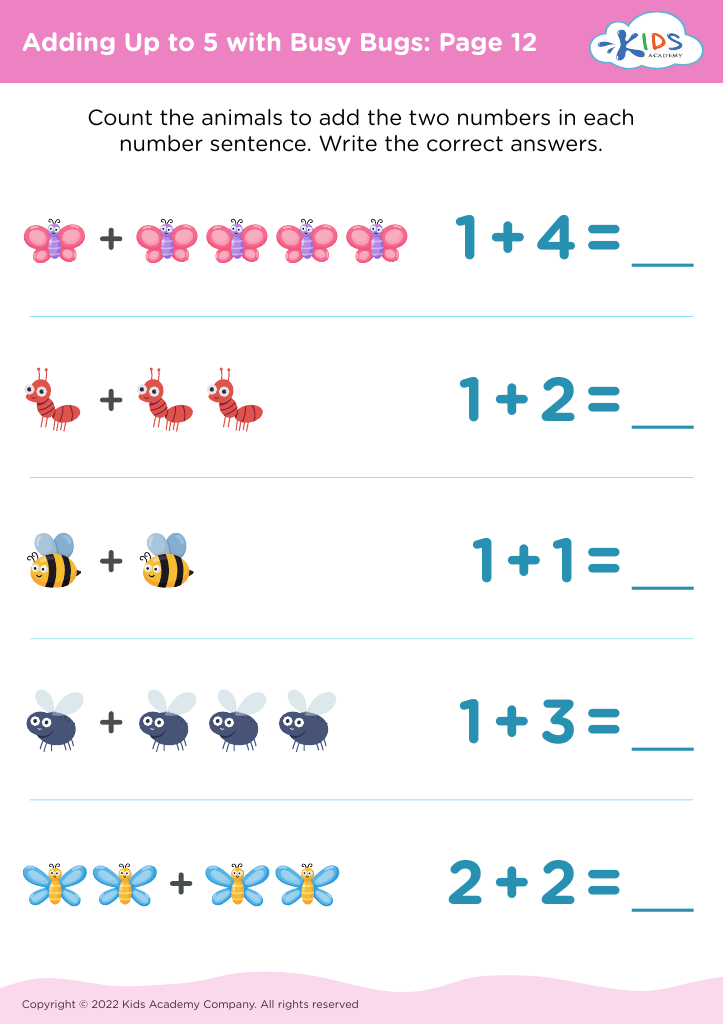
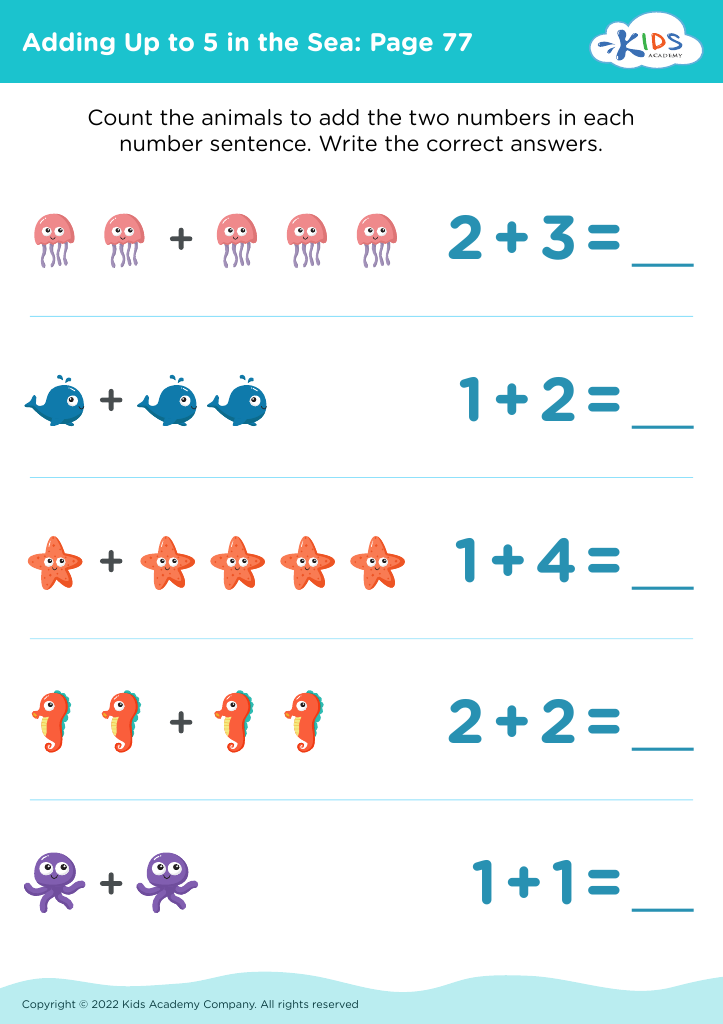
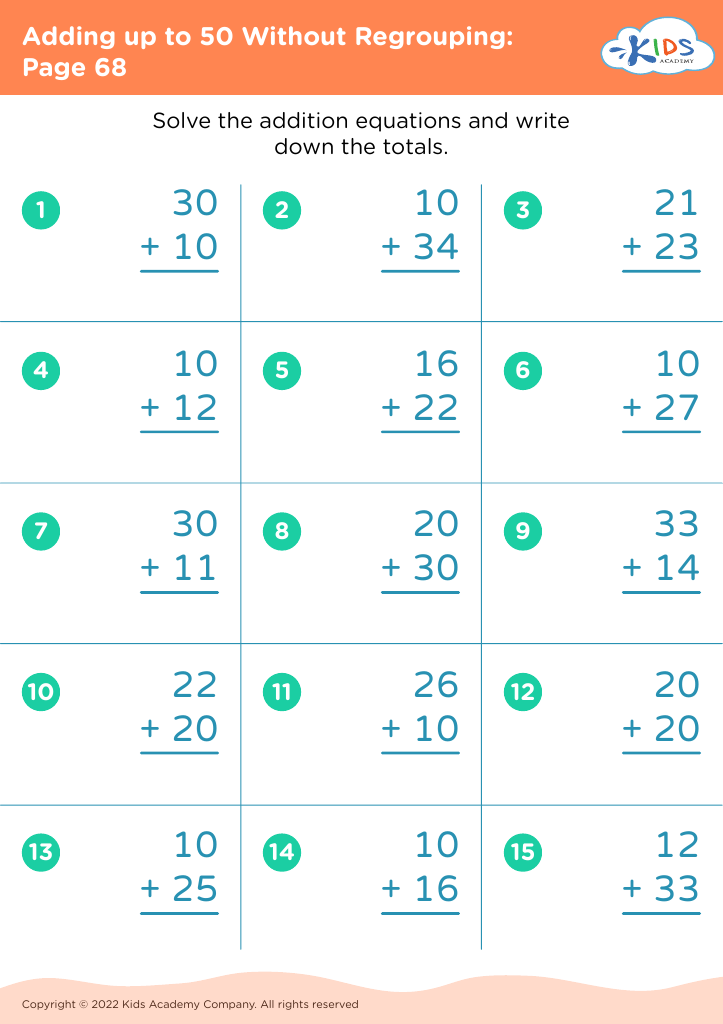
Discover our "Counting Accuracy Addition Worksheets for Ages 3-7," perfect for young learners to build a strong math foundation! Each worksheet focuses on enhancing counting accuracy and addition skills, tailored to meet the needs of children aged 3 to 7. Engaging activities and colorful designs make learning fun and effective. These printable worksheets are excellent for both classroom and home use, offering structured practice to help kids develop confidence in their math abilities. Start their numerical journey with our carefully crafted resources that promote a love for learning and ensure mathematical success. Explore our collection today!






.jpg)

Counting accuracy and basic addition skills are fundamental building blocks for young children aged 3-7. These early math skills lay the foundation for all future learning in more complex mathematics, such as subtraction, multiplication, and division. When children accurately count and perform simple additions, they develop an understanding of number concepts, relationships, and the base ten system.
Parents and teachers should recognize the importance of counting accuracy in fostering a child's confidence and enthusiasm for learning. Accurate counting acts as a bridge between tangible objects and abstract numbers, making math relatable and less intimidating. As children become proficient counters, they are better equipped to tackle more complex problems with ease.
Addition, which builds on counting skills, teaches children about combining quantities, understanding "more," and recognizing patterns. Proficiency in addition influences critical thinking and problem-solving abilities, skills that extend beyond mathematics and are vital in everyday life.
Moreover, early success in math contributes to positive attitudes towards the subject, reducing math anxiety and opening doors to STEM-related fields. In sum, focusing on counting accuracy and addition for young learners fosters their cognitive development, equipping them with essential tools for academic success and practical life. Investing time and effort in these foundational skills sets the stage for a lifetime of learning and curiosity.








