Filters

292 filtered results

Clear all filters
Favorites
With answer key
Interactive

292 filtered results

Difficulty Level

Grade


Check out this FREE Trial Lesson on Addition for age 3-7!

Match Objects that Fit Together

Favorites
With answer key
Interactive
  • 3-7
  • Counting practice
  • Addition
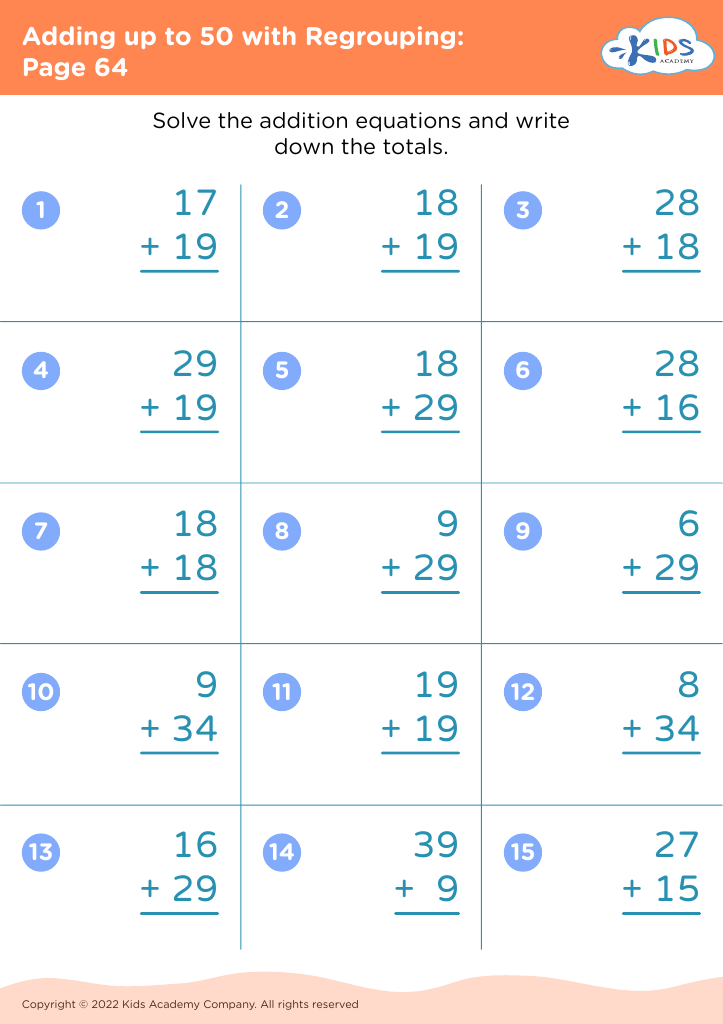
Adding up to 50 with Regrouping: Page 64
Worksheet
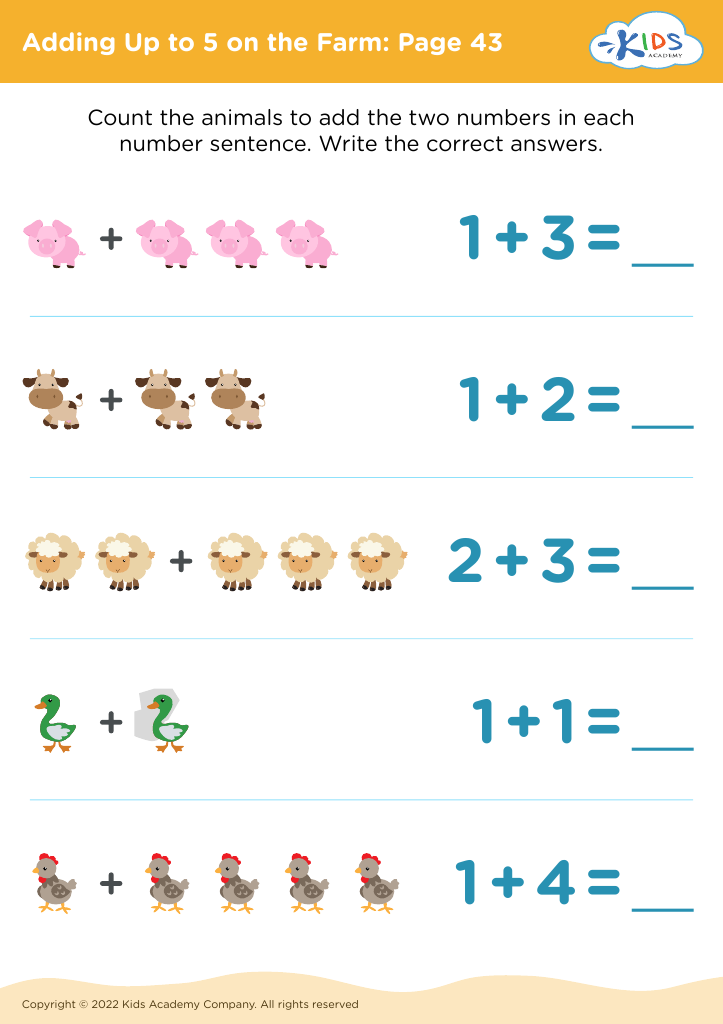
Adding Up to 5 on the Farm: Page 43
Worksheet
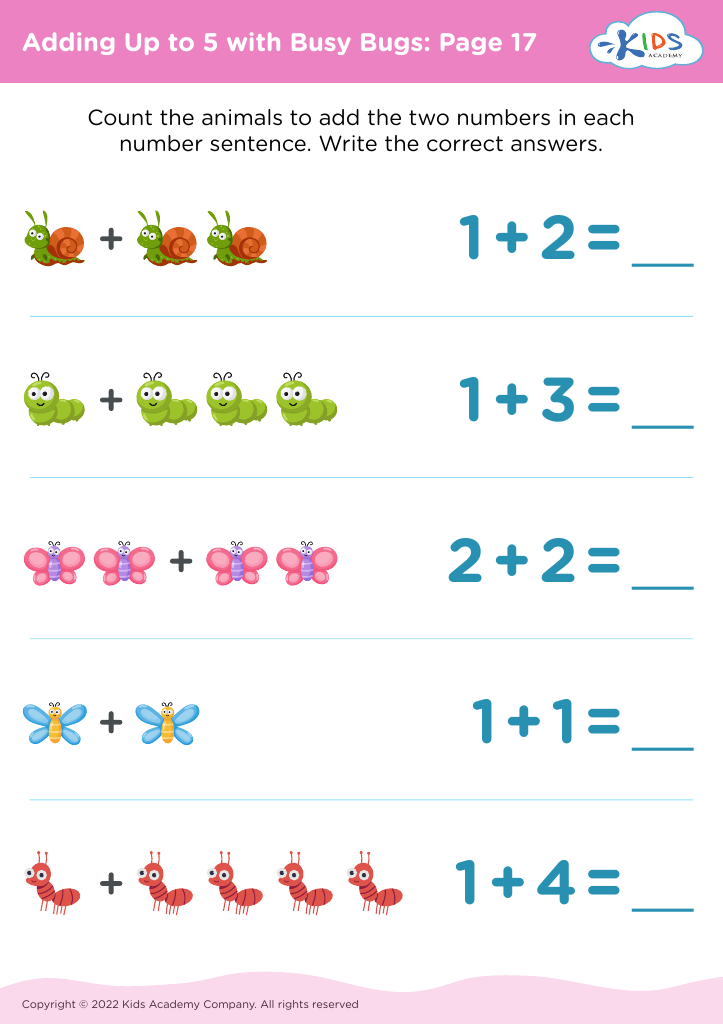
Adding Up to 5 with Busy Bugs: Page 17
Worksheet
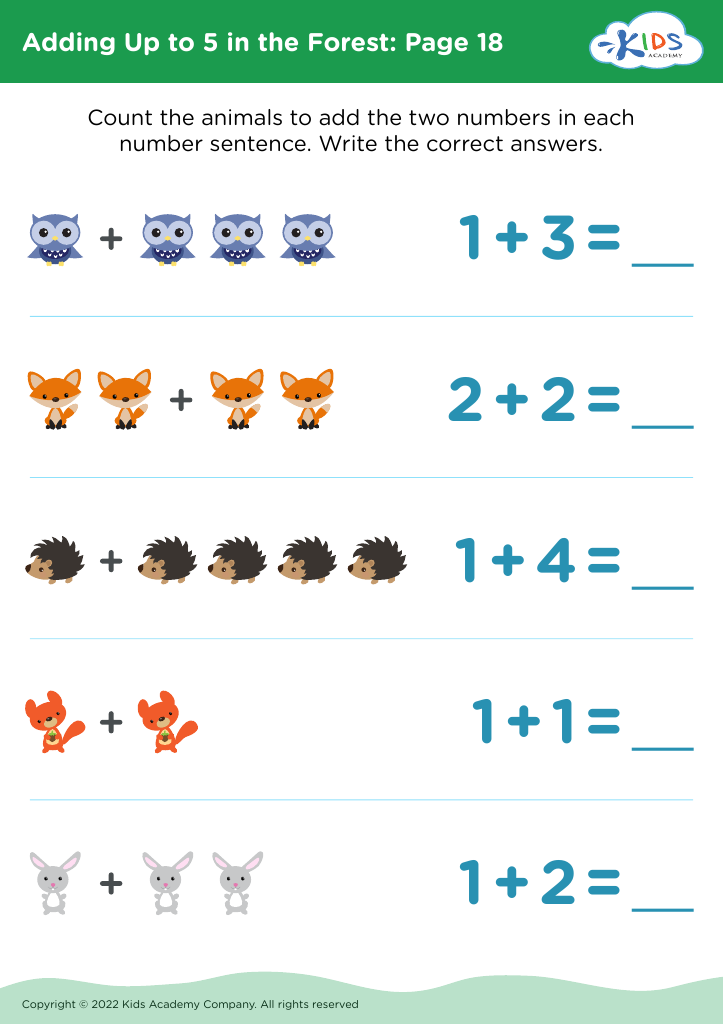
Adding Up to 5 in the Forest: Page 18
Worksheet
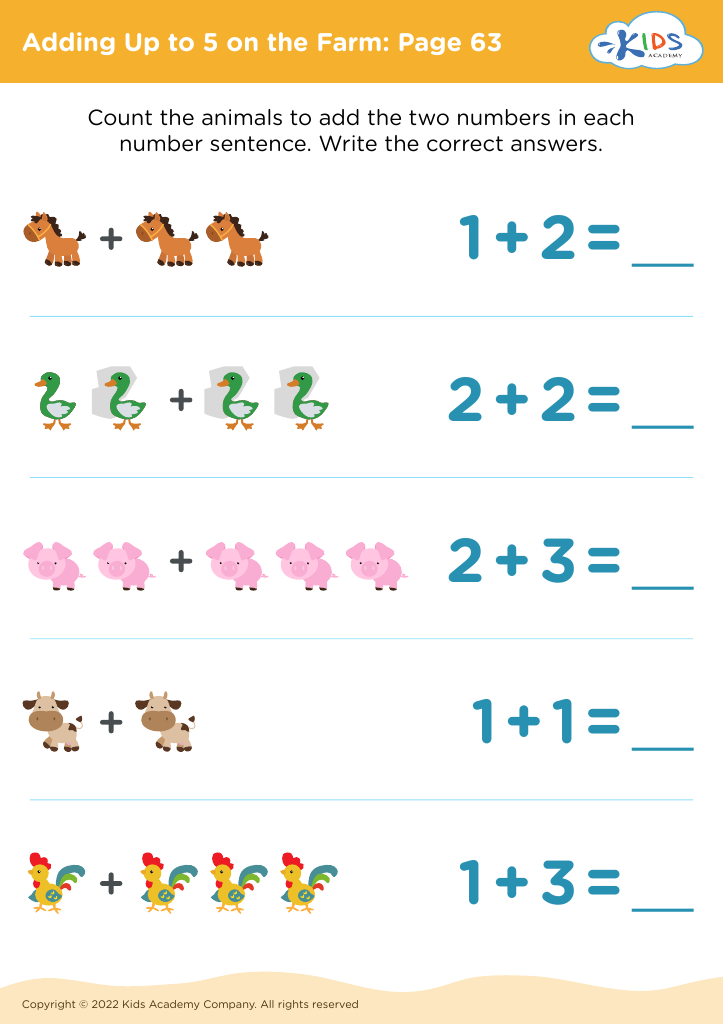
Adding Up to 5 on the Farm: Page 63
Worksheet
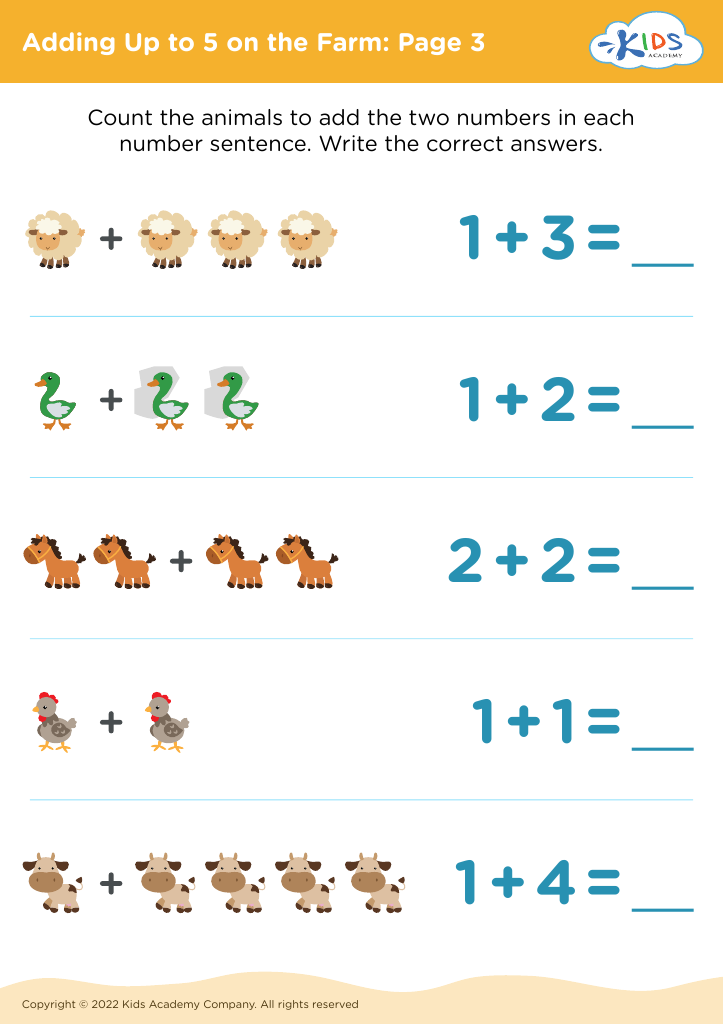
Adding Up to 5 on the Farm: Page 3
Worksheet
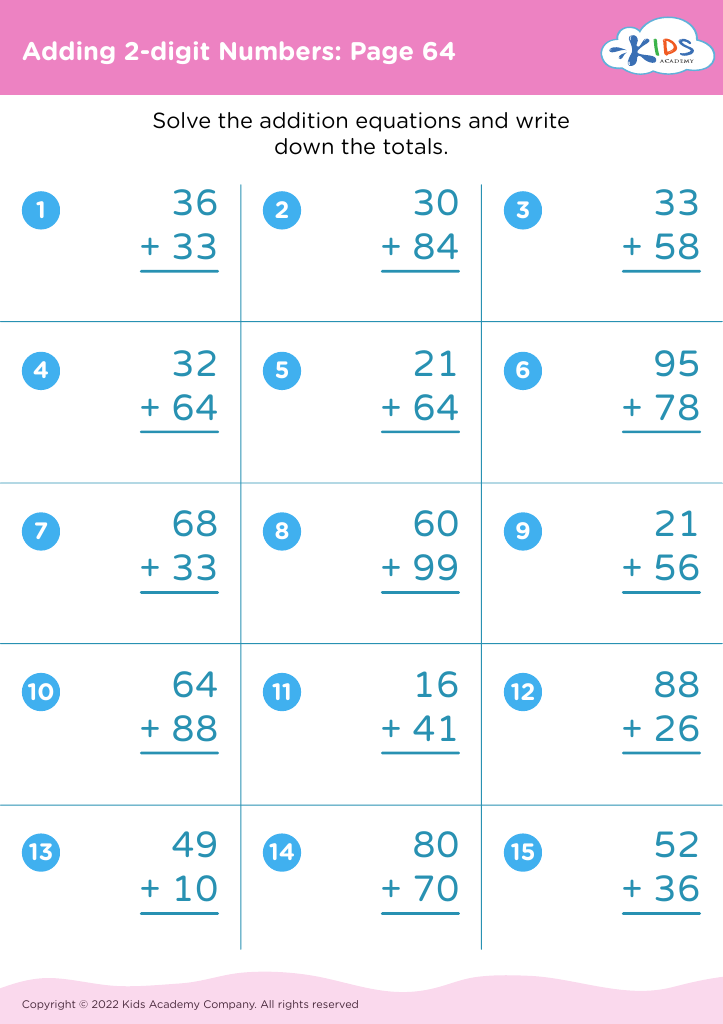
Adding 2-digit Numbers: Page 64

Adding 2-digit Numbers: Page 64

Adding 2-digit Numbers: Page 64
Worksheet
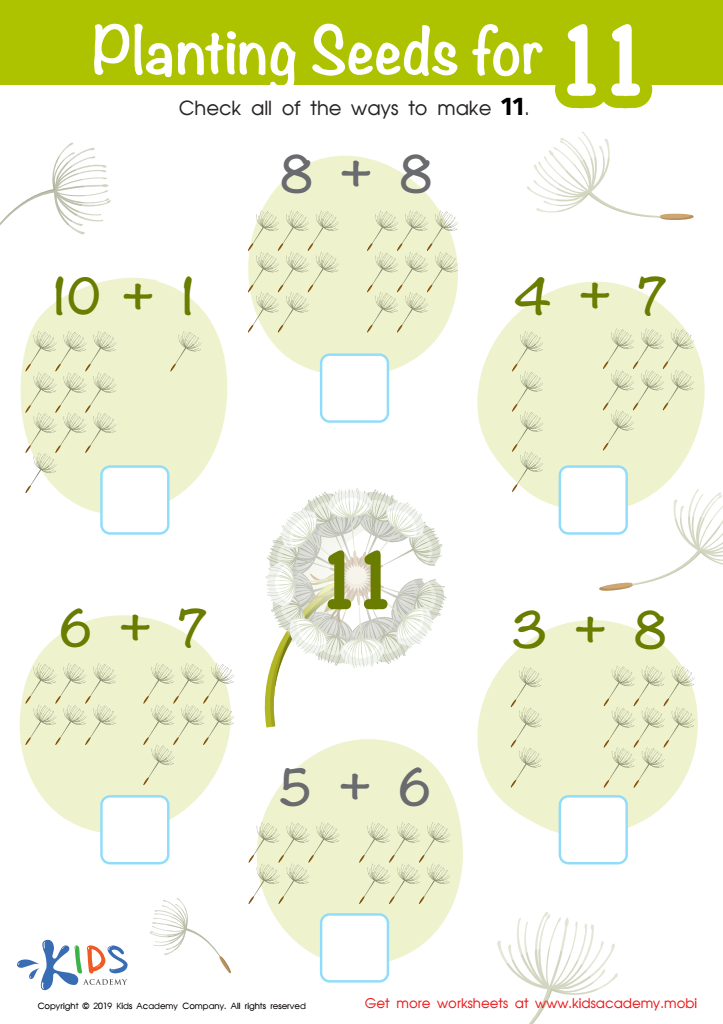
Planting Seeds for 11 Worksheet

Planting Seeds for 11 Worksheet

Before starting, ask your students to count as high as they can. Explain that different numbers can add up to the same total. Give examples like 2+2 =4 and 3+1 =4. Ask if they can think of other examples. Then have them work through the equations in the printout and circle all that add up to 11.
Planting Seeds for 11 Worksheet
Worksheet
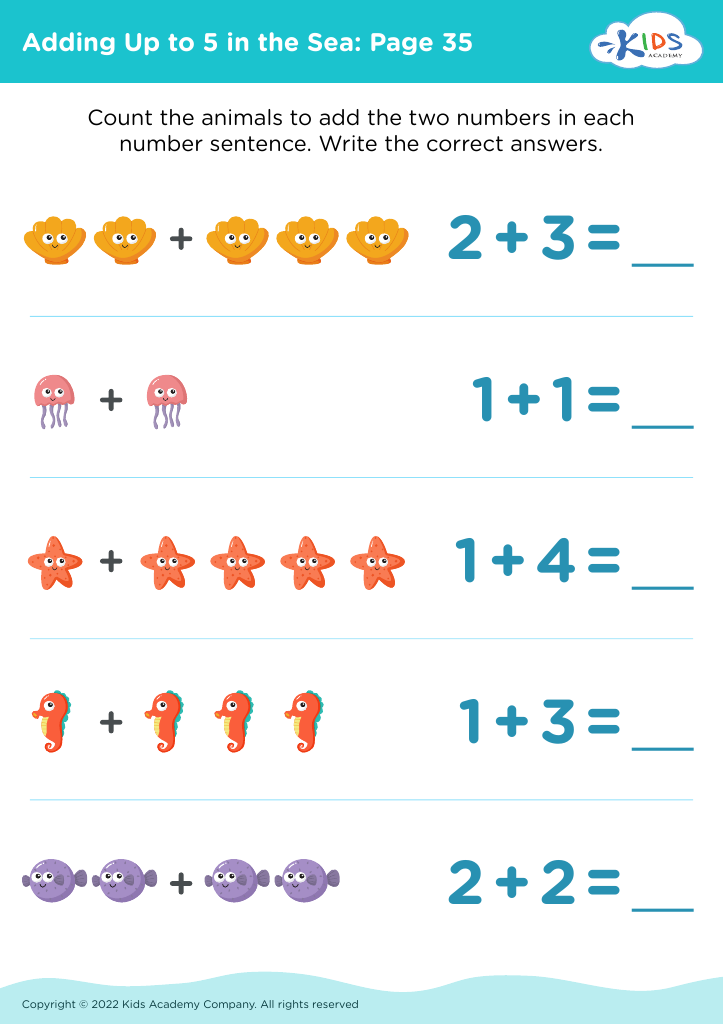
Adding Up to 5 in the Sea: Page 35
Worksheet
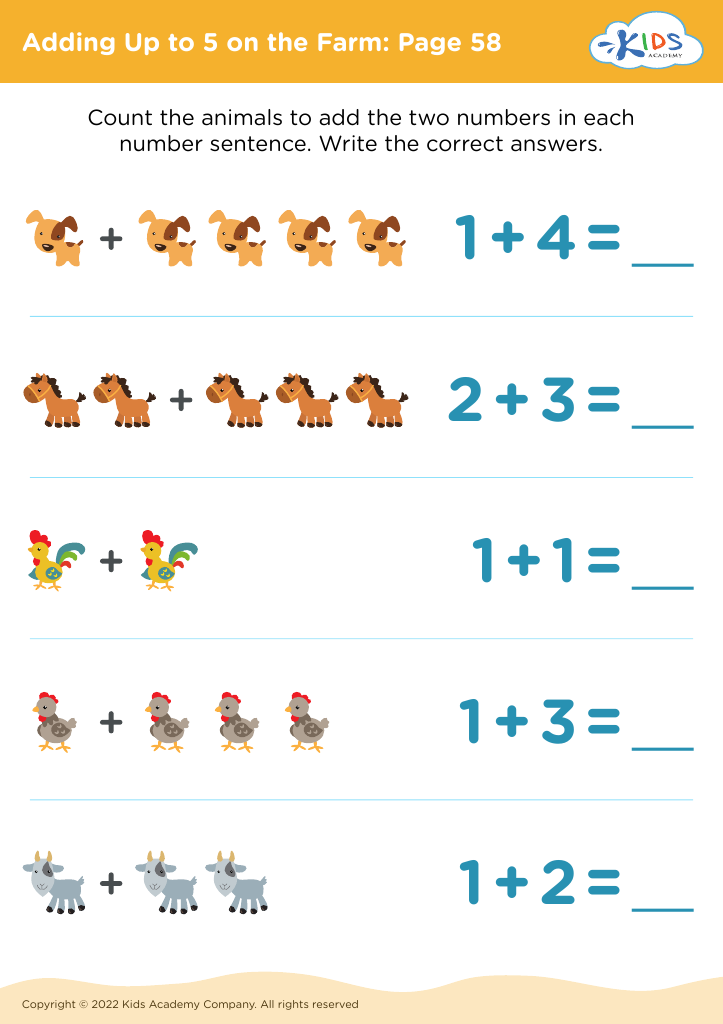
Adding Up to 5 on the Farm: Page 58
Worksheet
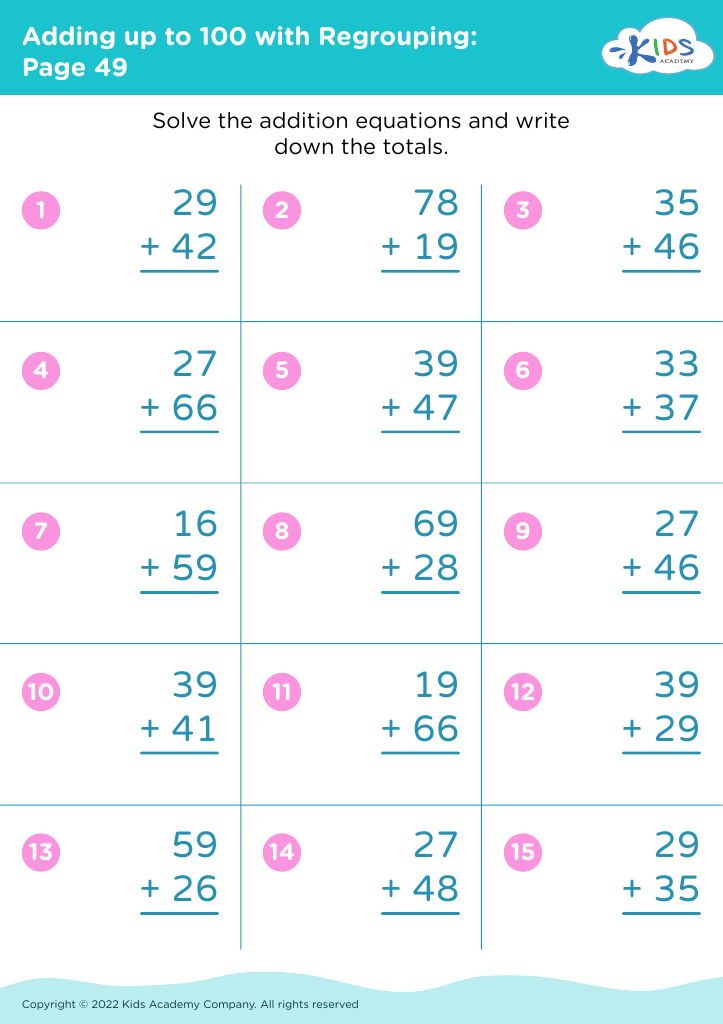
Adding up to 100 with Regrouping: Page 49
Worksheet
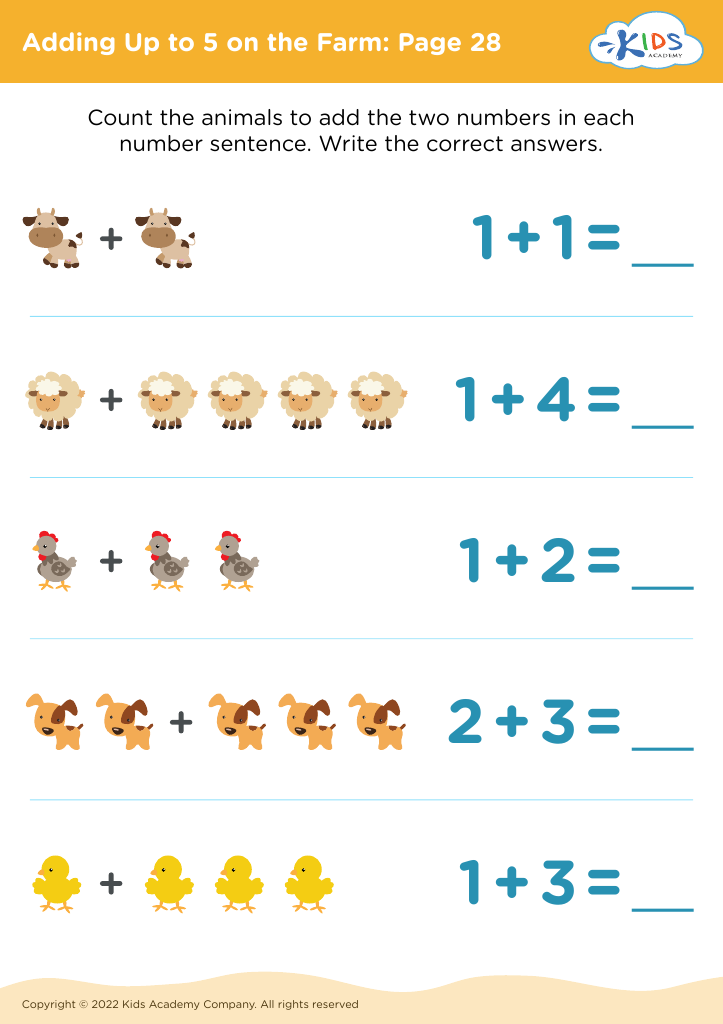
Adding Up to 5 on the Farm: Page 28
Worksheet
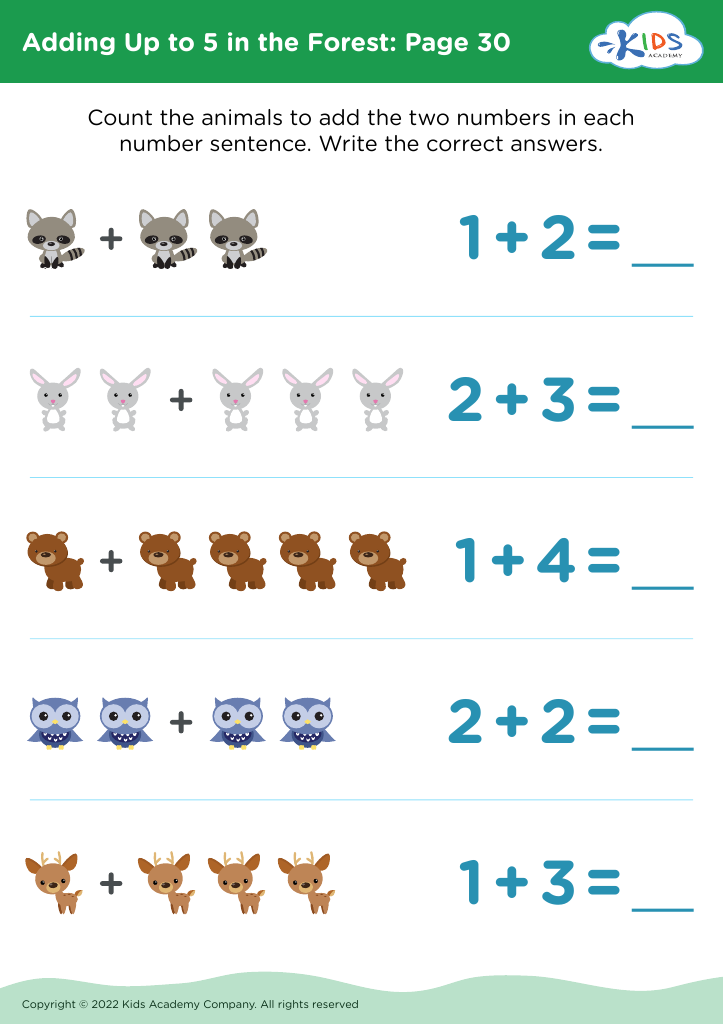
Adding Up to 5 in the Forest: Page 30
Worksheet
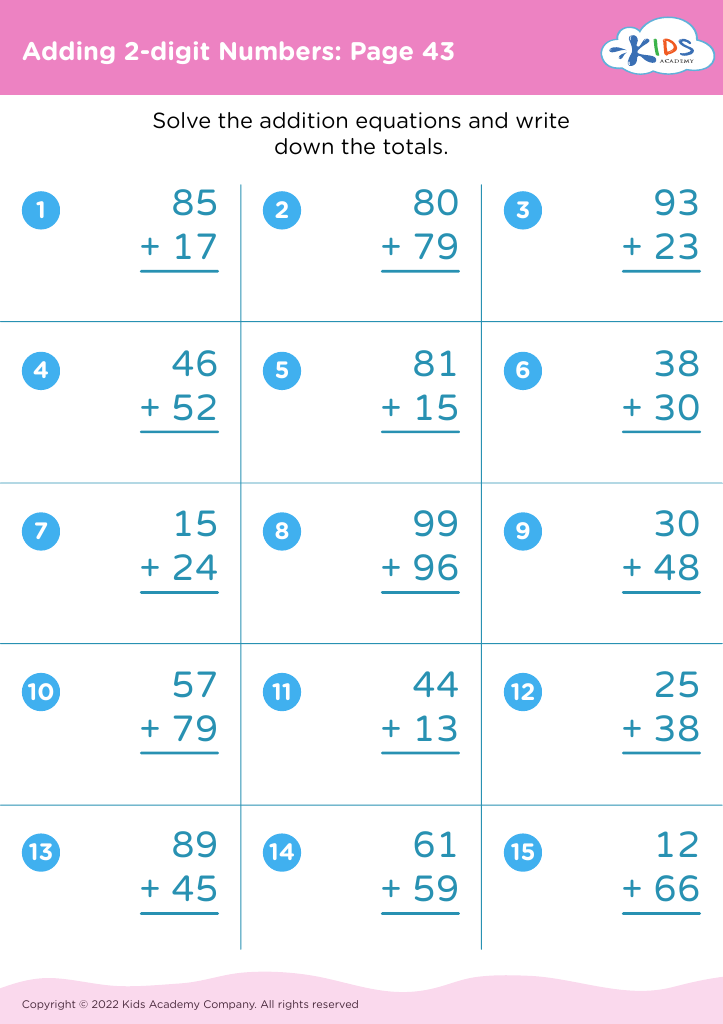
Adding 2-digit Numbers: Page 43

Adding 2-digit Numbers: Page 43

Adding 2-digit Numbers: Page 43
Worksheet
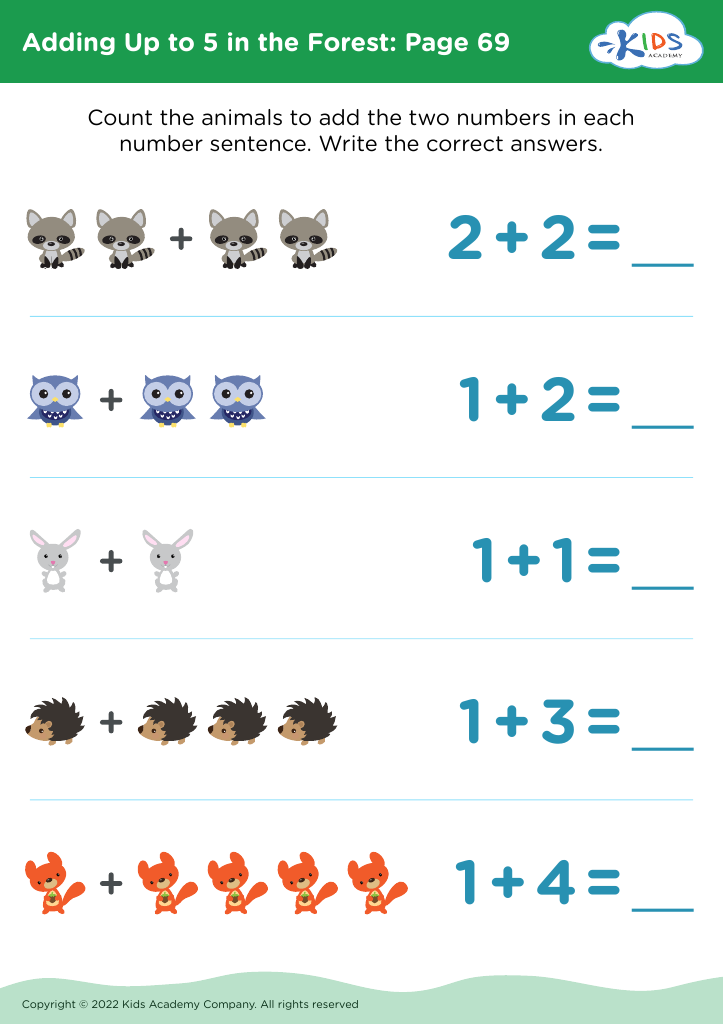
Adding Up to 5 in the Forest: Page 69
Worksheet
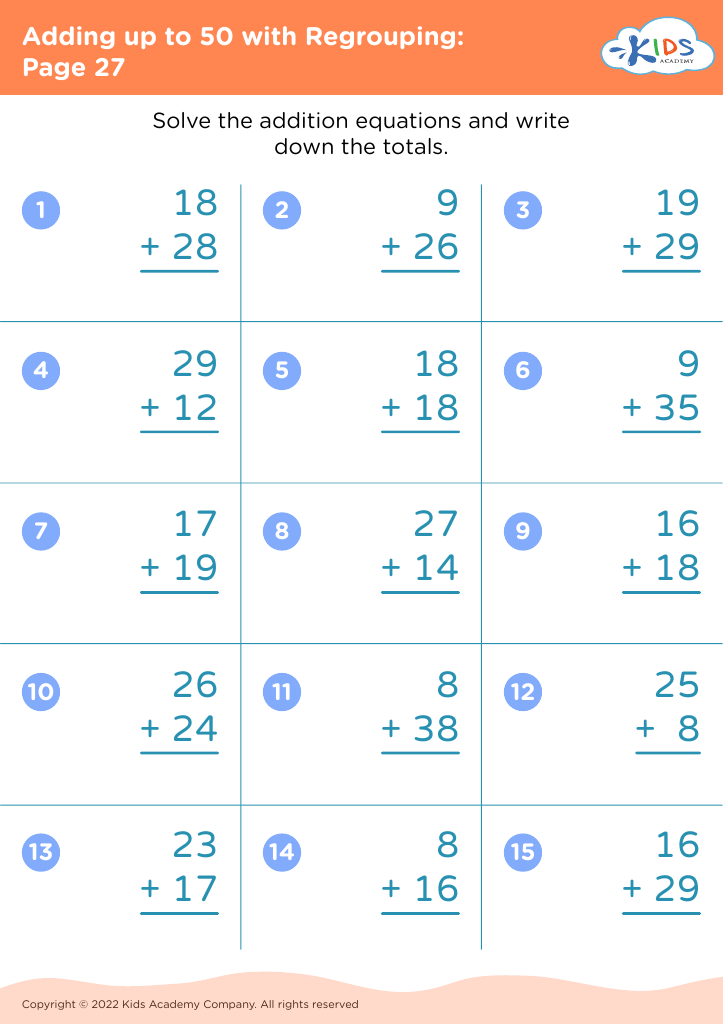
Adding up to 50 with Regrouping: Page 27
Worksheet
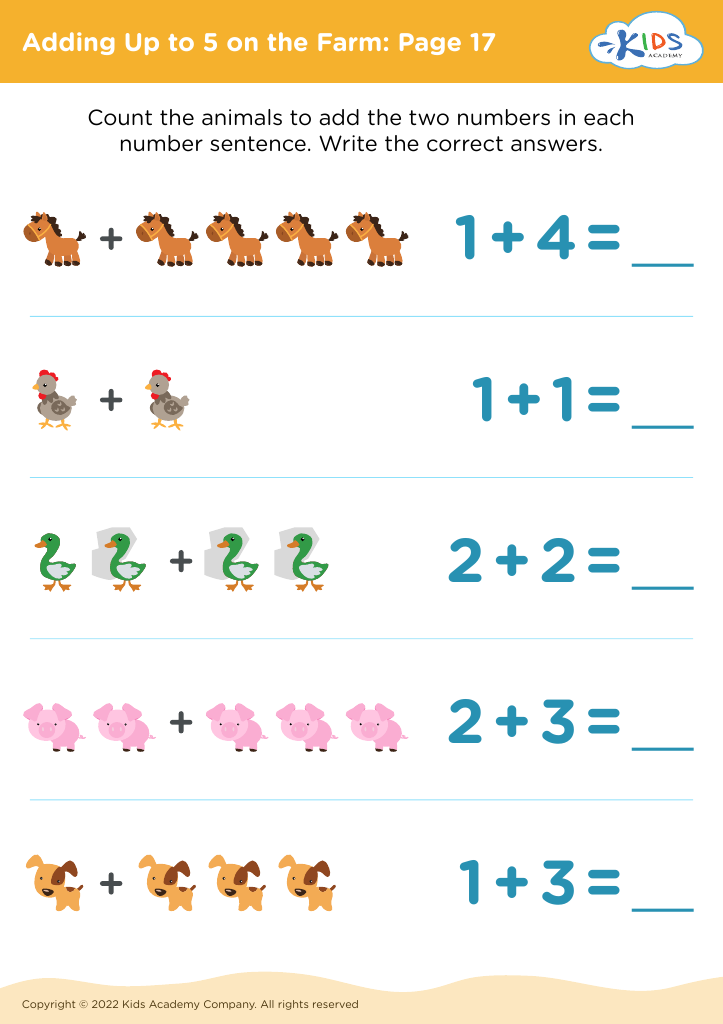
Adding Up to 5 on the Farm: Page 17
Worksheet
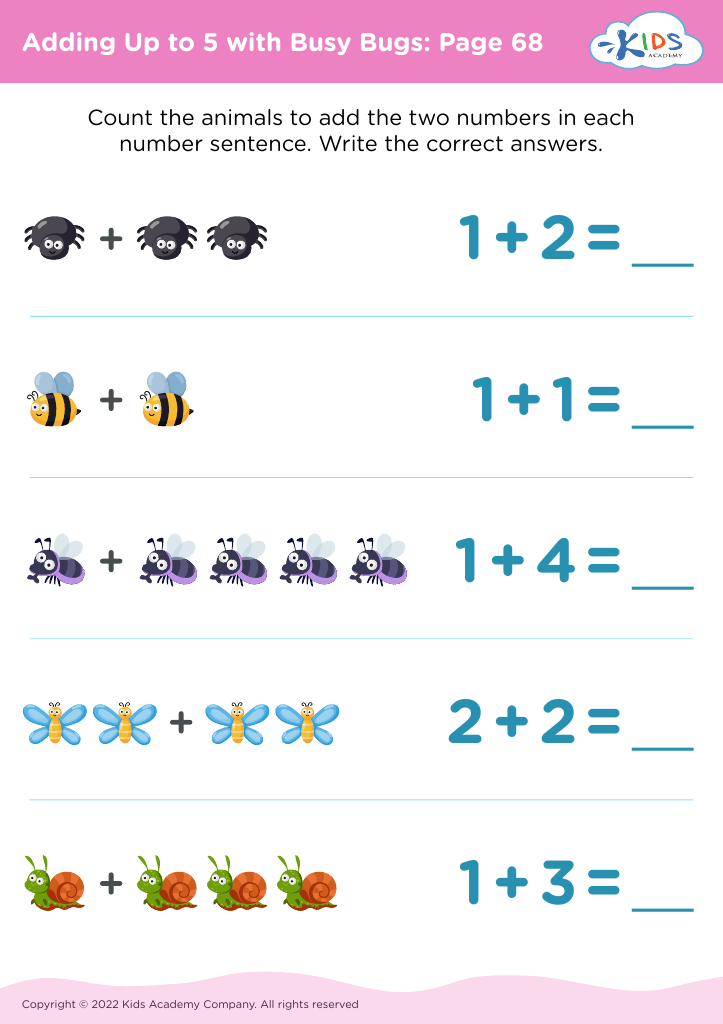
Adding Up to 5 with Busy Bugs: Page 68
Worksheet
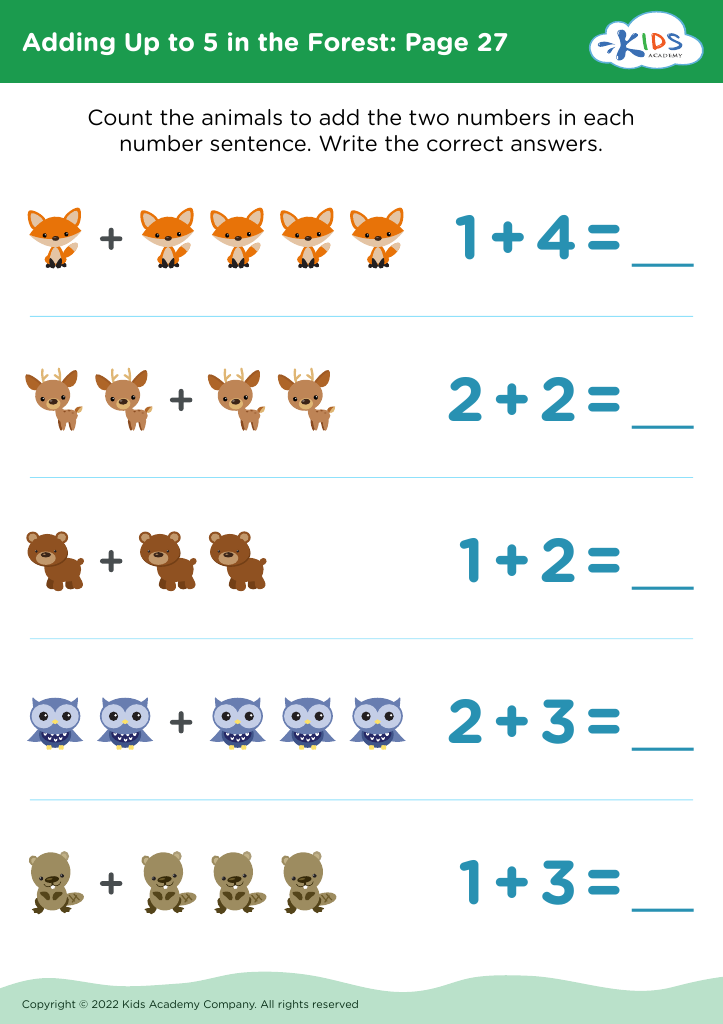
Adding Up to 5 in the Forest: Page 27
Worksheet
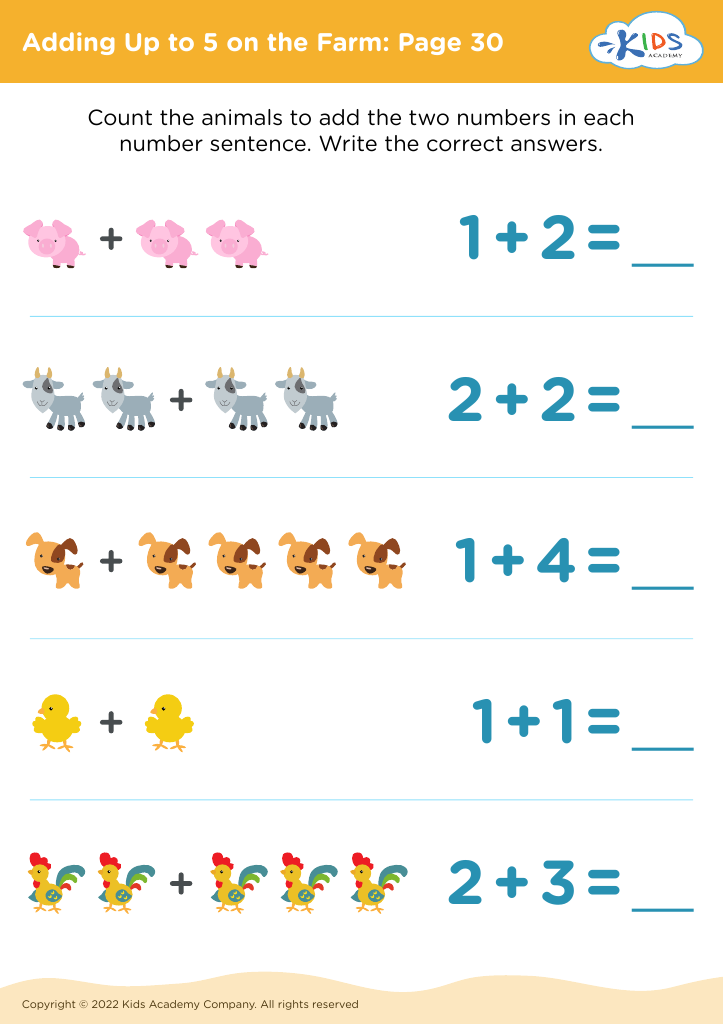
Adding Up to 5 on the Farm: Page 30
Worksheet
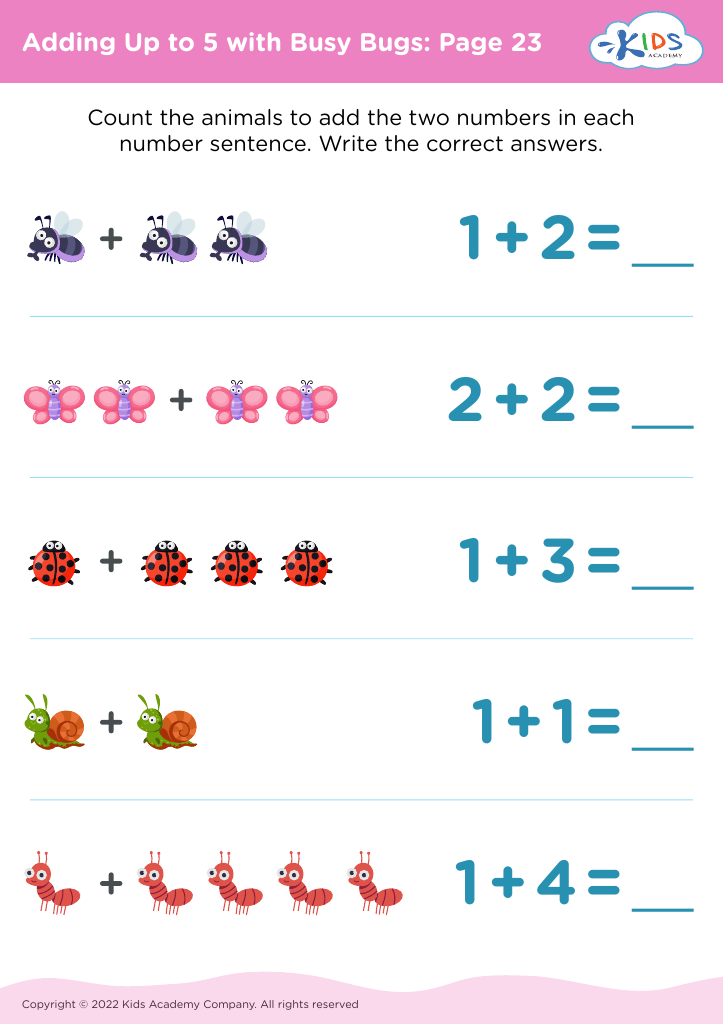
Adding Up to 5 with Busy Bugs: Page 23
Worksheet
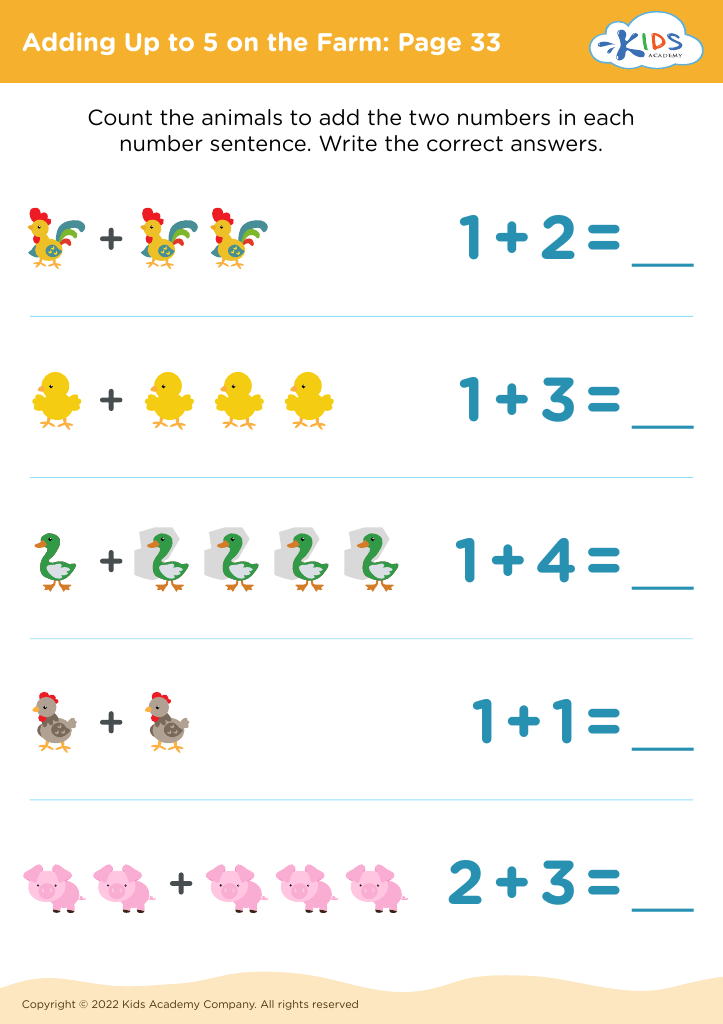
Adding Up to 5 on the Farm: Page 33
Worksheet
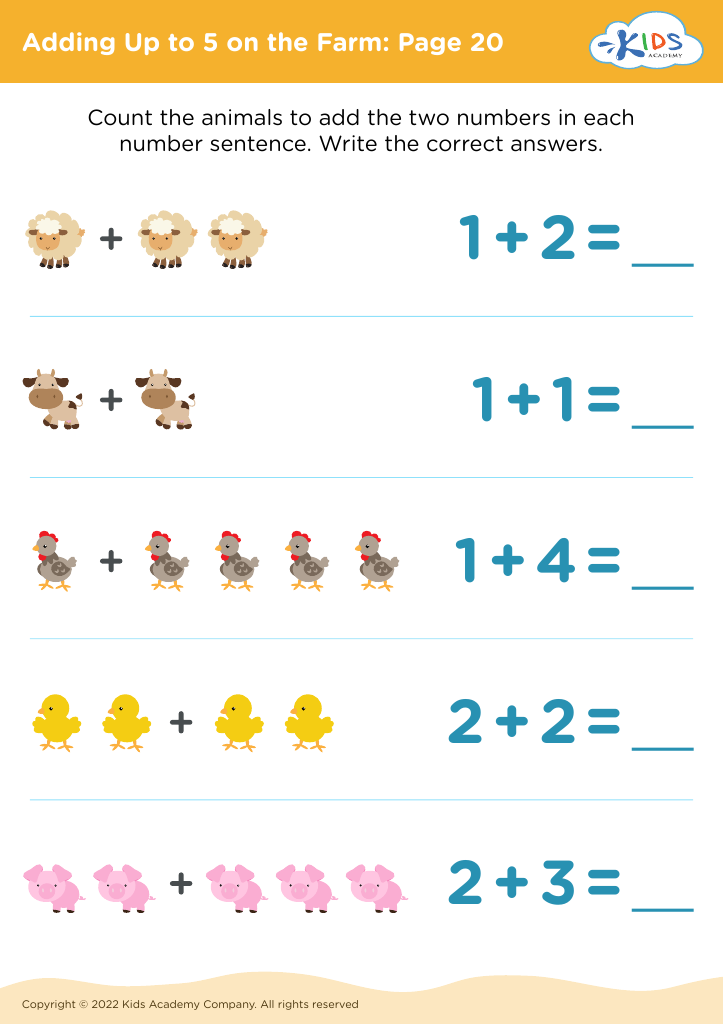
Adding Up to 5 on the Farm: Page 20
Worksheet
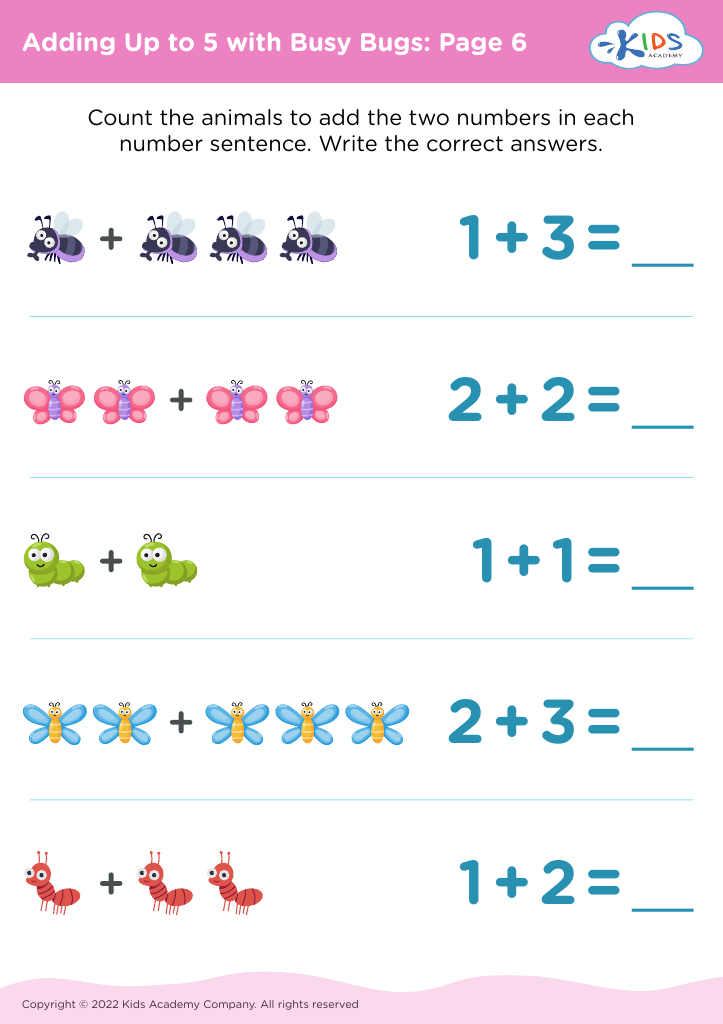
Adding Up to 5 with Busy Bugs: Page 6
Worksheet


Counting practice and addition for ages 3-7 are foundational skills that significantly influence a child's future mathematical abilities and overall intellectual development. At this early stage, children are highly receptive to learning, and introducing counting and basic addition lays the groundwork for more advanced mathematical concepts. These activities foster a strong sense of number sense, which is the ability to understand and work with numbers flexibly.

When parents and teachers engage children in counting and basic addition, they help develop critical cognitive skills like memory, attention, and logical thinking. These skills are essential not only for math but for all areas of learning. Frequent exposure to numbers enhances children's ability to recognize patterns, make predictions, and ultimately solve problems more efficiently.

Moreover, early counting practice and addition bolster confidence and curiosity in young learners. When children grasp these basic concepts, they are more likely to approach new mathematical challenges with a positive mindset. This early success diminishes math anxiety and builds resilience in learning.

Socially, this early math practice encourages cooperative learning and communication, as children often work together to find solutions. Lastly, a strong foundation in math translates to better academic performance, enabling children to excel in school and other intellectual pursuits. For these reasons, investing time in counting and addition practice is essential for young children's development.