Develop number recognition Addition Worksheets for Ages 3-7
5 filtered results
-
From - To
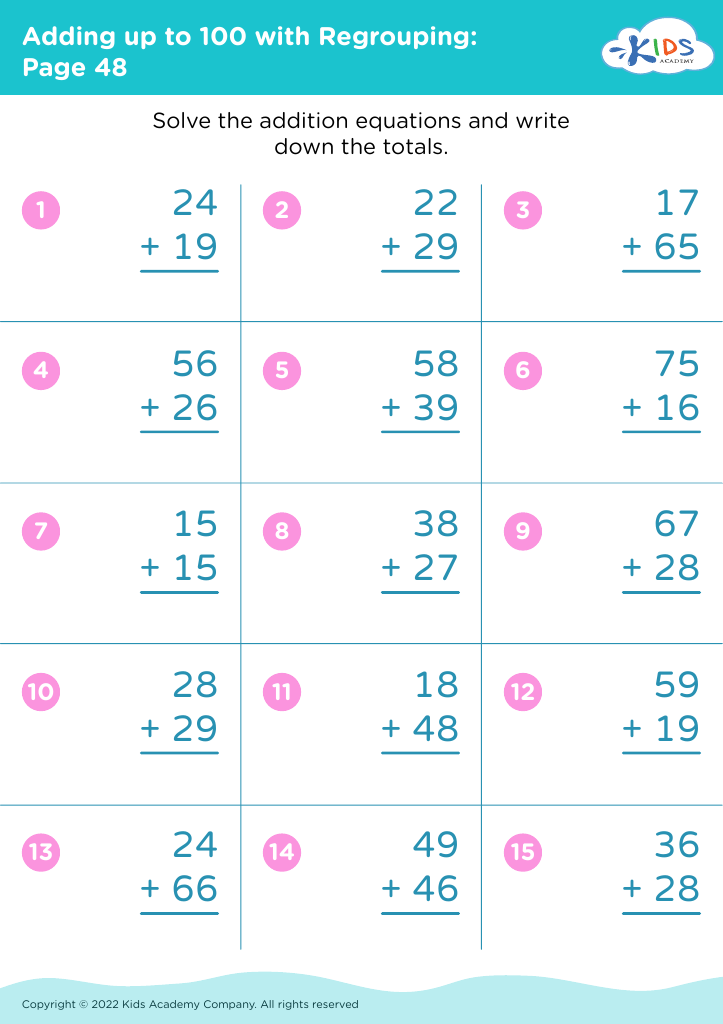
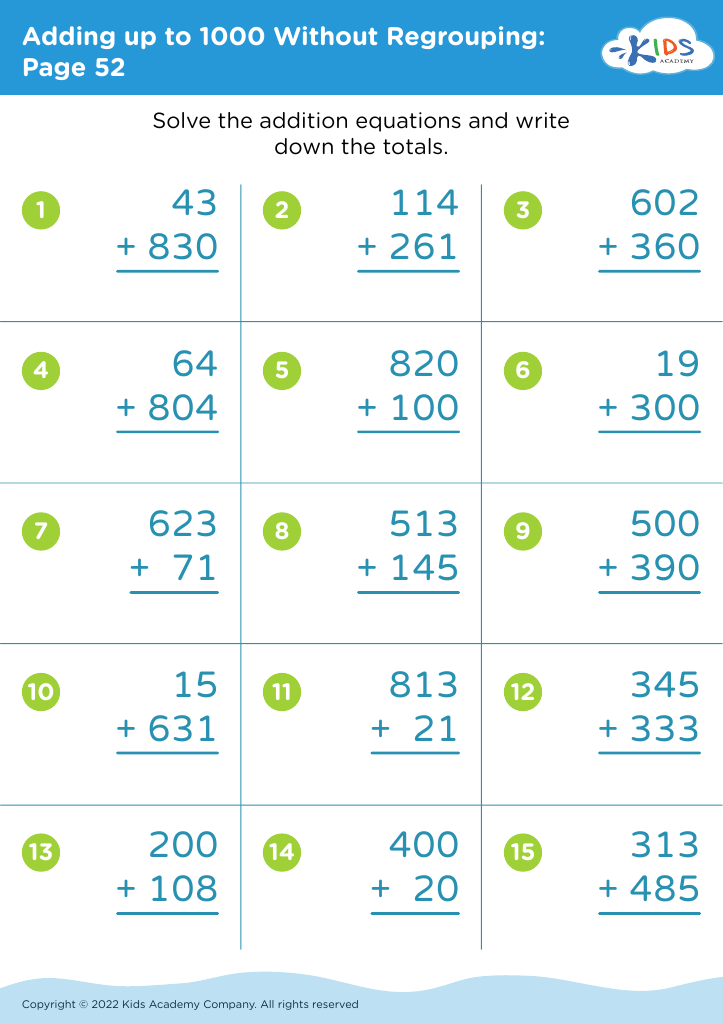
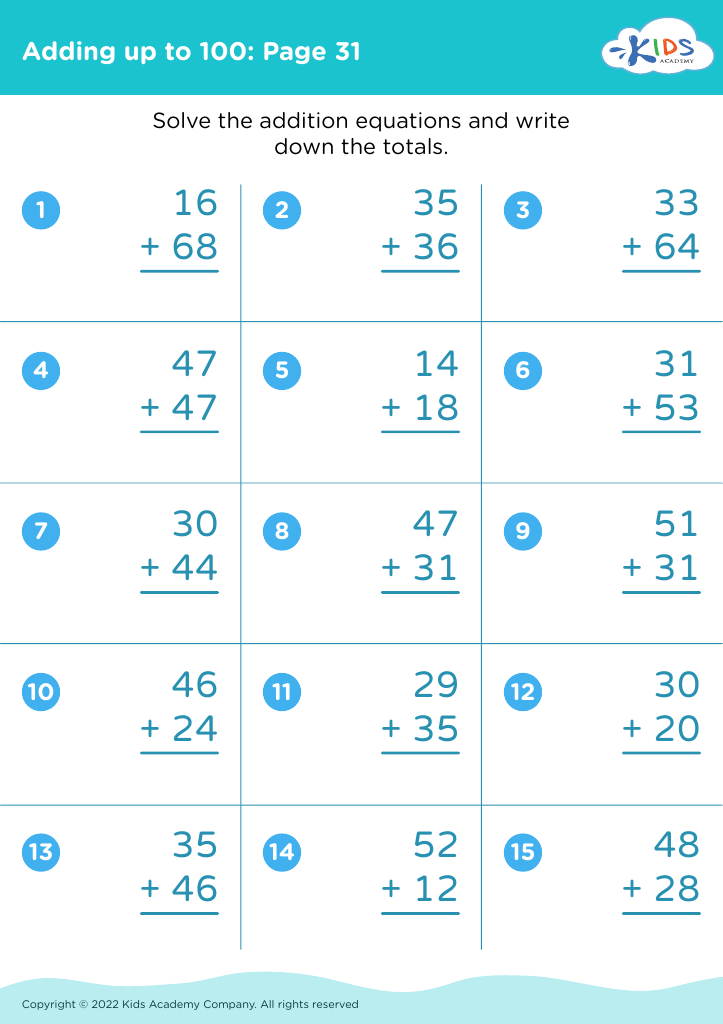
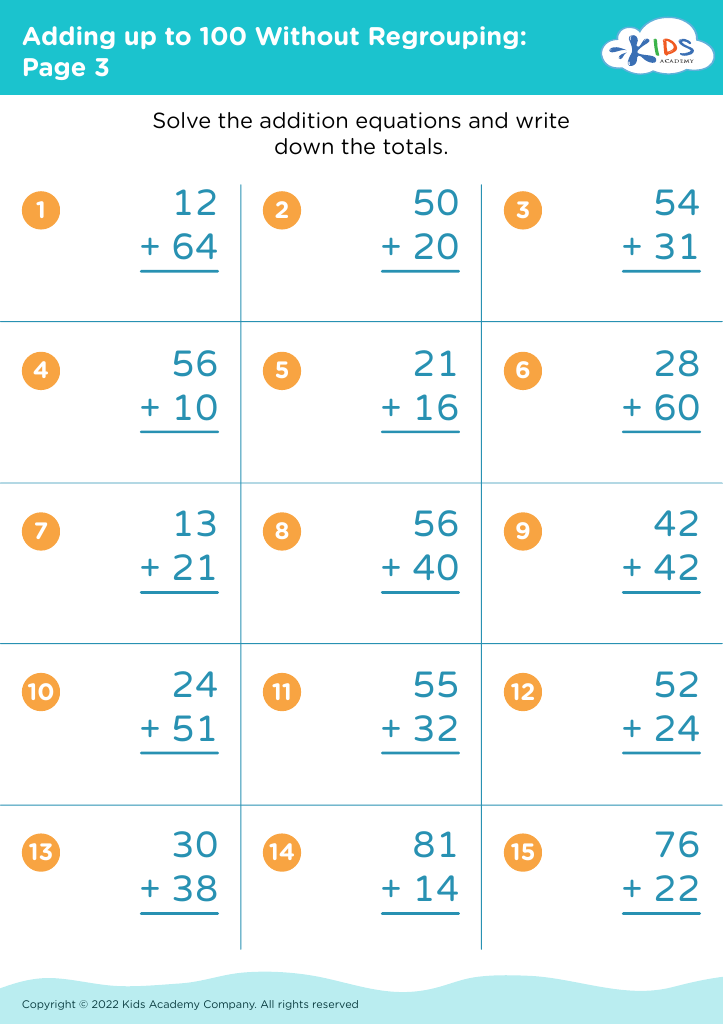
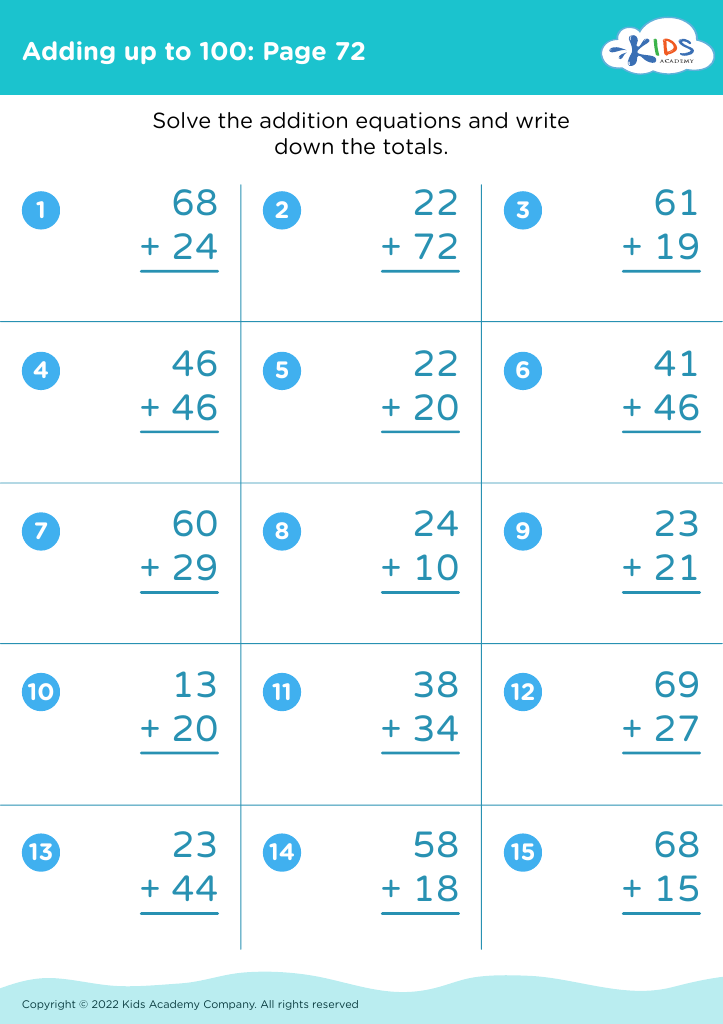
Discover our specially designed addition worksheets aimed at children aged 3-7, perfect for developing number recognition and early math skills. Our engaging and educational activities help young learners build a strong foundation in addition by recognizing numbers and understanding basic math concepts. Featuring colorful illustrations and fun exercises, these worksheets encourage interactive learning, making math exciting and accessible. Ideal for both at-home practice and classroom use, our addition worksheets boost confidence and foster a love for learning. Empower your child’s mathematical journey with our expertly crafted resources to achieve number recognition success. Explore now and start adding fun to learning!







.jpg)
Developing number recognition and basic addition skills in children aged 3-7 is crucial for several reasons. Firstly, it lays the foundation for all future mathematical learning. Number recognition helps children understand and recognize the symbols that represent quantities, which is a fundamental step before they can perform any mathematical operations. When children can identify numbers easily, they gain confidence in their math skills, making them more eager to learn and explore further.
Basic addition is one of the first introductions to arithmetic that children encounter. Mastering this skill at an early age helps children develop problem-solving skills and logical thinking. It also has practical applications in everyday life, such as counting items, handling money, and measuring ingredients while cooking.
Moreover, early proficiency in these skills can influence a child's academic success in other areas. For instance, understanding math contributes to the development of critical thinking and analytical skills, which are valuable in subjects like science and engineering.
For teachers and parents, focusing on developing these skills can ensure that children have a stronger academic foundation and are better prepared for the increasingly complex mathematical concepts that they will encounter as they grow older. Engaging young learners with fun, interactive activities can make this process enjoyable, fostering a lifelong love of learning.








