Enhance concentration Addition Worksheets for Ages 3-7
5 filtered results
-
From - To
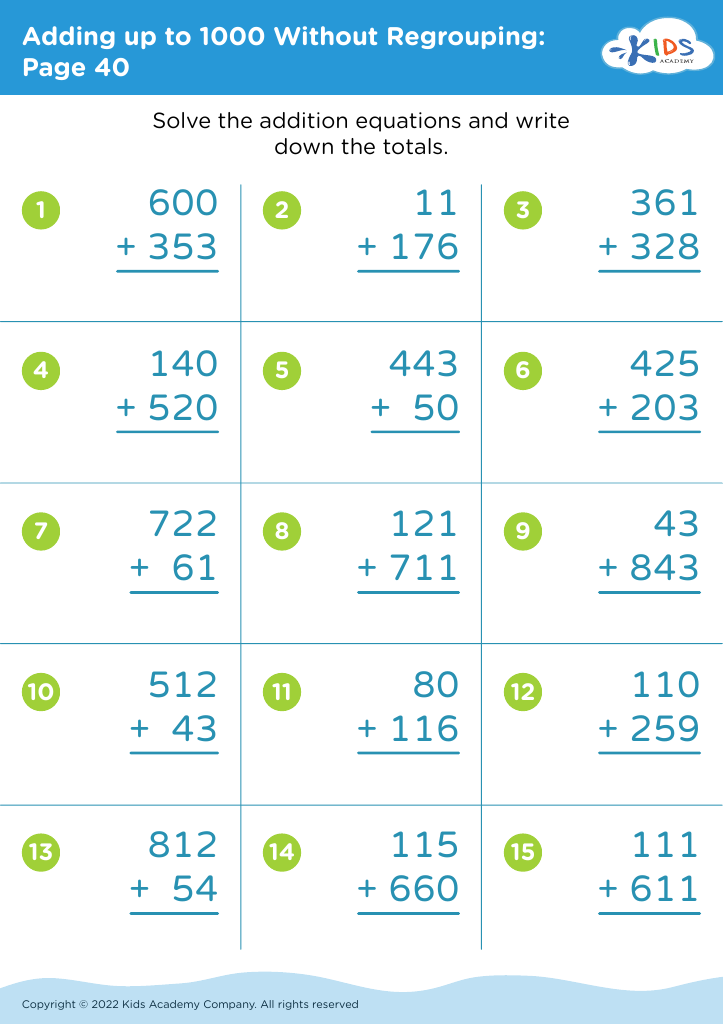
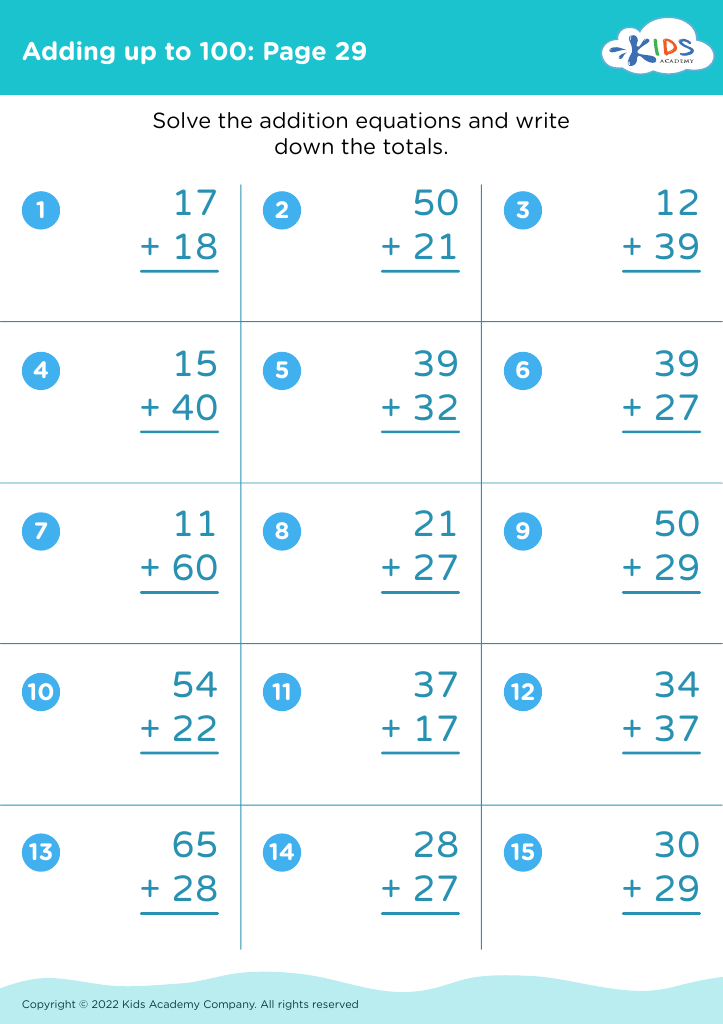
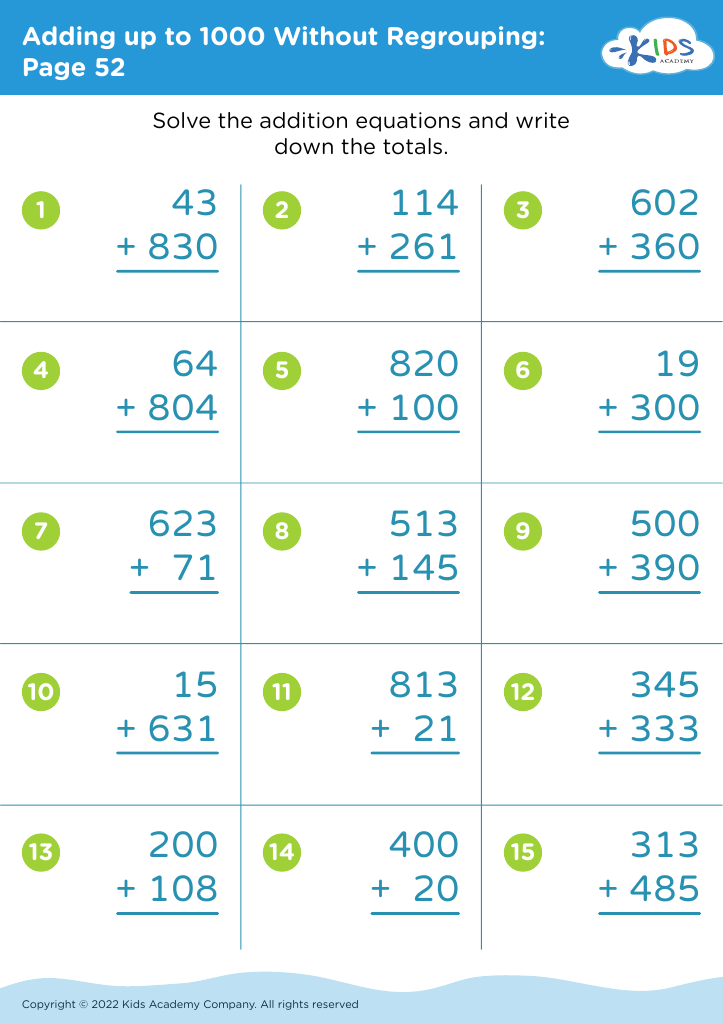
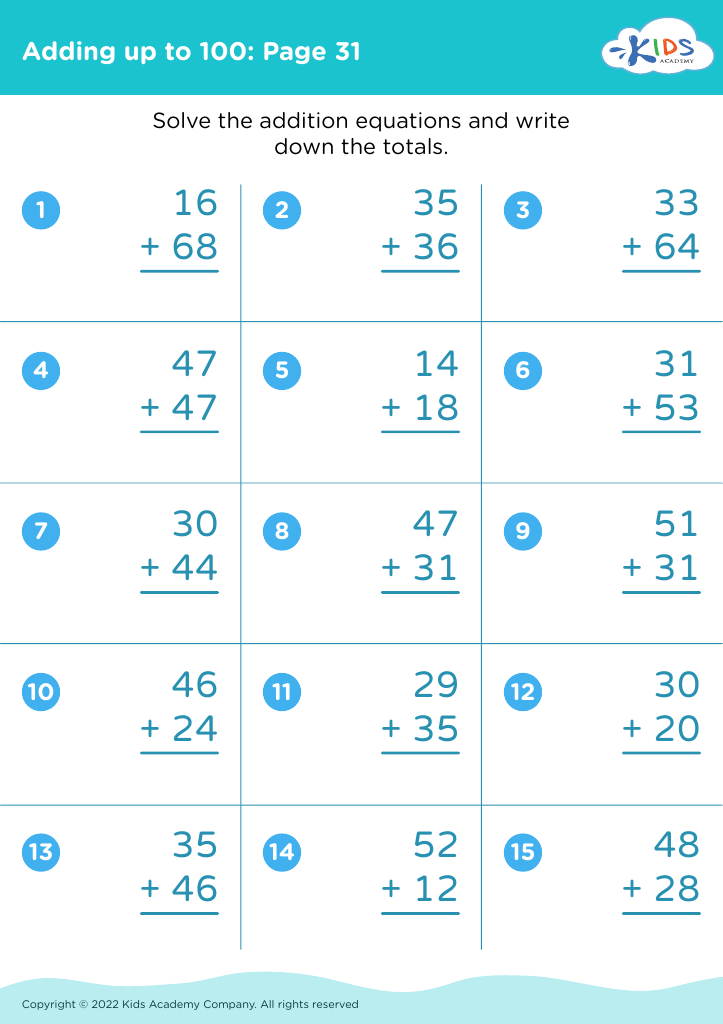
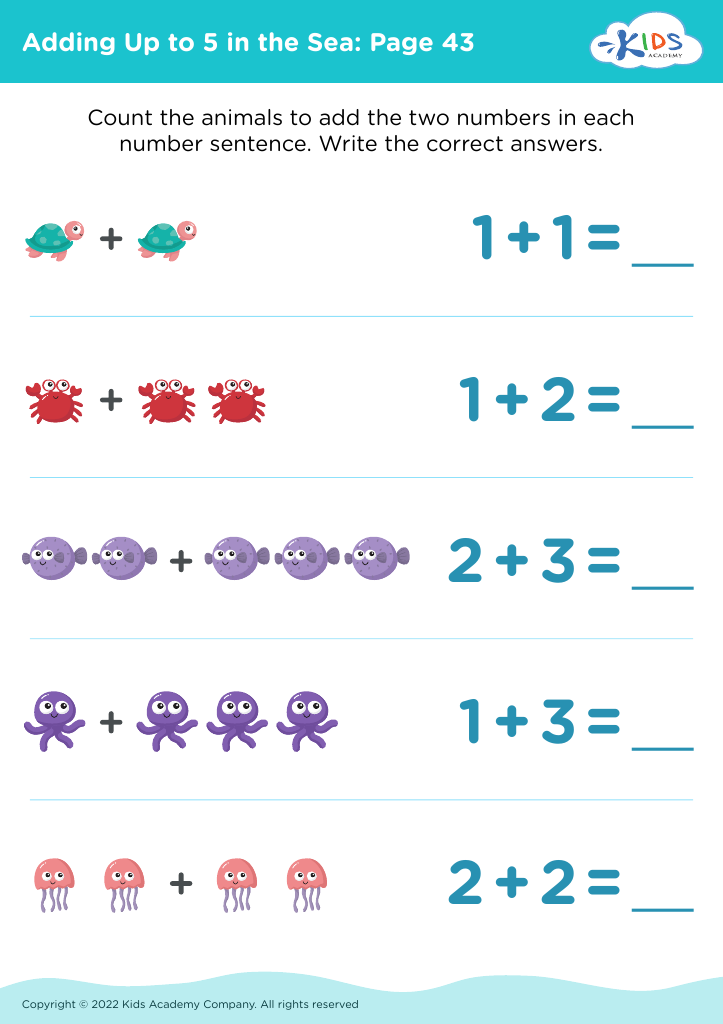
Boost your child's focus and math skills with our "Enhance Concentration Addition Worksheets" designed for ages 3-7. These engaging and interactive worksheets help young learners build essential addition skills while maintaining their attention. Featuring vibrant graphics and enjoyable exercises, each worksheet encourages concentration through fun activities that promote active learning. Parents and teachers can utilize these resources to track progress and reinforce key concepts. Perfect for at-home learning or classroom use, our addition worksheets provide a solid foundation in mathematics while making learning enjoyable. Download now and unlock your child’s potential with fun, focused educational activities!








Enhancing concentration in young children, particularly ages 3-7, is pivotal for their overall development and success in learning. During this formative period, children's brains are rapidly developing, making it essential to cultivate skills that support focus and attention. Concentration aids children in effectively engaging with their surroundings, participating in interactive learning, and building foundational skills for later academic success.
Parents and teachers play a crucial role in nurturing this ability. When children can concentrate, they are better prepared to absorb information, solve problems, and complete tasks, leading to increased confidence and a love for learning. Furthermore, improved concentration can help reduce frustration, allowing for smoother educational experiences both at home and in the classroom.
Games and activities designed to enhance concentration also promote critical thinking, creativity, and social skills, essential components of early childhood education. By prioritizing activities that focus on concentration, parents and teachers can set the groundwork for future learning, fostering essential skills that will benefit children as they progress through school. In an increasingly distracted world, strengthening attention spans at an early age not only prepares children for academic challenges but also equips them with valuable life skills.








