Enhance problem-solving abilities Addition Worksheets for Ages 3-7
5 filtered results
-
From - To
Discover a vibrant collection of addition worksheets designed to enhance problem-solving abilities for children ages 3-7. These engaging resources provide young learners with fun and interactive activities that encourage critical thinking and mathematical confidence. Tailored to meet developmental milestones, our worksheets feature colorful graphics and relatable scenarios that make learning addition enjoyable. Each worksheet aims to strengthen foundational math skills while fostering independence in problem-solving. Perfect for home or classroom use, these addition activities ensure that children not only learn to add but also develop essential reasoning skills. Start your child's journey toward math mastery today with our thoughtfully crafted worksheets!
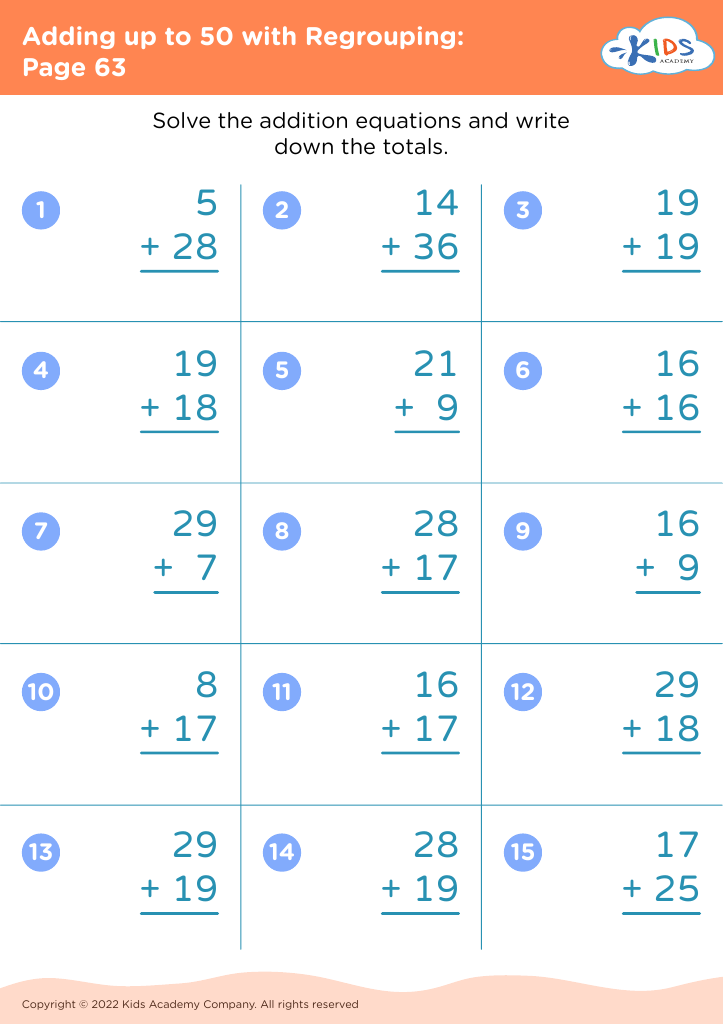
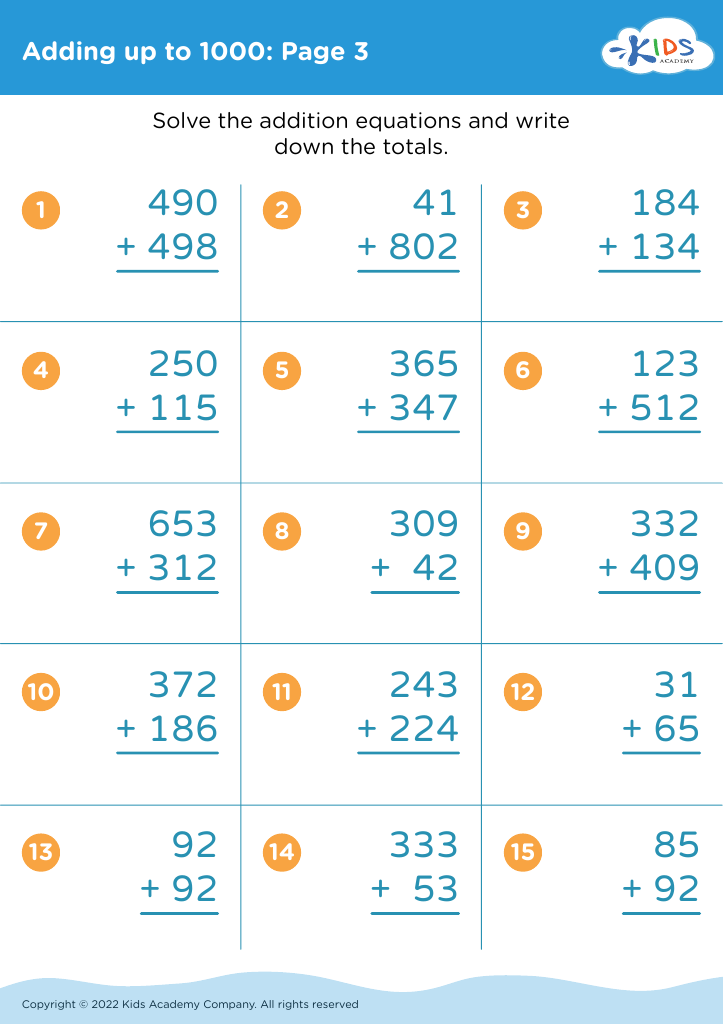
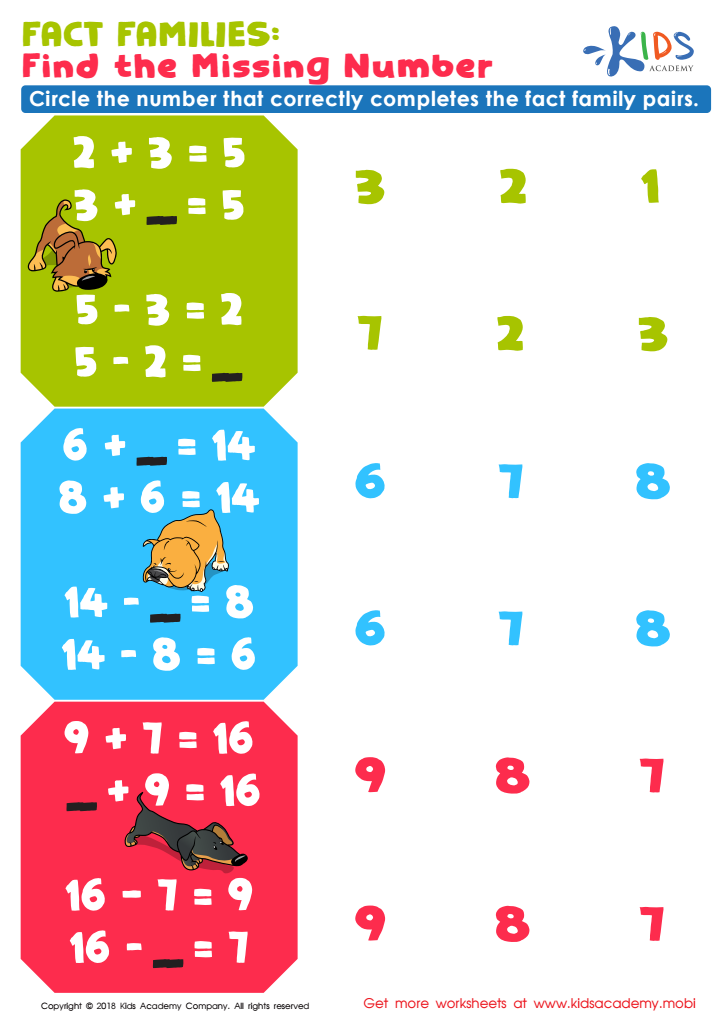
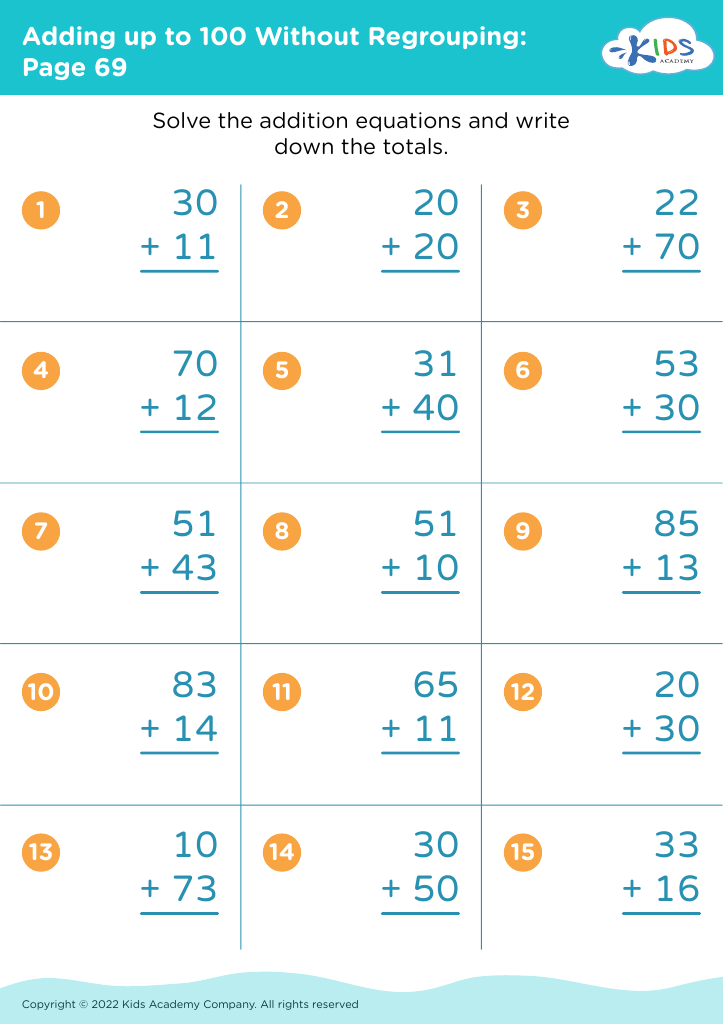
Fact Families: Find Missing Number Worksheet
 Assign to My Students







.jpg)
Enhancing problem-solving abilities in young children, particularly in the context of addition, is crucial for several reasons. Firstly, engaging in addition activities fosters critical thinking and cognitive skills that are foundational for all future learning. When children learn to solve addition problems, they develop their ability to analyze situations, think logically, and make connections between numbers—skills that are essential in everyday life.
Secondly, early mastery of addition builds confidence in children. Understanding basic math concepts helps them feel competent and prepared as they advance to more complex math tasks. Children who struggle with problem-solving may develop a fear of math that can persist into later grades, impacting their overall academic performance.
Moreover, enhancing problem-solving abilities promotes perseverance and resilience. Children learn that encountering challenges is a part of the learning process, and developing strategies to overcome these challenges is an invaluable life skill.
Lastly, educators and parents play a pivotal role in creating an environment that encourages exploration and inquiry. By emphasizing addition and problem-solving from ages 3-7, adults help lay a strong foundation that not only cultivates mathematical proficiency but also nurtures a lifelong love of learning. This holistic approach ultimately benefits children's academic growth and personal development.








