
Enhancing creativity Addition Worksheets for Ages 3-7
4 filtered results
Difficulty Level
Grade
Age
-
From - To
Subject
Activity
Standards
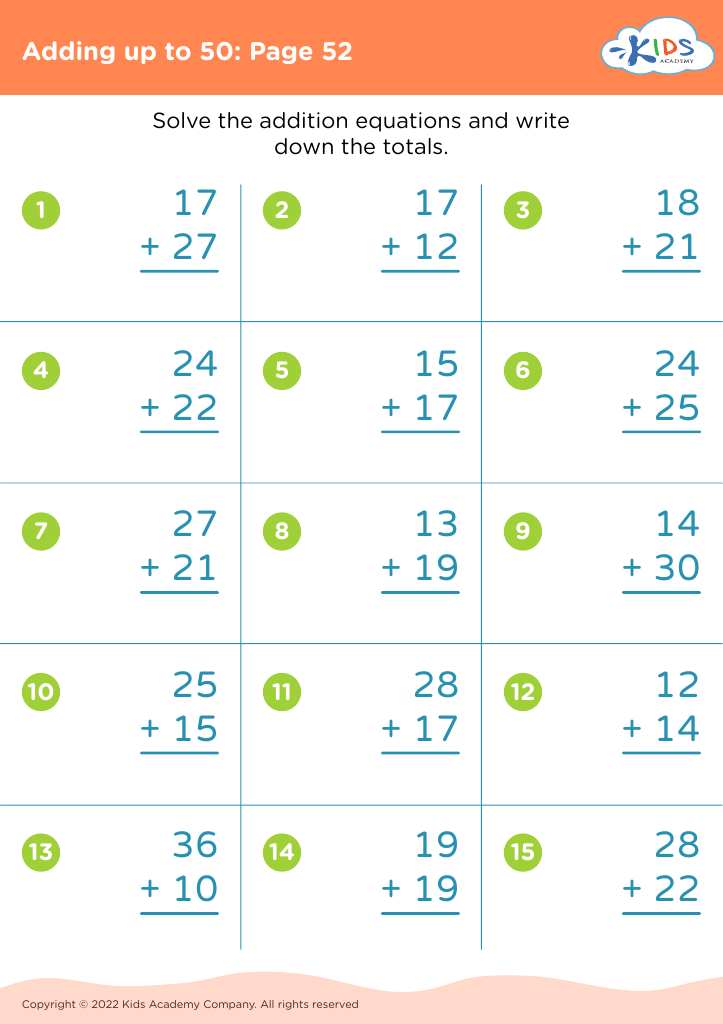
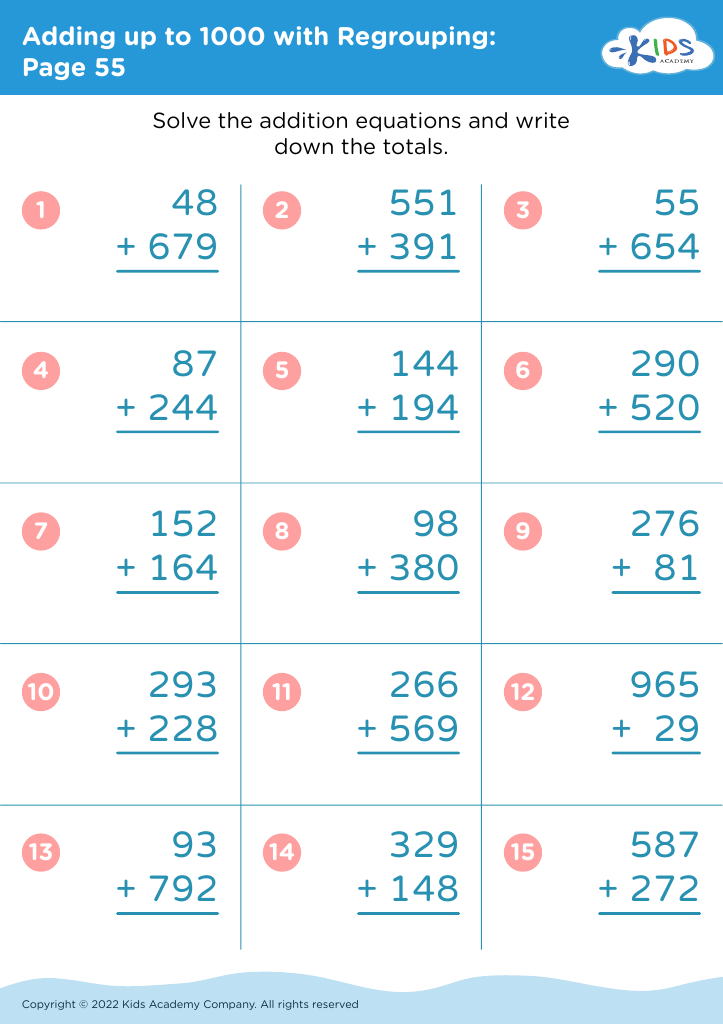
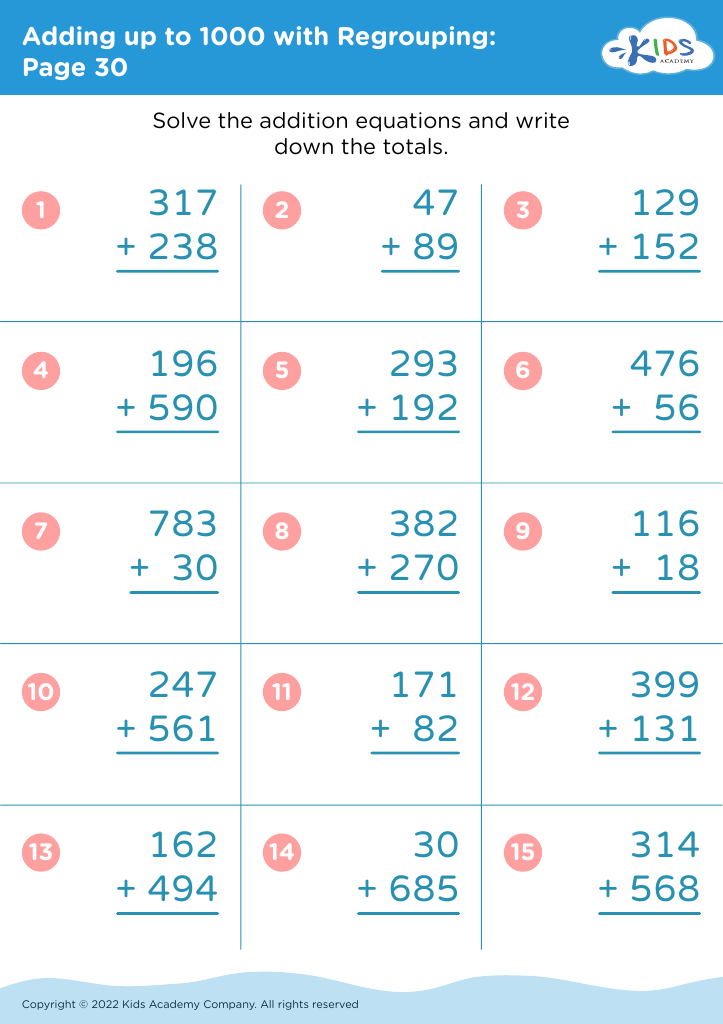
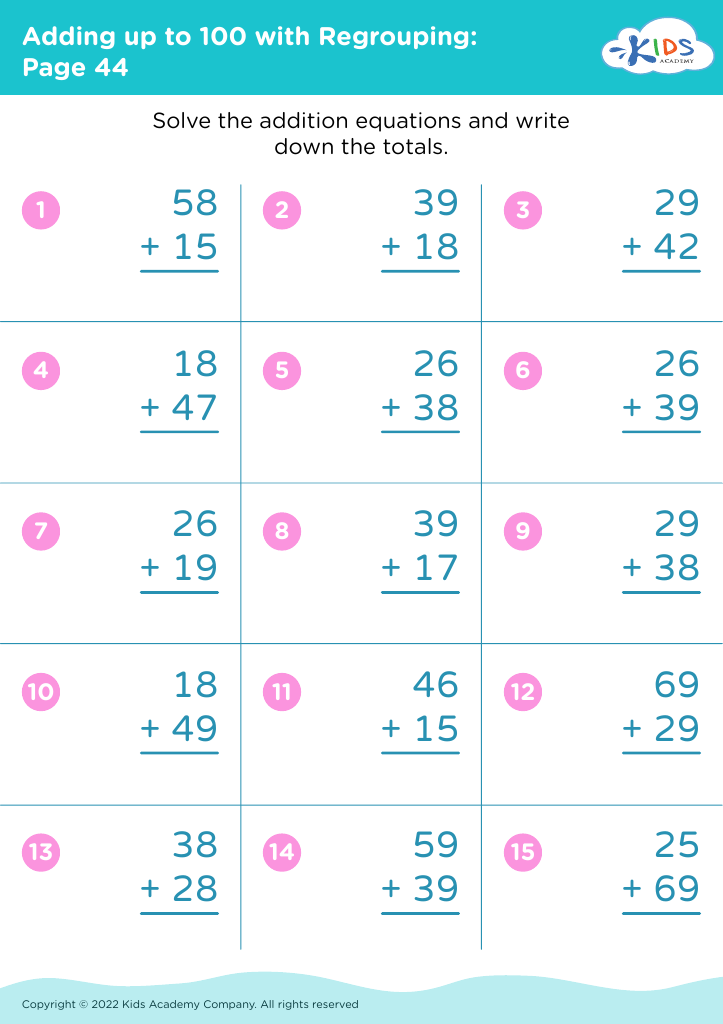
Discover our "Enhancing Creativity Addition Worksheets" designed for children aged 3-7! These engaging worksheets combine foundational math skills with creative expression, encouraging young learners to explore addition through fun, interactive activities. Packed with colorful illustrations and imaginative scenarios, each worksheet promotes critical thinking and problem-solving while maintaining a playful approach to learning. Our worksheets not only reinforce essential math concepts, but also inspire kids to use their creativity in a meaningful way. Perfect for parents and educators, these resources provide a dynamic way to foster a love for learning in early years. Let’s make math a fun and imaginative experience!
Favorites
With answer key
Interactive
Join Kids Academy for Free
Who is primarily going to use this learning content?








Enhancing creativity in children aged 3-7 is vital for their holistic development. During these early years, children are naturally curious and imaginative, and nurturing their creativity helps foster critical cognitive, social, and emotional skills. Engaging in creative activities—such as art, music, and storytelling—encourages problem-solving and innovative thinking, driving a growth mindset that is essential for lifelong learning.
Furthermore, creativity enhances language development, as children express ideas and emotions in varied ways, boosting their vocabulary and communication skills. It also encourages collaboration and teamwork, as kids often work together on creative projects, teaching them valuable social skills.
Teachers and parents play a crucial role in this developmental phase. By providing resources and opportunities for creative exploration, they help children gain confidence in their abilities and express themselves authentically. Inquiry-based learning stimulates curiosity and allows children to explore subjects deeply, tying creativity to academic success.
Additionally, fostering creativity in young children promotes resilience and flexibility, skills that are immensely valuable in an ever-evolving world. Thus, prioritizing creativity in educational and home environments not only enriches young learners’ experiences but also prepares them for future challenges in both education and life.








