Enhancing focus Addition Worksheets for Ages 3-7
4 filtered results
-
From - To
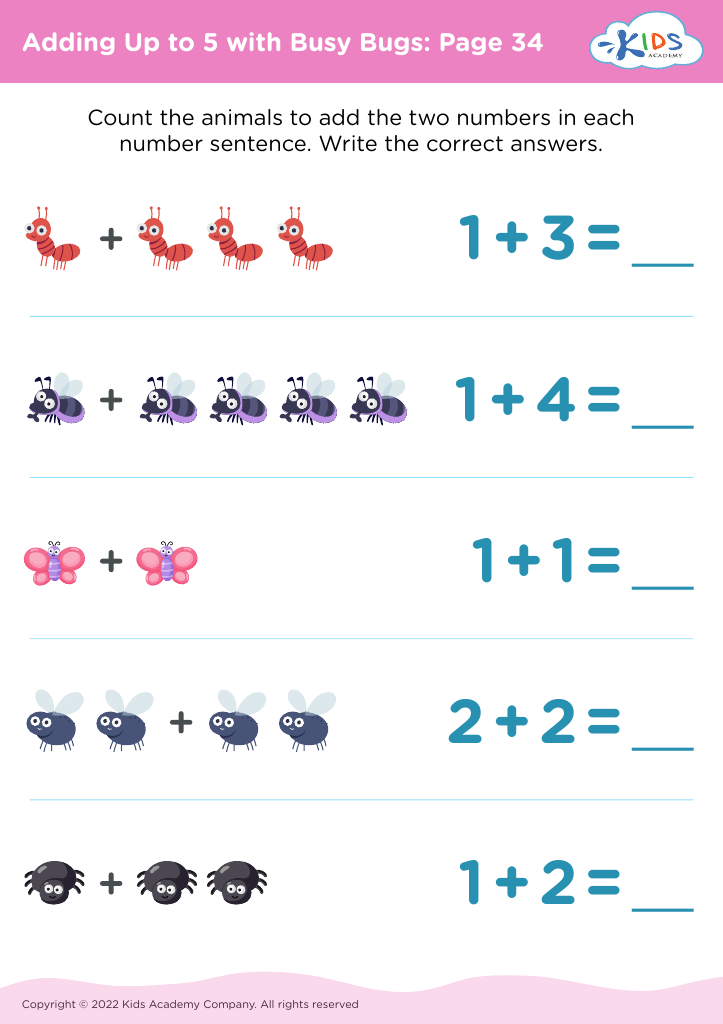
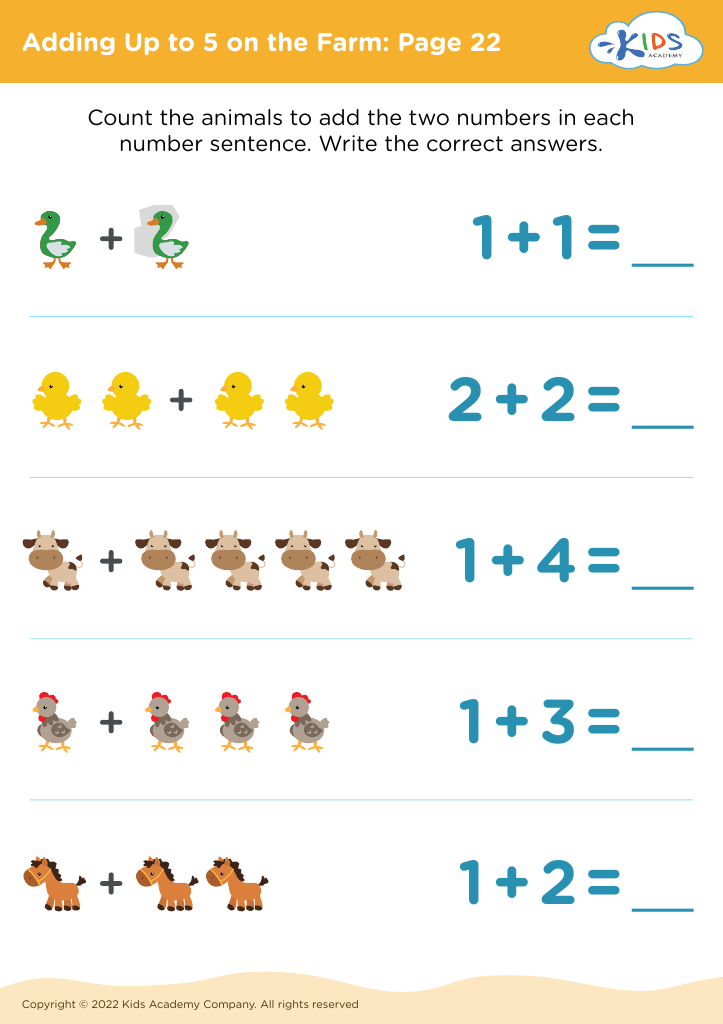
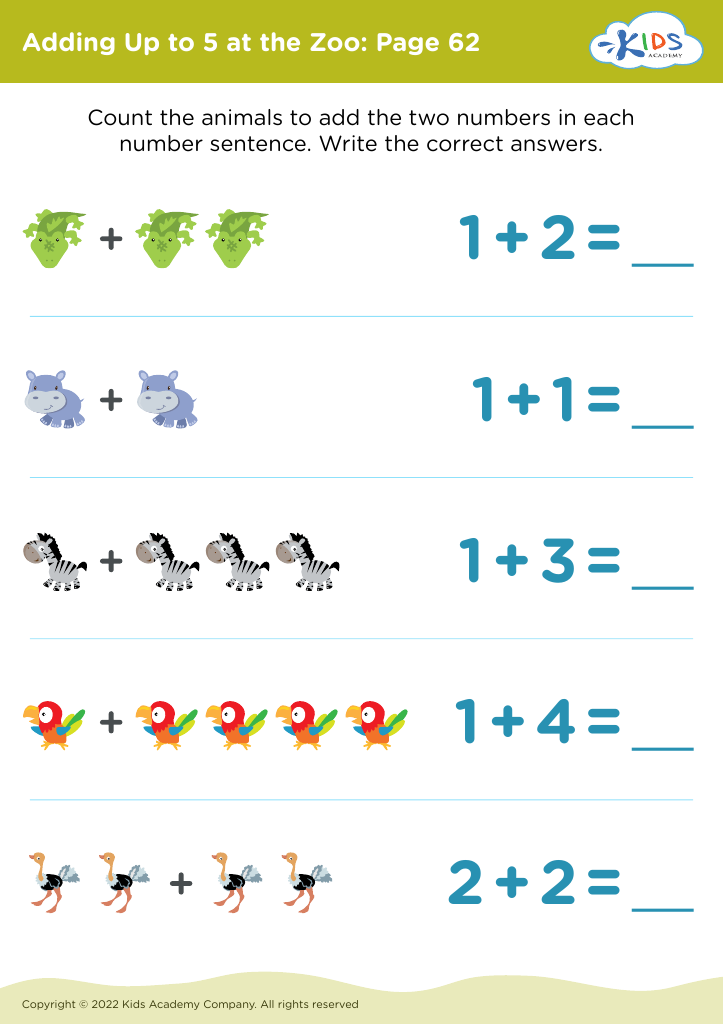
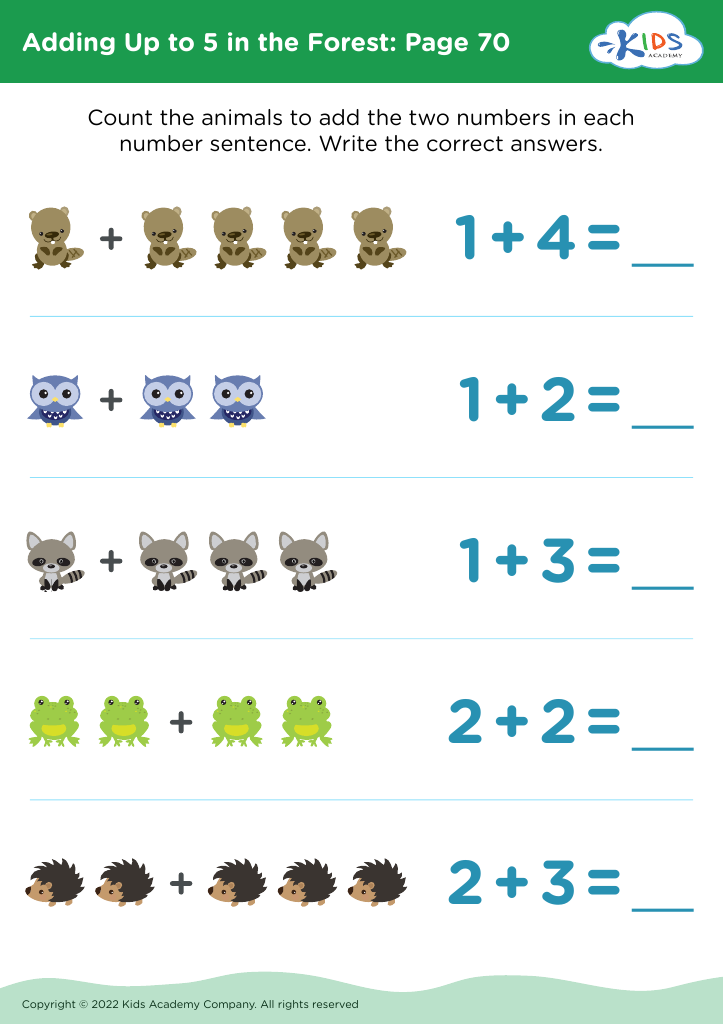
Welcome to our "Enhancing Focus Addition Worksheets" tailored for young learners aged 3-7! These expertly designed worksheets provide engaging, interactive exercises that not only teach basic addition concepts but also encourage concentration and focus. Each activity is created to captivate children's imaginations while fostering essential math skills. Our worksheets are perfect for parents and teachers aiming to enhance early math education in a fun, supportive environment. By integrating playful elements with focused learning, these resources help kids improve their attention spans and problem-solving abilities. Discover the joy of learning addition with our stimulating worksheets today and watch your students thrive!








Enhancing focus for young children aged 3-7 is crucial as it lays the foundation for their academic and social development. At this age, brain development is rapid, and fostering focus helps boost cognitive skills such as problem-solving, memory, and critical thinking. Children with better concentration are more likely to engage in classroom activities, follow instructions, and participate actively, which leads to improved learning outcomes.
Moreover, enhancing focus helps children manage distractions in a world filled with stimuli. It equips them with skills to successfully navigate their environment and develop self-regulation. Focused children often display greater emotional resilience, which can lead to healthier interactions with peers and teachers.
For parents and teachers, fostering focus can reduce frustration during learning activities, making them more enjoyable. Simple strategies like short, structured tasks, interactive games, and mindful breathing can help sustain attention while also developing a sense of accomplishment in young learners. Ultimately, by prioritizing enhanced focus in early childhood education, we cultivate lifelong skills that promote academic success, personal growth, and a love of learning. This investment brings lasting benefits well beyond the classroom, shaping well-rounded individuals prepared for future challenges.








