Fine Motor Skills (coloring) Addition Worksheets for Ages 3-7
6 filtered results
-
From - To
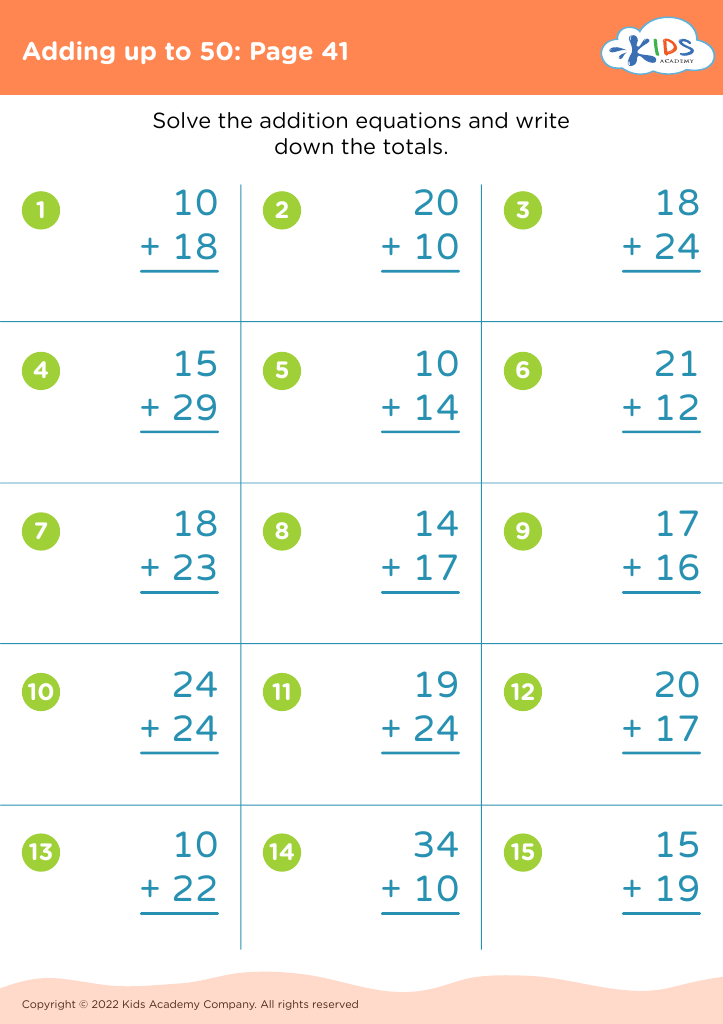
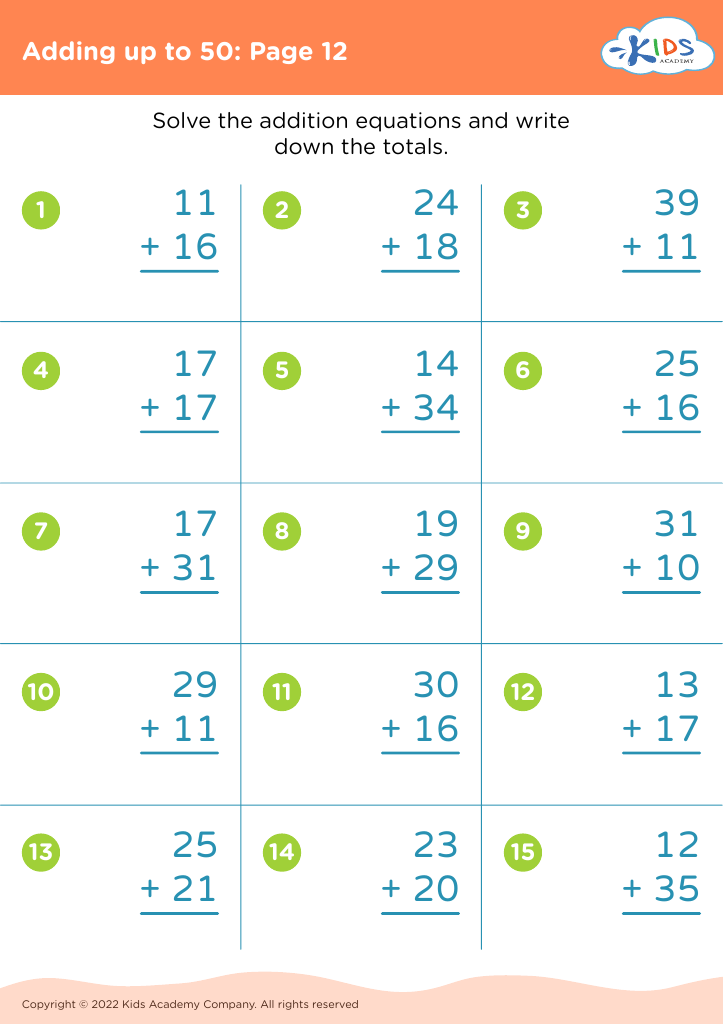
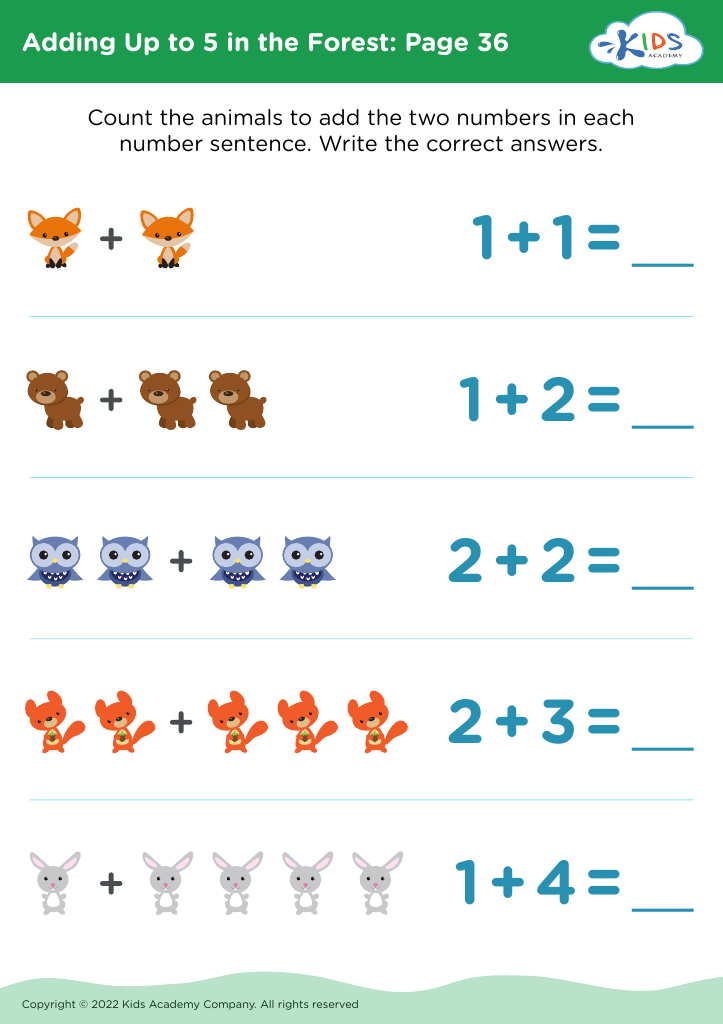
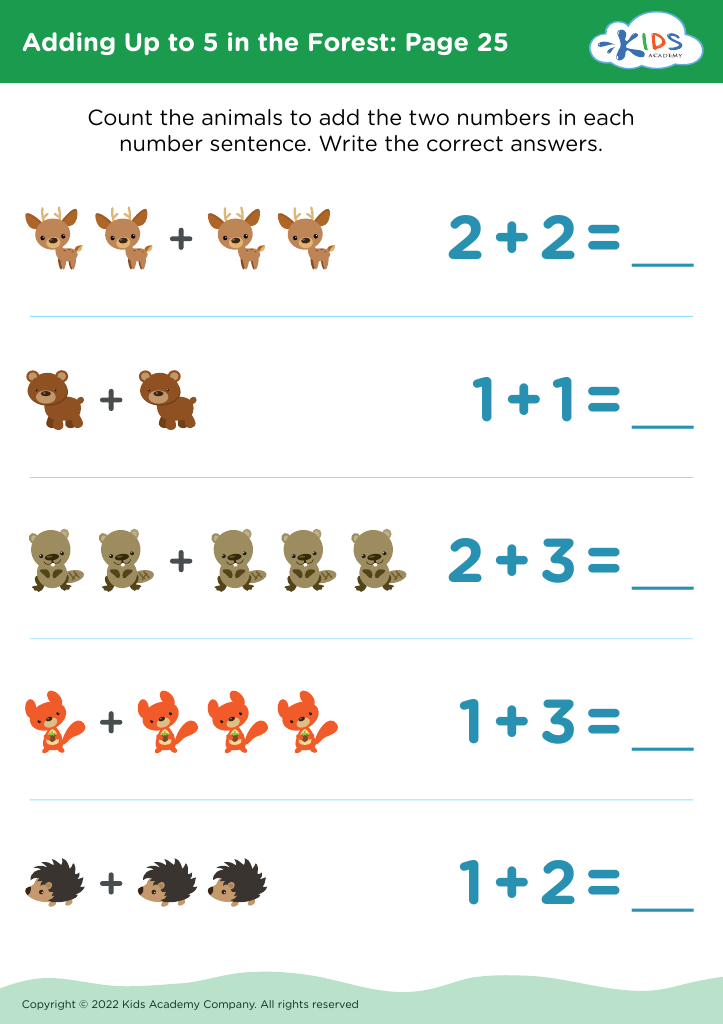
Enhance your child’s fine motor skills while introducing them to the basics of addition with our engaging coloring worksheets designed for ages 3-7. These printable activities are crafted to combine learning with creativity, making math fun and interactive. Children will enjoy coloring while they solve simple addition problems, promoting hand-eye coordination and dexterity. Each worksheet features colorful designs and easy-to-follow instructions that encourage young learners to practice math in an enjoyable way. Perfect for at-home learning or classroom settings, these worksheets will help your child build essential skills while fostering a love for learning through play. Download now for endless fun!
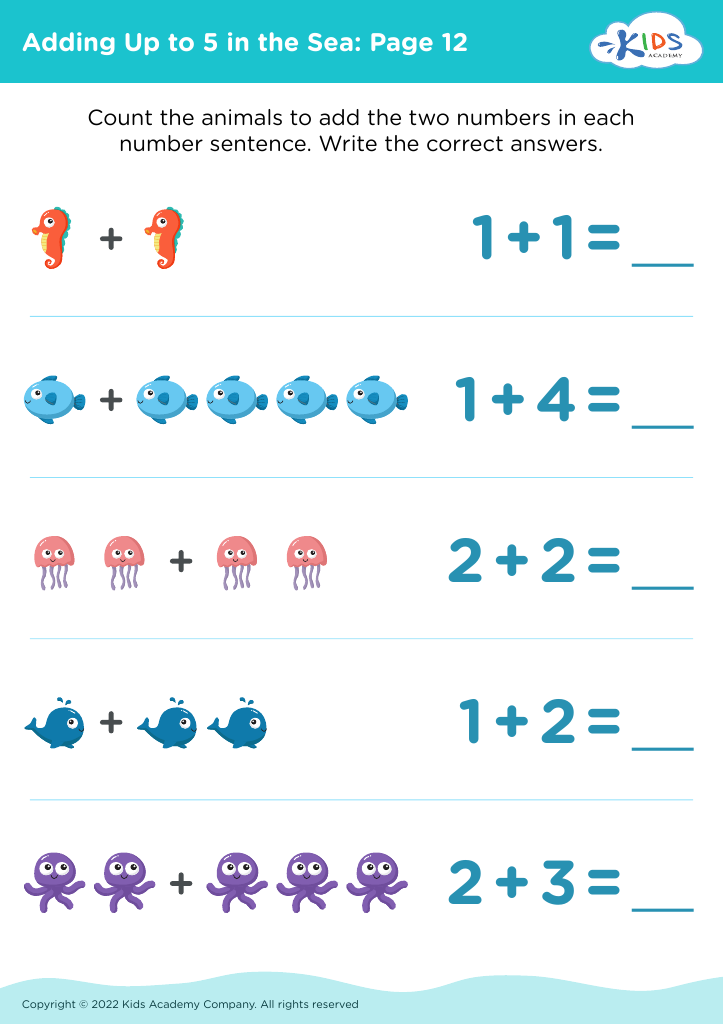
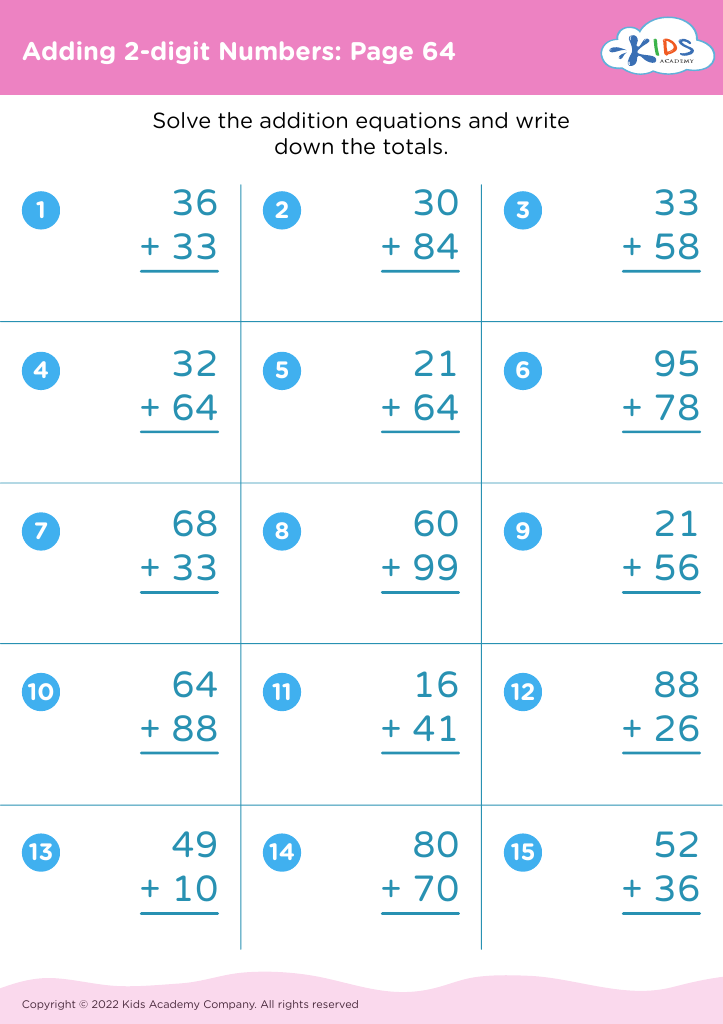








Fine motor skills, essential for tasks like coloring, are crucial for children aged 3 to 7 as they lay the foundation for lifelong learning and development. Engaging in coloring activities fosters dexterity and hand-eye coordination, enabling children to control crayons, pencils, and brushes effectively. These skills not only enhance a child’s ability to write later but also contribute to their readiness for more complex activities like cutting, tying shoelaces, and using utensils.
Moreover, coloring encourages creativity and self-expression. As children experiment with colors and designs, they explore their imaginations, which is vital for cognitive development. It also aids in improving concentration and focus, as kids learn to pay attention to their work, which can positively influence their learning experiences in school.
From a socio-emotional perspective, coloring allows for mindfulness, helping children to express their feelings and relieve stress. It offers opportunities for parental or teacher interaction, promoting communication and bonding. By nurturing fine motor skills through coloring, parents and teachers are investing in a child’s overall development, paving the way for academic success and healthy emotional growth as they transition through early education.








