Hand-eye Coordination Addition Worksheets for Ages 3-7 - Page 2
25 filtered results
-
From - To
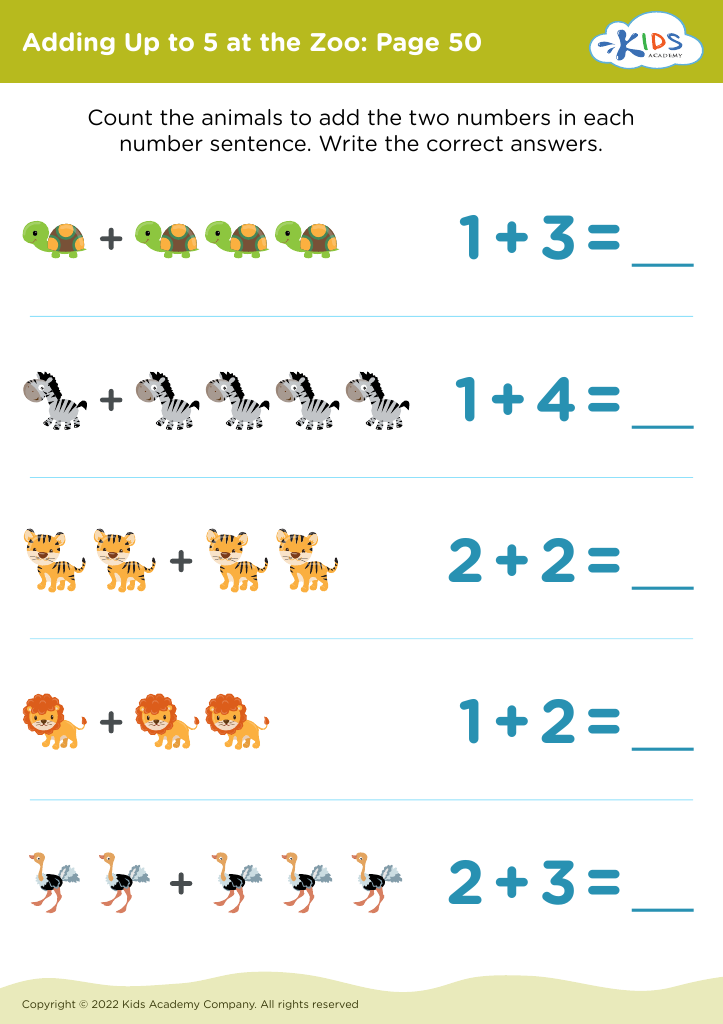








Hand-eye coordination is a crucial skill for children aged 3-7 as it lays the foundation for a range of developmental milestones. For parents and teachers, fostering this skill is essential for enhancing children's physical, cognitive, and social abilities. Hand-eye coordination plays a significant role in daily activities such as writing, drawing, and playing sports. These activities not only improve fine motor skills but also help in developing concentration and focus.
Engaging children in hand-eye coordination activities promotes brain development and spatial awareness. As they perform tasks that require this skill—like throwing a ball or catching a toy—they are learning to make quick decisions and improving their reaction times. This improvement translates to greater confidence in their abilities, which can have a positive impact on their self-esteem.
Furthermore, hand-eye coordination activities can be fun and social, encouraging collaboration and communication among peers. With increased interaction, children learn to work together, sharing ideas and playing creatively.
Ensuring children develop strong hand-eye coordination makes them more prepared for the academic challenges ahead, ultimately setting the stage for lifelong learning and success. Parents and teachers should prioritize activities that enhance this vital skill to help children thrive both in and out of the classroom.








