Learning number patterns Addition Worksheets for Ages 3-7
3 filtered results
-
From - To
Discover our engaging "Learning Number Patterns Addition Worksheets" designed specifically for children aged 3-7. These worksheets provide a fun and interactive way for young learners to grasp the fundamentals of addition through essential number patterns. With colorful illustrations and age-appropriate exercises, kids can enjoy practicing essential math skills while developing critical thinking and problem-solving abilities. Our resources cater to different learning styles, ensuring every child can thrive in their mathematical journey. Perfect for both classroom use and home learning, these worksheets help lay a strong foundation for a lifetime of numeracy skills. Start your child’s math adventure today!
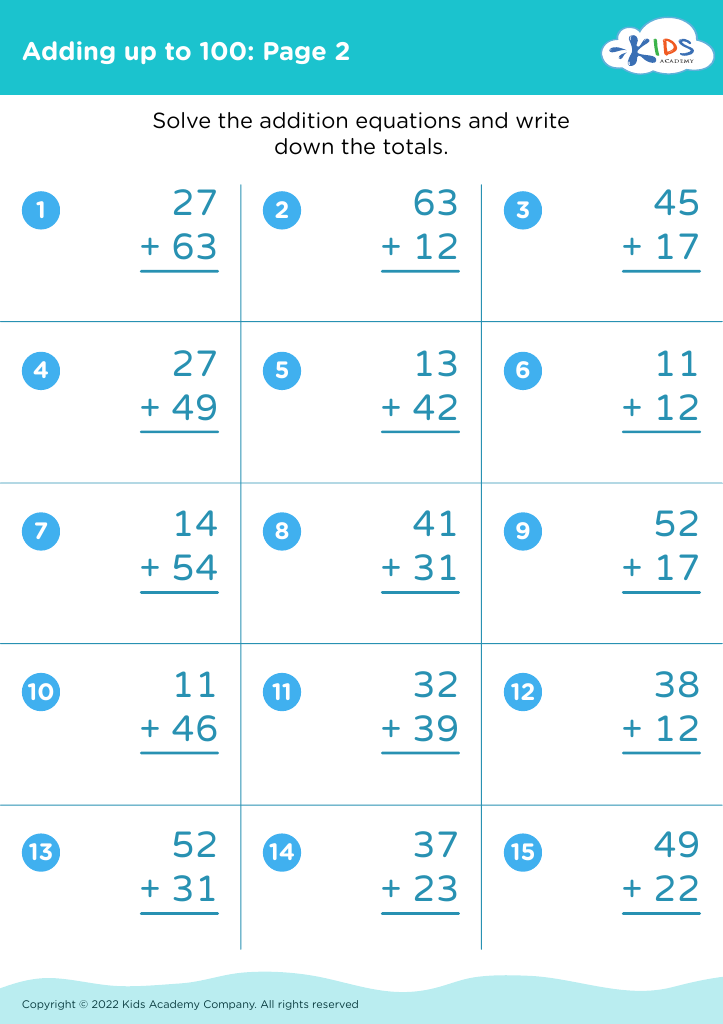
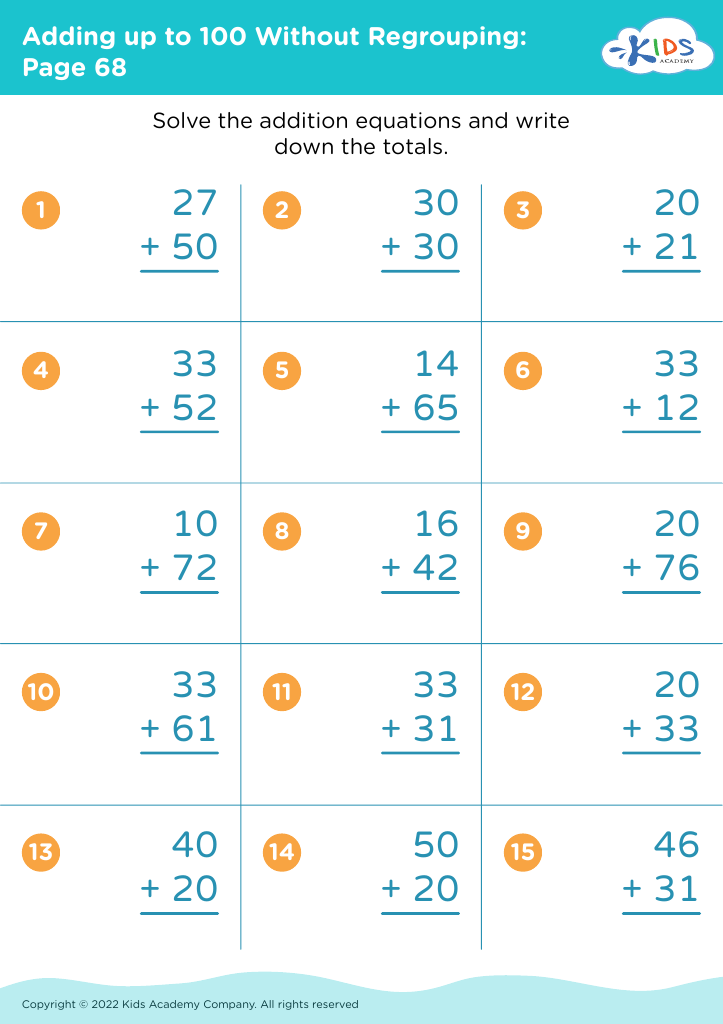
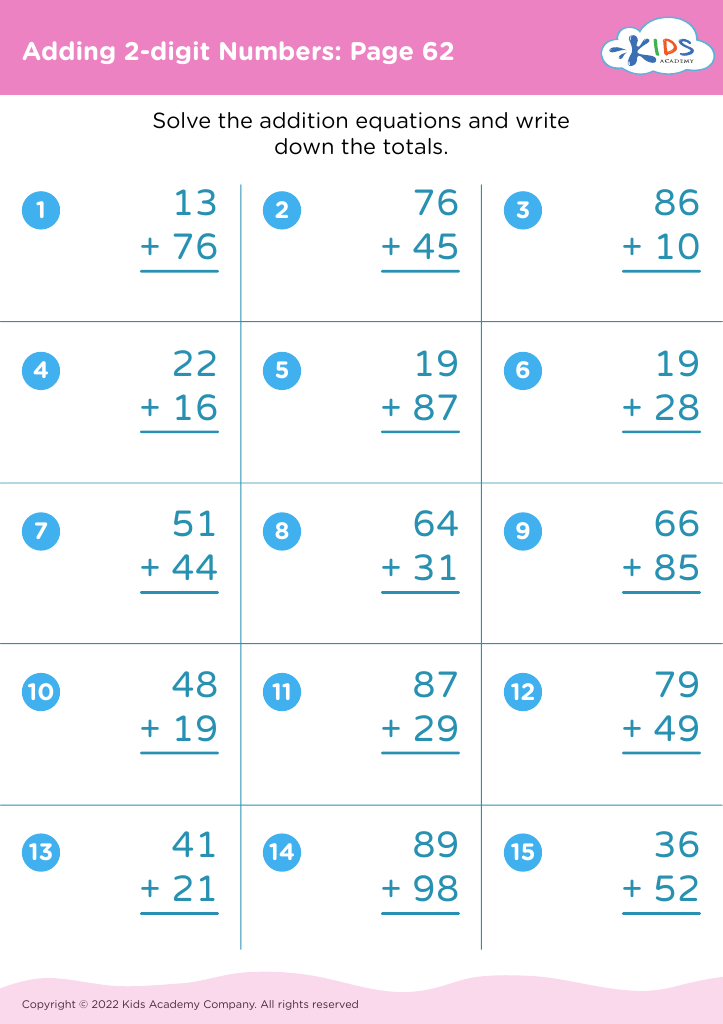








Learning number patterns in addition is essential for children ages 3-7 as it lays the groundwork for their mathematical development. At this age, children are naturally curious and eager to explore numbers. Recognizing and understanding patterns helps them make connections between numbers, enhancing their ability to problem-solve and manipulate quantities.
Understanding number patterns also aids children in developing their addition skills. By recognizing sequences, such as even and odd numbers, they can predict outcomes and apply logic to solve problems more efficiently. This intuitive grasp of numbers boosts their confidence and encourages a positive attitude toward math.
Furthermore, learning number patterns fosters critical thinking and cognitive skills. As children identify and extend patterns, they learn to analyze and draw conclusions. This foundational skill is vital not only in mathematics but also in other subjects. Moreover, activities involving patterns can enhance fine motor skills and encourage collaborative learning when done in groups.
In essence, caring about teaching number patterns in addition empowers children to build a strong mathematical framework, enhances their cognitive abilities, and instills a lifelong love of learning. With early support from parents and teachers, children can develop the confidence and skills needed for future academic success.








