Logical thinking Addition Worksheets for Ages 3-7
9 filtered results
-
From - To
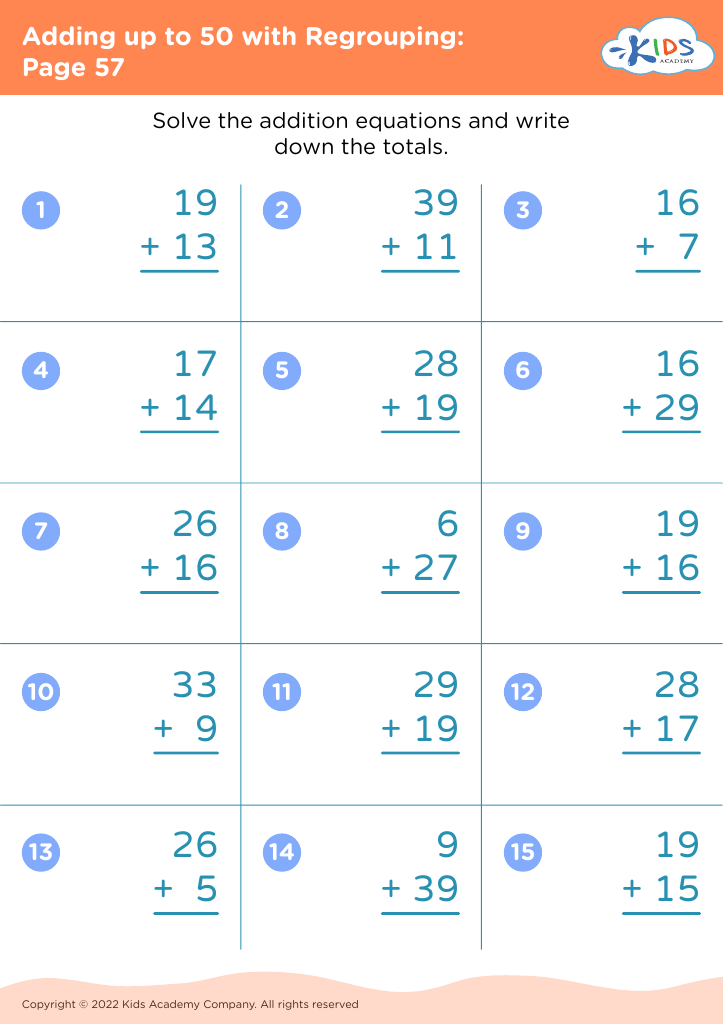
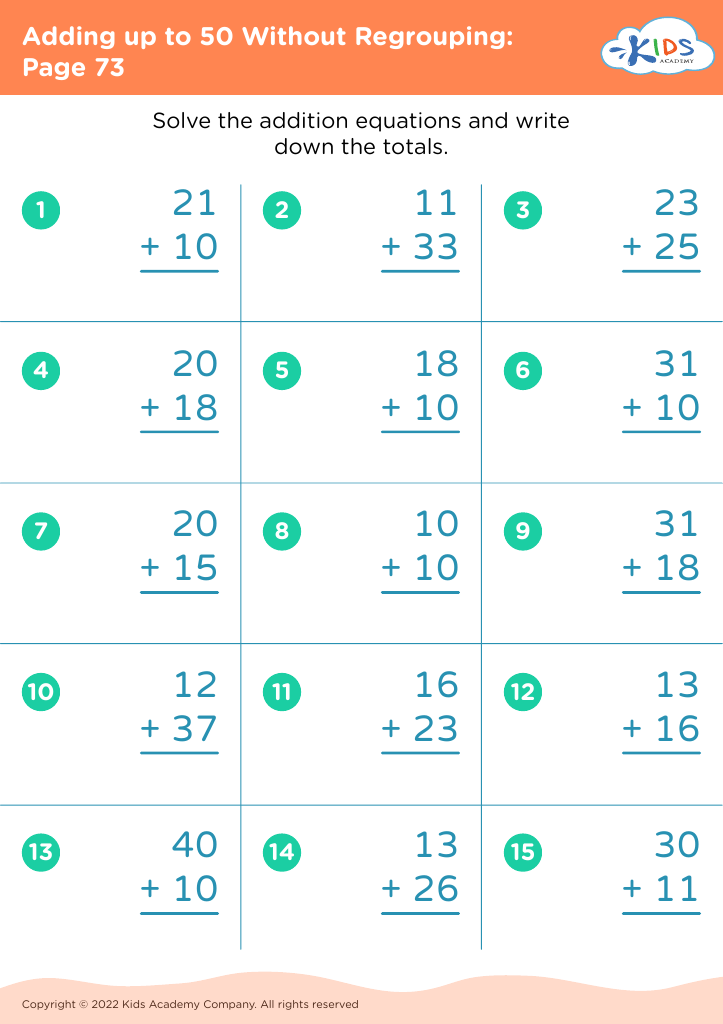
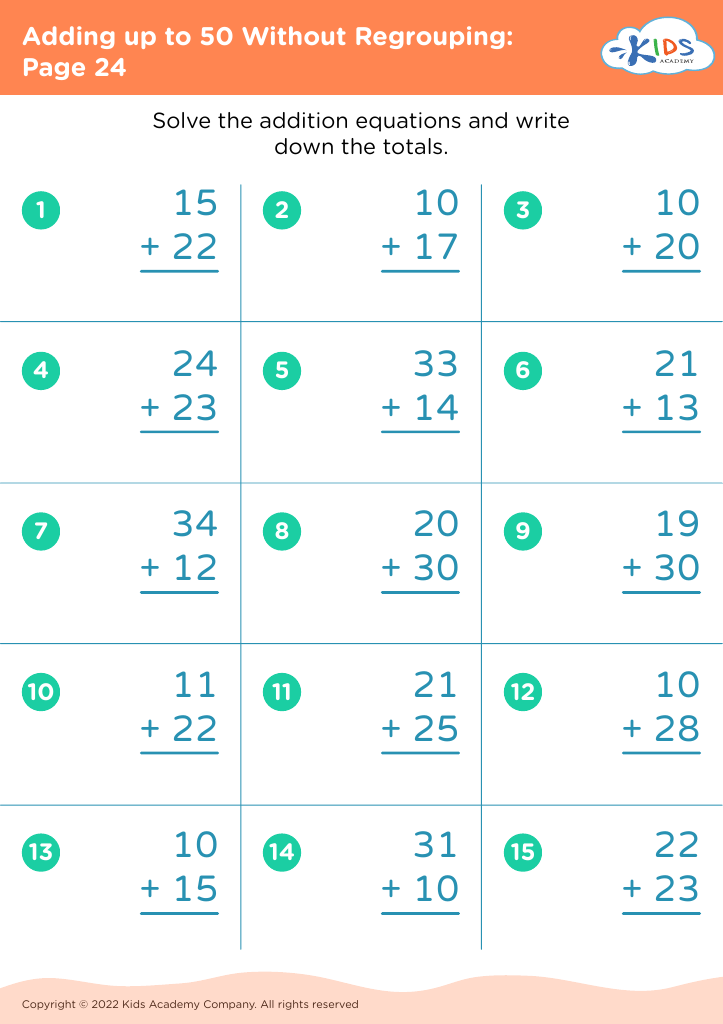
Discover our engaging "Logical Thinking Addition Worksheets" designed for children aged 3-7! These worksheets provide a fun and interactive way for young learners to enhance their addition skills while fostering logical thinking. Each activity encourages critical reasoning and problem-solving through colorful visuals and relatable scenarios. Perfect for home or classroom use, our worksheets help children understand basic math concepts while developing essential cognitive abilities. Whether it's counting objects, solving simple problems, or recognizing patterns, these resources will pave the way for a solid mathematical foundation. Empower your little ones to think critically about numbers with our thoughtfully crafted addition worksheets!
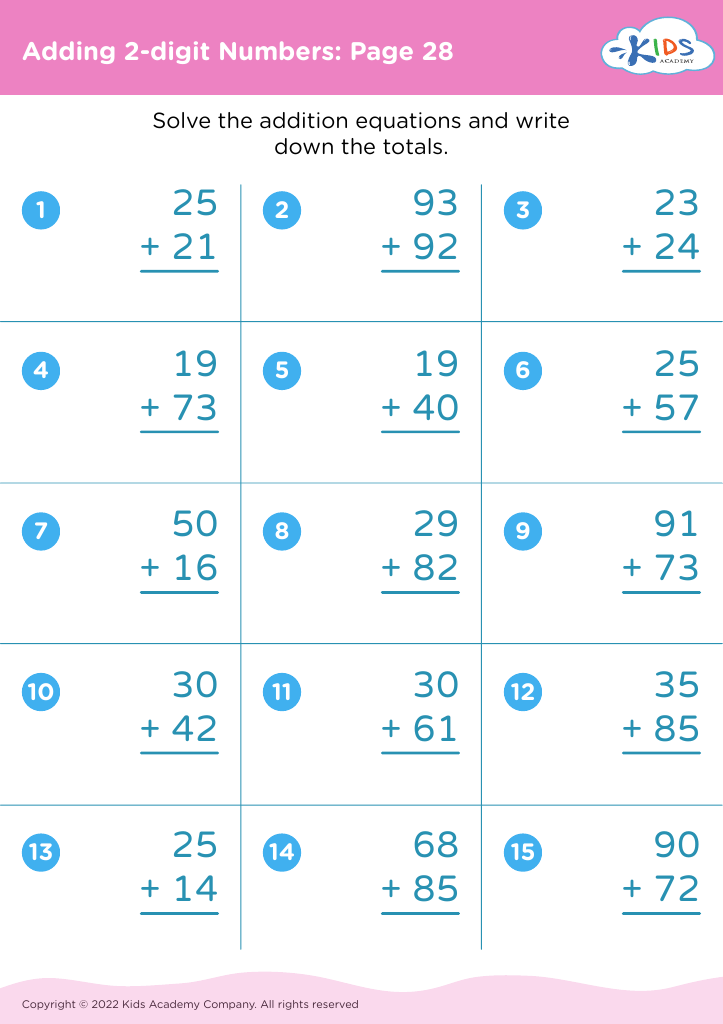
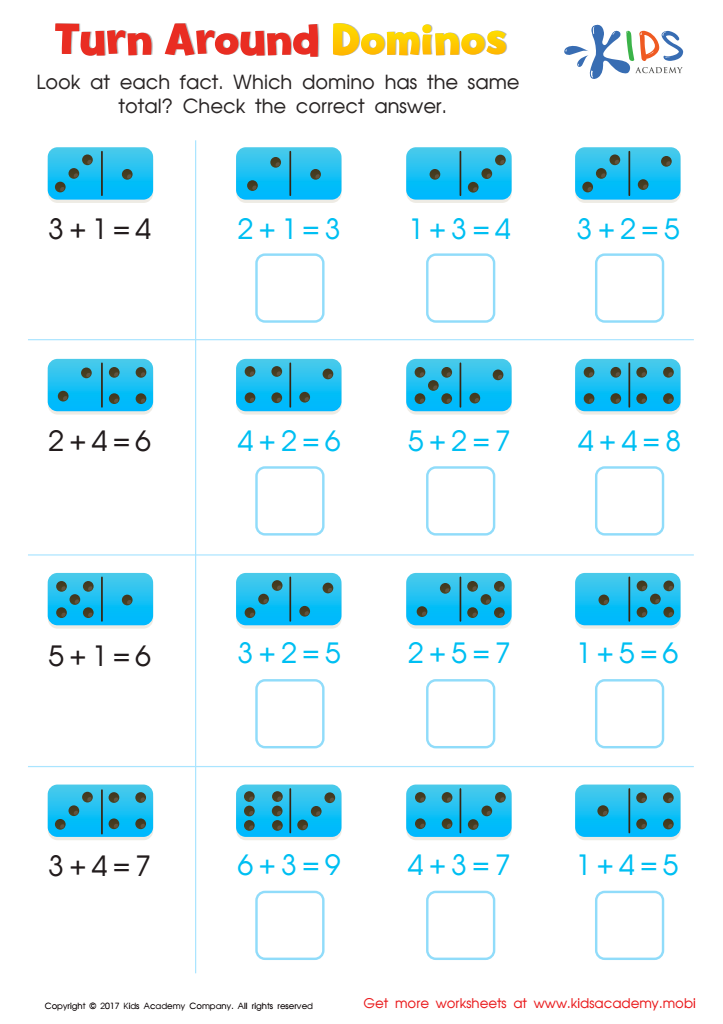
Turn Around Dominos Worksheet
 Assign to My Students
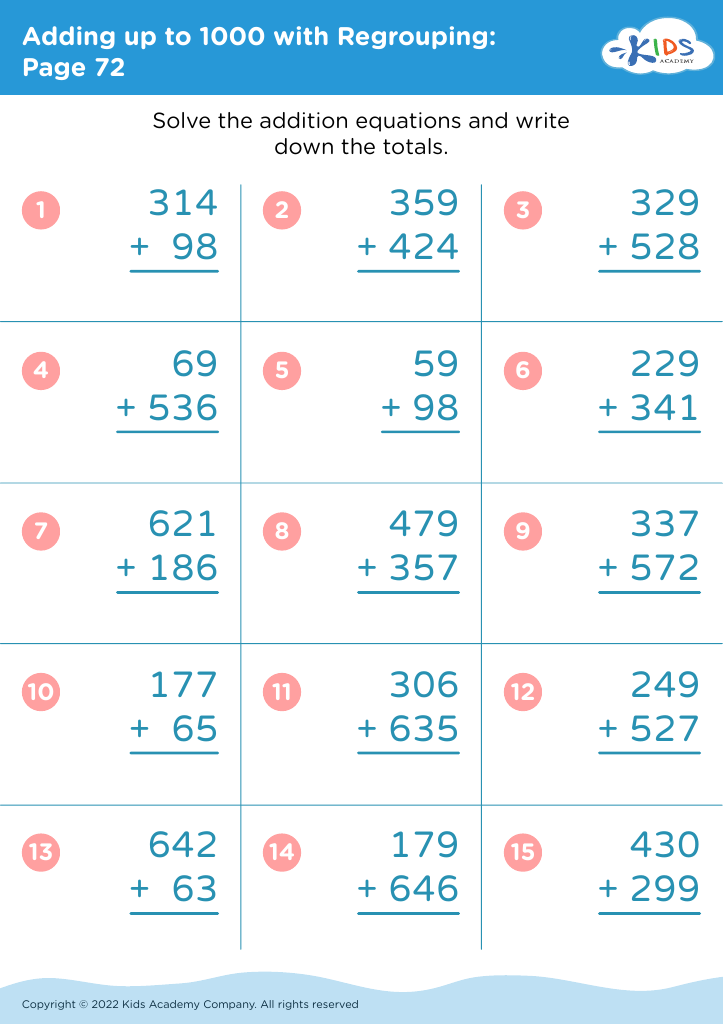
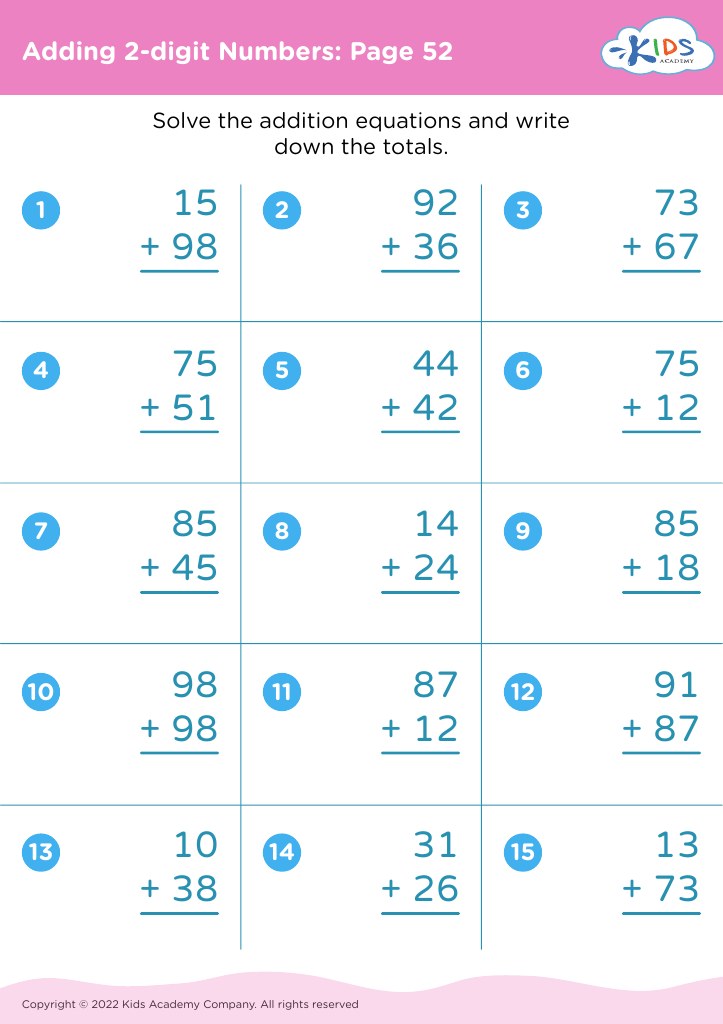
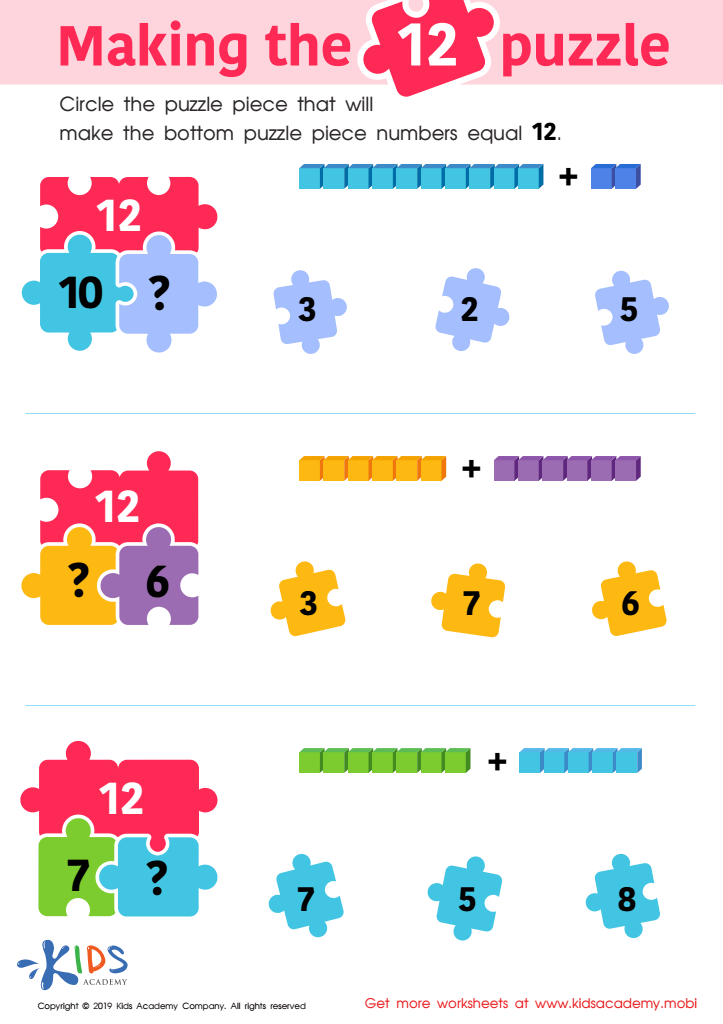
Making the 12 Puzzle Worksheet








Logical thinking is foundational for young children's cognitive development, making it essential for parents and teachers to nurture this skill, especially through activities like adding. For ages 3-7, children are naturally curious, and engaging them in logical thinking activities, such as basic addition, enhances their problem-solving capabilities and reasoning skills.
At this age, children start to develop crucial mathematical concepts, and addition serves as a stepping stone to more complex arithmetic. When children practice addition, they learn to recognize patterns, make connections, and understand relationships between numbers, which fosters cognitive skills that extend beyond math.
Moreover, logical thinking promotes a growth mindset. Children who learn to approach problems systematically tend to become more resilient and confident in their abilities. These skills also translate to other subjects, improving reading comprehension and science understanding, as they learn to analyze information and draw conclusions.
Additionally, early exposure to addition through games, manipulatives, and interactive activities can make learning enjoyable and approachable. This approach not only builds foundational math skills but also strengthens parent-child or teacher-child relationships, as they engage together in meaningful learning experiences. Ultimately, fostering logical thinking through addition lays the groundwork for lifelong learning.








