
Matching skills Addition Worksheets for Ages 3-7
3 filtered results
Difficulty Level
Grade
Age
-
From - To
Subject
Activity
Standards
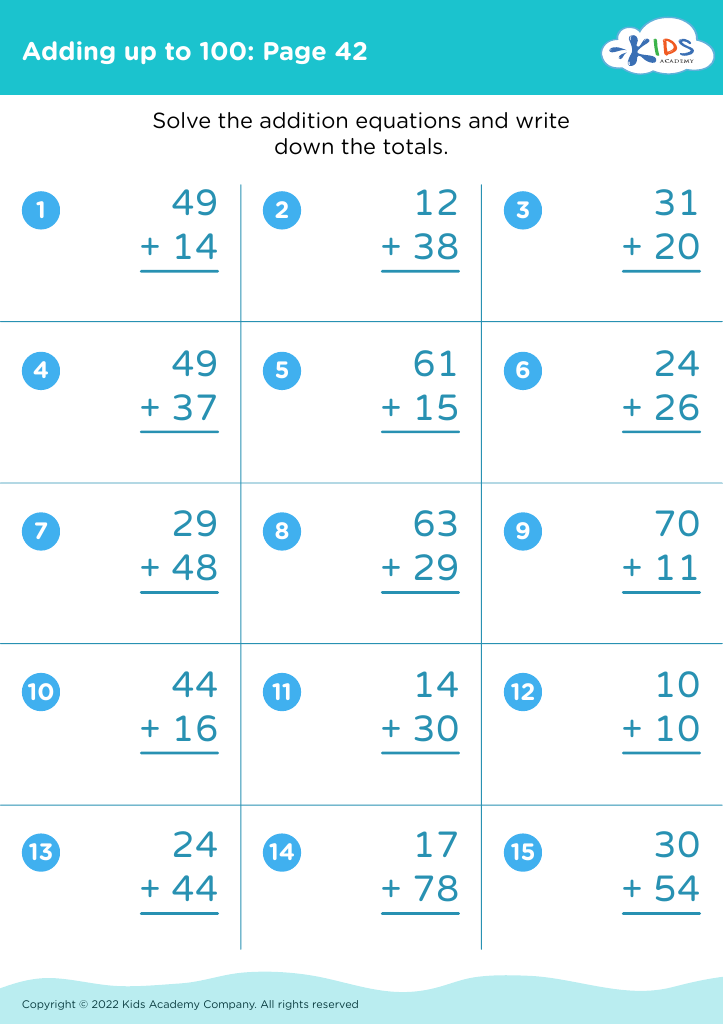
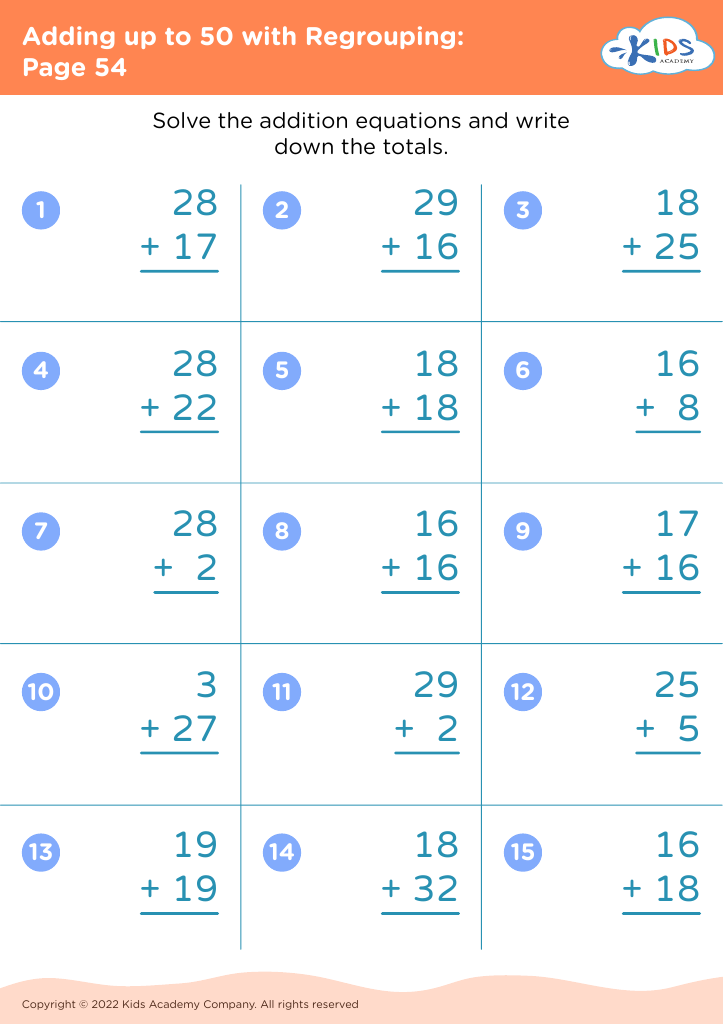
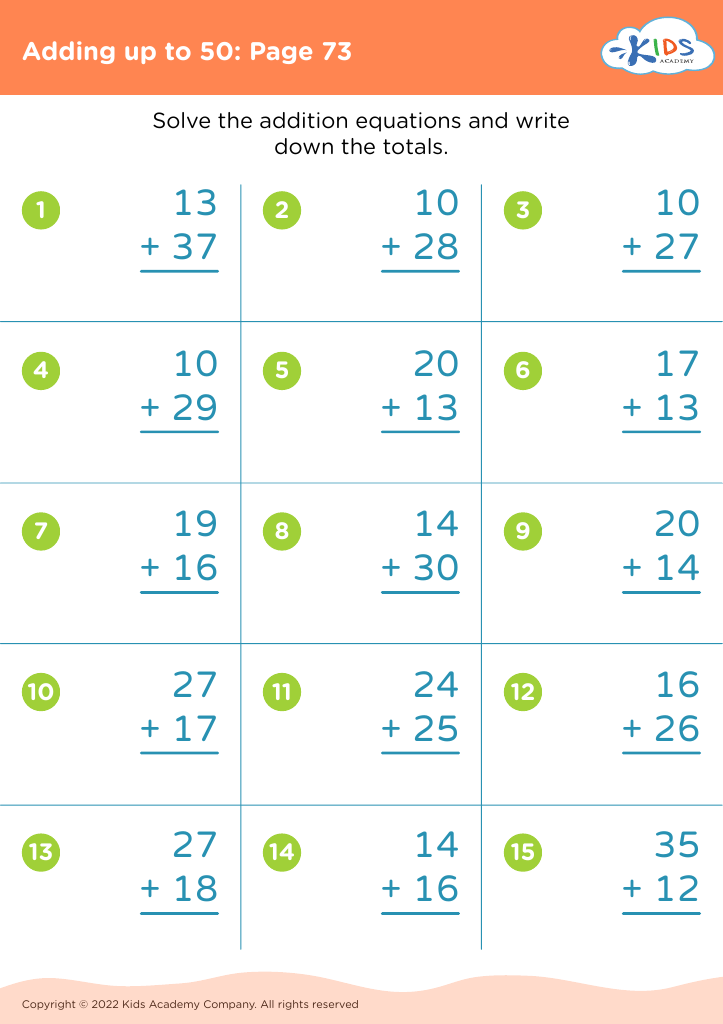
Explore our engaging Matching Skills Addition Worksheets designed for children ages 3-7! These interactive worksheets enhance young learners' understanding of basic addition while developing their matching skills. Each activity encourages children to pair numbers with corresponding visuals, making learning fun and effective. Ideal for classroom use or at-home learning, these worksheets promote cognitive development through playful exploration. Perfect for preschool and early elementary students, our resources help foster a strong foundation in math concepts. Give your child the tools to succeed in their early education journey with our thoughtfully designed addition worksheets! Start matching and learning today!
Favorites
With answer key
Interactive
Join Kids Academy for Free
Who is primarily going to use this learning content?








Matching skills in addition, particularly for ages 3-7, play a crucial role in early math development and cognitive growth. At this stage, children are beginning to understand basic concepts of quantity and numbers. By engaging in matching activities, they not only learn to associate numerals with corresponding quantities, but also enhance their problem-solving skills and critical thinking abilities.
Parents and teachers should care about these skills because they lay the foundation for more complex mathematical concepts as children progress in their education. Mastering addition through matching helps children grasp the idea of combining quantities, essential for future math tasks. Moreover, these activities can be a fun, interactive way to reinforce learning, fostering a love for numbers and mathematics that can carry on throughout school.
Additionally, developing matching skills encourages fine motor development and memory retention, critical cognitive processes at this age. Social interaction involved in group activities can further strengthen communication skills and teamwork. By emphasizing matching skills in addition, adults can help cultivate a strong foundation for future learning, ensuring children leave preschool or early grades equipped with the essential skills needed for academic success.








