Motor skills development Addition Worksheets for Ages 3-7
5 filtered results
-
From - To
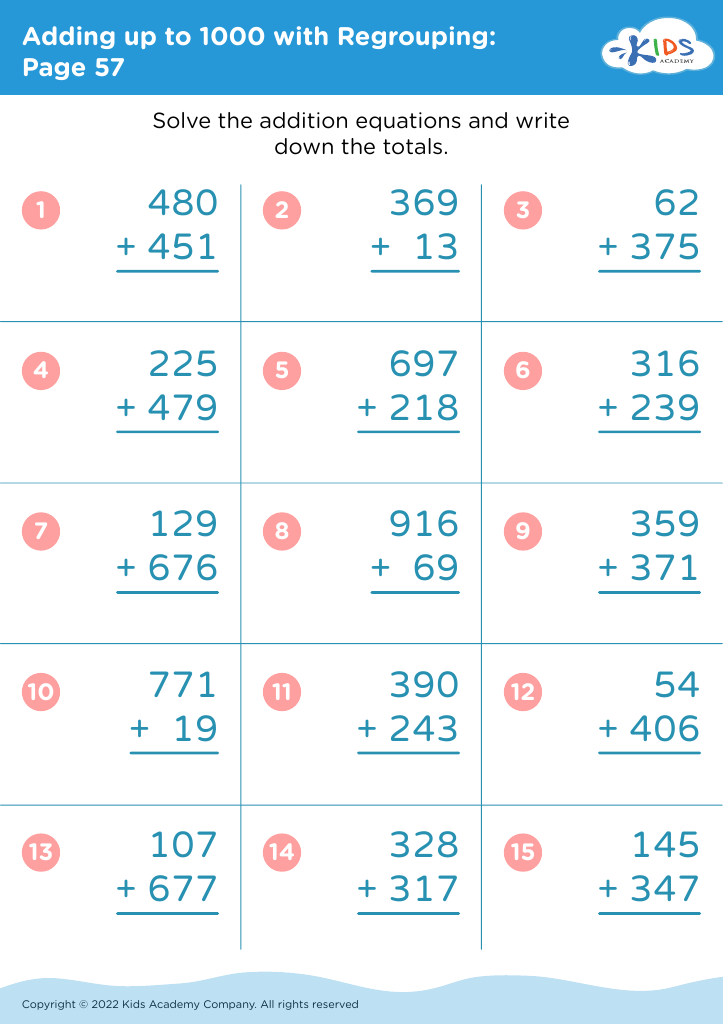
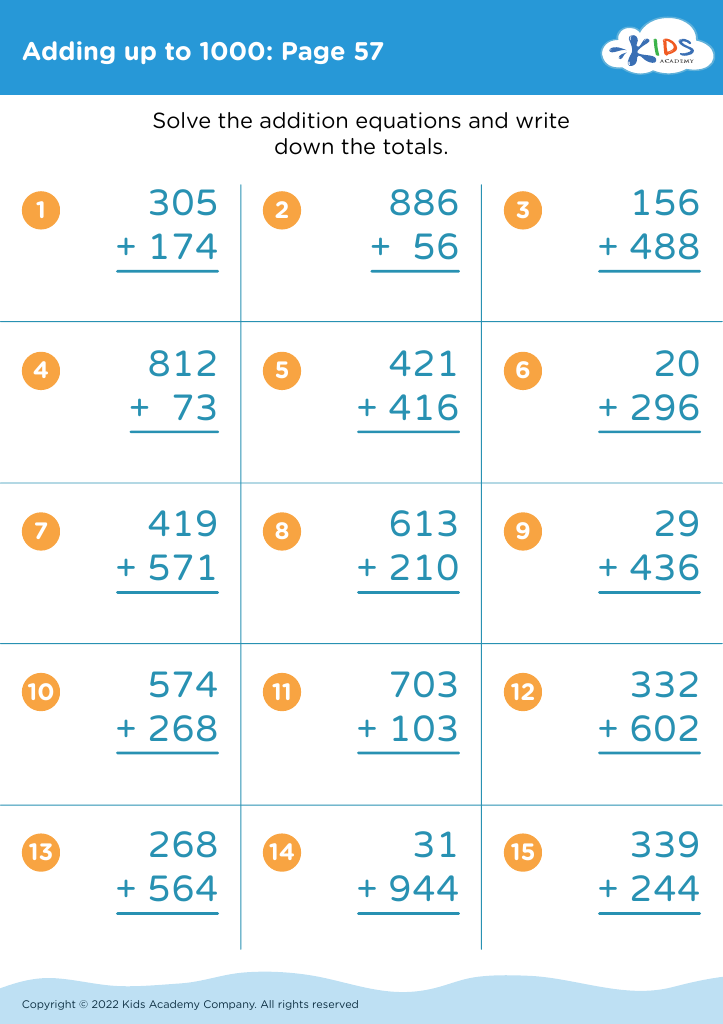
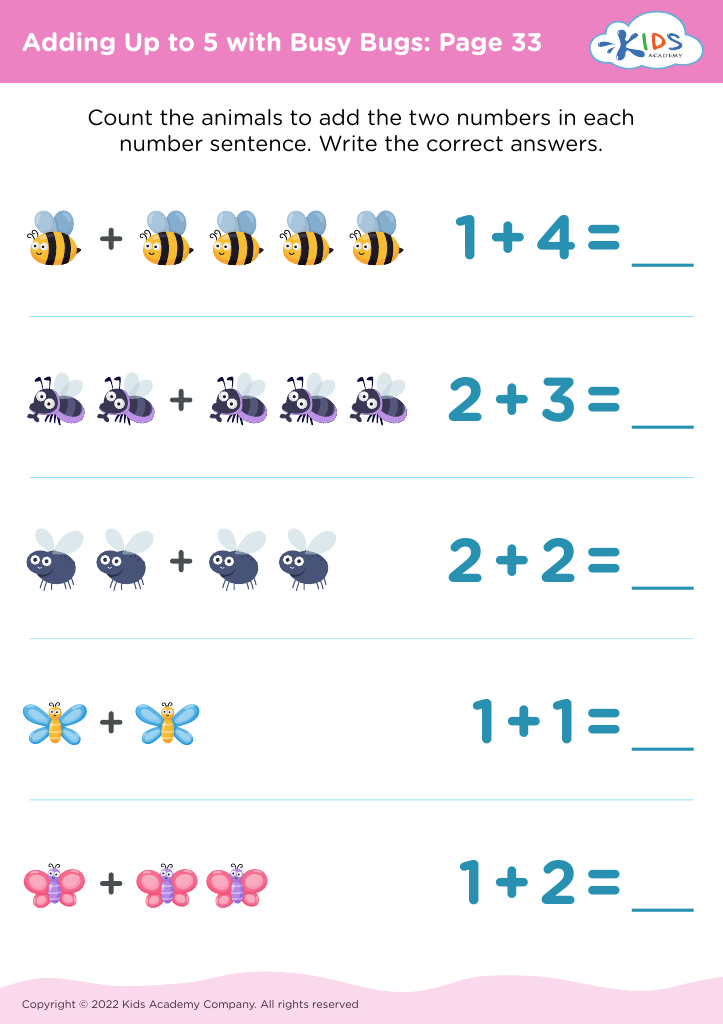
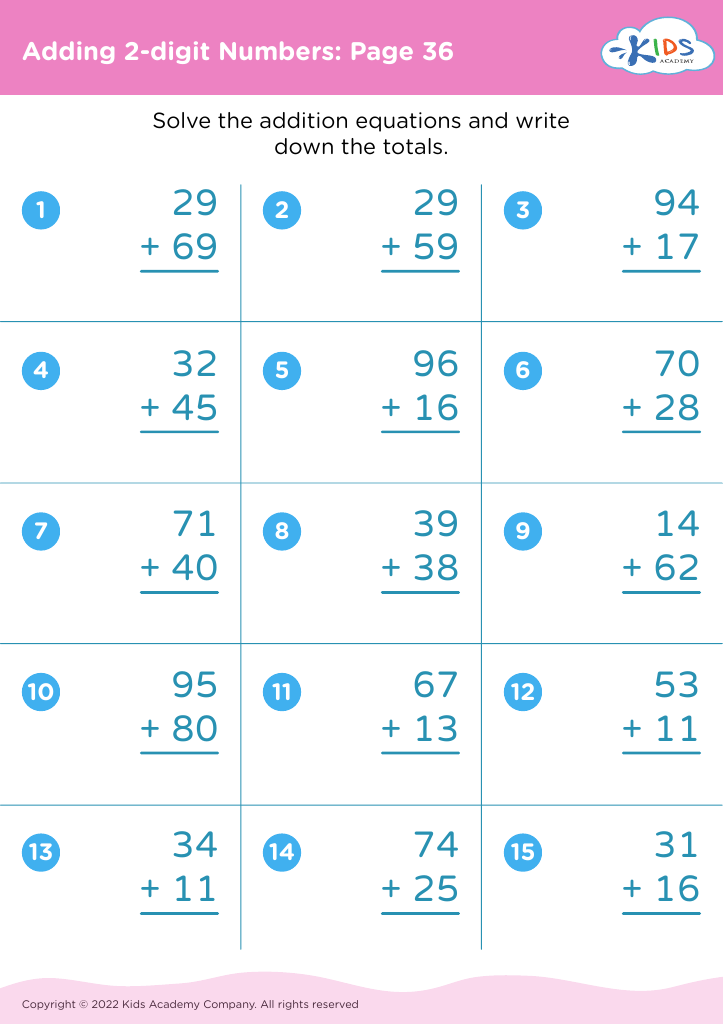
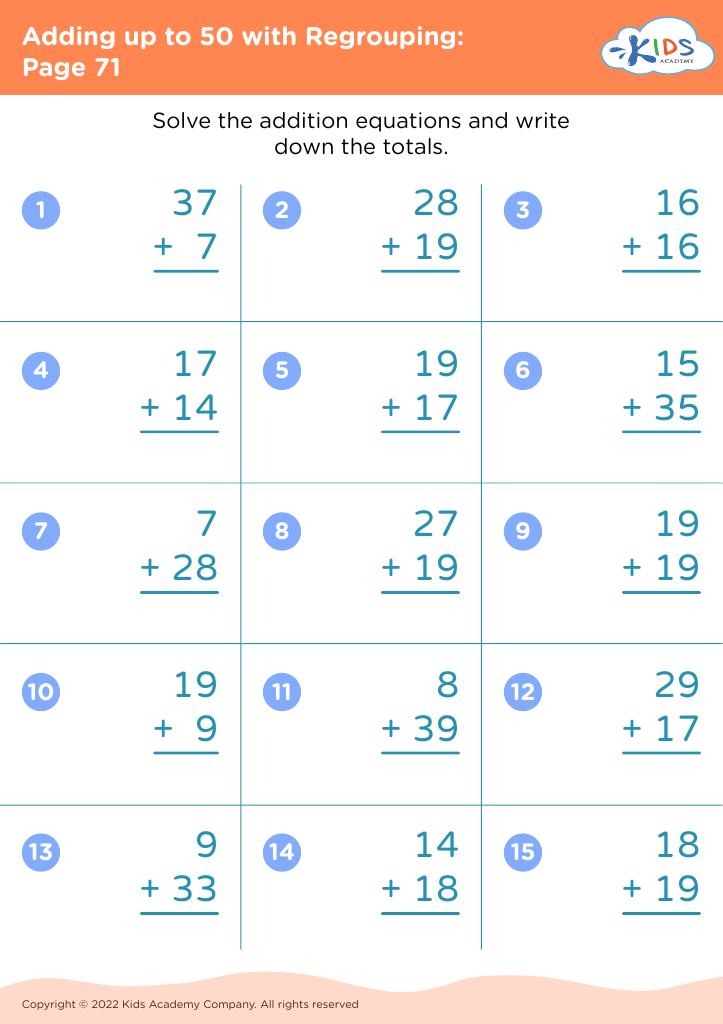
Explore our engaging Motor Skills Development Addition Worksheets specifically designed for children aged 3 to 7. These thoughtfully crafted resources combine essential early mathematics with fine motor skill practice, helping young learners develop hand-eye coordination and dexterity while they conquer addition concepts. Each worksheet features fun illustrations and interactive activities that captivate children’s attention, making learning enjoyable and effective. Perfect for home or classroom use, our worksheets support foundational math skills while promoting physical development. Empower your child’s learning journey today with our innovative addition worksheets that bridge math and motor skills for a comprehensive educational experience!



.jpg)
.jpg)



Motor skills development is crucial for children aged 3-7, as it lays the foundation for their physical, cognitive, social, and emotional growth. During this stage, children are rapidly developing both gross motor skills (such as running, jumping, and climbing) and fine motor skills (like holding a pencil or buttoning a shirt). These skills are essential for everyday activities and play a significant role in a child's ability to interact with their environment and peers.
Parents and teachers should care about this development because strong motor skills enhance a child's confidence and independence. Proficient motor skills allow children to engage in physical activities, which promotes a healthy lifestyle and combats obesity. Moreover, fine motor skills are directly linked to academic success; for example, they are necessary for writing and manipulating tasks in the classroom.
Encouraging motor skills through play and structured activities fosters creativity and critical thinking, foundational components for lifelong learning. Furthermore, as children navigate social interactions during play, they practice sharing, taking turns, and collaborating, which enhances their social skills. In essence, supporting motor skills development is not just about physical capability; it contributes to a child's overall happiness, confidence, and ability to thrive in school and life.








