Nature appreciation Addition Worksheets for Ages 3-7
5 filtered results
-
From - To
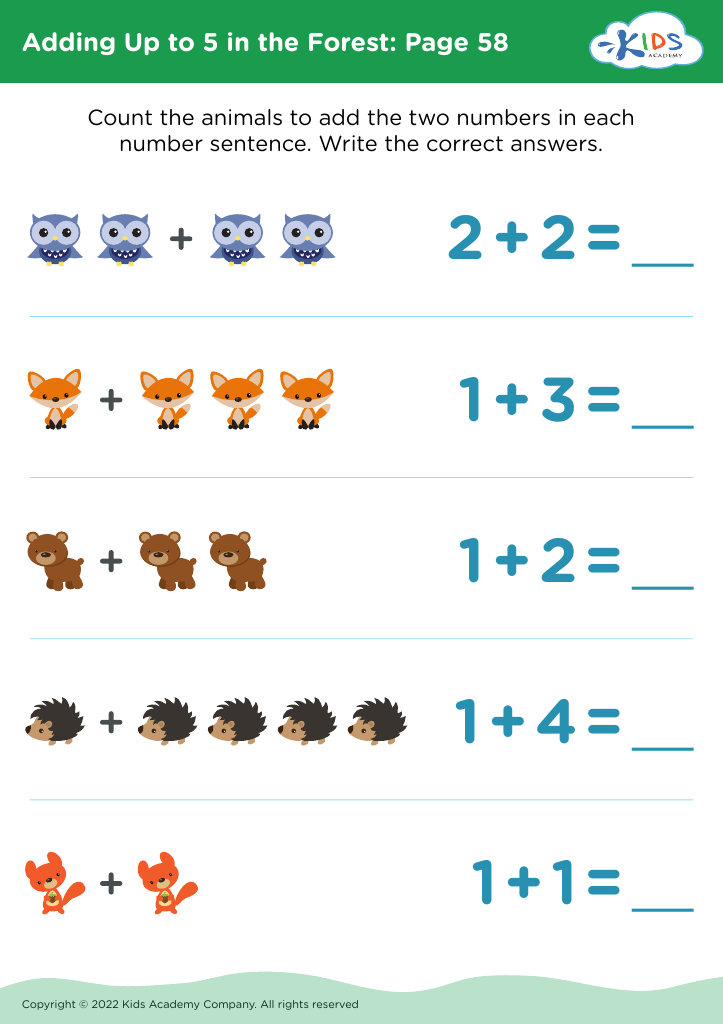
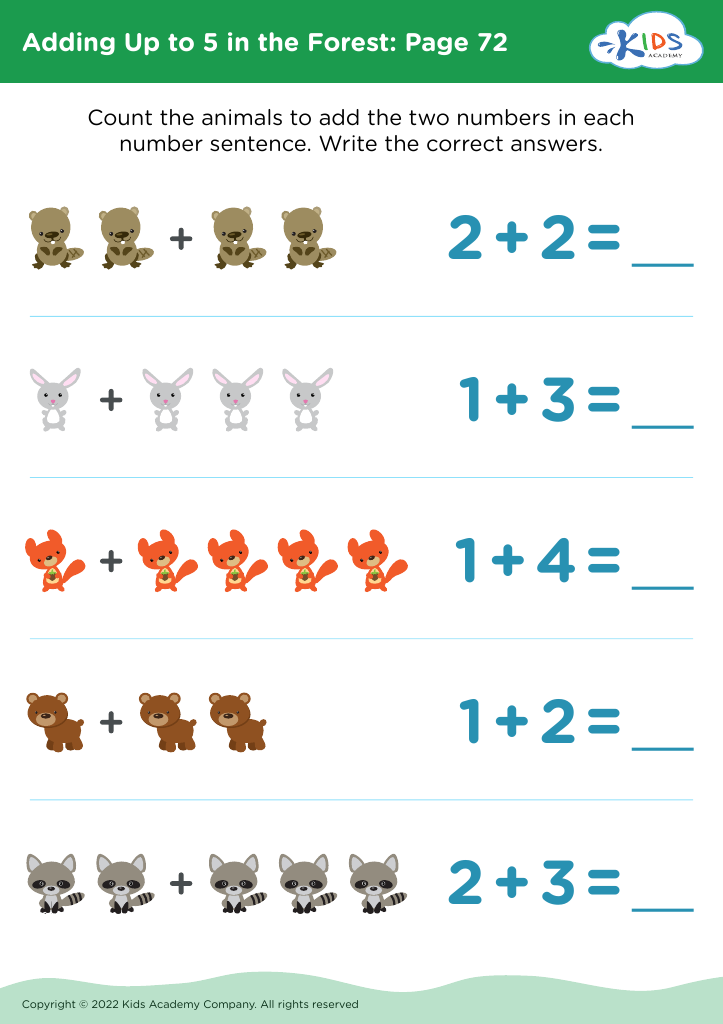
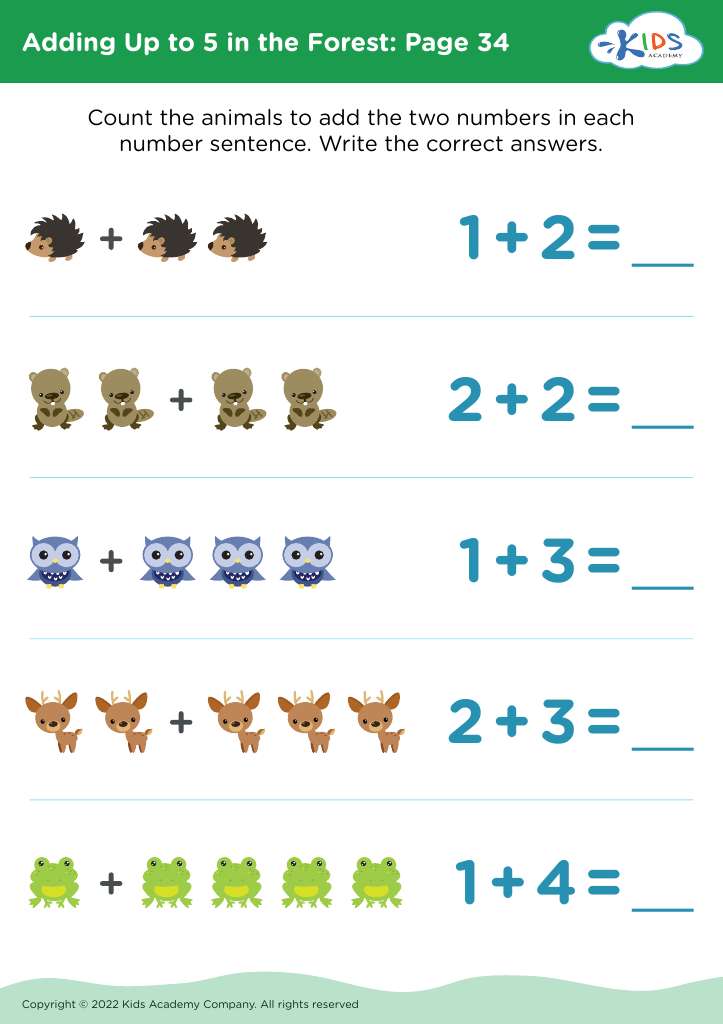
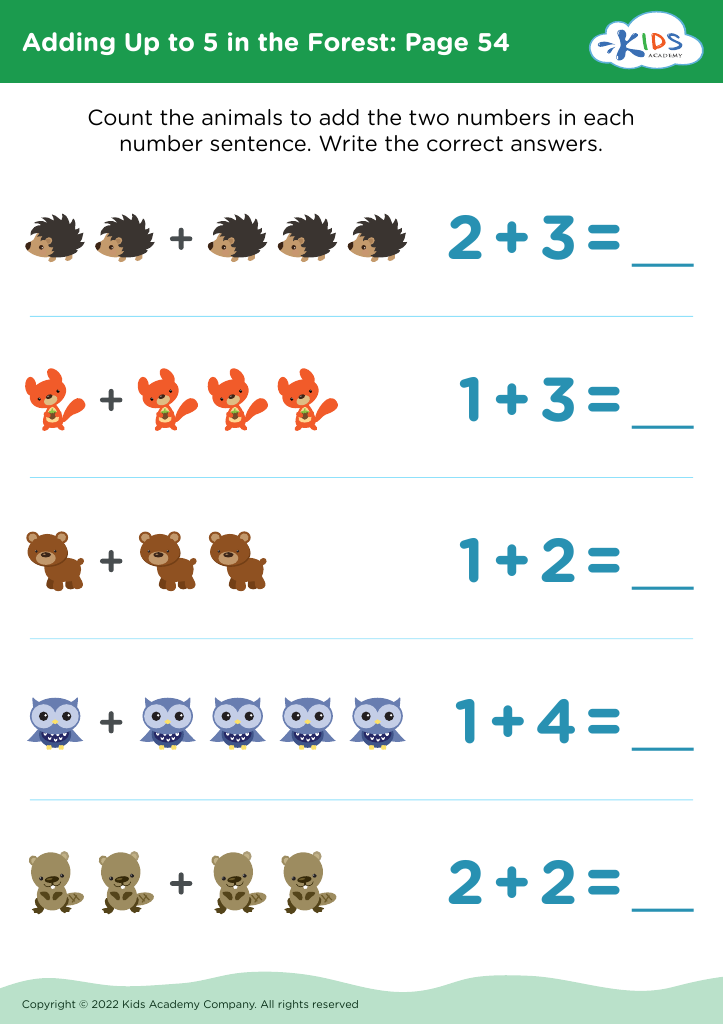
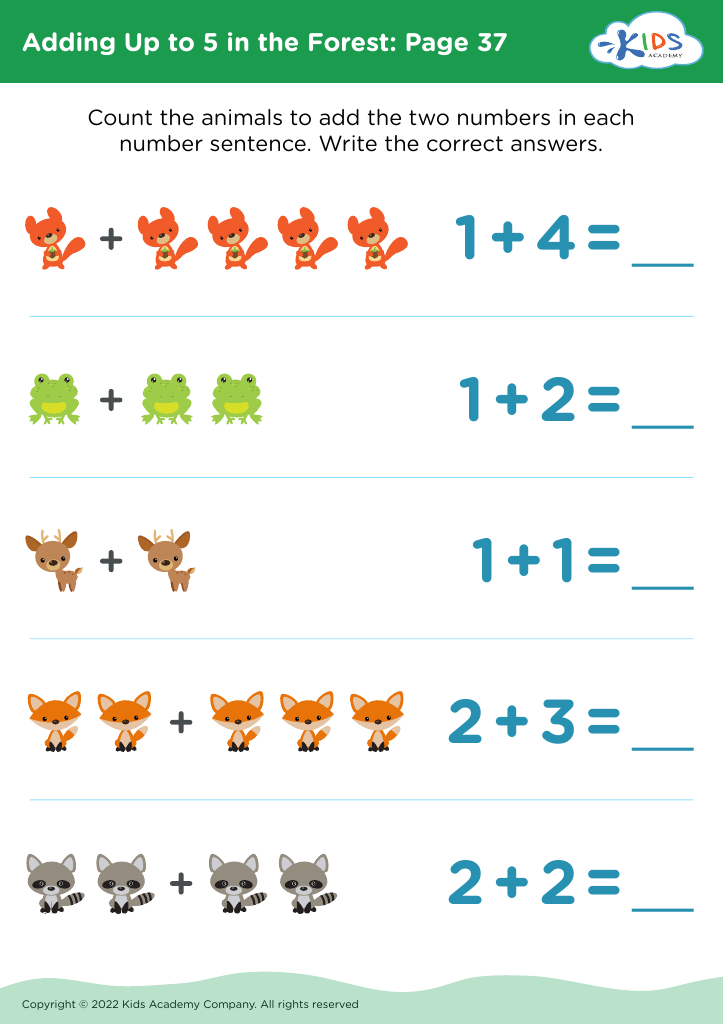
Introduce your young learners to the beauty of nature while mastering essential math skills with our Nature Appreciation Addition Worksheets for Ages 3-7. These engaging and educational worksheets integrate nature-themed visuals, making learning both fun and informative. Perfect for preschoolers and early elementary students, our activities are designed to boost addition skills and encourage an appreciation for the natural world. From counting flowers to adding up animals, each worksheet offers a delightful way for kids to practice math. Spark a love for learning and nature simultaneously with these thoughtfully crafted resources!





.jpg)


Nature appreciation is crucial for young children ages 3-7 and can be fostered through simple activities that enhance their developmental growth. Parents and teachers should care about nature appreciation for several significant reasons. First, it nurtures curiosity and a sense of wonder, essential for cognitive development. Through activities like exploring leaves, observing insects, or planting seeds, children learn to observe, ask questions, and understand the world around them.
Secondly, engaging with nature can improve physical health. Outdoor play encourages physical activity, fostering motor skills, coordination, and overall fitness. It also reduces the sedentary lifestyle promoted by screen time.
Thirdly, nature activities can enhance emotional well-being. Time spent in nature has been shown to reduce stress, anxiety, and hyperactivity in children. The calming effect of natural settings can lead to improved social behaviors and emotional regulation.
Furthermore, instilling a love for nature at a young age promotes environmental stewardship. Understanding and appreciating biodiversity fosters a sense of responsibility to protect and preserve our natural world for future generations.
Incorporating nature into early childhood education is a holistic approach that benefits children's intellectual, physical, emotional, and ethical development. Simple activities ensure children reap these lifelong benefits, advocating for a healthier and more mindful future.








