
Number identification Addition Worksheets for Ages 3-7
5 filtered results
Difficulty Level
Grade
Age
-
From - To
Subject
Activity
Standards
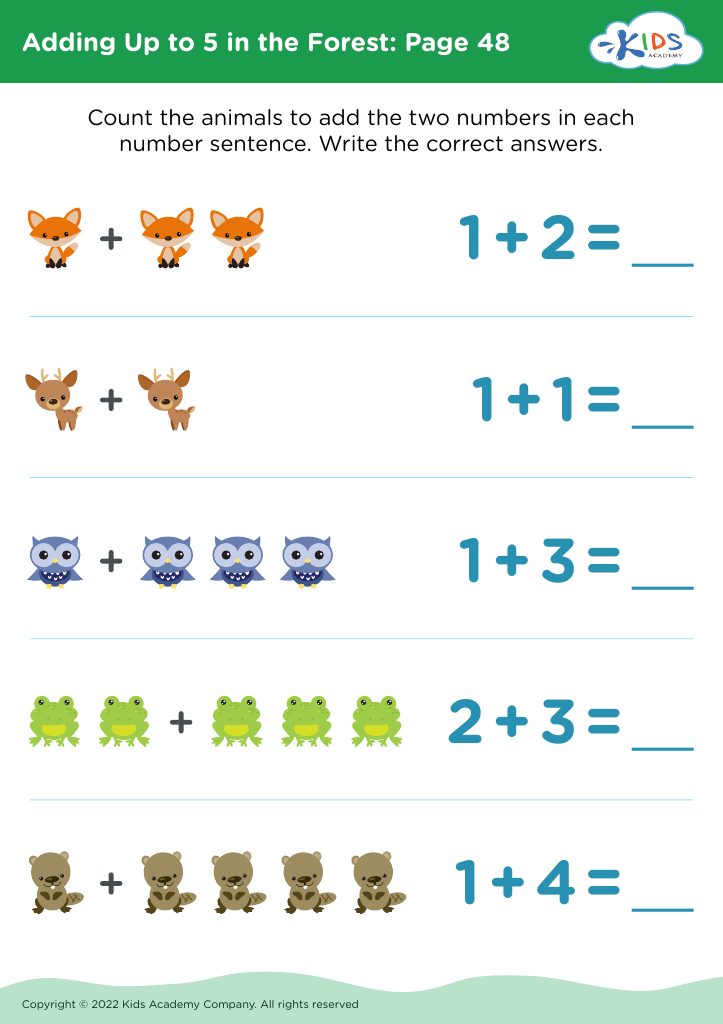
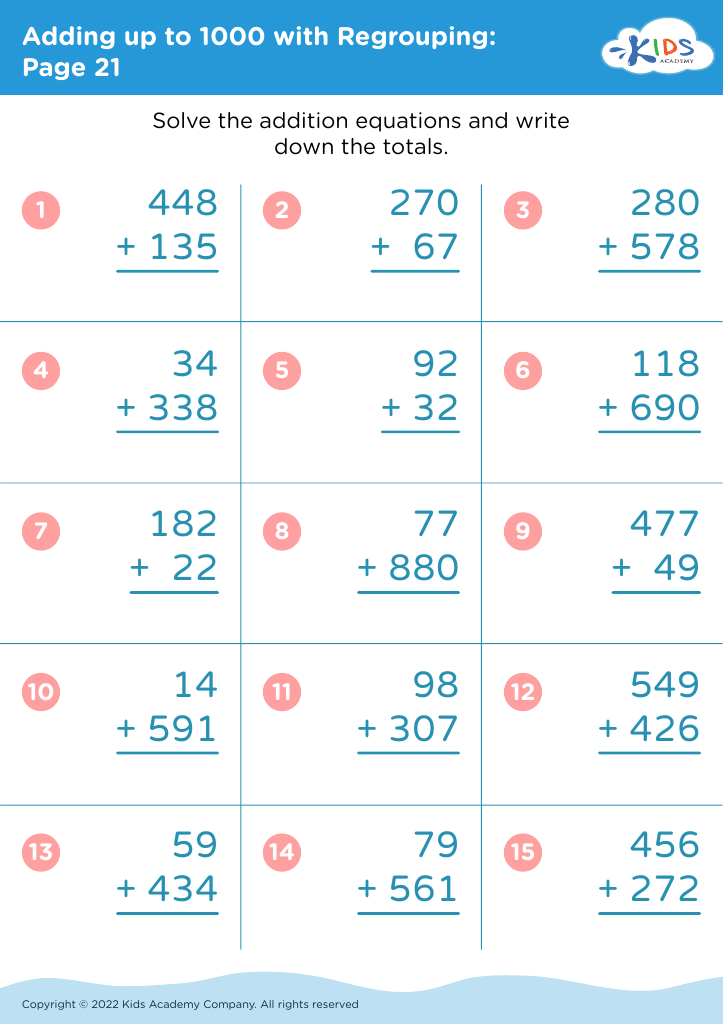
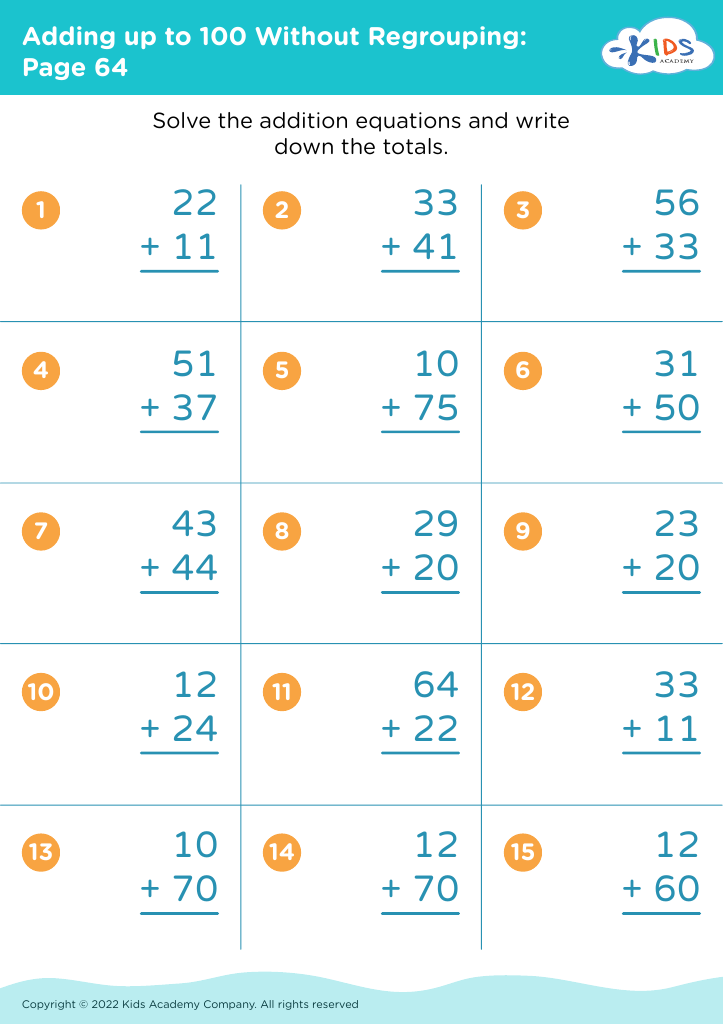
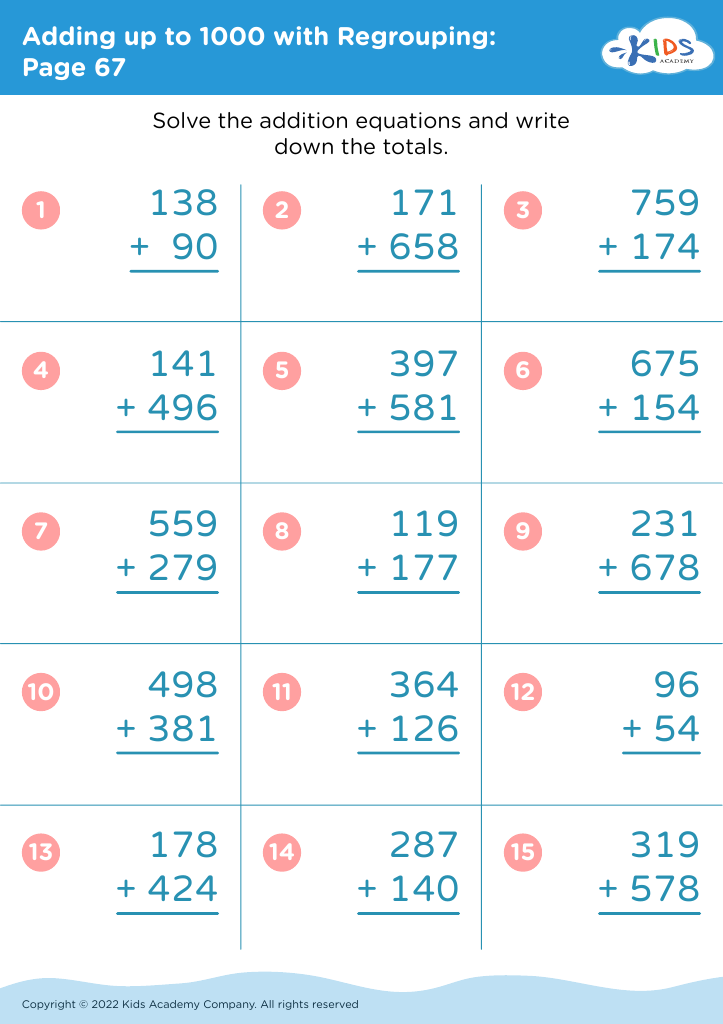
Discover our engaging Number Identification Addition Worksheets designed specifically for children aged 3 to 7! These printable activities help young learners develop essential math skills by blending number recognition and basic addition. Each worksheet features colorful illustrations and child-friendly layouts that make learning fun and interactive. Whether at home or in the classroom, our resources support early math development, encouraging kids to explore numbers while enhancing their problem-solving abilities. With varying levels of difficulty, these worksheets cater to different learning stages, ensuring each child can progress at their own pace. Start building a solid math foundation today with our delightful worksheets!
Favorites
With answer key
Interactive
Join Kids Academy for Free
Who is primarily going to use this learning content?








Number identification and addition are foundational skills in early childhood education that parents and teachers should prioritize for children aged 3-7. Mastering these concepts is crucial as they serve as building blocks for future mathematical learning. Number identification helps children recognize and understand numbers, which is essential for comprehending basic math operations, measurements, and numerical relationships in everyday life.
Encouraging addition skills fosters critical thinking and problem-solving abilities at a young age. It promotes logical reasoning as children learn to combine numbers and understand quantities. This early engagement promotes a positive attitude towards math, reducing anxiety and building confidence as children progress.
Moreover, these foundational skills are closely linked to academic success in higher grades. Children who struggle with number identification and addition may face challenges in more complex mathematical concepts later on. Additionally, early exposure to these skills promotes cognitive development, language skills, and social interaction through collaborative activities like games and group work.
By ensuring that children master number identification and addition, parents and teachers lay a solid groundwork, paving the way for lifelong learning and achievement in mathematics and beyond. Thus, prioritizing these skills is essential for a child’s overall educational journey.








