Practice problem-solving Addition Worksheets for Ages 3-7
4 filtered results
-
From - To
Boost your child’s math confidence with our engaging Practice Problem-Solving Addition Worksheets, tailored for ages 3-7. These worksheets provide a fun and interactive way for young learners to explore addition through real-life scenarios, enhancing their critical thinking and problem-solving skills. Each worksheet is designed to be age-appropriate, visually appealing, and easy to understand, ensuring that your child remains motivated and excited about learning. From basic addition to more complex challenges, our resources empower children to apply their math skills in practical situations. Download our worksheets today and support your child’s educational journey with enjoyable and effective math practice!
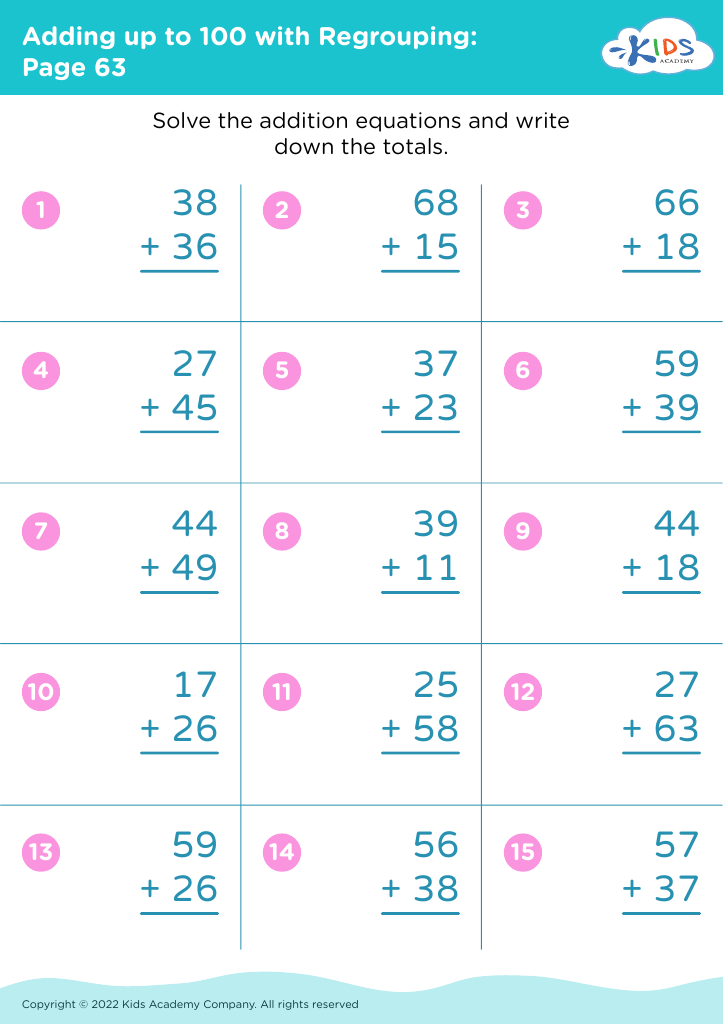
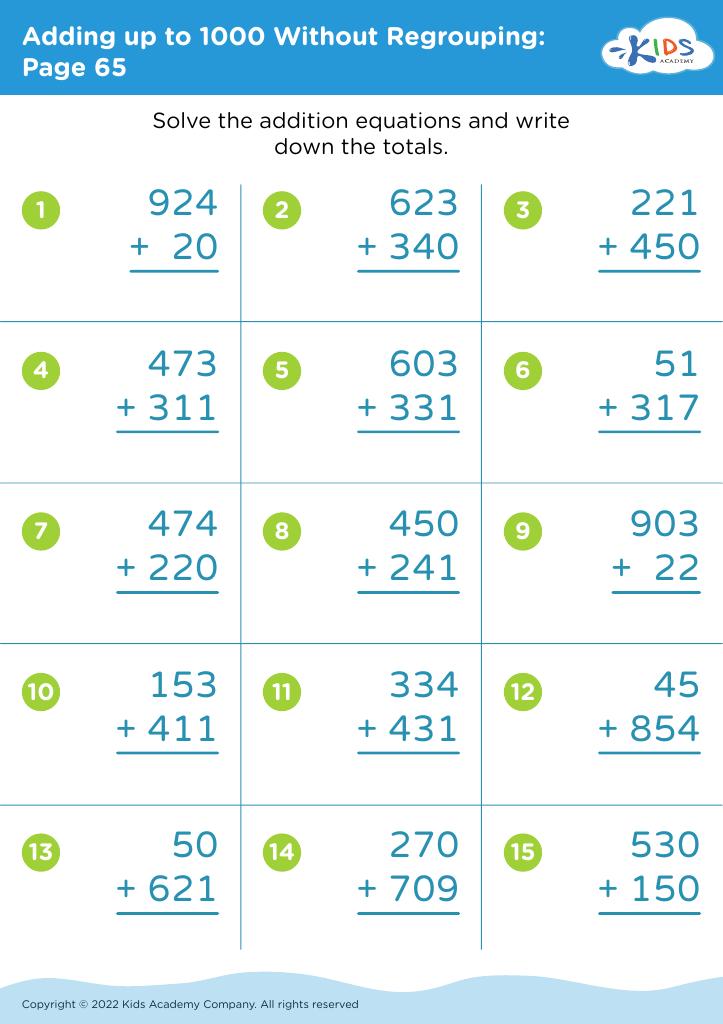
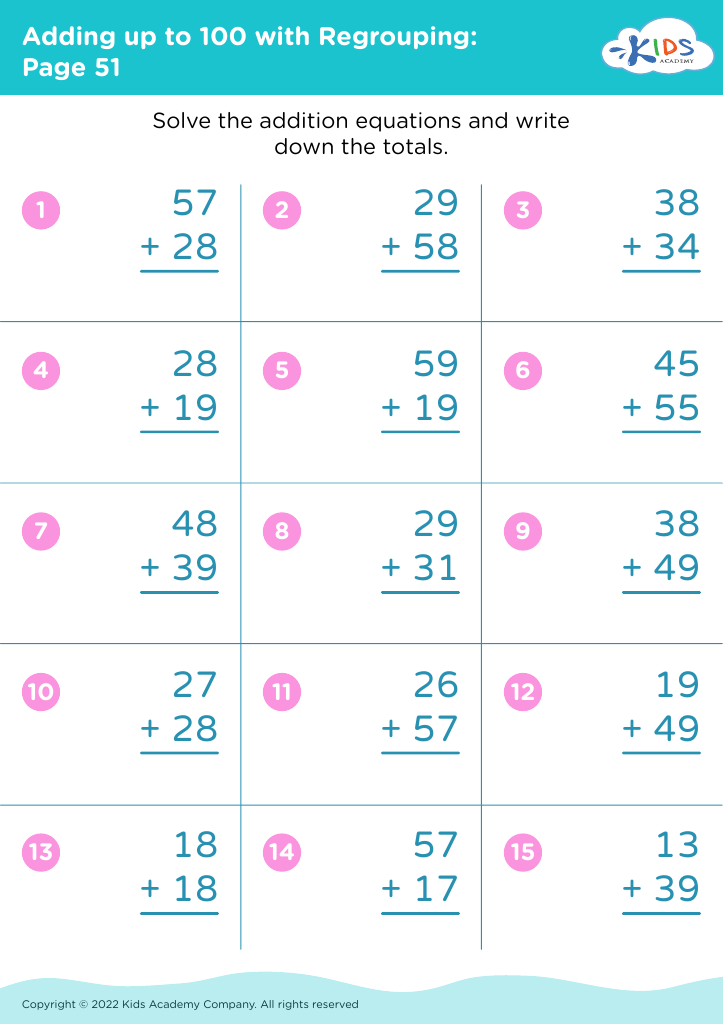
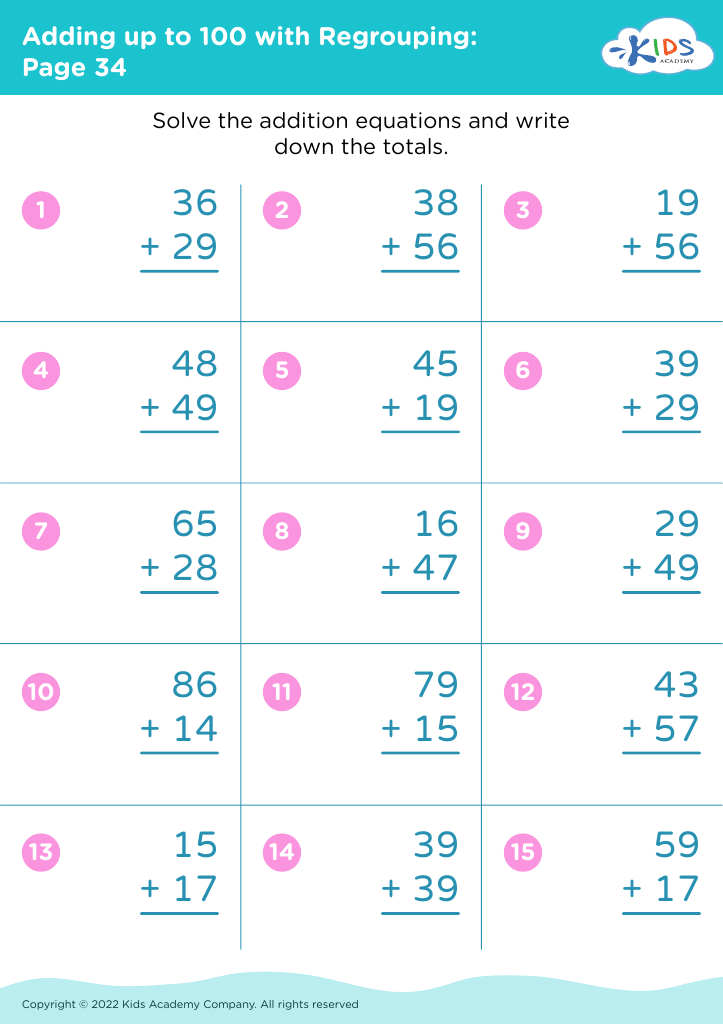







Practice problem-solving in addition is essential for children aged 3-7, as it lays the groundwork for mathematical understanding and critical thinking skills essential for lifelong learning. During these formative years, children's cognitive abilities are developing rapidly, and engaging them in problem-solving activities helps to build a strong foundation in math concepts.
For parents and teachers, emphasizing problem-solving in addition promotes a deeper understanding of numbers beyond rote memorization. It encourages children to think critically, approach challenges creatively, and develop persistence when overcoming obstacles—skills that transfer beyond mathematics into everyday life situations.
Additionally, problem-solving fosters communication and collaboration skills when children work together on math tasks. It allows them to express their thought processes, share strategies, and learn from their peers, enriching their social skills and emotional intelligence. Therefore, both parents and teachers should value and encourage problem-solving practices, as they not only contribute to mathematical proficiency but also support holistic development in children.
Ultimately, nurturing these skills promotes confidence and a positive attitude toward learning, empowering children to become effective thinkers and problem solvers throughout their educational journeys and in their future endeavors.








