
Sequencing Skills Addition Worksheets for Ages 3-7
3 filtered results
Difficulty Level
Grade
Age
-
From - To
Subject
Activity
Standards
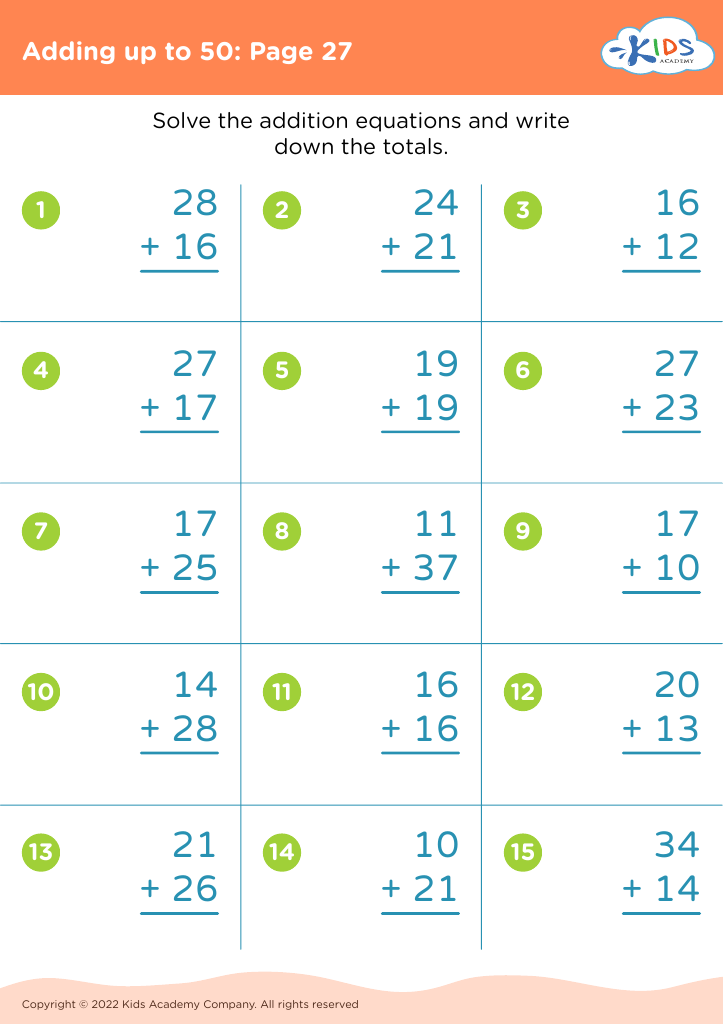
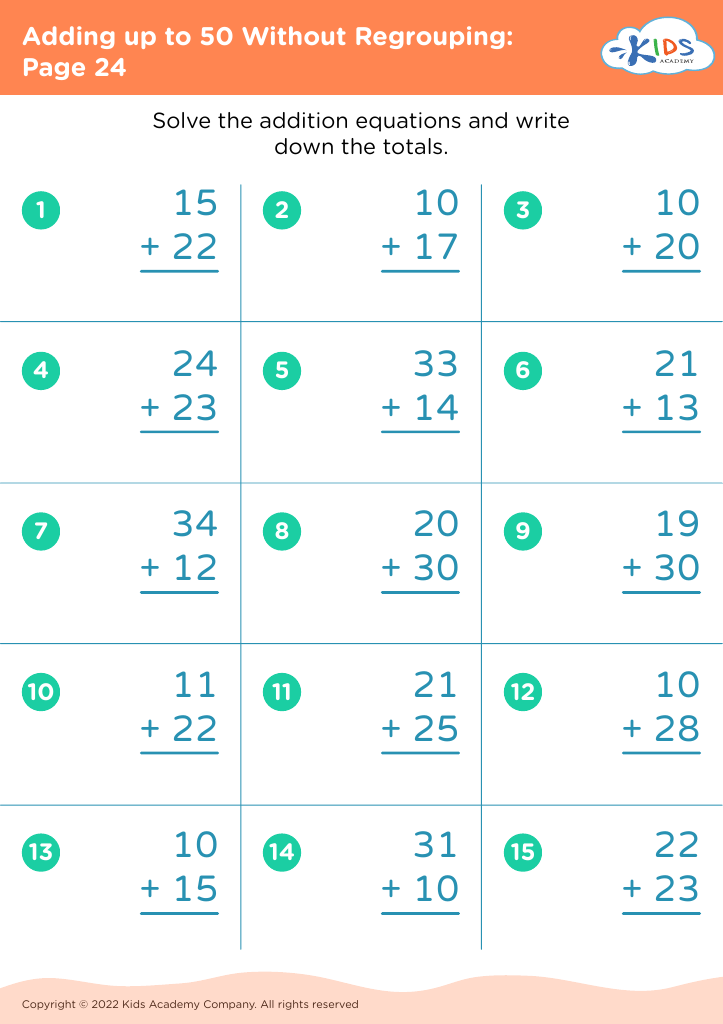
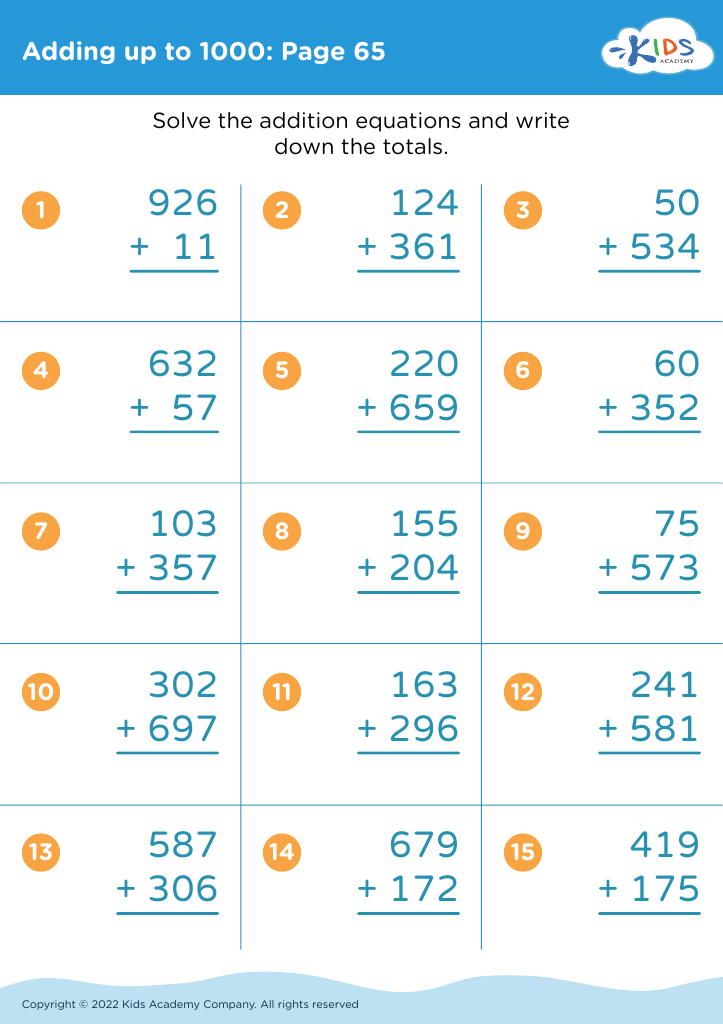
Welcome to our Sequencing Skills Addition Worksheets for ages 3-7! Designed to enhance your child's understanding of addition through engaging sequencing activities, these worksheets promote critical thinking and problem-solving skills. Kids will love following along with colorful illustrations and exciting tasks that reinforce their addition knowledge. Our worksheets are perfect for classrooms or at-home learning, with levels tailored to a child's age and cognitive development. Encourage your little learners to build a strong mathematical foundation in a fun and interactive way. Explore our collection and watch your child's confidence and skills flourish in addition and sequencing!
Favorites
With answer key
Interactive
Join Kids Academy for Free
Who is primarily going to use this learning content?








Sequencing skills, particularly in the context of addition for children ages 3-7, are crucial because they lay the groundwork for math fluency and problem-solving abilities. Sequencing helps children understand the order of operations in addition, making it easier for them to grasp more complex concepts as they advance in their education. By learning to sequence numbers correctly, children develop skills essential for simple arithmetic, which can enhance their overall confidence in mathematics.
Furthermore, sequencing supports cognitive development by improving memory, organization, and critical thinking skills. When children engage in activities that strengthen their sequencing abilities, they enhance their ability to follow instructions, complete tasks efficiently, and approach problems logically. This skill set not only serves them in mathematics, but broadens their learning capabilities across all subjects.
For parents and teachers, fostering sequencing skills provides a critical foundation for academic success. Early development in these areas can lead to positive attitudes towards math and promote lifelong learning habits. By being invested in their child's sequencing and addition skills, caregivers can help ensure a smoother transition into higher levels of education, ultimately cultivating a future generation that is proficient and enthusiastic about math.








