Shape identification Addition Worksheets for Ages 3-7
13 filtered results
-
From - To
Discover our engaging Shape Identification Addition Worksheets designed for children ages 3-7! These worksheets serve as a perfect blend of math skills and shape recognition, ensuring early learners grasp essential concepts in a fun way. Kids will explore various shapes while practicing addition through interactive exercises that capture their imagination. Bright, colorful graphics keep children engaged, fostering a love for math from an early age. Our worksheets are easy to print, making them ideal for both classrooms and homeschooling. Enhance your child's learning experience with our innovative approach that nurtures critical thinking and foundational math skills. Explore today and watch them thrive!
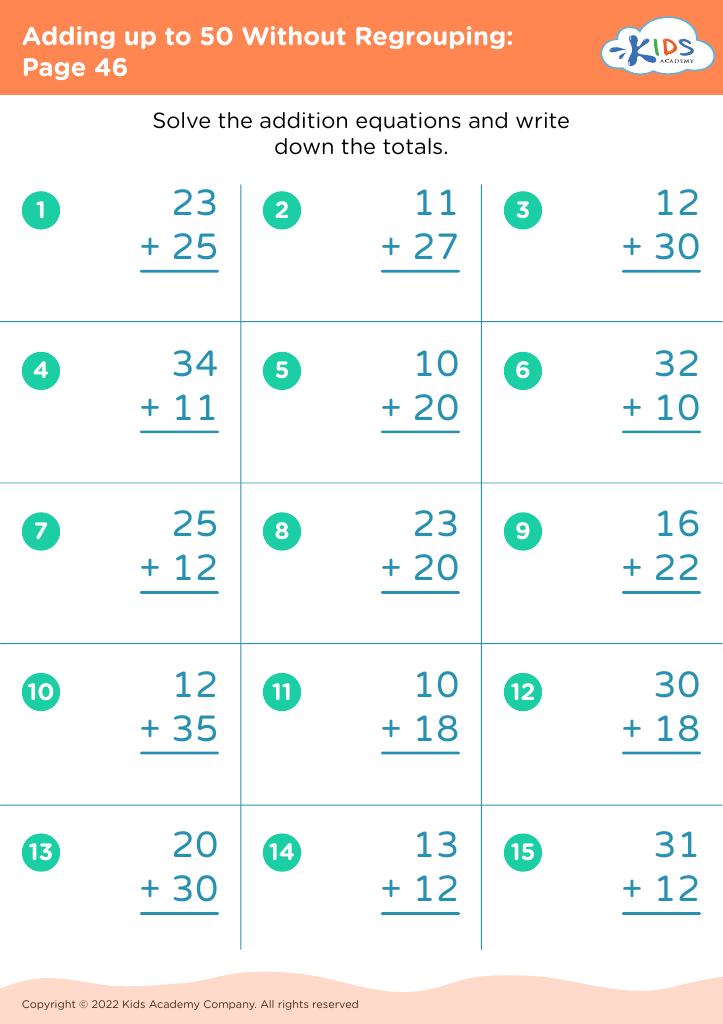
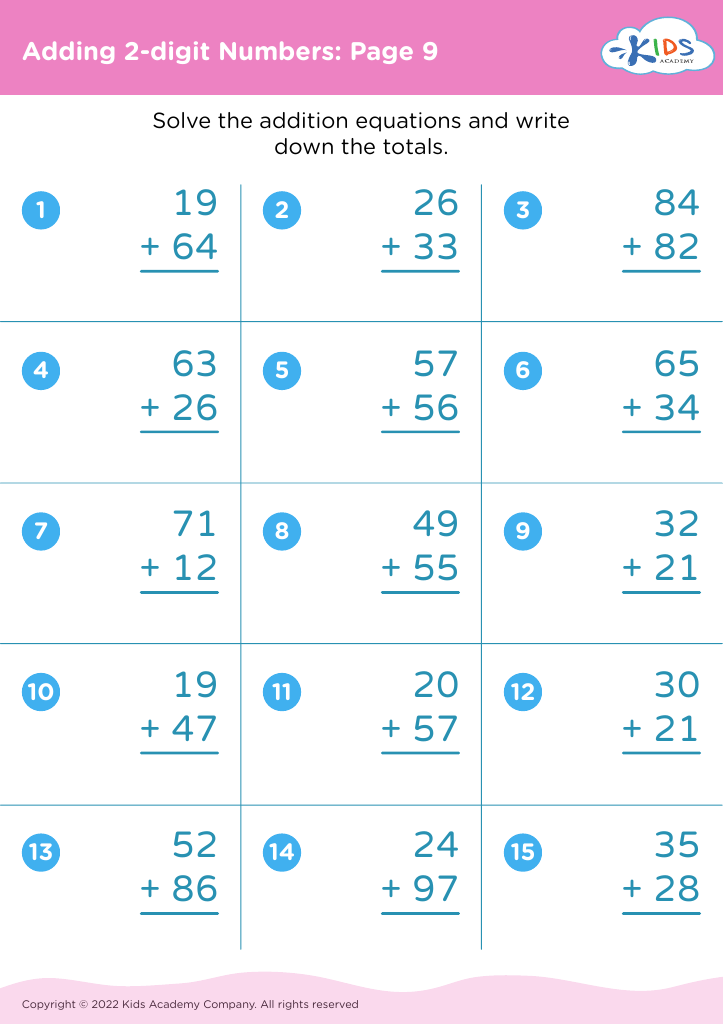
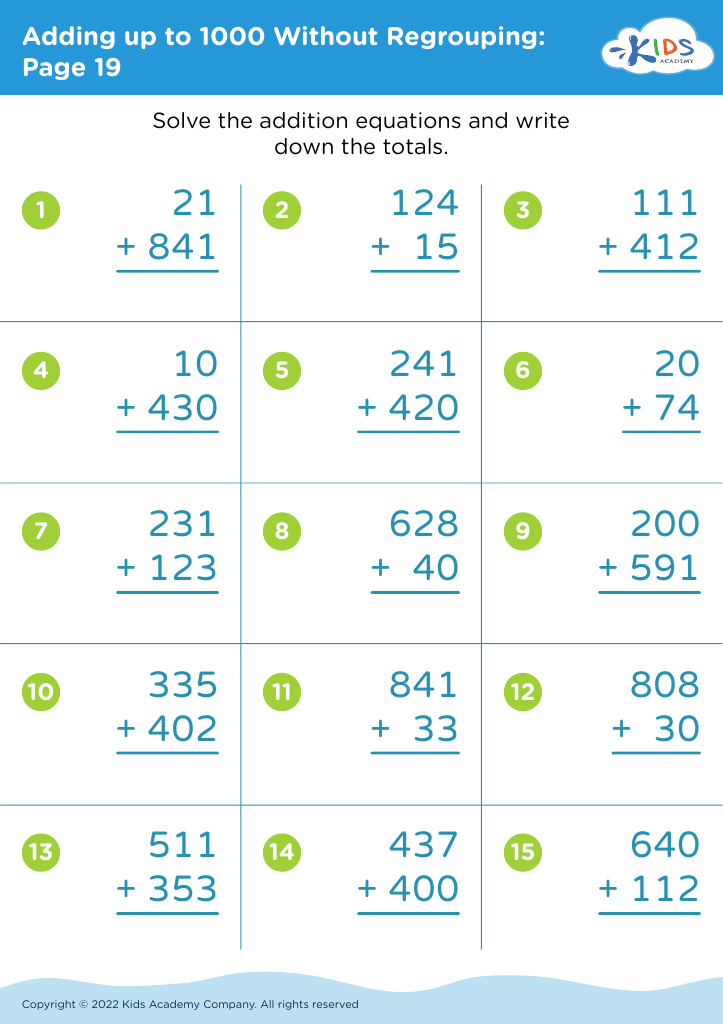
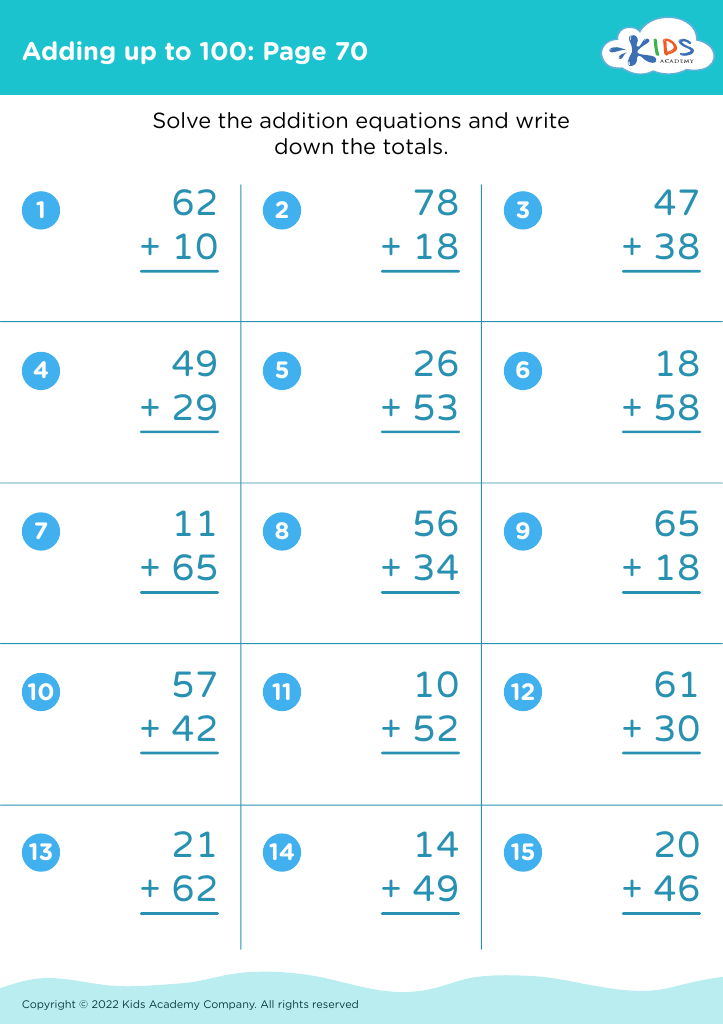
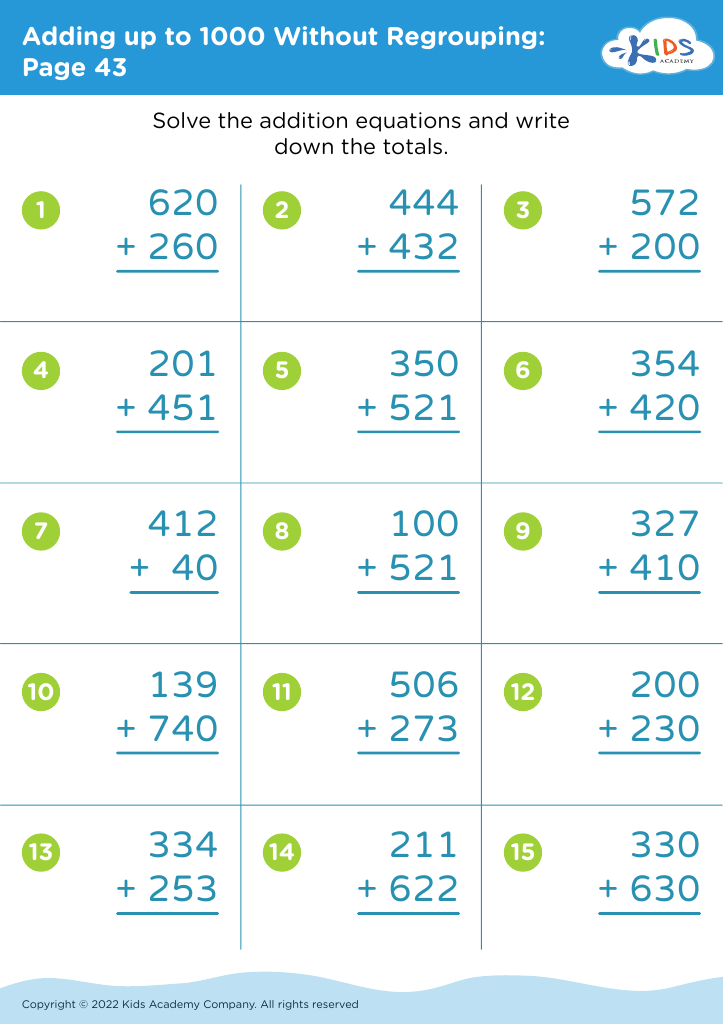








Shape identification and basic addition are fundamental skills for children ages 3-7, forming the building blocks for their cognitive and mathematical development. Understanding shapes helps children make sense of their environment; it enhances spatial awareness and assists in recognizing patterns, which are crucial for more complex math skills later on. Moreover, grasping the concept of shapes fosters critical thinking as children learn to classify, compare, and analyze objects.
In terms of addition, early mathematical skills cultivate a child’s numeracy and problem-solving abilities. Introducing addition in a playful manner—such as through shape-based activities—makes learning engaging, which can foster a love for mathematics. This joyful approach encourages children to experiment with numbers, enhancing their confidence.
Parents and teachers play a vital role in reinforcing these skills. Incorporating shape identification and addition into everyday activities, storytime, or play can promote learning effectively. Understanding these concepts not only aids in early success in math but also lays a foundation for future academic achievement in science and technology.
By supporting children in developing shape and early addition skills, parents and teachers are empowering them with essential life skills, preparing them for academic challenges, and building their confidence in approaching new problems.








