Sorting skills Addition Worksheets for Ages 3-7
4 filtered results
-
From - To
Welcome to our Sorting Skills Addition Worksheets designed for children aged 3 to 7! These engaging worksheets combine sorting activities with fundamental addition exercises, helping young learners develop essential math skills while enhancing their ability to categorize and differentiate objects. Our resources are thoughtfully crafted to spark curiosity, promote critical thinking, and foster a love for learning. Ideal for preschool and early elementary classrooms, these worksheets support educational growth through interactive practice. Discover a fun and effective way to strengthen sorting and addition skills simultaneously, setting your child on the path to mathematical success! Start exploring our collection today!
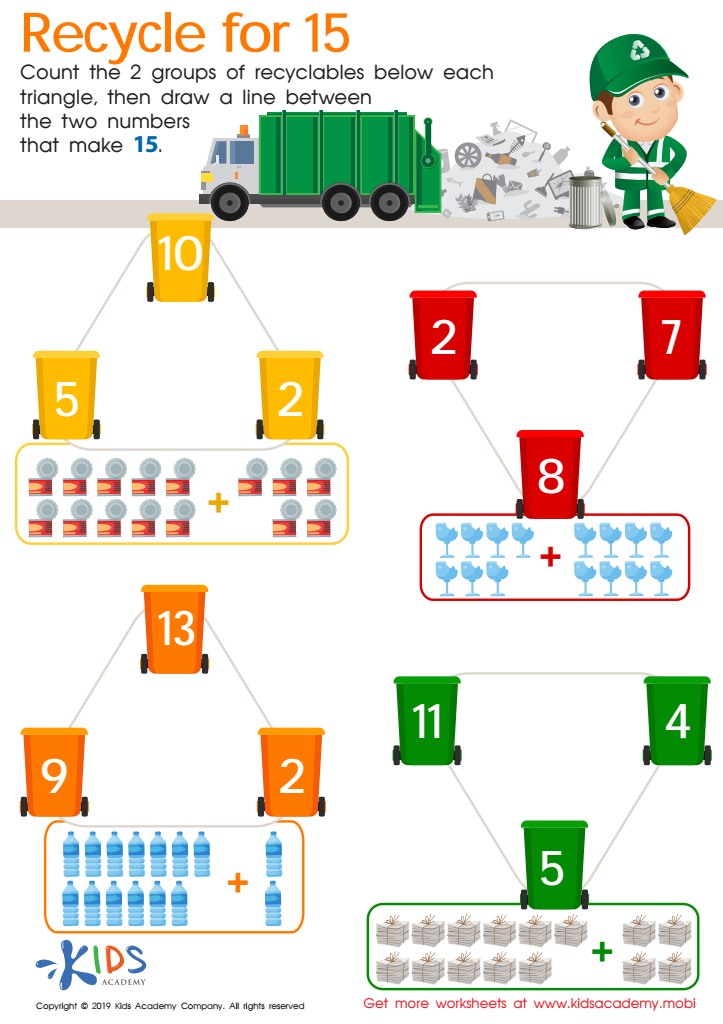
Recycle for 15 Worksheet
 Assign to My Students
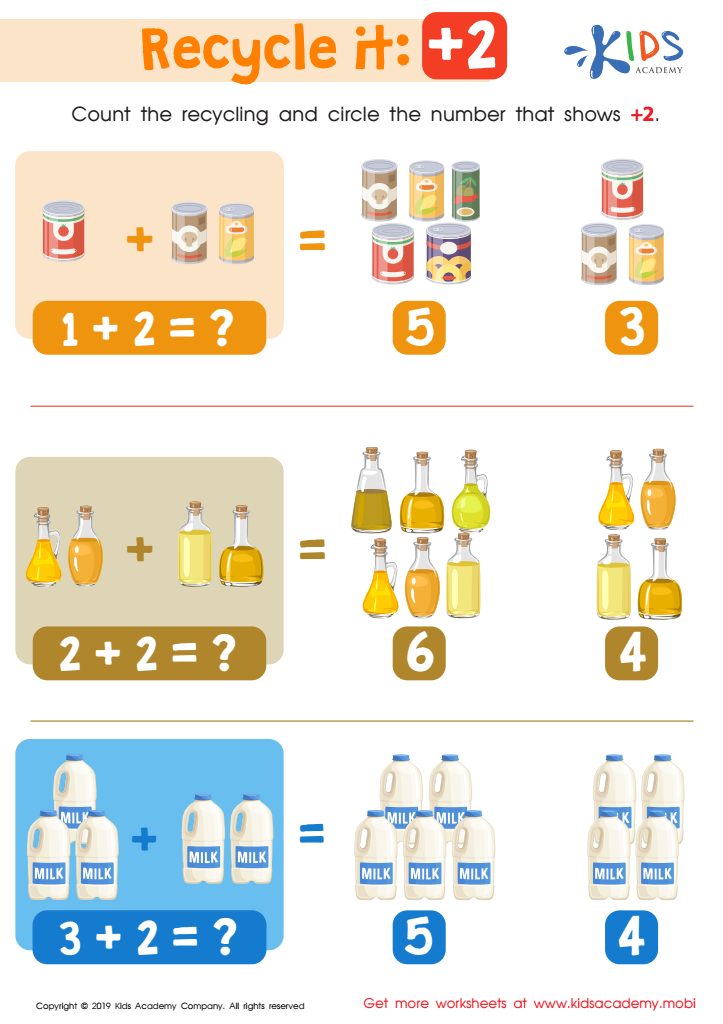
Recycle It: +2 Worksheet








Sorting skills and addition are foundational elements in a child's early education, particularly for ages 3-7. These skills not only enhance cognitive development but also lay the groundwork for more complex mathematical concepts later on. When children engage in sorting activities, they learn to categorize and organize objects based on attributes like shape, color, and size. This classification builds critical thinking and problem-solving abilities.
Addition, on the other hand, fosters numerical understanding. By learning to add objects, children develop a sense of quantity and number relationships. This skill is crucial for everyday activities, from sharing toys to understanding simple transactions. Additionally, sorting is often a precursor to more advanced math skills, making it an essential building block for addition.
For parents and teachers, nurturing these skills promotes better academic readiness. It allows children to experience math in a fun, engaging way, reducing math anxiety that can hinder their progress later on. Encouraging sorting and addition through games, activities, and real-life experiences can also foster a love for learning. Ultimately, investing time and energy into developing these foundational skills can lead to a stronger academic performance and increased confidence for children as they progress through their education.








