Understand sequences Addition Worksheets for Ages 3-7
5 filtered results
-
From - To
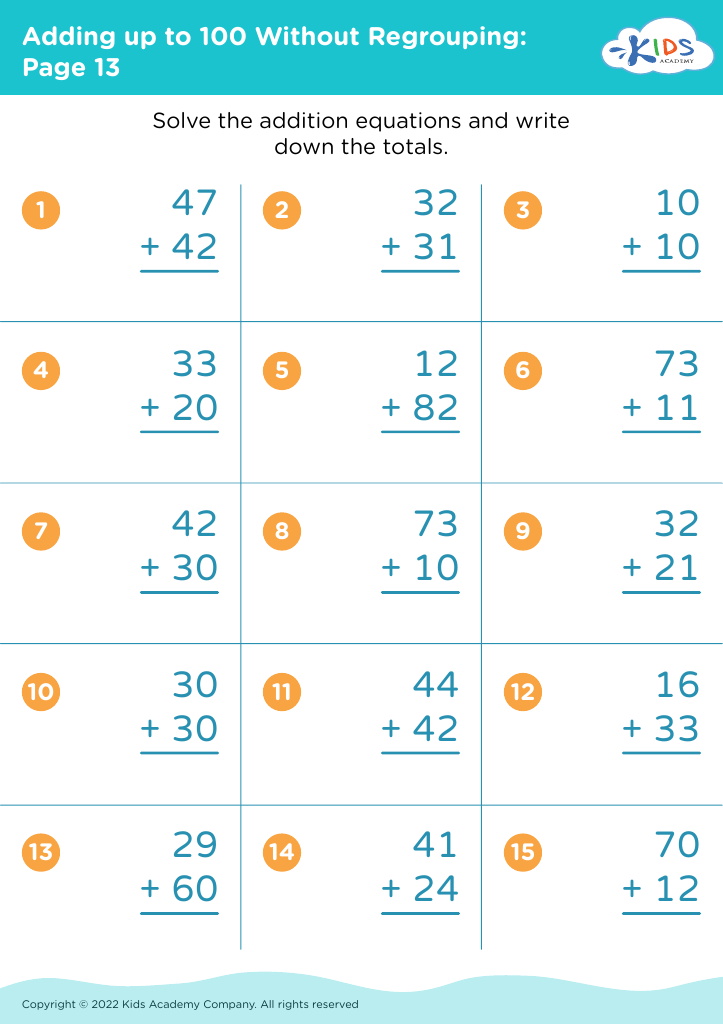
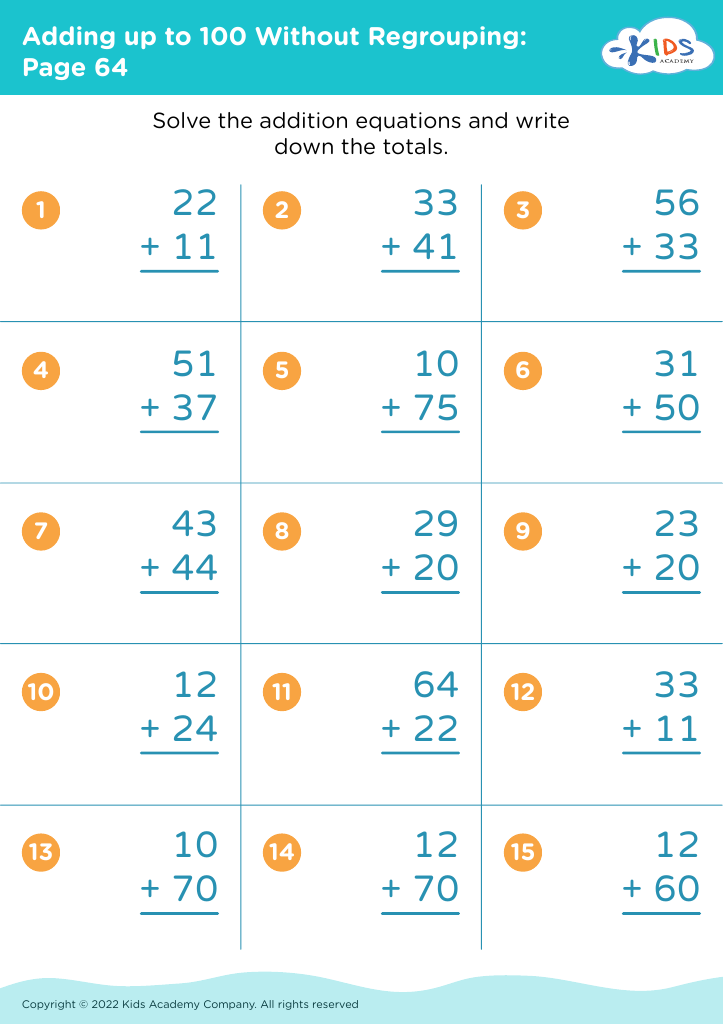
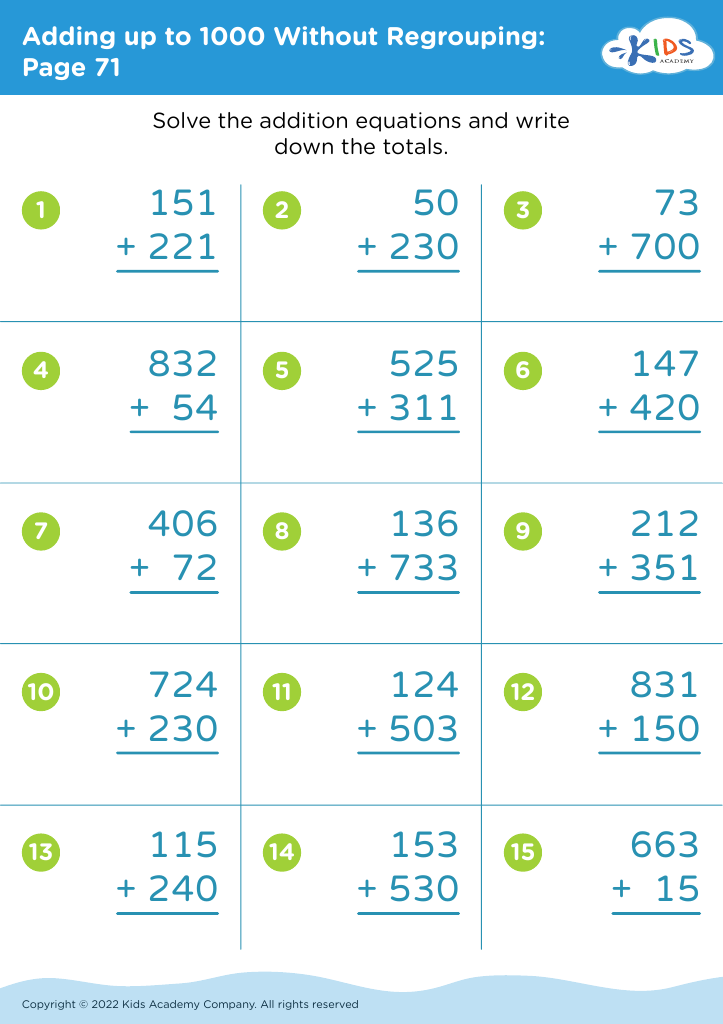
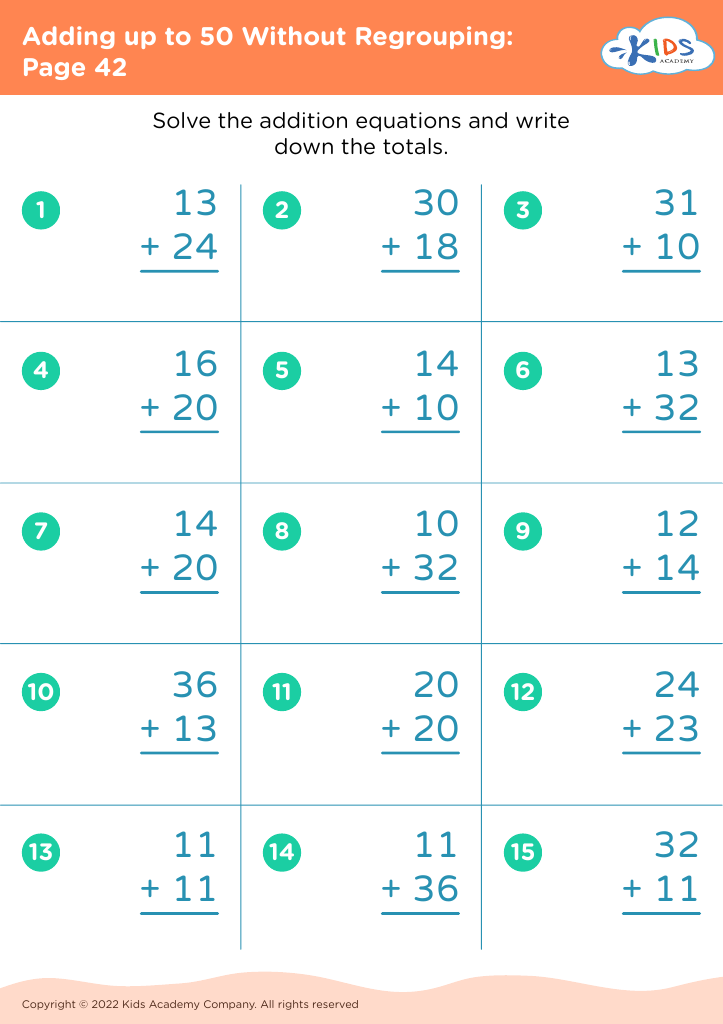
Welcome to our "Understand Sequences Addition Worksheets" for children ages 3-7! Designed to enhance your child’s early math skills, these engaging worksheets focus on understanding number sequences through fun and interactive addition problems. Perfect for parents and educators, our worksheets encourage young learners to recognize patterns and improve their sequencing abilities while developing foundational addition skills. The activities are colorful and captivating, making math enjoyable and relatable. Whether at home or in the classroom, these resources help cultivate a love for numbers and foster confidence in mathematical concepts. Start exploring the world of addition through sequences with us today!
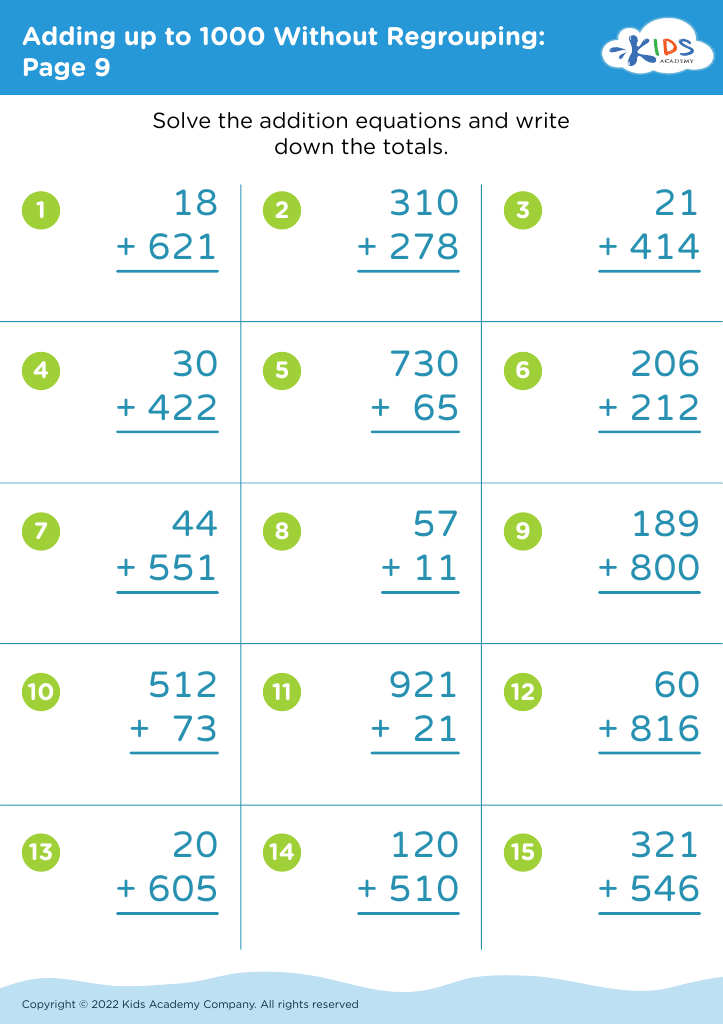








Understanding sequences in addition is crucial for children aged 3 to 7 as it lays the foundational skills necessary for their mathematical development. At this age, children begin to grasp the concept of numbers and their relationships. By focusing on sequences, they learn to recognize patterns in addition, which enhances their problem-solving abilities and promotes logical thinking.
For parents and teachers, nurturing this skill can lead to increased confidence in young learners. A strong grasp of addition sequences helps children not only solve mathematical problems but also relate to real-world situations, such as counting objects or sharing toys. Early mastery of these concepts fosters a positive attitude toward math, decreasing math anxiety later in life.
Moreover, sequences in addition help reinforce other fundamental skills, such as counting, measuring, and understanding time, which are essential for overall cognitive development. Engaging with children through playful learning experiences, such as songs and games, creates a fun environment where they can explore these concepts. By emphasizing understanding of addition sequences, caregivers can cultivate a strong mathematical foundation that supports lifelong learning and academic success. Thus, prioritizing this learning in early education is essential for building confident, capable mathematicians.








