Filters

158 filtered results

Clear all filters
Favorites
With answer key
Interactive

158 filtered results

Difficulty Level

Grade


Check out this FREE Trial Lesson on Addition for age 3-7!

D

Favorites
With answer key
Interactive
  • 3-7
  • Understanding fractions
  • Addition
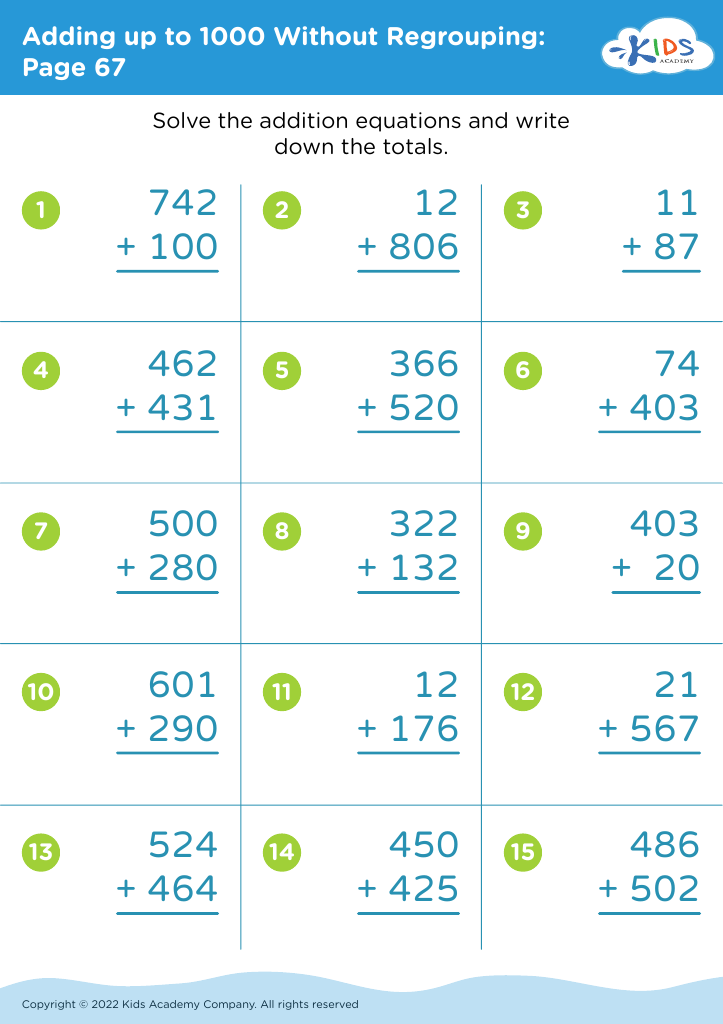
Adding up to 1000 Without Regrouping: Page 67
Worksheet
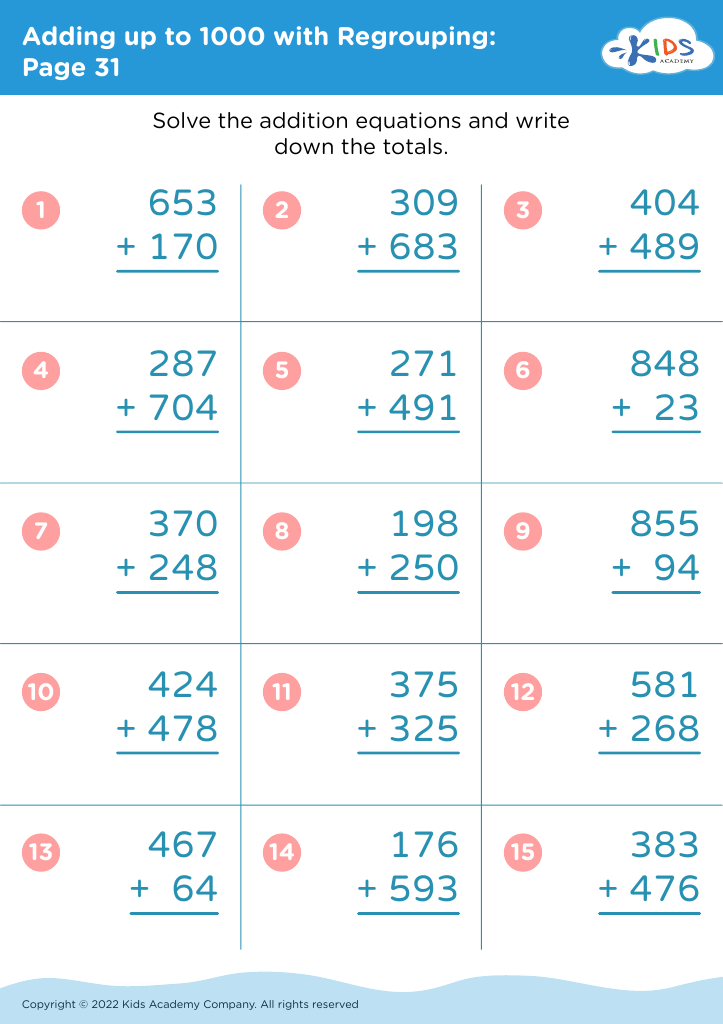
Adding up to 1000 with Regrouping: Page 31
Worksheet
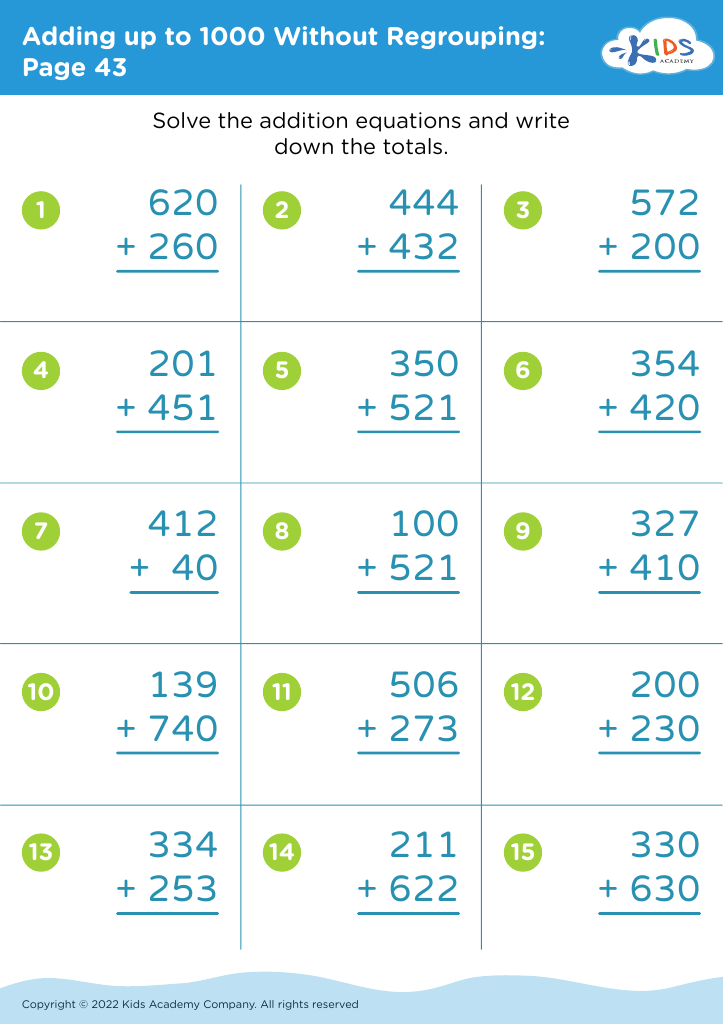
Adding up to 1000 Without Regrouping: Page 43
Worksheet
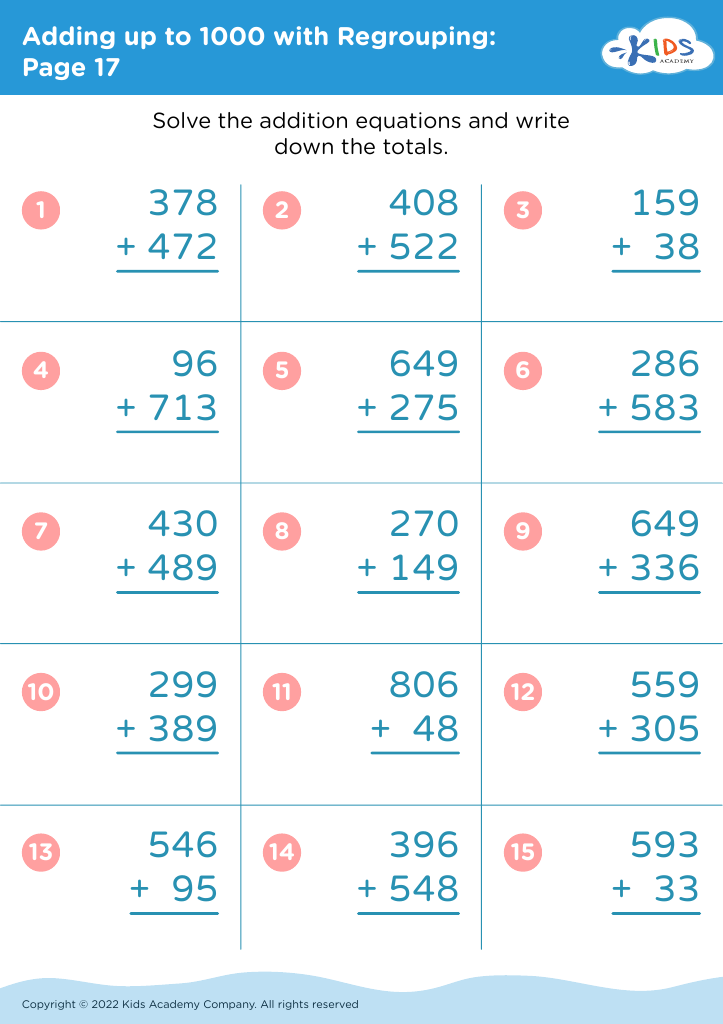
Adding up to 1000 with Regrouping: Page 17
Worksheet
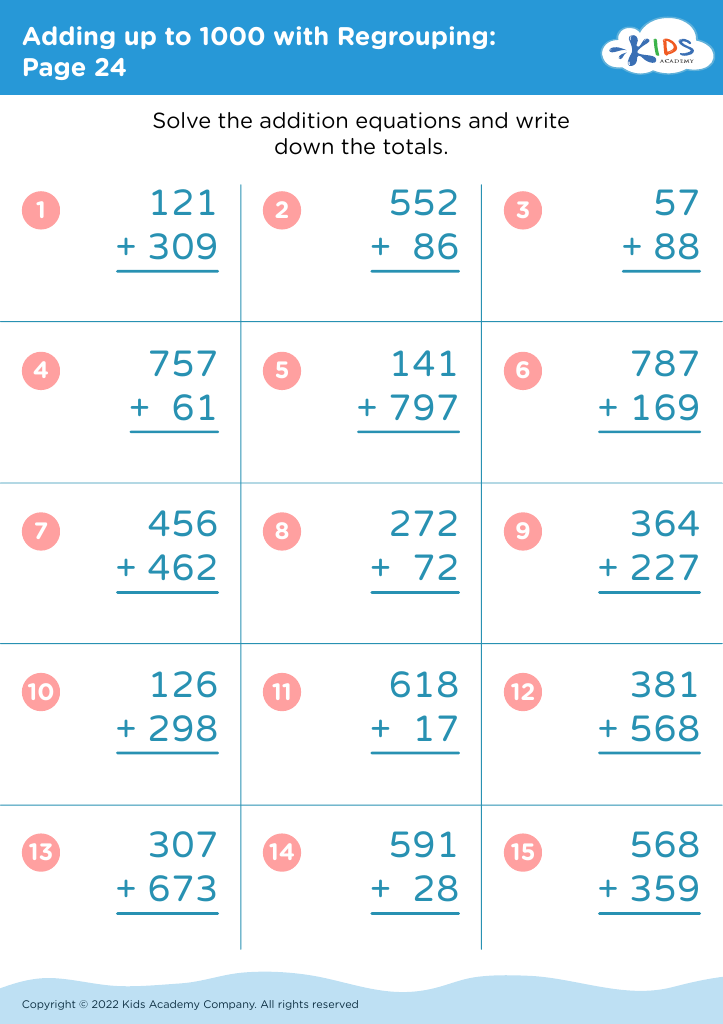
Adding up to 1000 with Regrouping: Page 24
Worksheet
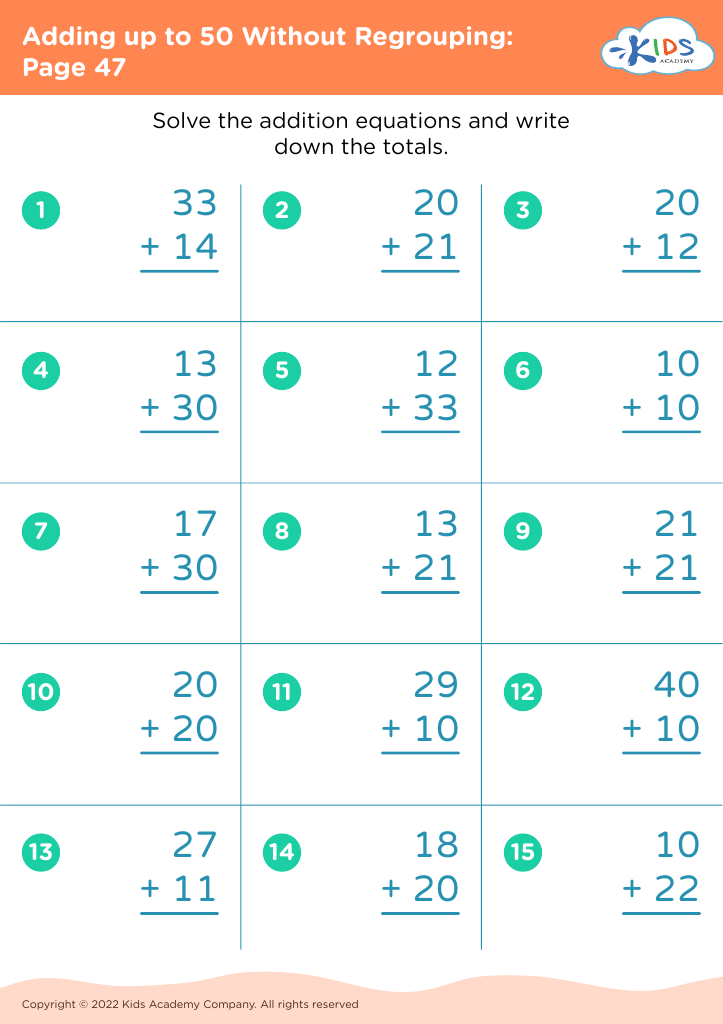
Adding up to 50 Without Regrouping: Page 47
Worksheet
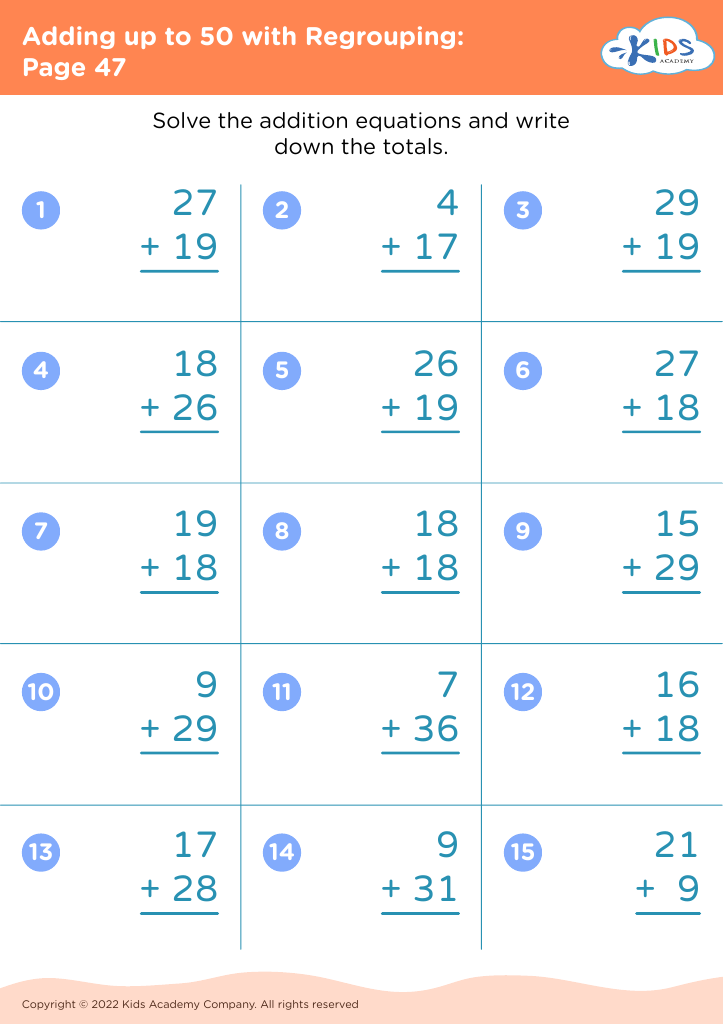
Adding up to 50 with Regrouping: Page 47
Worksheet
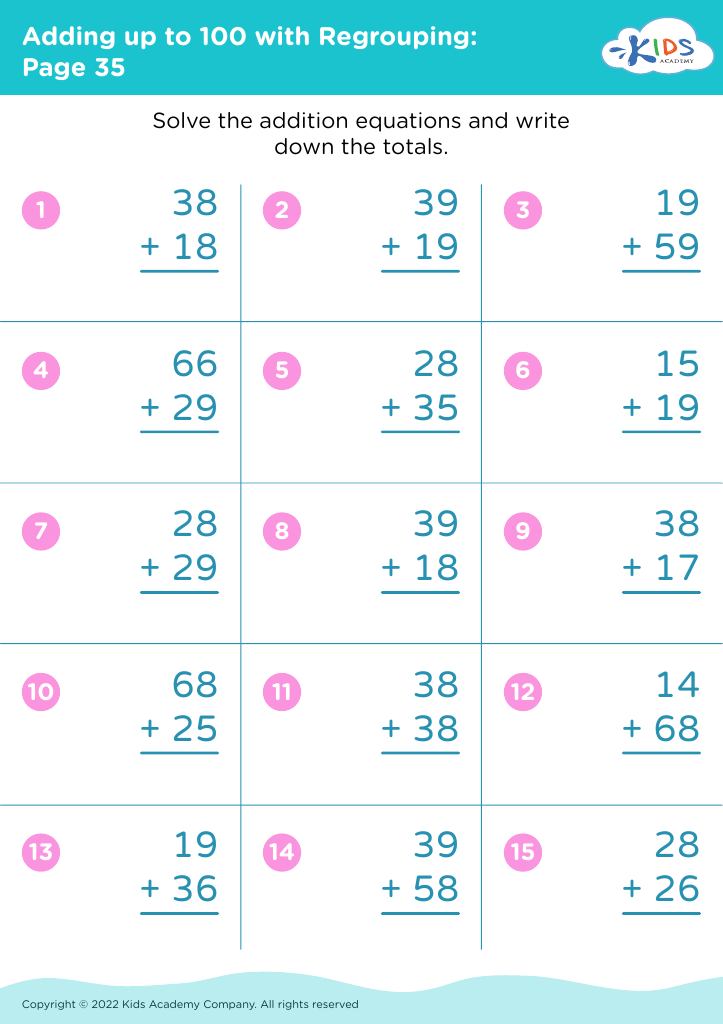
Adding up to 100 with Regrouping: Page 35
Worksheet
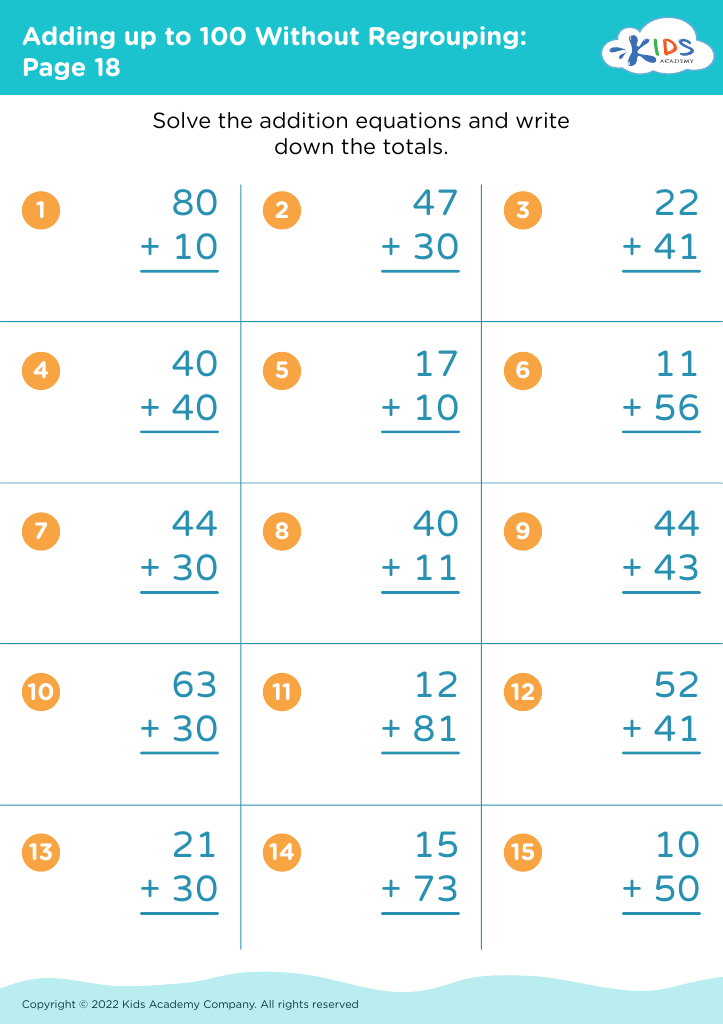
Adding up to 100 Without Regrouping: Page 18
Worksheet
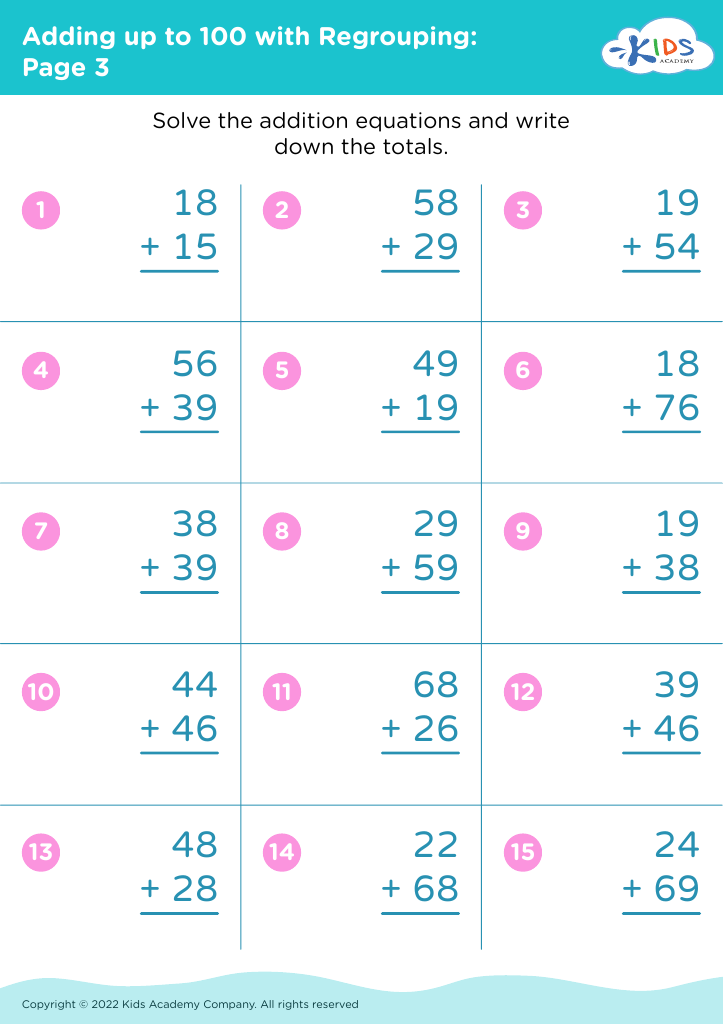
Adding up to 100 with Regrouping: Page 3
Worksheet
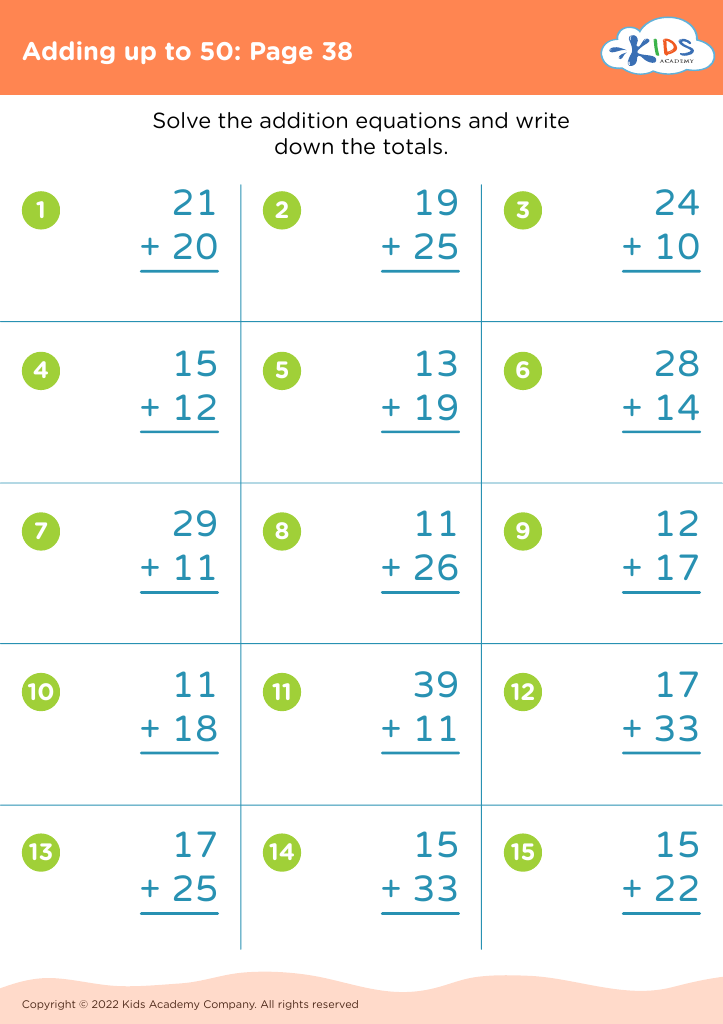
Adding up to 50: Page 38

Adding up to 50: Page 38

Adding up to 50: Page 38
Worksheet
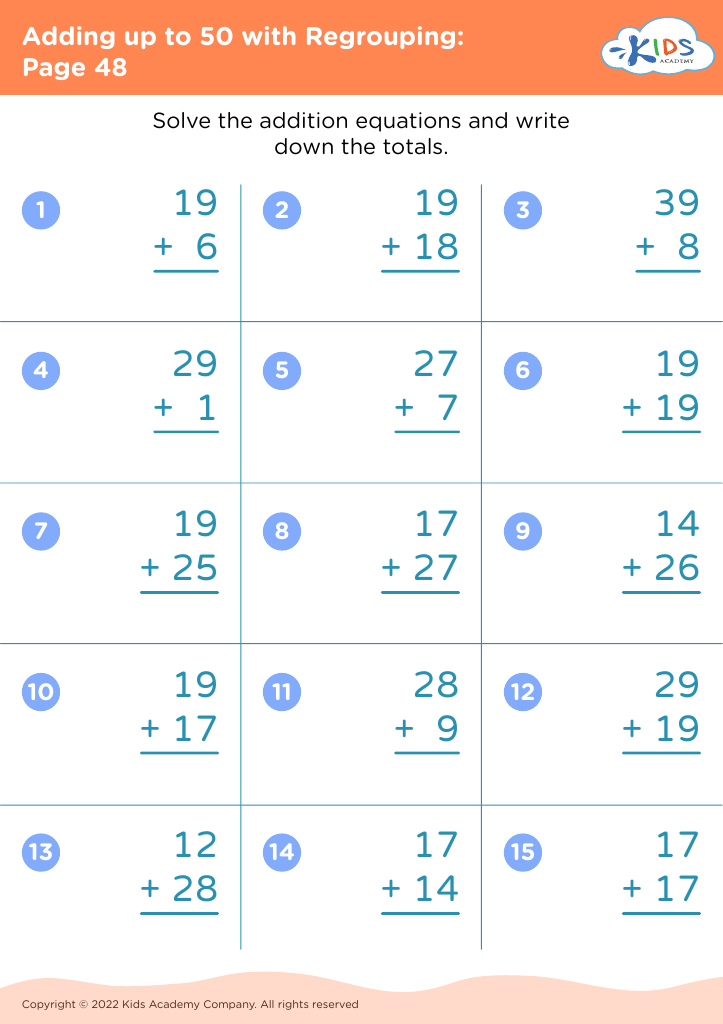
Adding up to 50 with Regrouping: Page 48
Worksheet
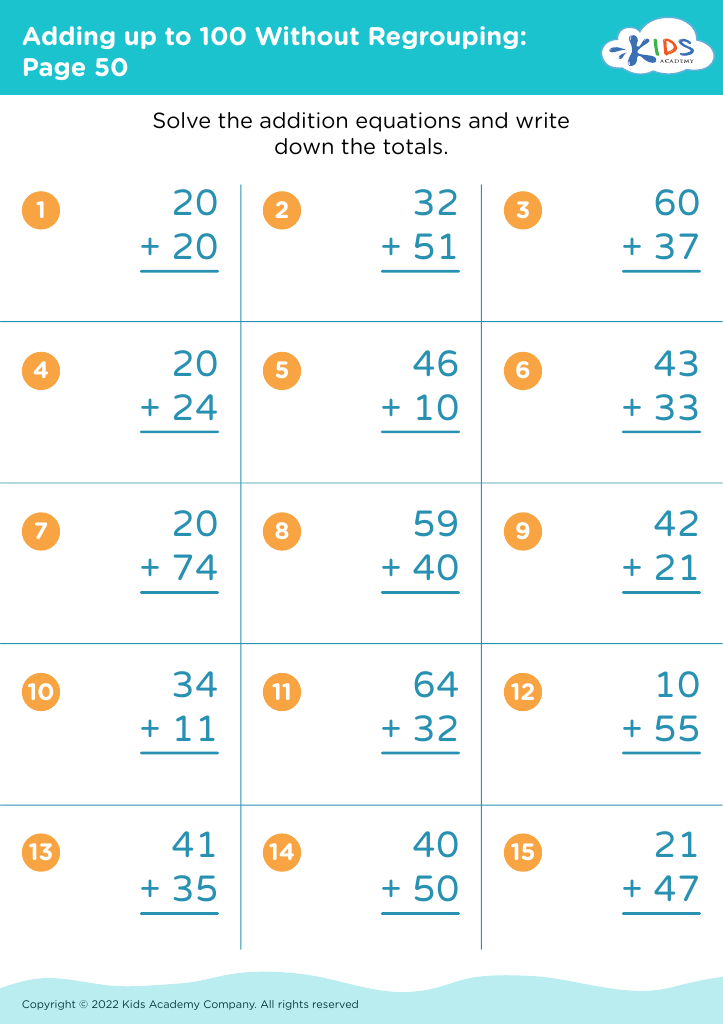
Adding up to 100 Without Regrouping: Page 50
Worksheet
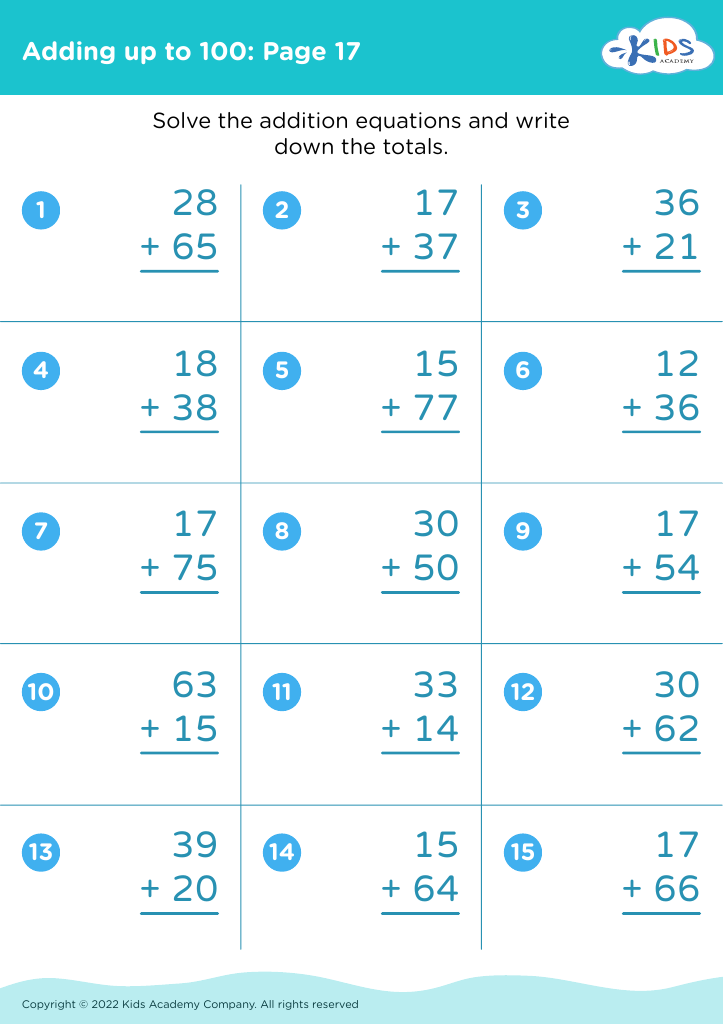
Adding up to 100: Page 17

Adding up to 100: Page 17

Adding up to 100: Page 17
Worksheet
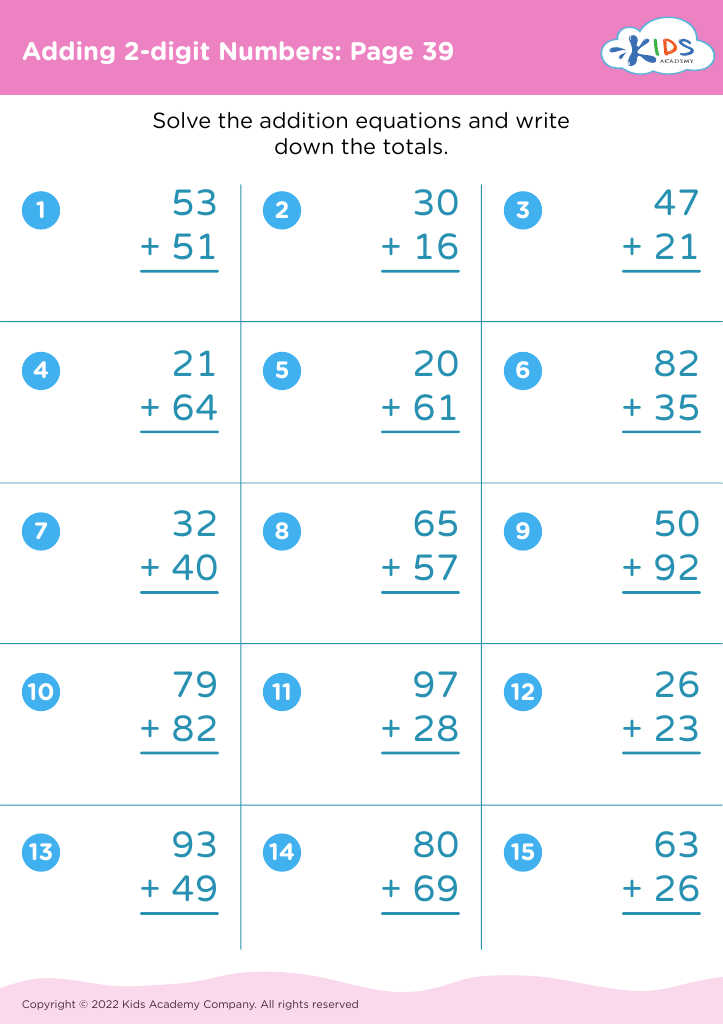
Adding 2-digit Numbers: Page 39

Adding 2-digit Numbers: Page 39

Adding 2-digit Numbers: Page 39
Worksheet
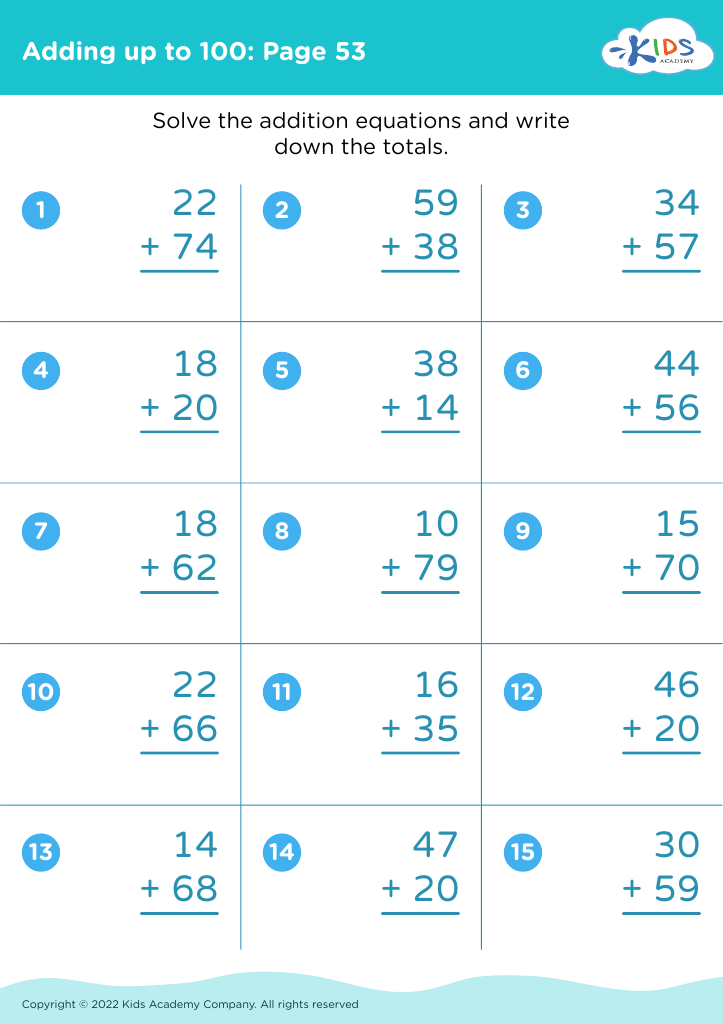
Adding up to 100: Page 53

Adding up to 100: Page 53

Adding up to 100: Page 53
Worksheet
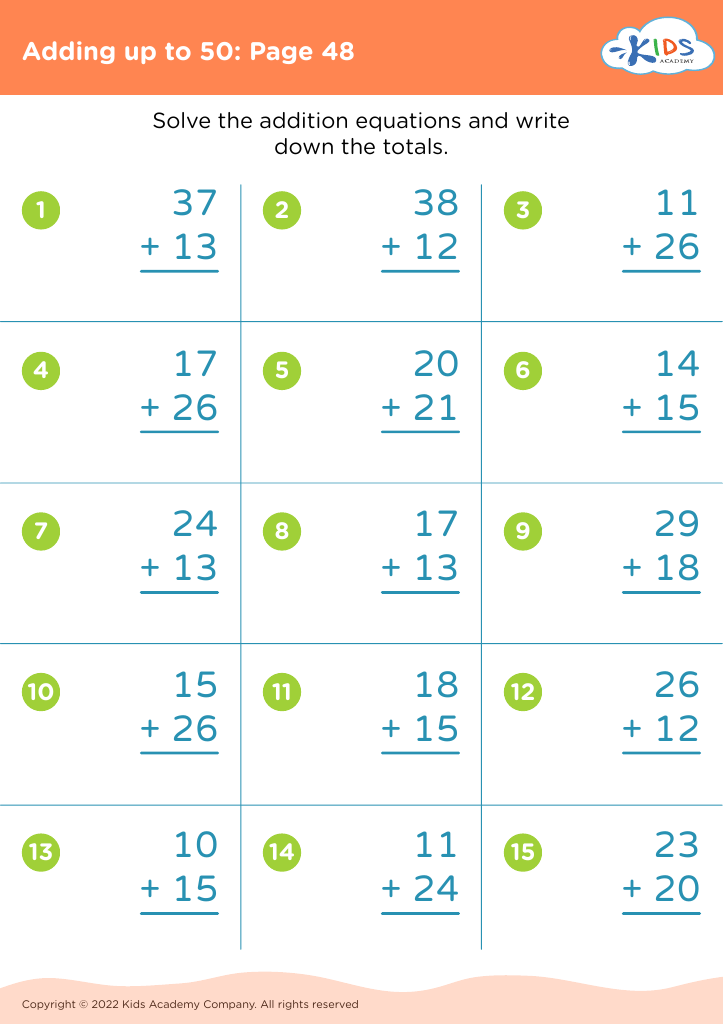
Adding up to 50: Page 48

Adding up to 50: Page 48

Adding up to 50: Page 48
Worksheet
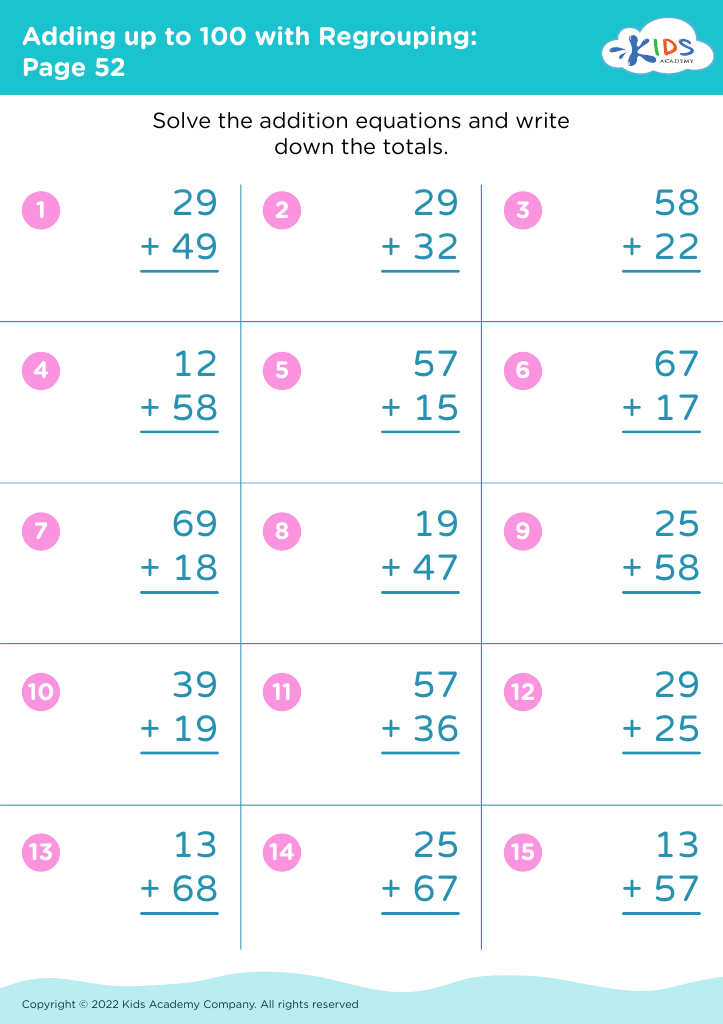
Adding up to 100 with Regrouping: Page 52
Worksheet
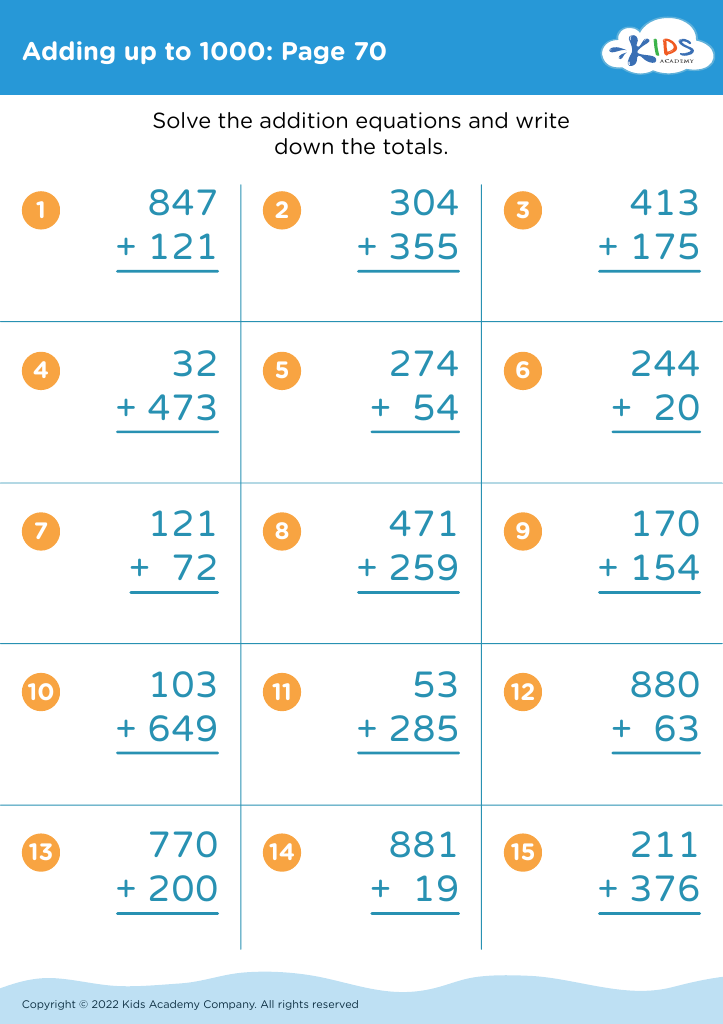
Adding up to 1000: Page 70

Adding up to 1000: Page 70

Adding up to 1000: Page 70
Worksheet
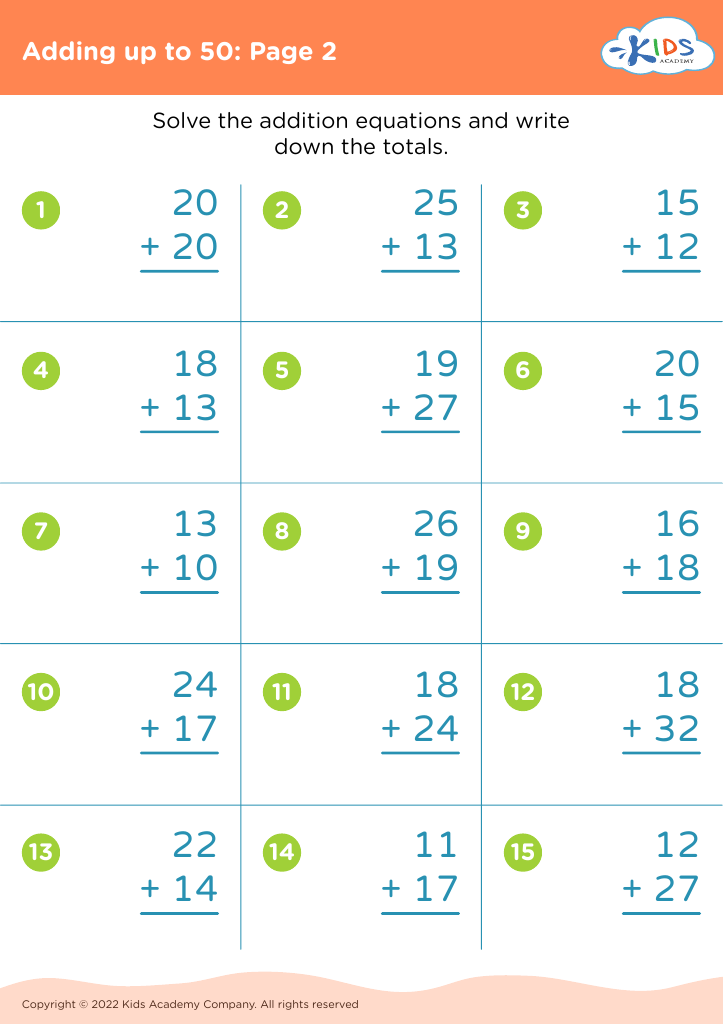
Adding up to 50: Page 2

Adding up to 50: Page 2

Adding up to 50: Page 2
Worksheet
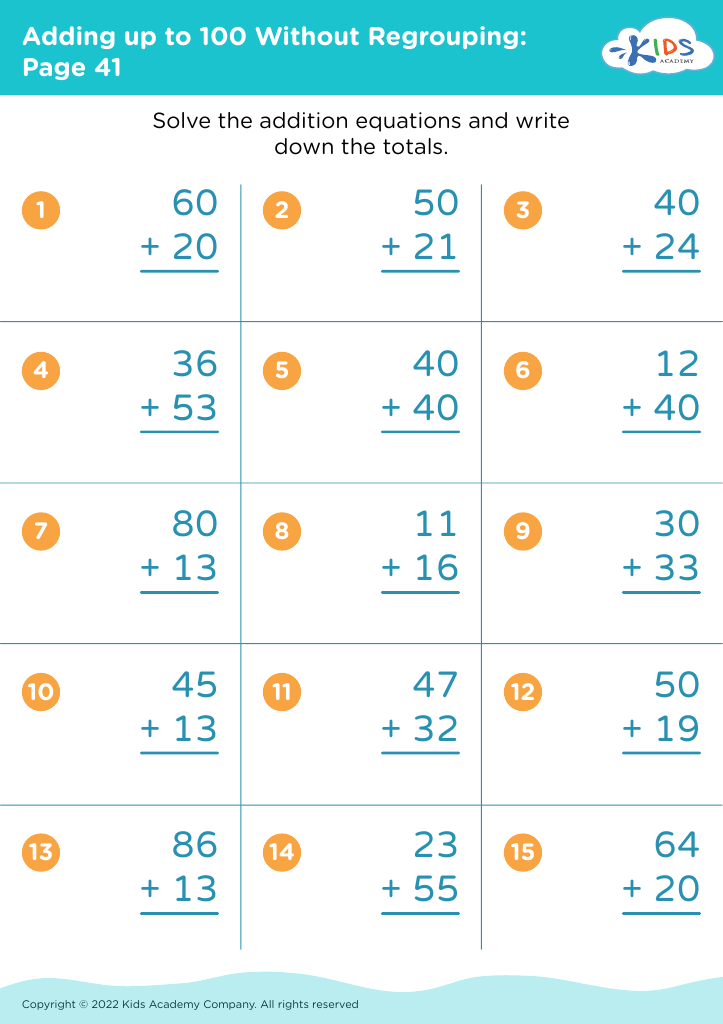
Adding up to 100 Without Regrouping: Page 41
Worksheet
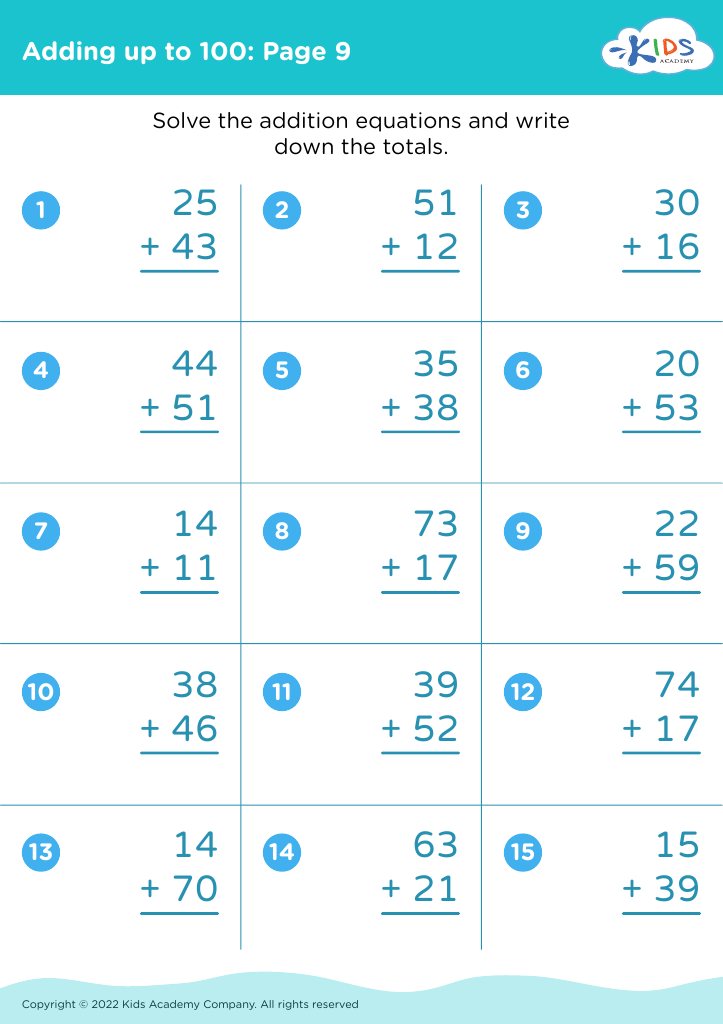
Adding up to 100: Page 9

Adding up to 100: Page 9

Adding up to 100: Page 9
Worksheet
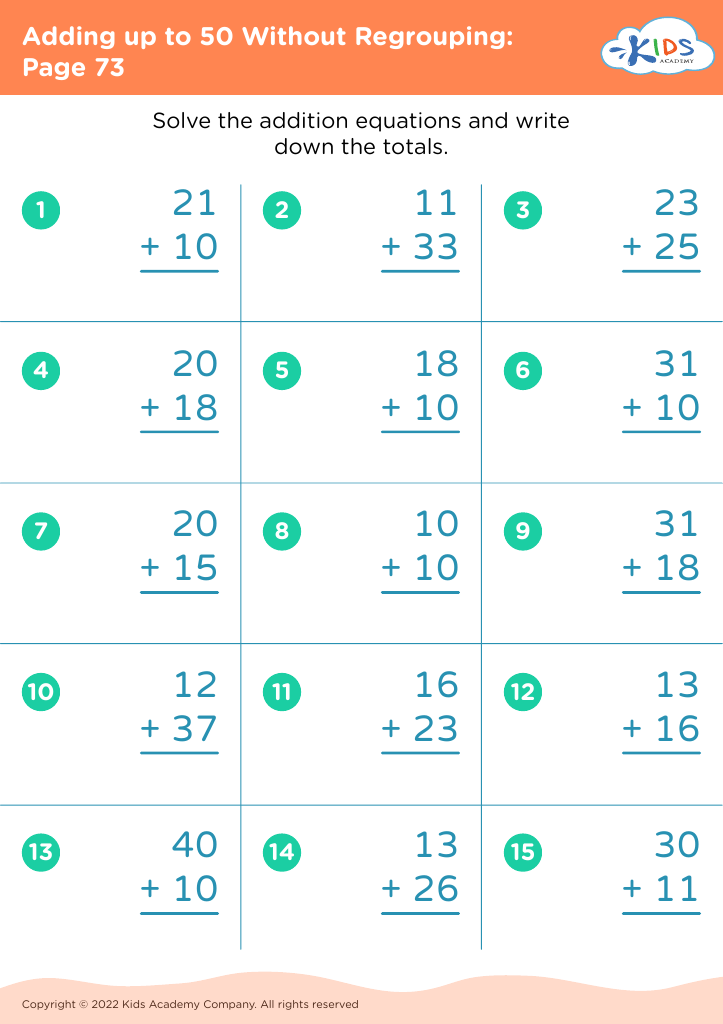
Adding up to 50 Without Regrouping: Page 73
Worksheet
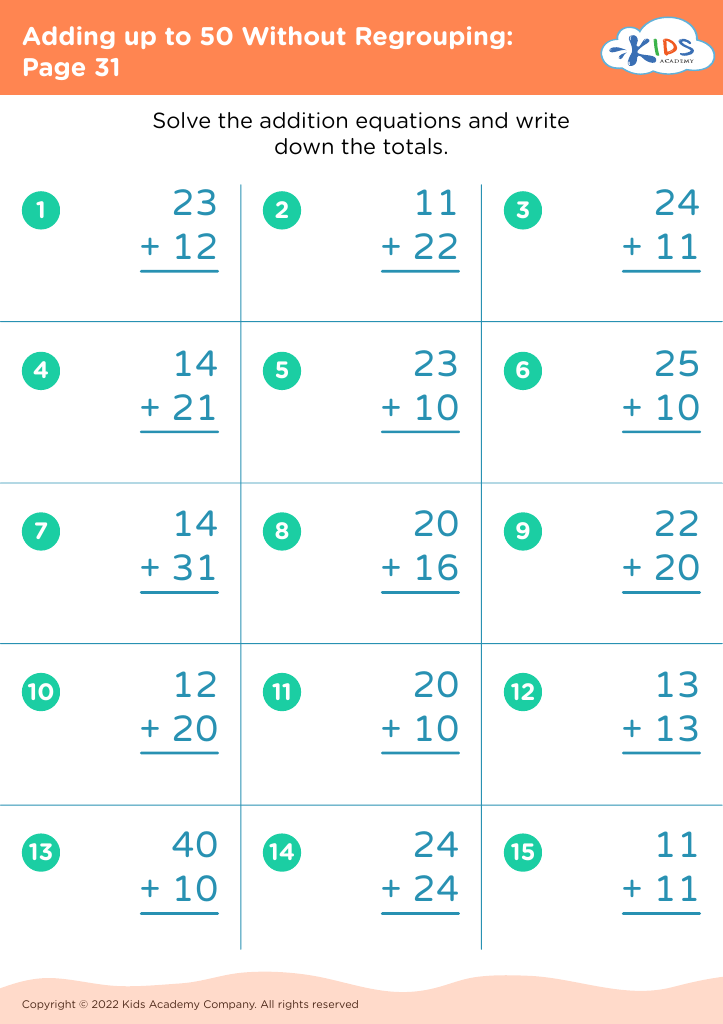
Adding up to 50 Without Regrouping: Page 31
Worksheet


Understanding fractions and their addition is crucial for children aged 3-7, as it lays the foundation for essential math skills. Early familiarity with fractions helps children develop a strong number sense, which supports their ability to understand relationships between parts and wholes. Recognizing fractions, such as 1/2 or 1/4, encourages logical thinking and problem-solving skills.

At this age, children's cognitive abilities are rapidly evolving, making it an ideal time to introduce concepts like sharing or dividing objects to illustrate fractions. Using tangible examples, like splitting a pizza or a cake, makes learning engaging and relatable, fostering a love for mathematics early on.

Moreover, understanding fractions is not just about math skills; it promotes critical thinking. For instance, when children learn to add simple fractions, they develop the ability to analyze, compare, and manipulate different quantities, skills that are beneficial in daily life, from cooking to budgeting.

By caring about this aspect of early education, parents and teachers positively impact children's academic futures and equip them with vital life skills. A strong grasp of fractions can make complex mathematical concepts more accessible in later years, easing their transition into higher-level math.