Understanding number values Addition Worksheets for Ages 3-7
3 filtered results
-
From - To
Discover a collection of engaging addition worksheets designed for children aged 3-7 to enhance their understanding of number values. These colorful and interactive exercises help young learners grasp the fundamentals of addition while building their confidence in math. Through hands-on activities, students will learn to recognize number quantities and how they combine to form sums. Our carefully crafted worksheets cater to various learning styles, ensuring every child can progress at their own pace. Foster a love for math early on and equipped your child with essential skills through these fun, educational materials. Perfect for home learning or classroom settings!
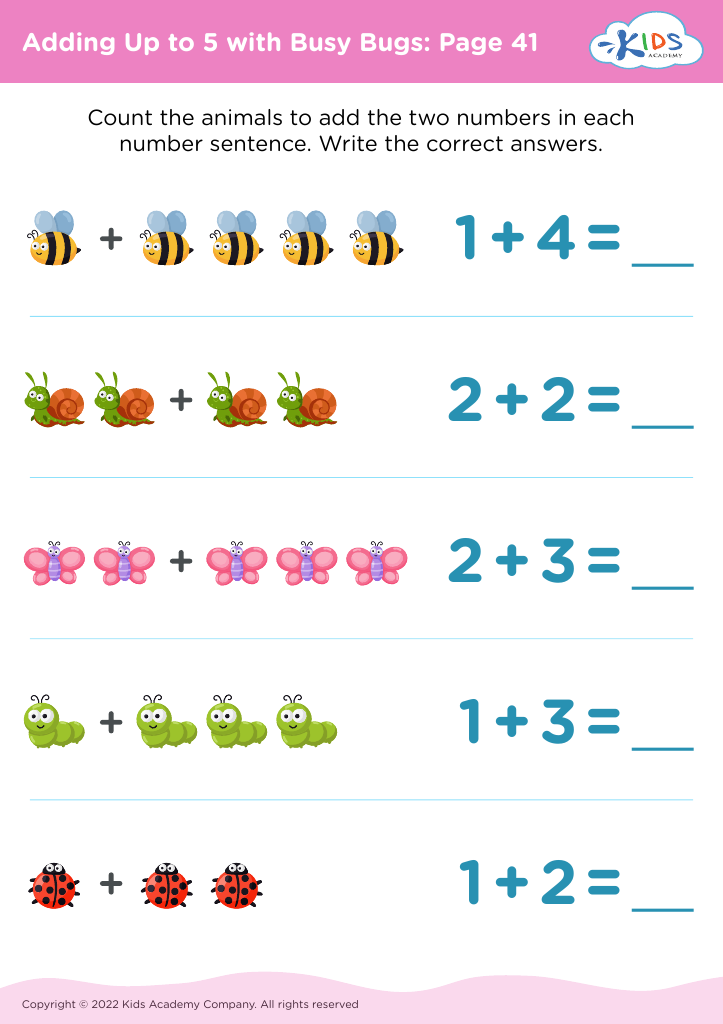
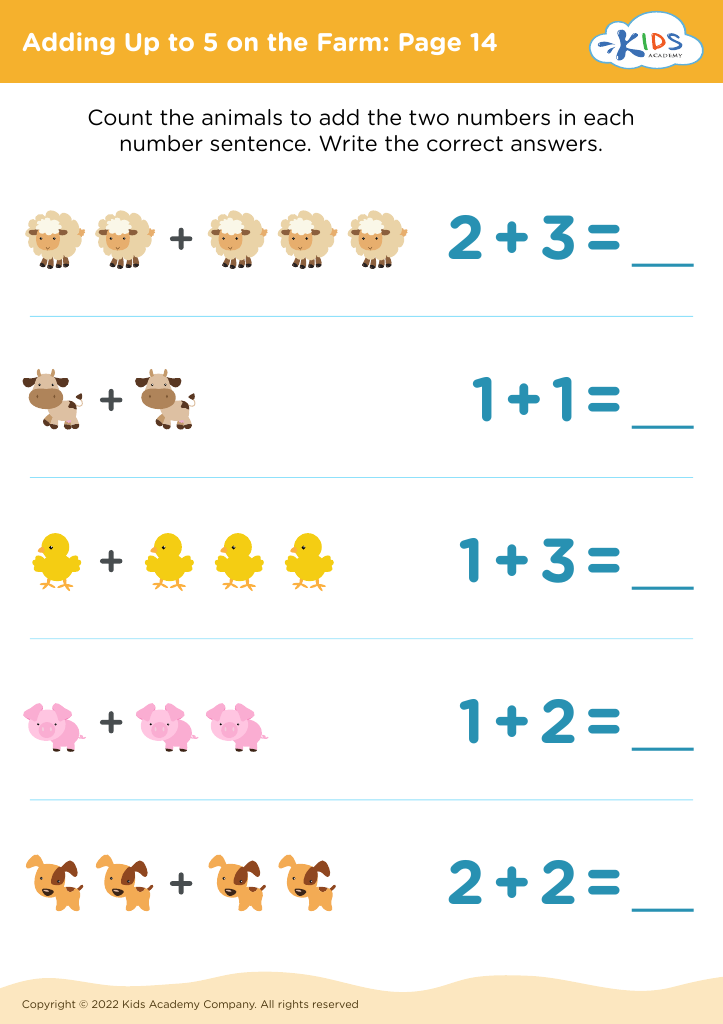
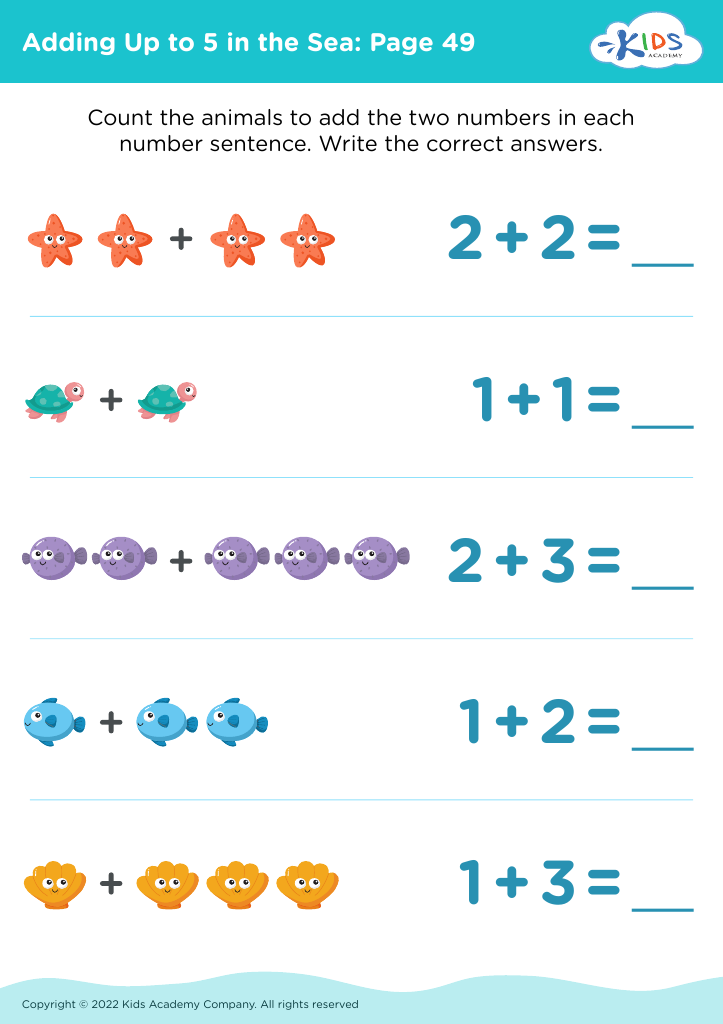








Understanding number values and addition is crucial for children aged 3-7 as it lays the foundation for their future math skills. During these formative years, children are naturally curious and capable of absorbing concepts through play and interaction. Teaching them about number values helps them recognize quantity, which is essential for everyday tasks and decision-making.
Addition introduces basic problem-solving skills, enabling children to combine groups of objects and see relationships among numbers. This skill nurtures critical thinking and helps them develop persistence when faced with challenges. When parents and teachers emphasize understanding over memorization, children engage actively with learning, fostering a more profound appreciation for math.
Moreover, early math skills are linked to long-term academic success. Research shows that children who grasp number concepts early on tend to perform better in mathematics later in school. Additionally, these skills build confidence, improving children's willingness to tackle more complex topics as they progress.
By actively participating in their child's learning journey, parents and teachers create a supportive environment where children can thrive. This investment not only benefits their immediate learning but also sets a strong foundation for lifelong learning and achievement in math and beyond.








