Understanding numeracy Addition Worksheets for Ages 3-7
4 filtered results
-
From - To
"Understanding Numeracy Addition Worksheets for Ages 3-7" provides young learners with a solid foundation in early math skills. These engaging and colorful worksheets are designed to make learning addition fun and effective, catering to children aged 3-7. By incorporating visually appealing images and easy-to-follow instructions, kids will develop essential numeracy skills. Through incremental challenges, each worksheet gradually reinforces understanding and confidence, paving the way for more advanced math concepts. Perfect for classroom use or at-home practice, these resources ensure children grasp the fundamental concepts of addition while enjoying their learning journey. Nurture your child’s numeracy skills today!
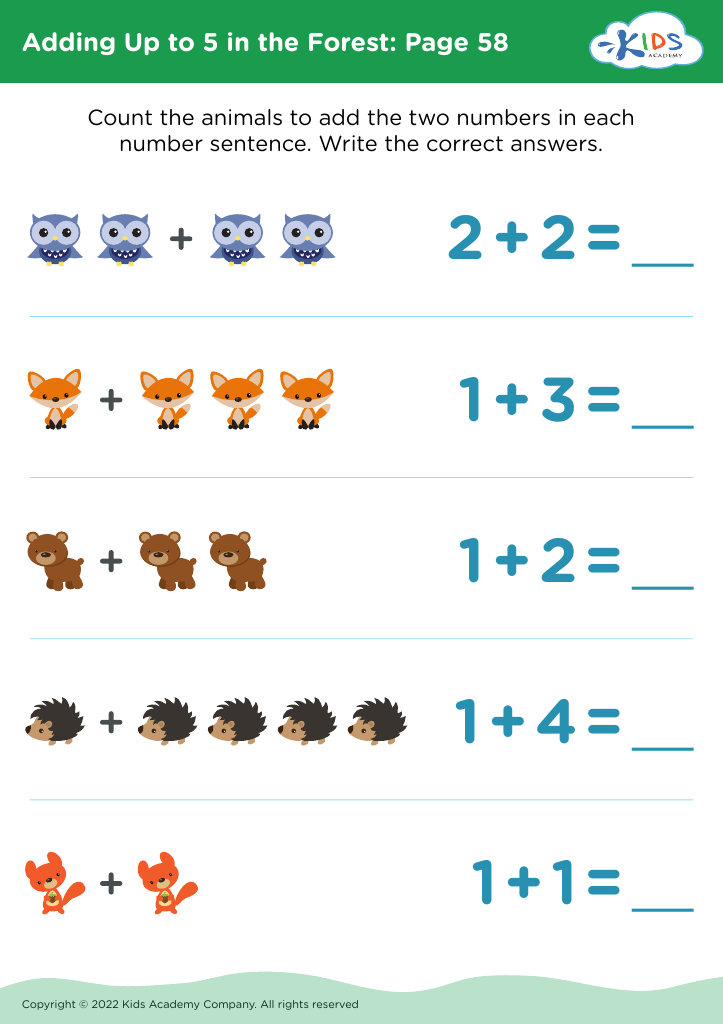
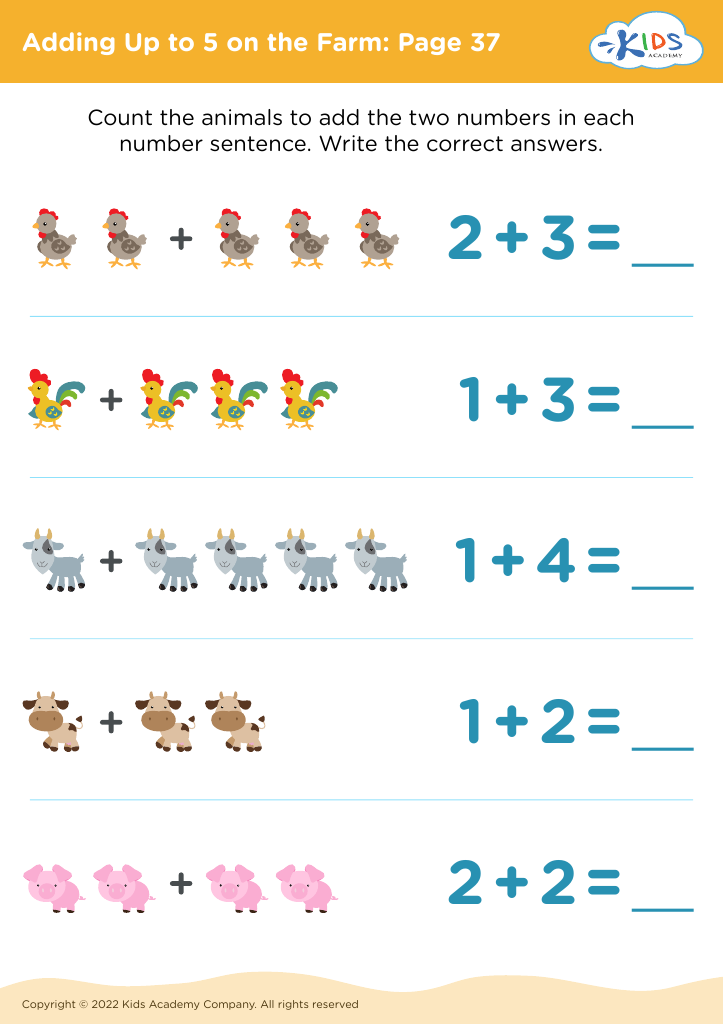
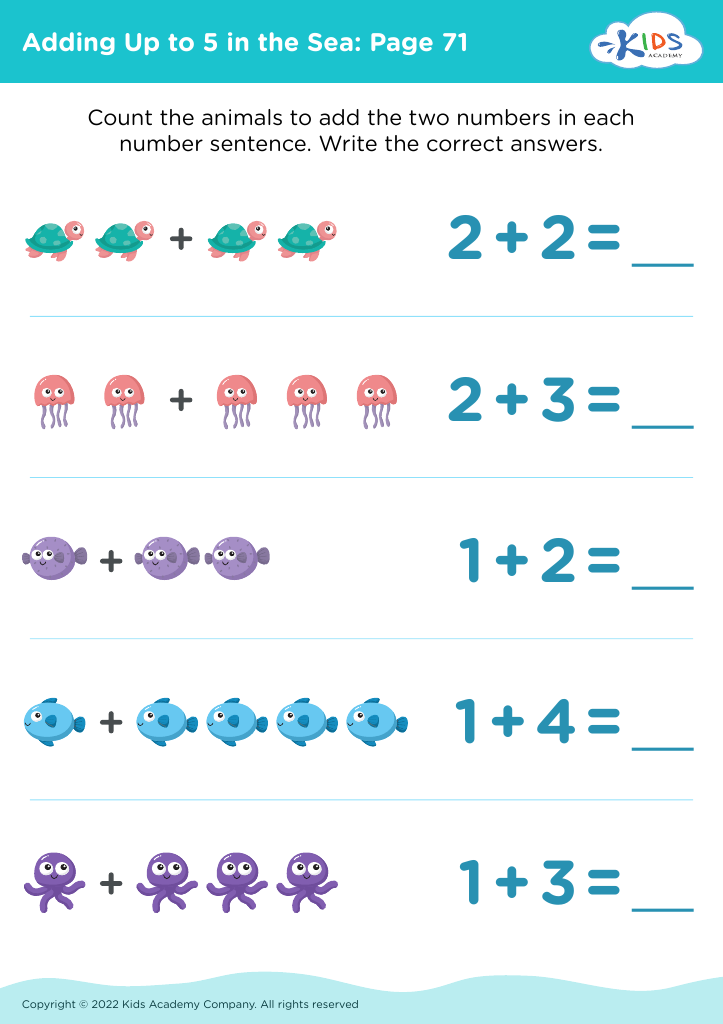
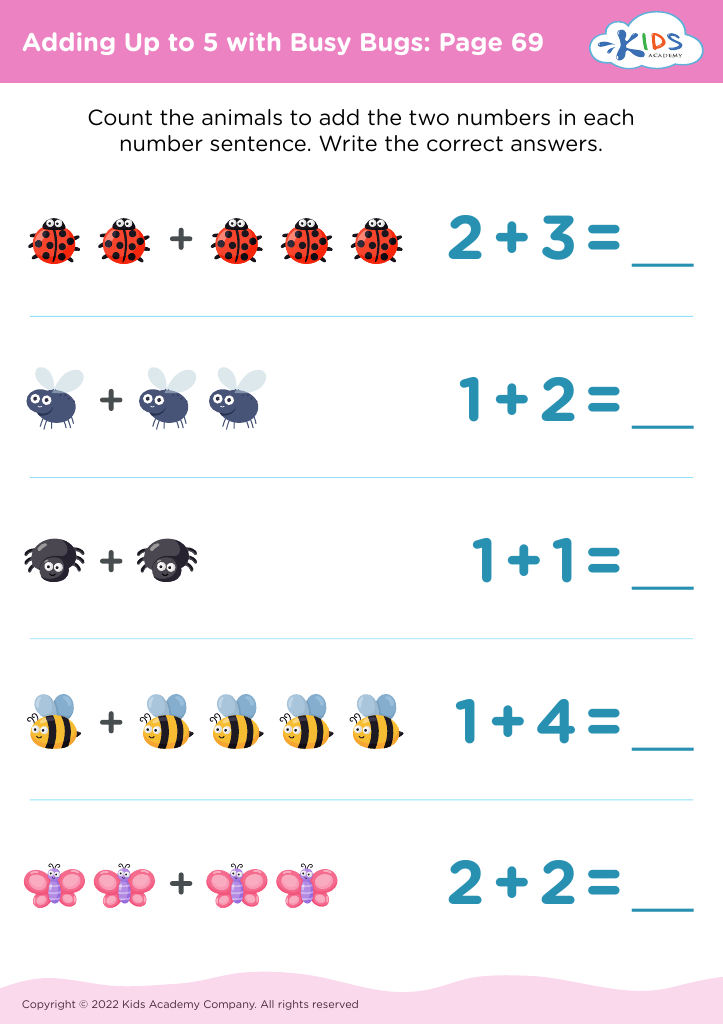








Understanding numeracy addition for ages 3-7 is crucial for several reasons. At this early developmental stage, young children are laying the foundation for all future mathematical learning and cognitive skills. Emphasizing numeracy and addition helps in shaping their ability to understand numbers, patterns, and logical thinking.
Firstly, early numeracy skills directly correlate with later academic achievement. Children proficient in basic addition are better equipped to tackle more complex mathematical concepts in higher grades. It also enhances their problem-solving skills, fostering a mindset inclined toward analysis and systematic thinking.
Secondly, grasp of numeracy bolsters confidence. When kids understand the basics of addition, they feel more capable and secure in their academic abilities. This can translate to a positive attitude toward learning in general. Moreover, early math skills are linked to improved literacy, as numerical reasoning supports comprehension and semantic understanding.
Lastly, engaging young minds with numeracy skills at an early age nurtures curiosity and fosters a love for learning. Fun, interactive addition activities encourage active engagement, making math enjoyable rather than daunting.
Parents and teachers play a pivotal role in ensuring children receive a solid foundation in numeracy addition. Through patience, practice, and encouragement, they can set children on a path to scholastic and lifelong success.








