Understanding patterns Addition Worksheets for Ages 3-7 - Page 2
29 filtered results
-
From - To
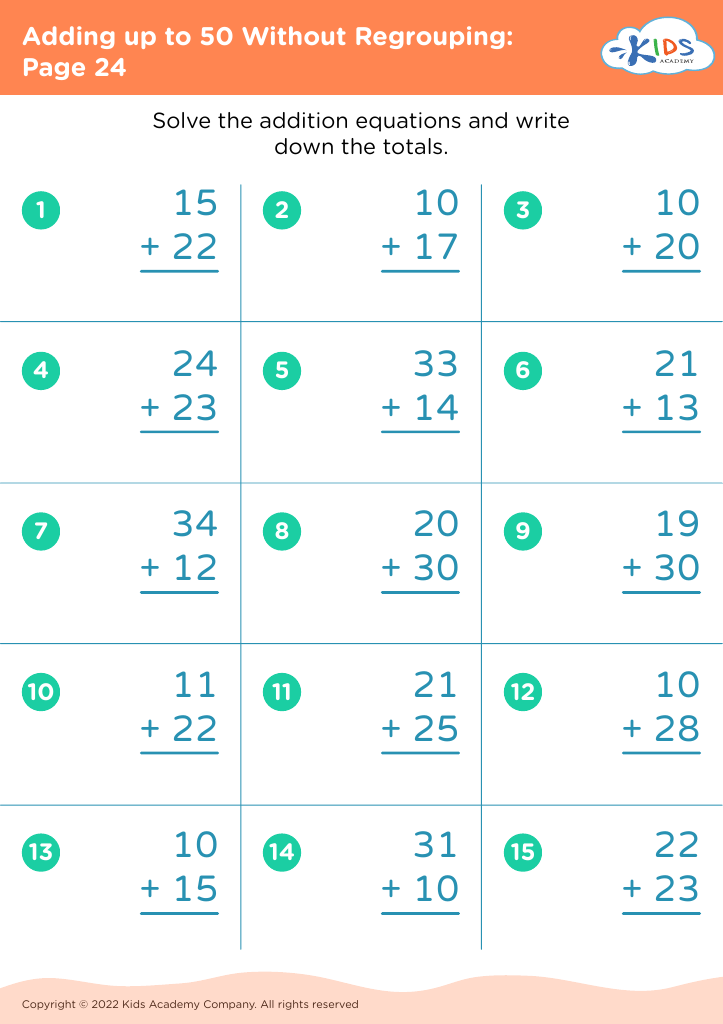
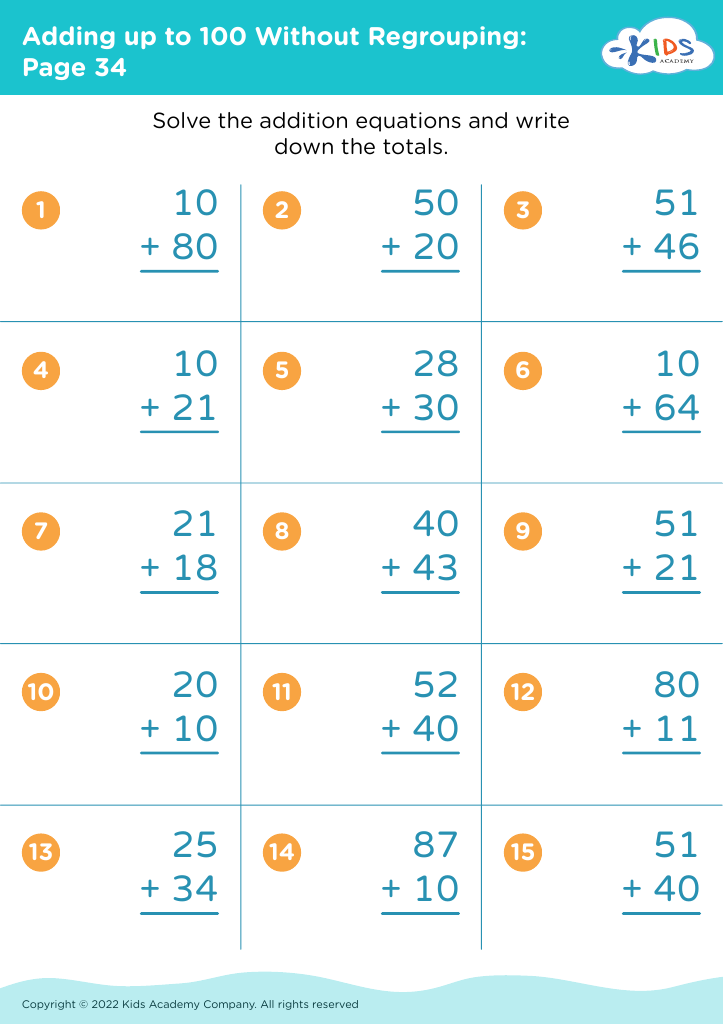
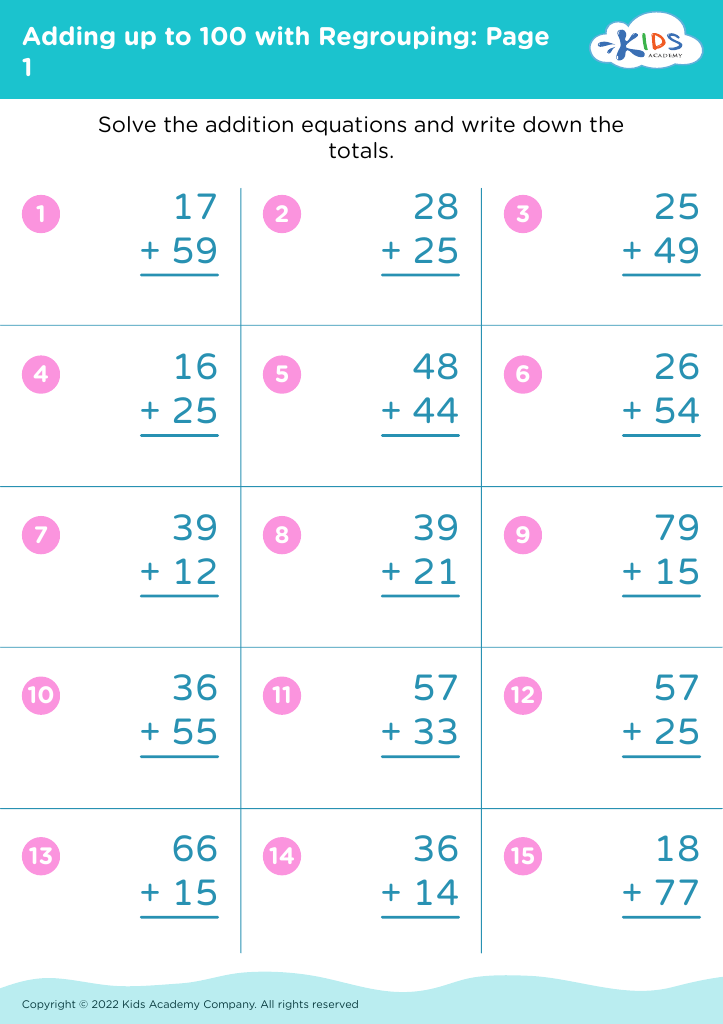
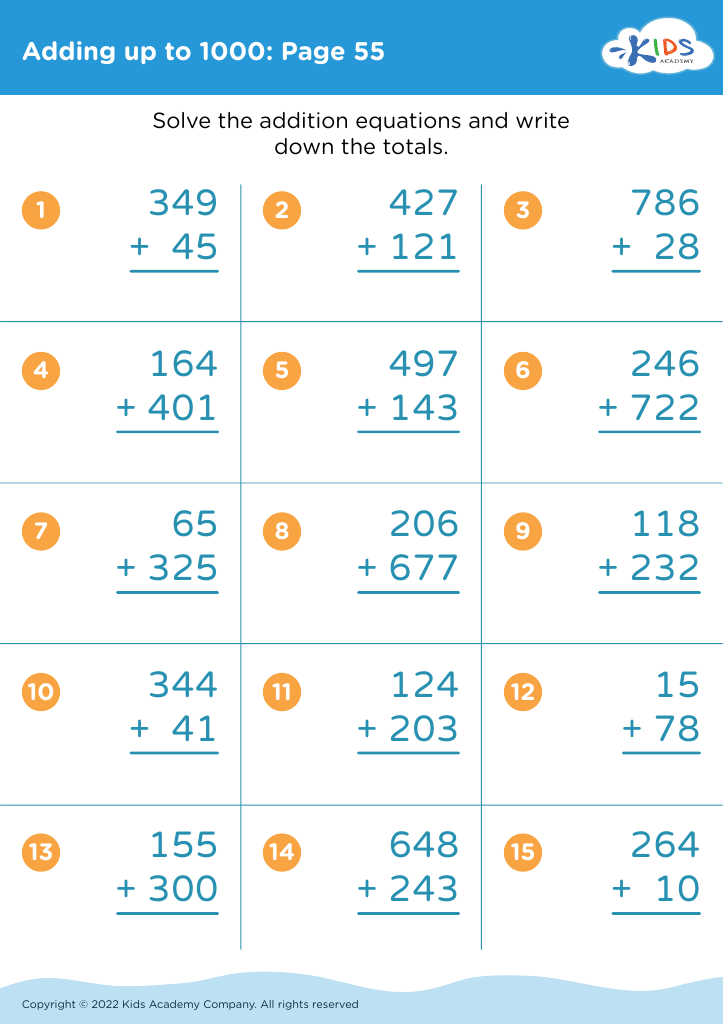
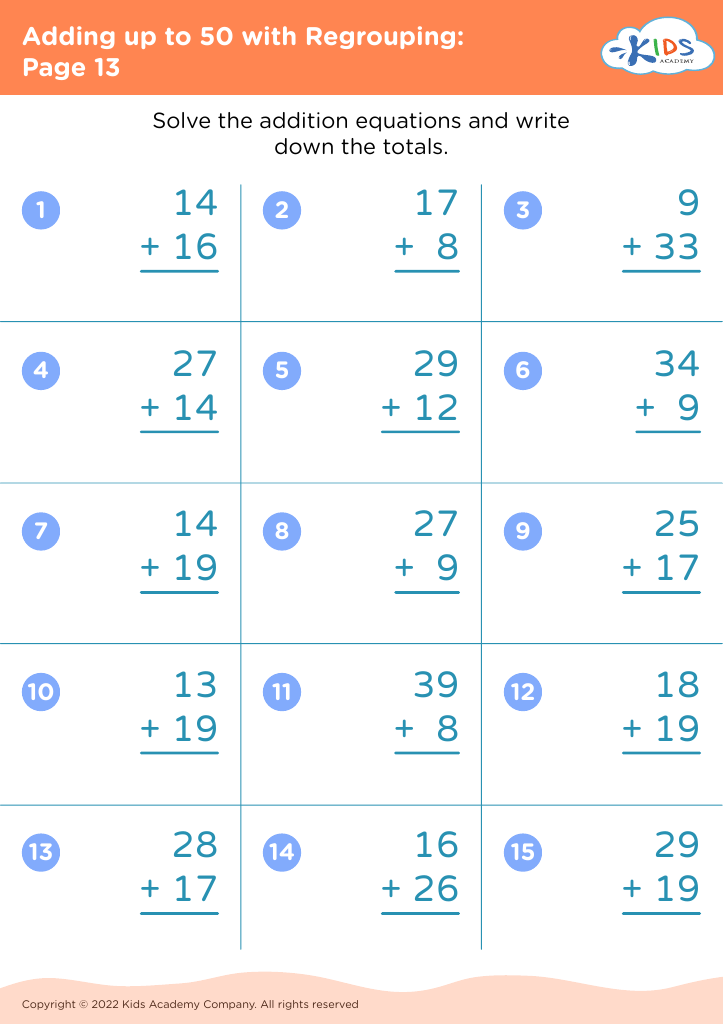








Understanding patterns in addition is fundamental for young children ages 3-7 as it lays the groundwork for future mathematical learning and critical thinking skills. At this developmental stage, children’s minds are highly receptive to recognizing and forming patterns, which are essentially repetitive and predictable arrangements. Grasping addition patterns enhances their number sense, fosters logical reasoning, and strengthens problem-solving skills.
When children comprehend addition patterns, they begin to see the relationships between numbers, like how adding 1 repeatedly creates a consistent count sequence or how pairs of numbers combine to form new sums. These patterns help children make predictions, understand numerical operations intuitively, and lay a solid foundation for more complex arithmetic concepts later on, such as multiplication and algebra.
Moreover, mastering these patterns in a supportive environment boosts children’s confidence in their mathematical abilities. It enables them to tackle new problems by identifying familiar number relationships, reducing anxiety around math as they progress in school. For both parents and teachers, emphasizing pattern recognition in addition makes math a more engaging and enjoyable subject, encouraging a lifelong appreciation and curiosity for numbers.
Incorporating patterns in early addition helps children build essential cognitive and academic skills that serve as building blocks for higher mathematics, overall logical processes, and everyday problem-solving abilities.








