
Underwater animal identification Addition Worksheets for Ages 3-7
3 filtered results
Difficulty Level
Grade
Age
-
From - To
Subject
Activity
Standards
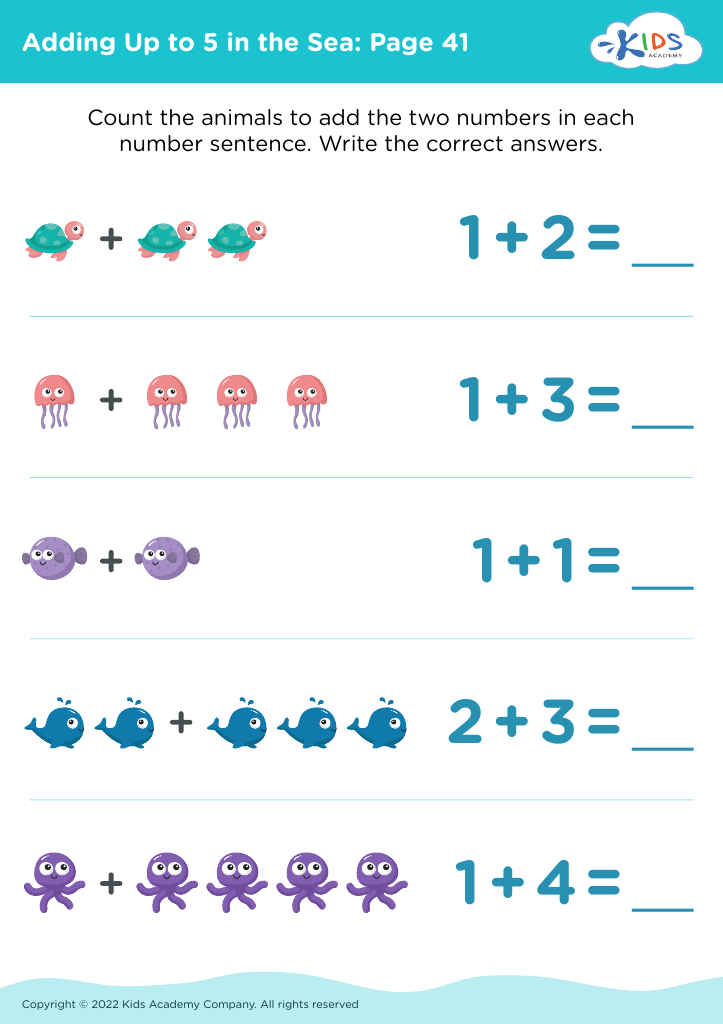
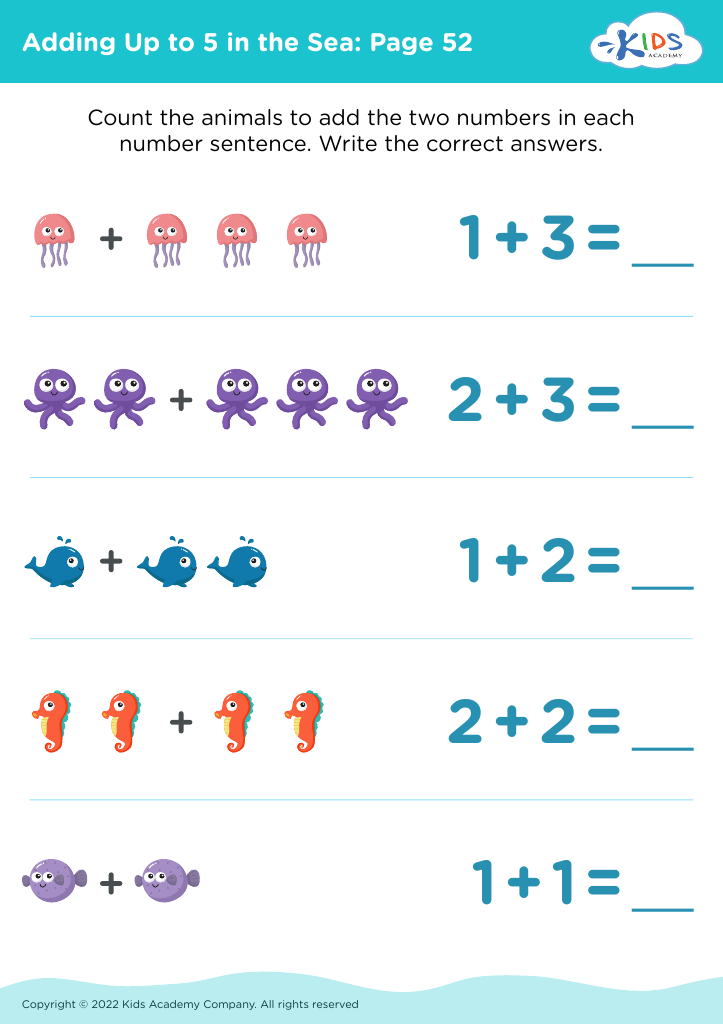
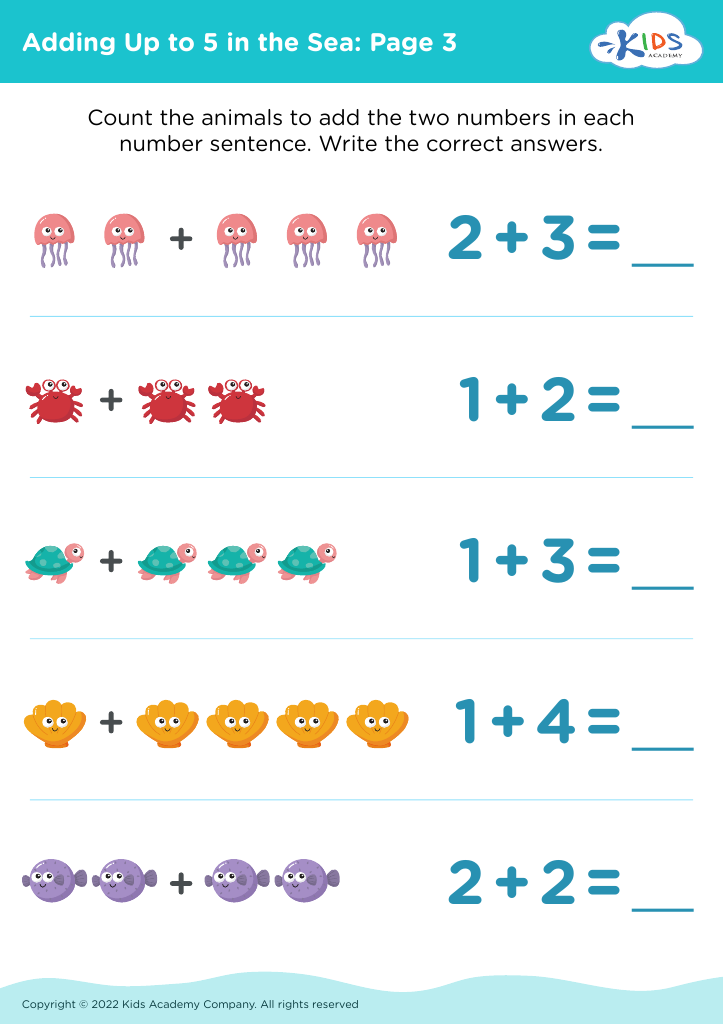
Dive into learning with our Underwater Animal Identification Addition Worksheets for Ages 3-7. Designed to make math fun, these worksheets combine playful underwater scenes with essential addition practice. Perfect for young learners, kids will enjoy identifying colorful sea creatures while strengthening their addition skills. Each worksheet features engaging illustrations and easy-to-follow instructions, ensuring a positive learning experience. Ideal for parents and teachers looking for effective educational tools, these worksheets encourage curiosity and cognitive development in early learners. Download now to transform math practice into an underwater adventure for your child or students.
Favorites
With answer key
Interactive
Join Kids Academy for Free
Who is primarily going to use this learning content?








Parents and teachers should take keen interest in Underwater Animal Identification for children ages 3-7 because it facilitates a highly engaging and educational experience that fosters fundamental developmental skills. At this impressionable age, children are naturally curious about the world around them, and learning about underwater creatures captivates their imagination, making education enjoyable. This interactive approach can spur a life-long interest in marine biology and environmental conservation.
Identifying underwater animals enhances cognitive development in children. It sharpens their observation and memory skills as they learn to distinguish between different species based on their colors, shapes, and sizes. This activity also promotes language development as children learn new vocabulary and concepts associated with marine life. Additionally, discussing the relationships and roles of these creatures encourages critical thinking and introduces basic ecological concepts.
Moreover, integrating simple addition with underwater animal identification reinforces early math skills in a fun context. When children count the number of fish or add the total limbs of sea creatures, they practice arithmetic in a meaningful and engaging way.
Overall, such interdisciplinary learning promotes curiosity, literacy, numeracy, and a sense of environmental stewardship, making it a valuable educational strategy for young learners.








