Visual comprehension Addition Worksheets for Ages 3-7
7 filtered results
-
From - To
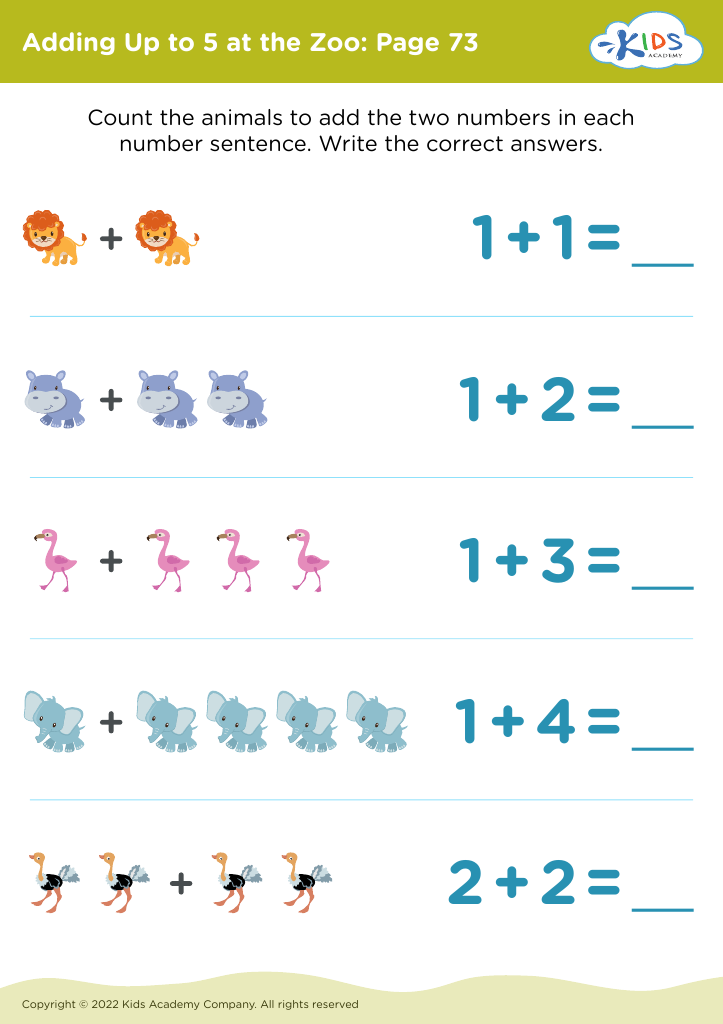
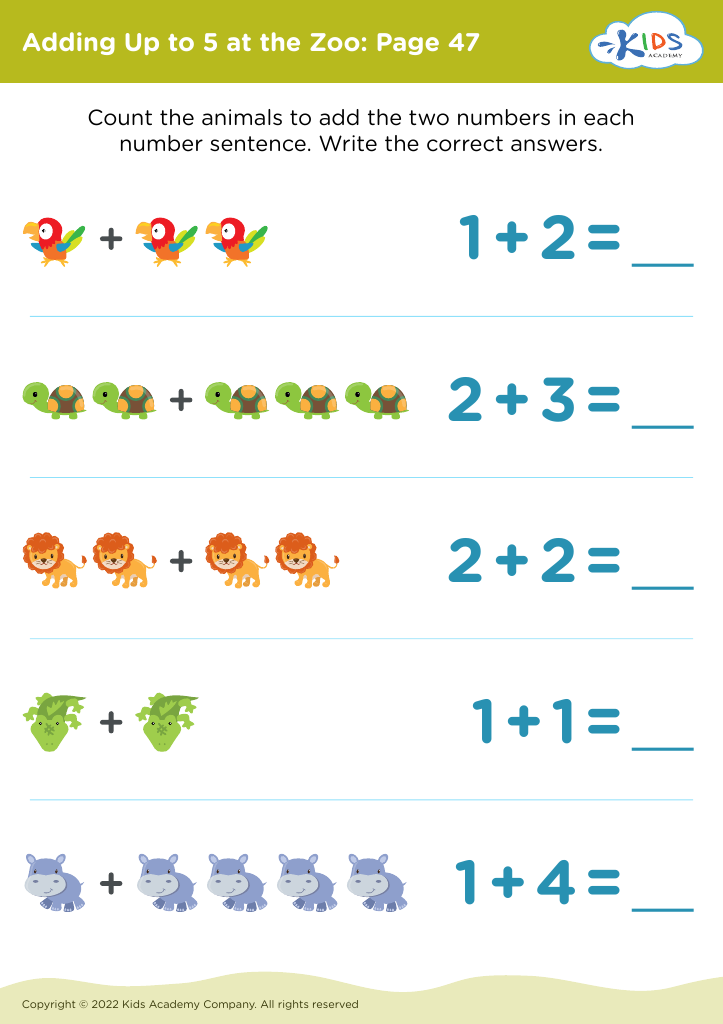
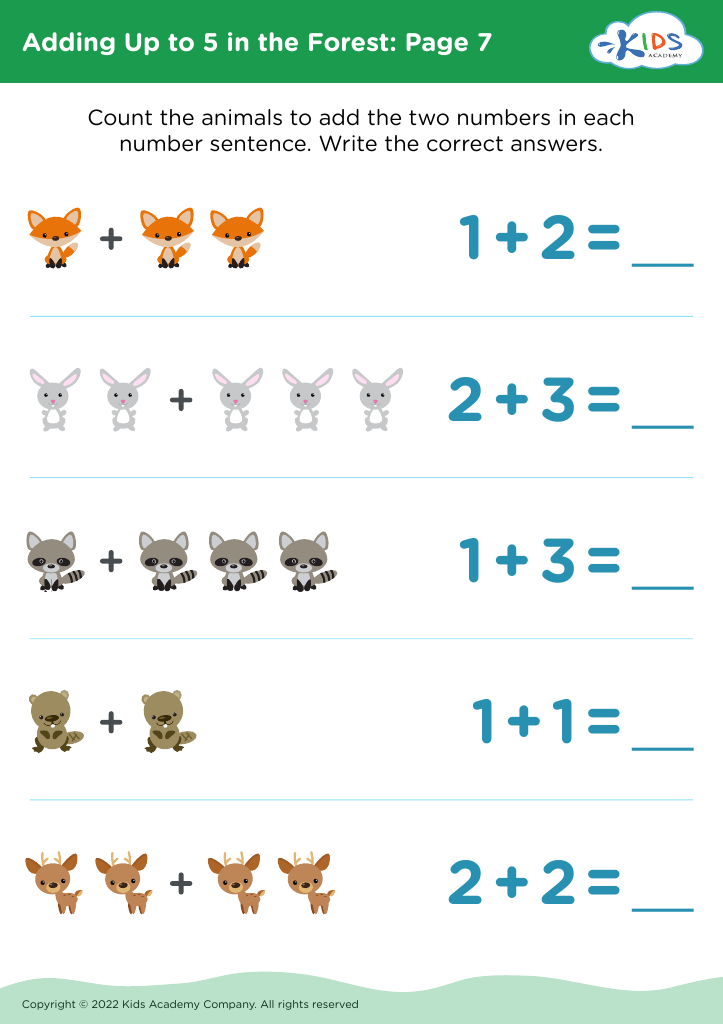
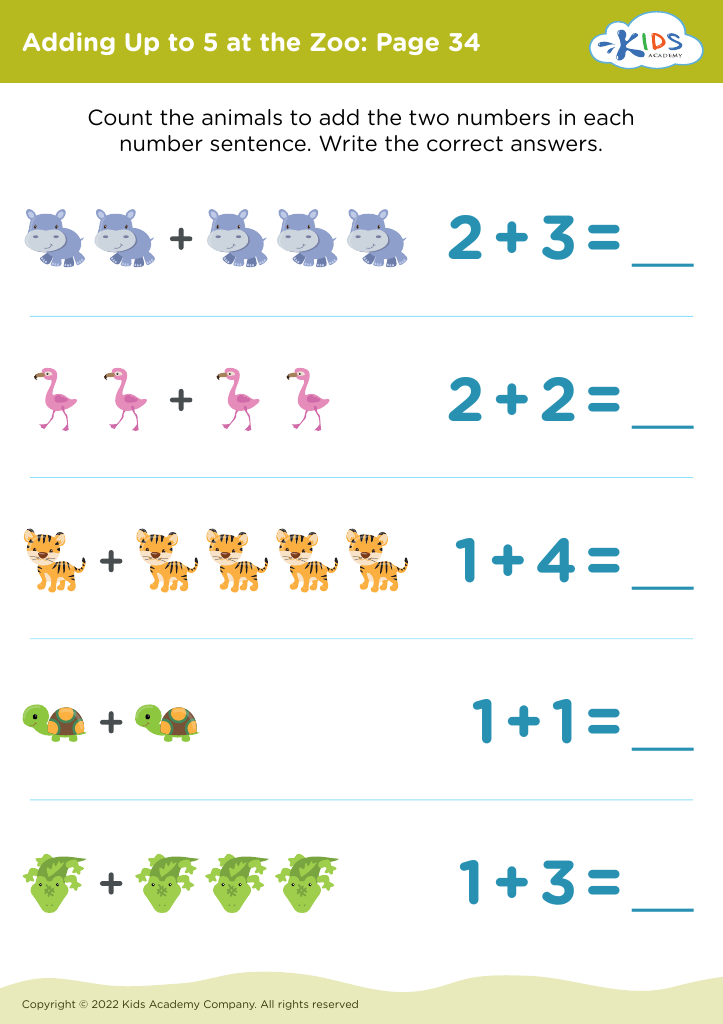
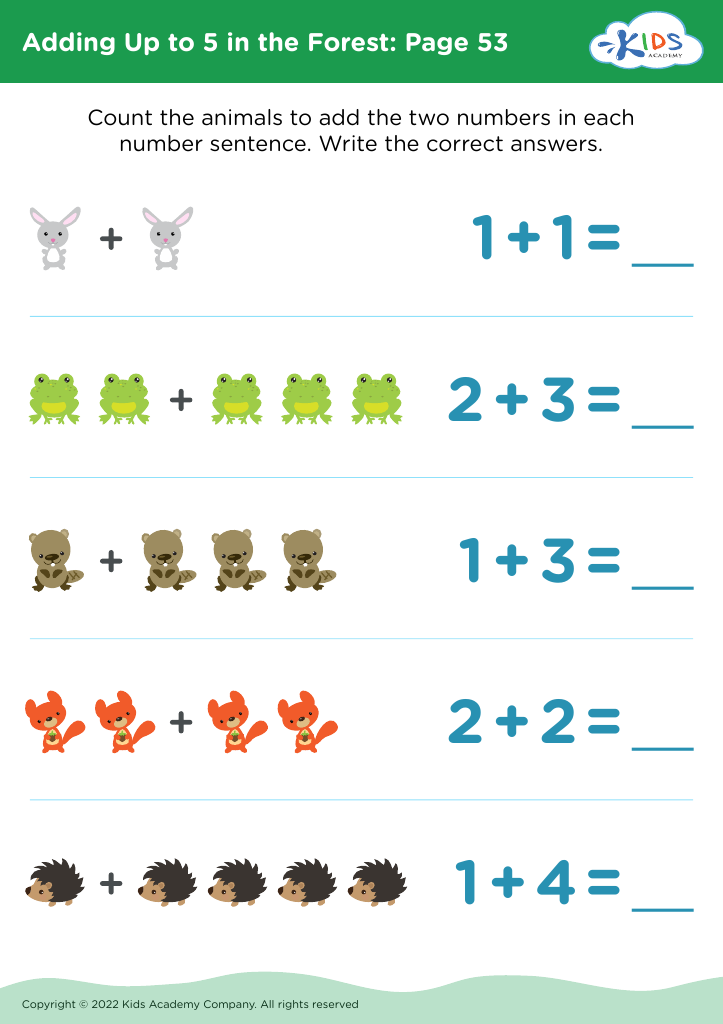
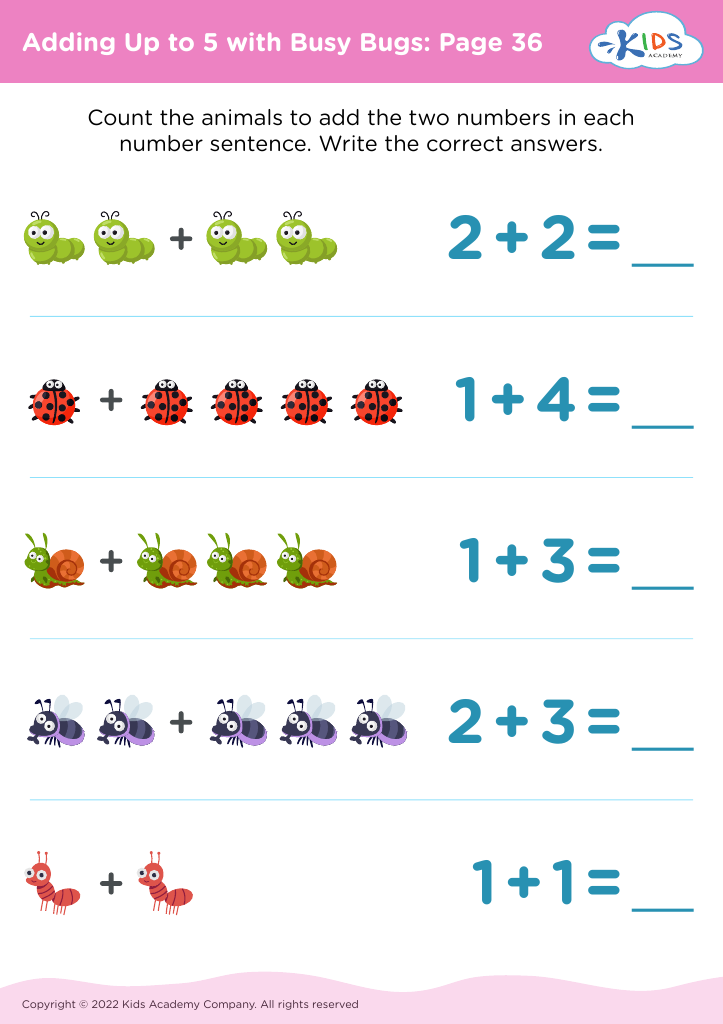
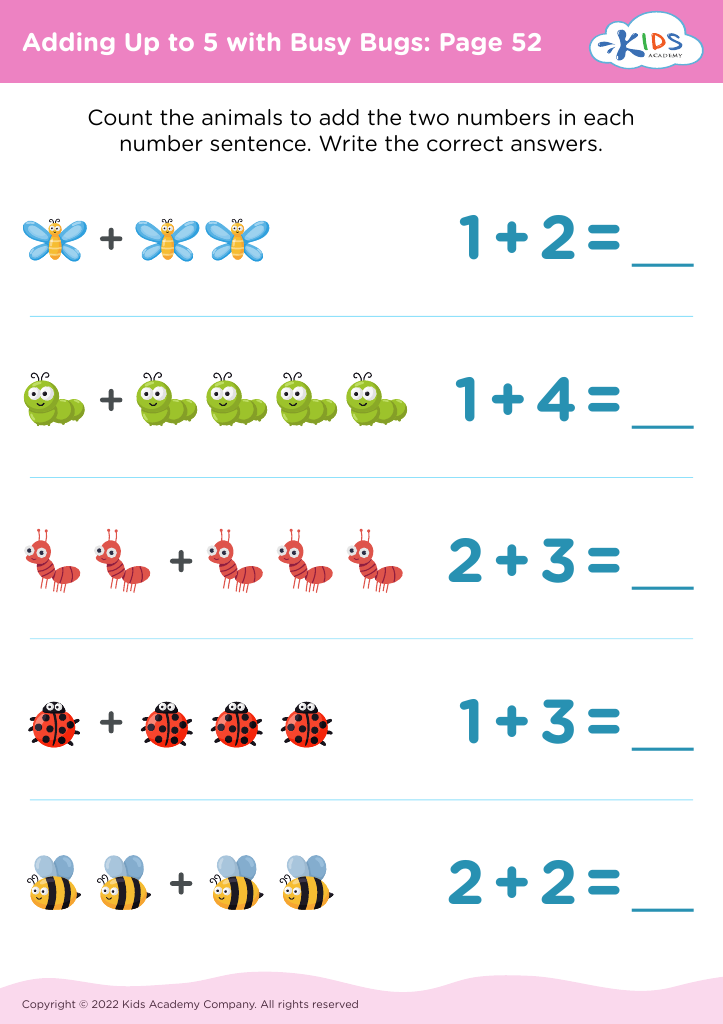
Explore our engaging Visual Comprehension Addition Worksheets designed specifically for children aged 3-7. These interactive resources help foster essential math skills through colorful visuals and relatable scenarios. Each worksheet encourages visual recognition, helping young learners connect images with quantities while adding fun to their learning process. With clearly designed activities, kids will strengthen their addition skills and boost their confidence in math. Perfect for parents and educators seeking to create an enjoyable learning environment, our worksheets support early numeracy development through a hands-on approach. Discover the joy of learning addition through visual comprehension today! Visit us for a delightful learning experience!






.jpg)

Visual comprehension in addition is crucial for children aged 3-7 as it lays the foundation for their mathematical skills and overall cognitive development. At this stage, children are naturally curious and highly observant, making it an ideal time to reinforce their understanding of numbers and basic mathematical operations through visual means. When parents and teachers emphasize visual comprehension in addition, they help children appreciate various ways to interpret and manipulate numerical concepts, such as through pictures, diagrams, or physical objects.
This approach not only makes math more engaging but also helps in developing critical thinking skills. Children learn to recognize patterns, understand relationships between numbers, and solve problems in real-world scenarios. Visual aids allow for diverse learning styles and cater to different capabilities, fostering a more inclusive learning environment.
Moreover, strong visual comprehension in early math can enhance spatial reasoning and improve focus—skills that are vital for success in more advanced mathematics in later grades. Ultimately, prioritizing visual comprehension in addition ensures that children have a robust mathematical foundation, enabling them to tackle challenges with confidence as they grow. Parents and teachers play a crucial role in this developmental journey, guiding and nurturing a child's mathematical abilities from a young age.








