Visual learning enhancement Addition Worksheets for Ages 3-7
4 filtered results
-
From - To
Discover our engaging Visual Learning Enhancement Addition Worksheets designed specifically for children ages 3-7! These worksheets utilize vibrant visuals and interactive elements to make learning basic addition concepts both fun and effective. Each activity is crafted to support young learners in grasping math skills through colorful illustrations and relatable scenarios, fostering their understanding and retention. Ideal for preschool and early grade teachers, parents, or tutors, our worksheets encourage visual thinking and patience in problem-solving. Help your child build a solid foundation in math while sparking joy for learning! Start enhancing their addition skills today with our thoughtfully designed resources!
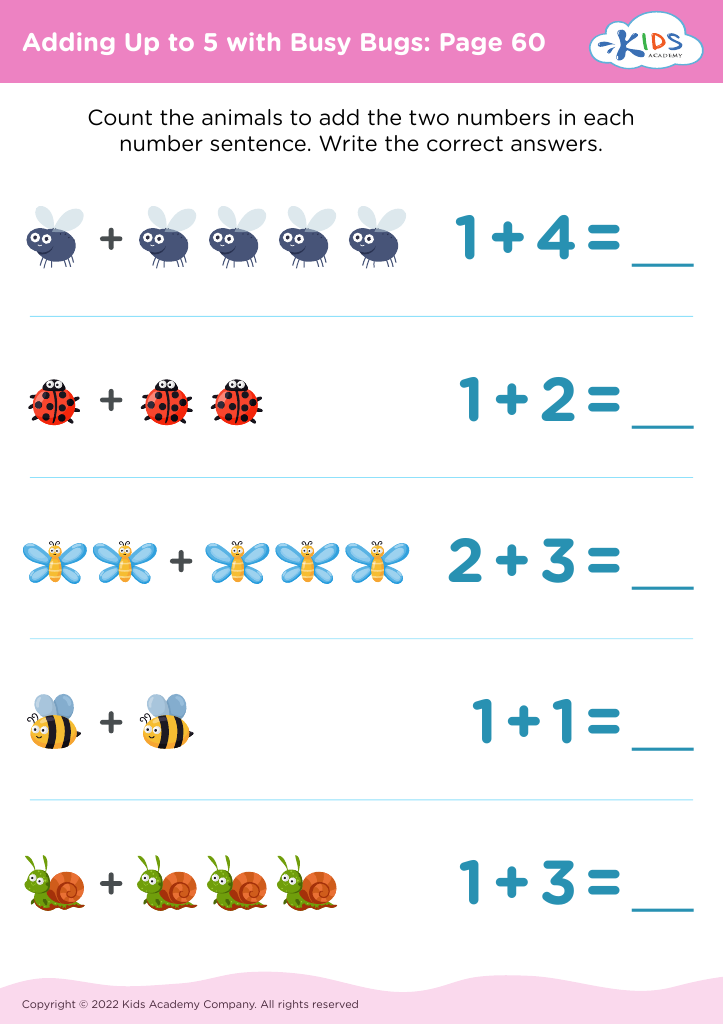
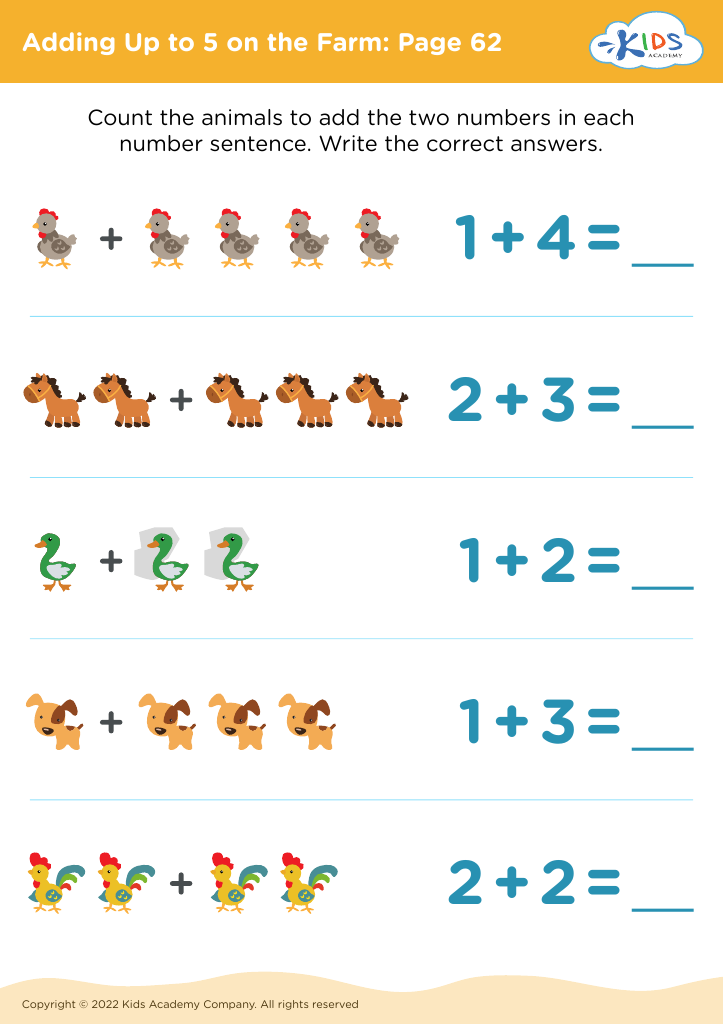
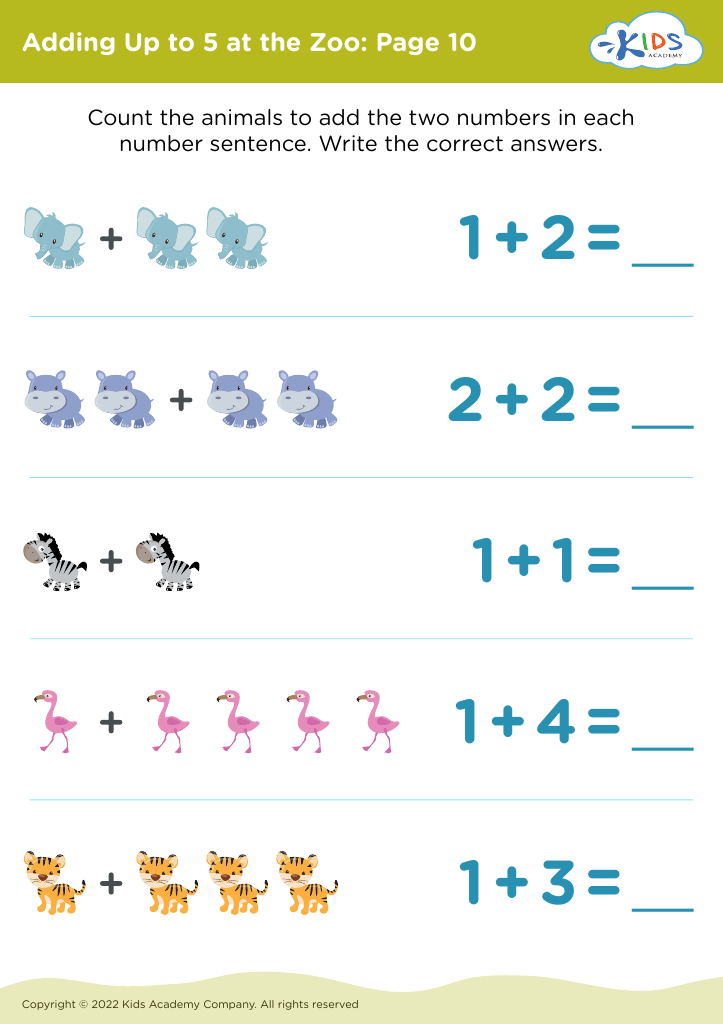
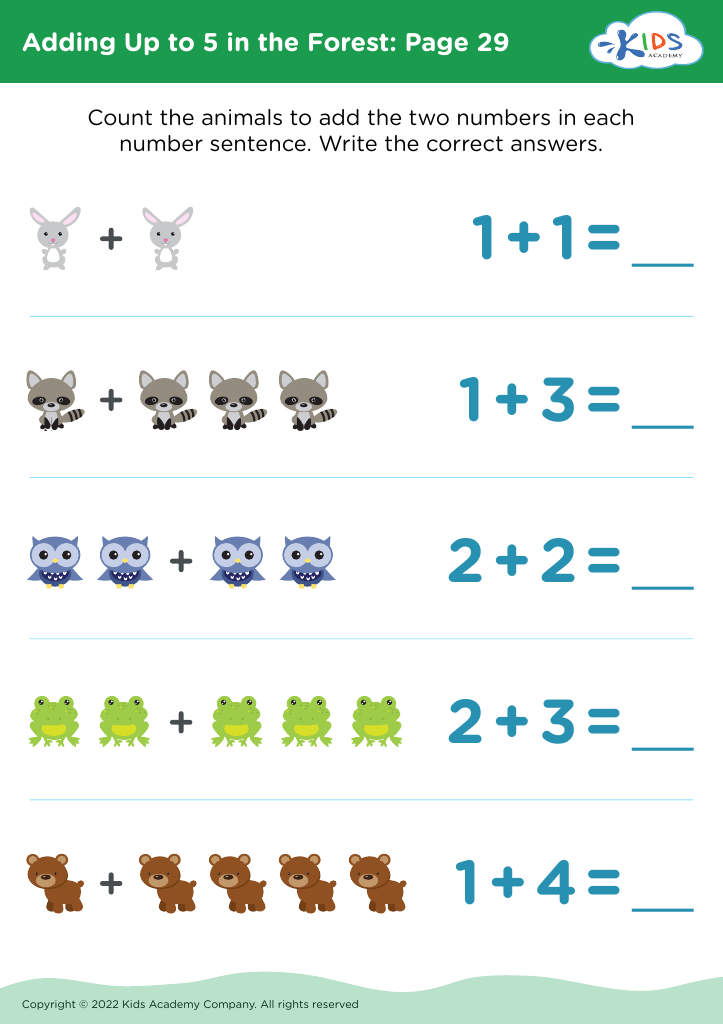








Visual learning enhancement techniques play a crucial role in the development of early learners aged 3-7. During these formative years, children are naturally curious, and their cognitive skills are rapidly evolving. Incorporating visual learning strategies helps to solidify concepts and improve retention, as young children are primarily visual learners.
Understanding addition can often be challenging for young minds, but using visual tools like manipulatives, diagrams, and engaging videos transforms abstract numbers into tangible experiences. When children can see, touch, or interact with mathematical representations, they gain comprehension through relatable, hands-on experiences.
Moreover, visual learning enhances engagement and motivation among young learners. Colorful graphics, playful imagery, and interactive activities capture their interest, making learning fun and exciting. This not only fosters a positive attitude toward math but also nurtures a lifelong love for learning.
Parents and teachers should prioritize visual learning methods in mathematics to build a solid foundation for future academic success. As these students grow, strong visual-spatial skills will aid them not only in math but across various subjects. Ultimately, investing in visual learning enhancement translates into improved outcomes for learners, equipping them with vital skills as they progress in their education journey.








