Addition skills Money Worksheets for Ages 3-7
3 filtered results
-
From - To
Introducing our "Addition Skills Money Worksheets for Ages 3-7"! Perfectly crafted for young learners, these worksheets are designed to make addition fun and engaging by incorporating real-life money scenarios. Help your child develop crucial math skills as they count coins and combine values. Our colorful, age-appropriate exercises boost confidence and understanding in early numeracy, paving the way for financial literacy. Whether your child is at home or in the classroom, these worksheets offer a hands-on approach to learning addition with money, ensuring a solid foundation for future math success. Get ready for interactive learning with our expertly designed worksheets!
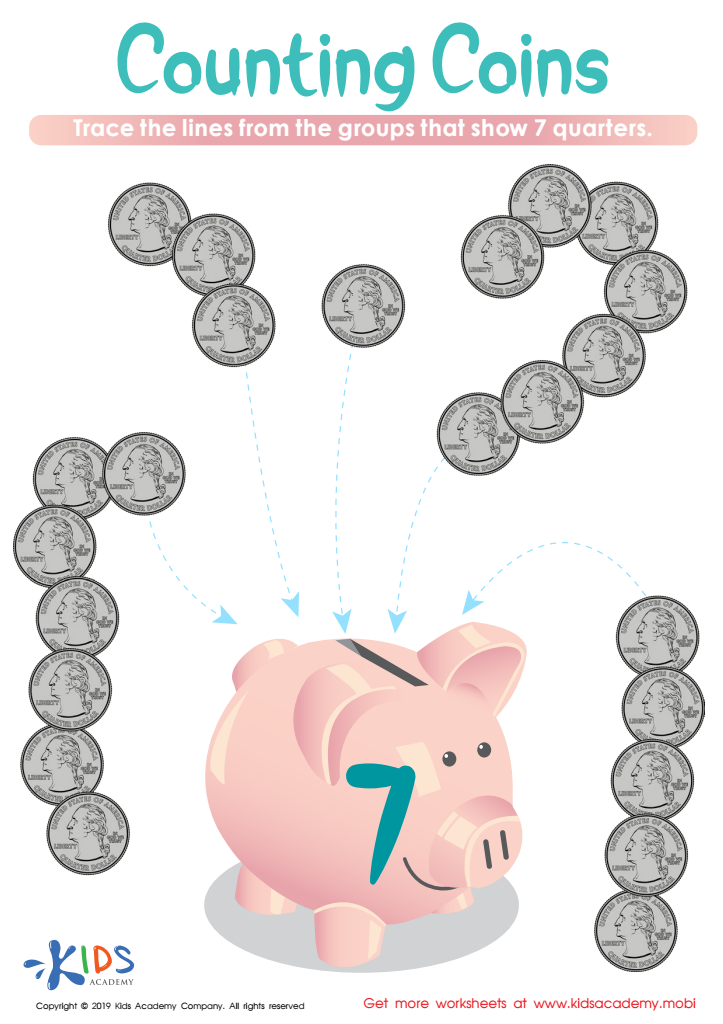
Counting Coins Worksheet
 Assign to My Students
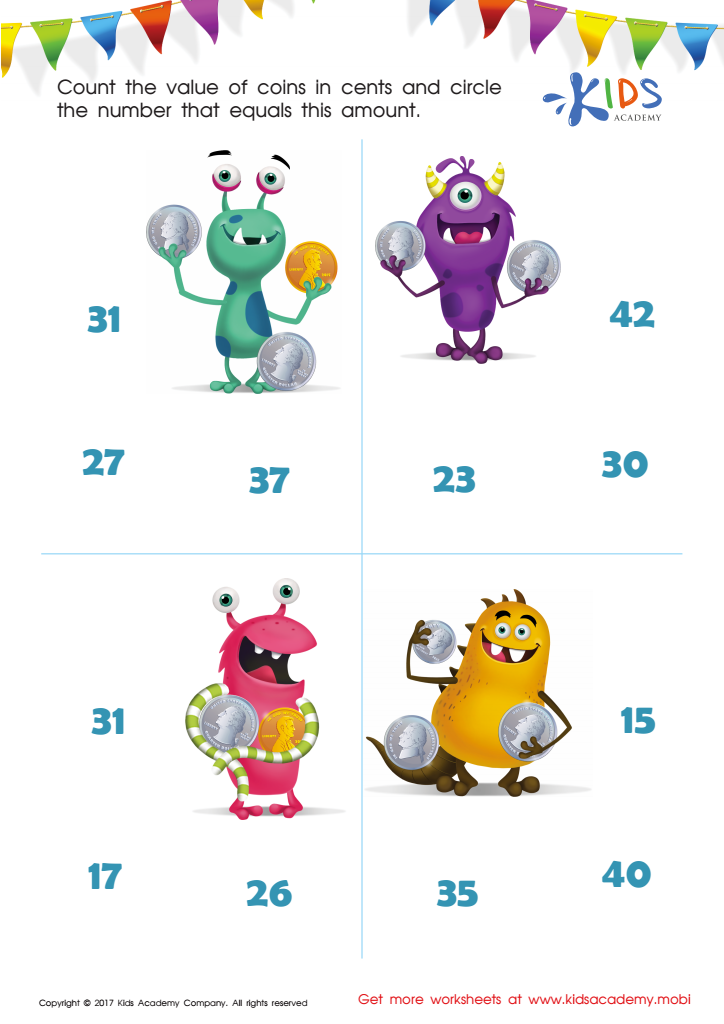
How Many Coins Money Worksheet
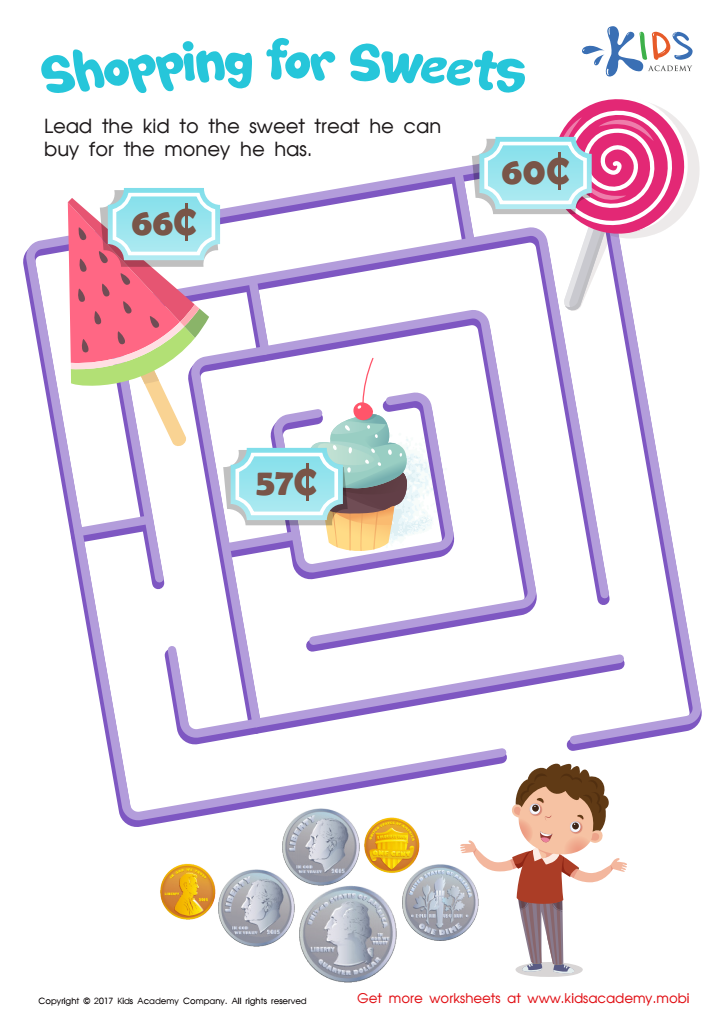
Shopping for Sweets Worksheet








Developing addition skills with money for children aged 3-7 is essential for several reasons. Firstly, it lays the foundation for basic arithmetic, a critical component of early childhood education. When children understand how addition works, they can then build on this knowledge to tackle more complex math problems in the future.
Secondly, introducing money concepts at an early age helps children develop financial literacy. By learning to add sums of money, kids can grasp the value of different coins and bills, sharpening their understanding of budgeting, saving, and spending. This practical skill is crucial for their future independence and decision-making.
Also, teaching addition with money can make learning more engaging. Children often find real-world applications like handling money more interesting than abstract numbers. This can increase their motivation to learn and participate in activities, leading to a stronger grasp of both arithmetic and financial concepts.
Parents and teachers who emphasize these skills are setting children up for academic success and everyday competence. Such early interventions can bridge gaps in understanding and make subsequent learning stages more manageable, ensuring children are well-equipped with the tools they need to navigate the world confidently and intelligently.








