Money recognition Money Worksheets for Ages 3-7
5 filtered results
-
From - To
Introduce young learners to the basics of money recognition with our engaging Money Recognition Worksheets, designed specifically for ages 3-7. At Kids Academy, our expertly crafted printable worksheets help children identify coins and understand their values. Through fun and interactive exercises, kids will enhance their counting skills and build a solid foundation in financial literacy. These activities are perfect for both classroom and at-home learning. Inspire confidence and excitement as your child navigates the world of money. Start developing essential lifelong learning skills—download our Money Recognition Worksheets today!
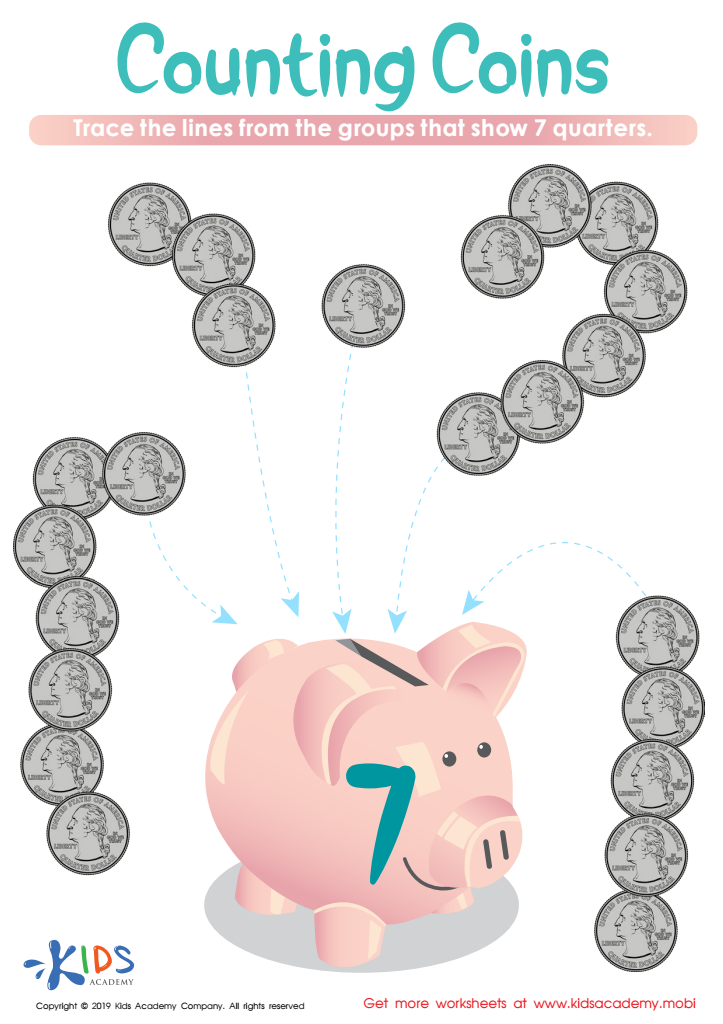
Counting Coins Worksheet
 Assign to My Students
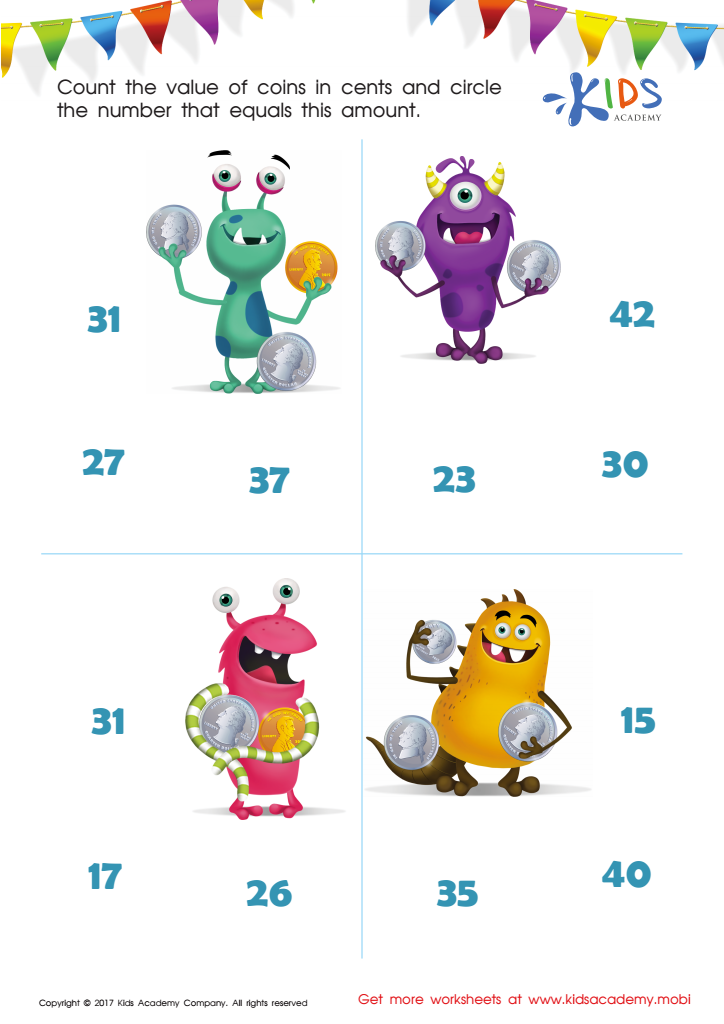
How Many Coins Money Worksheet
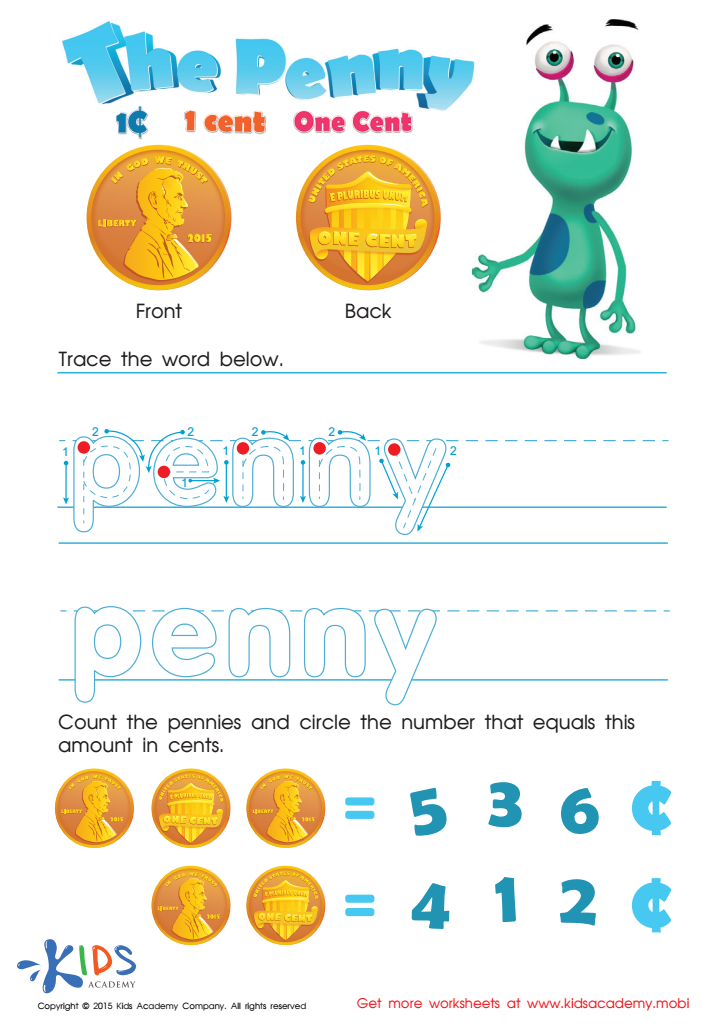
One Cent or the Penny Money Worksheet
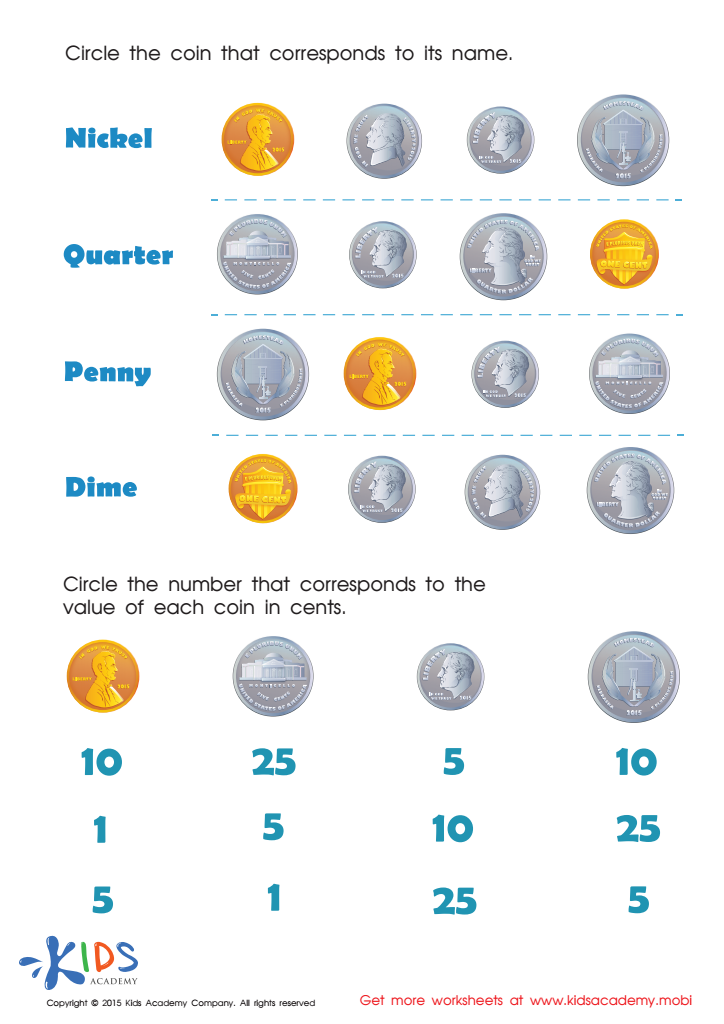
Coin Names and Values Money Worksheet
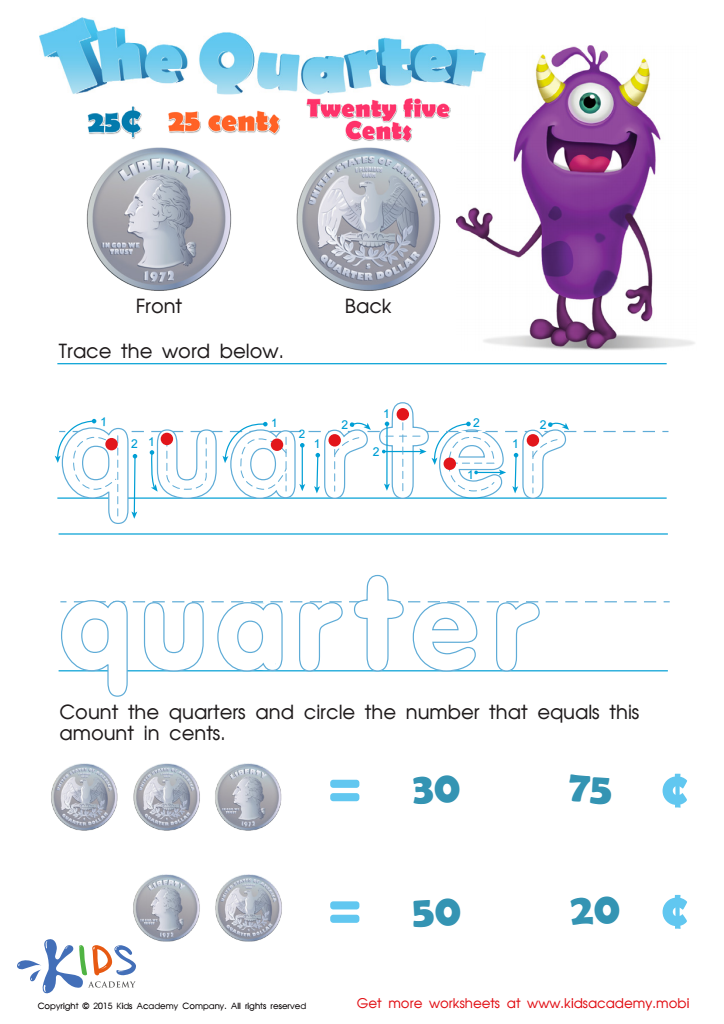
Twenty Five Cents or the Quarter Money Worksheet







Money recognition skills are foundational for young children, and teaching kids aged 3-7 about money has significant long-term benefits. Firstly, learning to recognize different coins and bills lays the groundwork for more advanced financial concepts. Kids who understand money will later find it easier to grasp budgeting, saving, and spending, crucial skills for responsible financial behavior as they grow older.
By focusing on money recognition at an early age, parents and teachers can also enhance children's mathematical abilities. Counting money involves basic arithmetic, including addition and subtraction, and understanding the value of different coins and bills reinforces number sense and place value concepts.
Moreover, early money recognition fosters decision-making and critical thinking skills. For example, when children learn the difference between a quarter and a penny, they start to realize that not all coins are created equal. This encourages them to make choices about spending and saving, imparting an understanding that can influence discerning financial behaviors.
Money recognition is also an important life skill. It prepares children to engage in everyday activities like shopping and recognizing prices, fostering independence. Ultimately, equipping children with basic financial literacy from a young age forms a solid foundation for their future financial well-being, making it a crucial aspect of early childhood education.








