Basic geometry knowledge Geometry Worksheets for Ages 3-7
3 filtered results
-
From - To
Discover our engaging Basic Geometry Worksheets designed specifically for children ages 3-7! These interactive resources introduce young learners to essential geometric concepts, including shapes, sizes, and spatial awareness. With colorful illustrations and fun activities, children will develop foundational skills while enjoying the learning process. Our worksheets encourage critical thinking and problem-solving through visual and hands-on experiences. Ideal for home or classroom use, they seamlessly integrate with early math education. Help your child explore the world of geometry and prepare them for future learning with our thoughtfully crafted materials. Explore the joy of geometry with Kids Academy today!
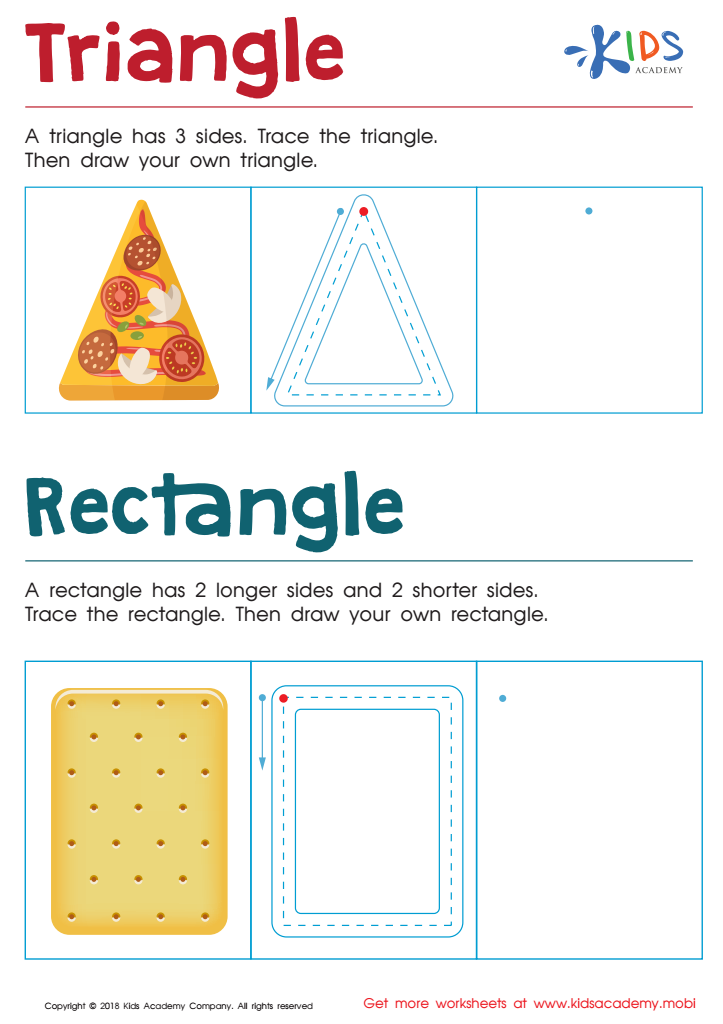
Triangle Rectangle Worksheet
 Assign to My Students











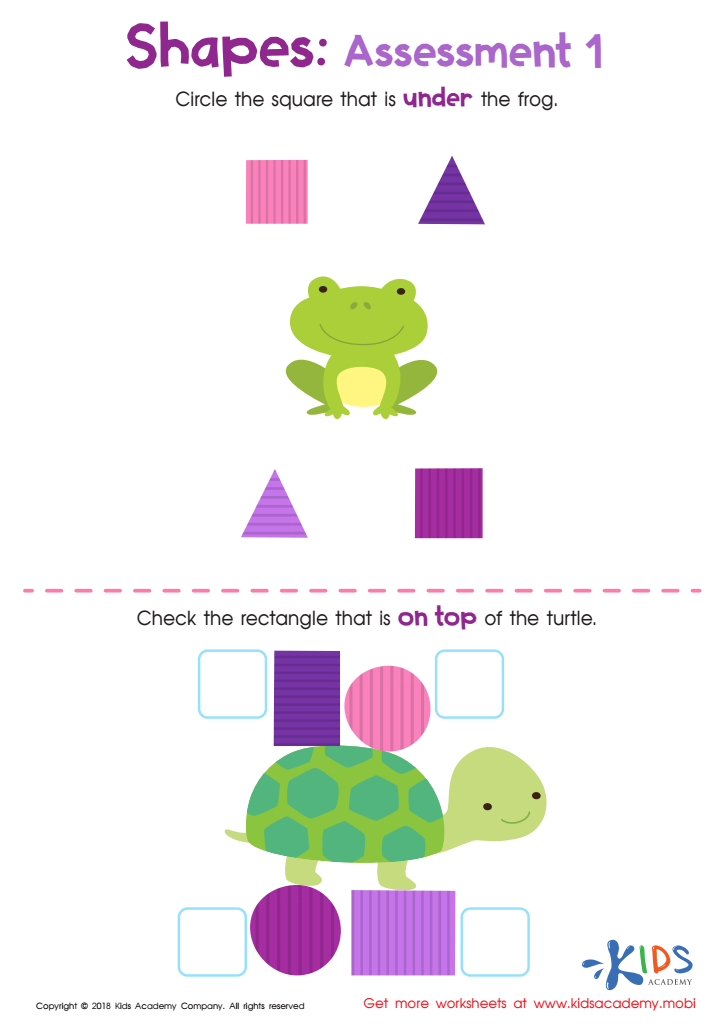
Geometry – Assessment 1 Worksheet
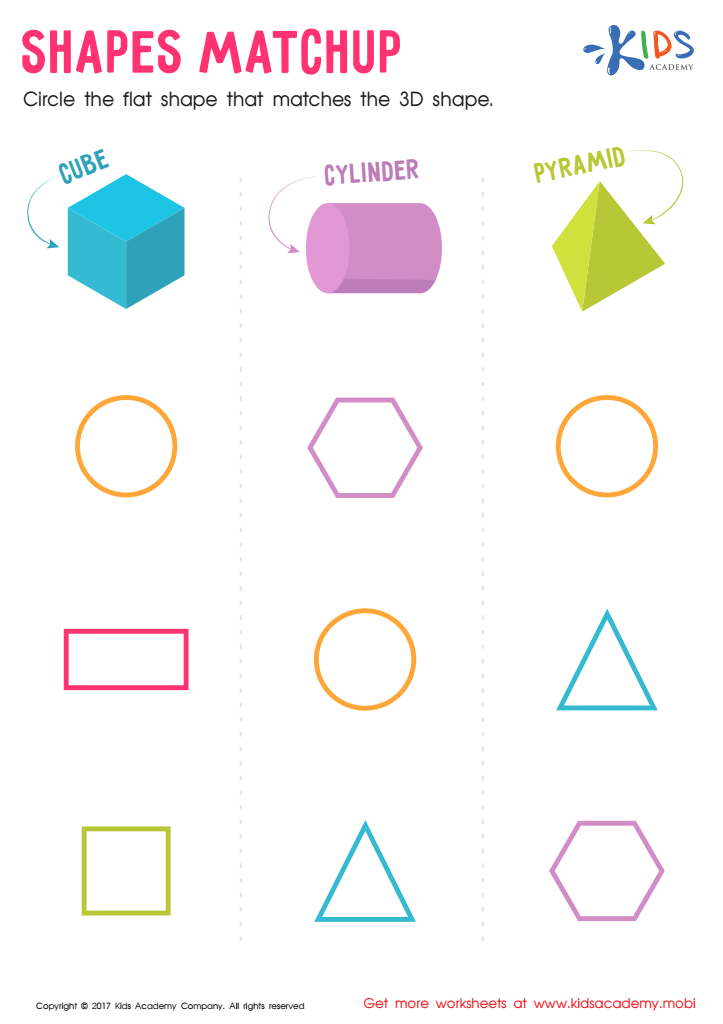
Shapes Matchup Worksheet








Basic geometry knowledge is crucial for children aged 3-7, as it lays the foundation for critical thinking, problem-solving, and spatial awareness. During these formative years, children are naturally curious and eager to explore their world. Introducing them to geometric concepts assists in developing their cognitive abilities. Recognizing shapes, understanding spatial relationships, and manipulating materials can enhance their fine motor skills and hand-eye coordination.
Furthermore, geometric concepts support early math skills, making math more relatable and accessible. For instance, learning about shapes helps with counting, sorting, and identifying patterns, which are essential skills for future mathematical learning. Geometry also encourages creativity and imagination through activities like drawing, building, and crafting with various shapes.
Moreover, a solid grasp of basic geometry prepares young learners for future academic success and everyday problem-solving. It enables them to make connections between math and real life, such as identifying shapes in the environment or understanding measurements while cooking or building.
By fostering an enriched learning environment, parents and teachers can instill a love for mathematics and enhance children’s overall development. Early exposure to geometry nurtures essential life skills, empowering children to approach challenges confidently and think critically.








