Categorization skills Geometry Worksheets for Ages 3-7
4 filtered results
-
From - To
Foster your child's critical thinking and visual discrimination abilities with our "Categorization Skills Geometry Worksheets" designed for ages 3-7. These engaging resources help young learners distinguish shapes, sizes, and colors through fun and interactive activities. Our carefully crafted worksheets support the development of essential geometry skills while entertaining your child with colorful illustrations and relatable scenarios. Perfect for preschoolers and early grade students, these worksheets make learning both effective and enjoyable. Explore our collection to give your child a strong foundation in geometry and categorization, setting the stage for future math success. Visit the linked page for more!
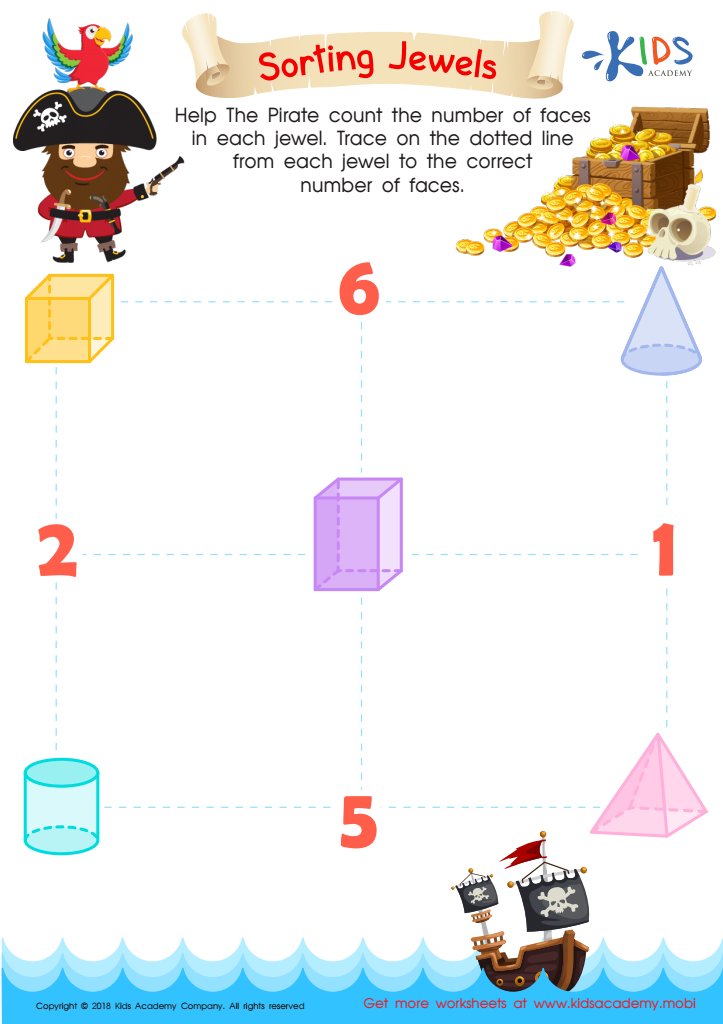
Sorting Jewels Worksheet
 Assign to My Students











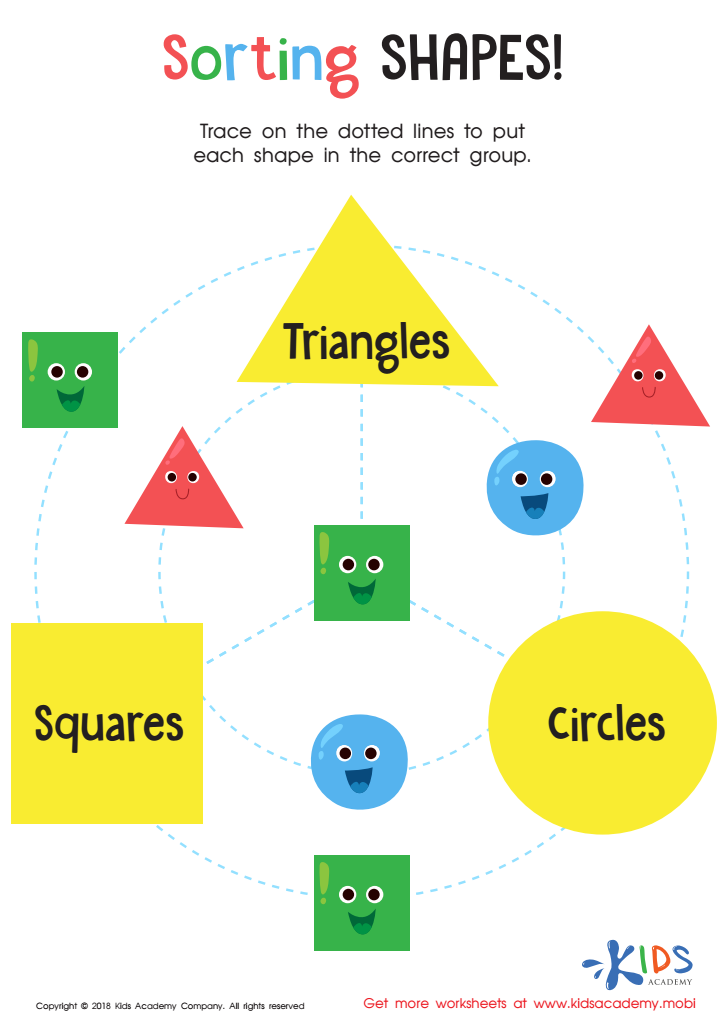
Sorting Shapes - Part 3 Worksheet
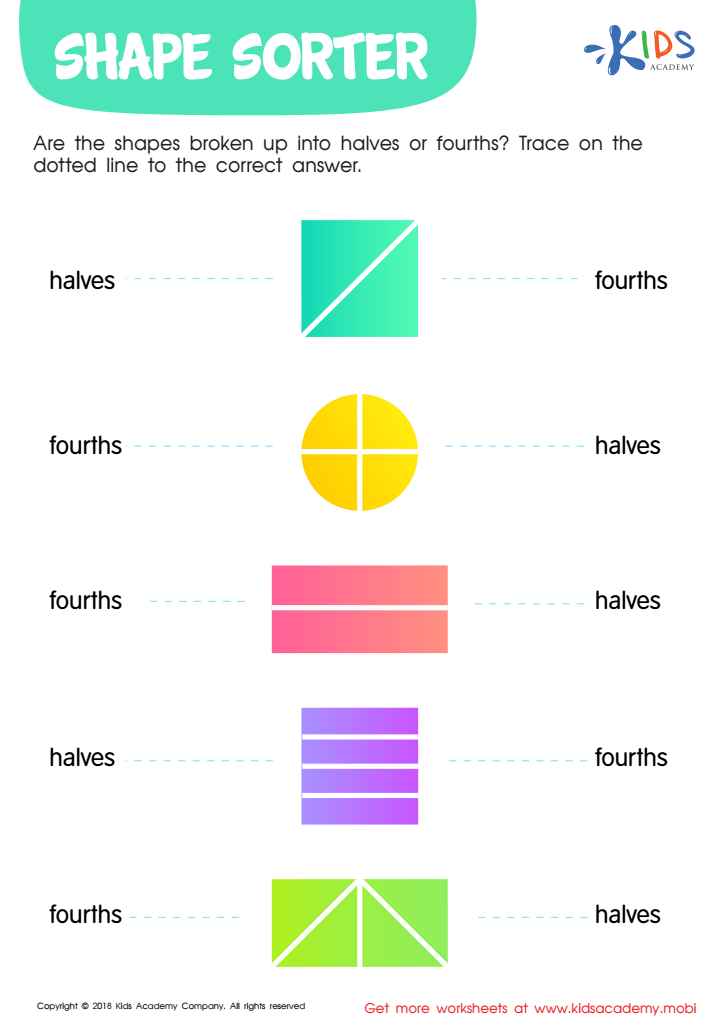
Shape Sorter Worksheet
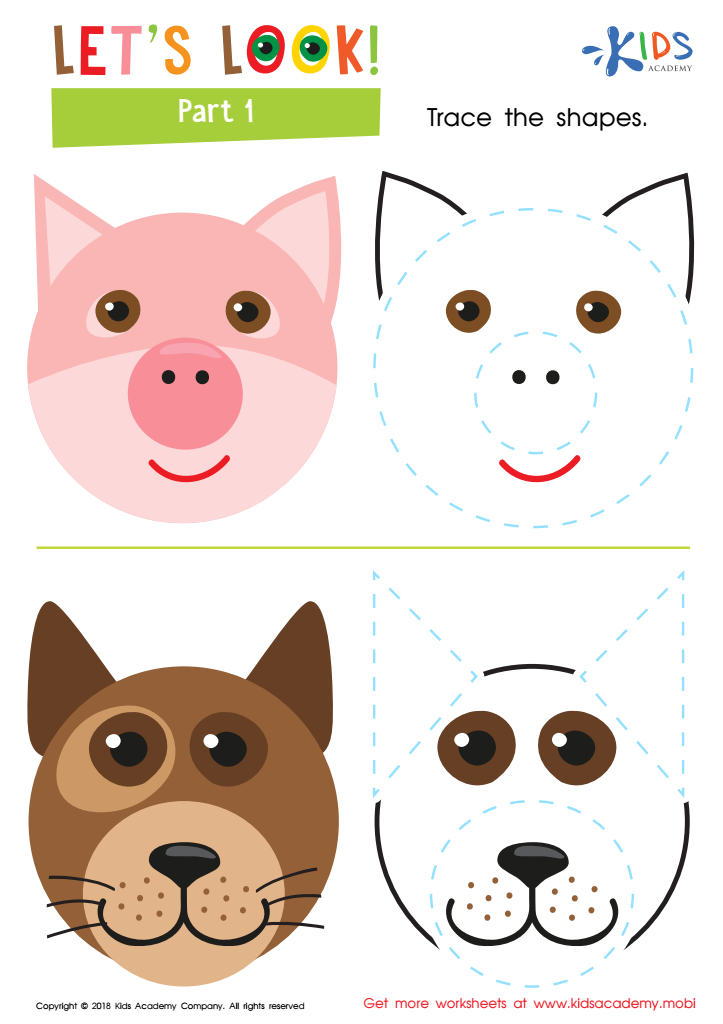
Let's Look! Part 1 Worksheet








Parents and teachers should pay close attention to the development of categorization and geometry skills in children ages 3-7, as these foundational abilities play a crucial role in their overall cognitive development and future academic success. Categorization skills help children recognize, compare, and group objects based on attributes such as shape, size, color, and more. This ability to categorize enhances their logical thinking and problem-solving skills, allowing them to make sense of the world around them.
Geometry, on the other hand, introduces children to the properties of shapes and spatial relationships. Early exposure to geometric concepts helps kids develop spatial awareness, an important skill for tasks ranging from navigating their environment to understanding more advanced math and science in later years. When children engage with shapes and related activities, they learn to identify, describe, and compare different geometrical forms, which bolsters their vocabulary and language skills.
Together, categorization and geometry provide a solid foundation for educational growth. By fostering these skills early on, parents and teachers help children build critical thinking capacities, enhance their problem-solving abilities, and prepare them for more complex mathematical concepts. These abilities support not only academic achievements but also everyday practical tasks, making them essential components of early childhood education.








