Animal identification Math Worksheets for Ages 3-7 - Page 2
33 filtered results
-
From - To
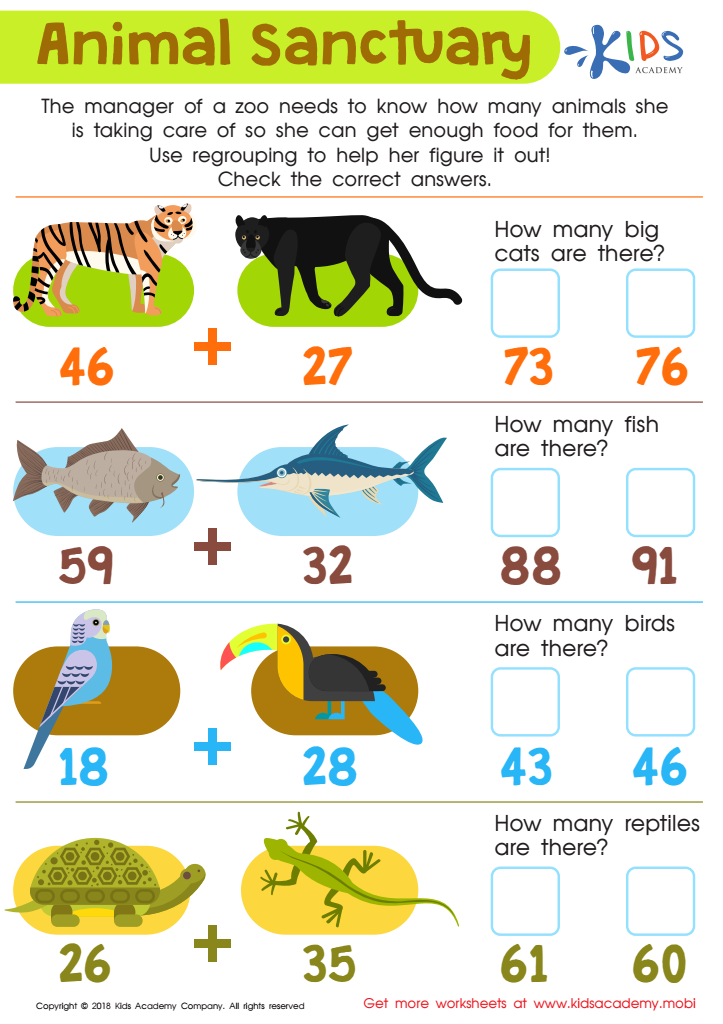
Animal Sanctuary Worksheet
 Assign to My Students





.jpg)

Parents and teachers play a crucial role in a child's early development, and encouraging activities like animal identification math for ages 3-7 can be incredibly beneficial. This dual-focus activity helps young learners develop both cognitive and emotional skills.
Firstly, identifying animals enhances a child's vocabulary and general knowledge about the world around them. As children learn to recognize and name different animals, they also learn about habitats, behaviors, and characteristics, fostering a sense of curiosity and respect for nature.
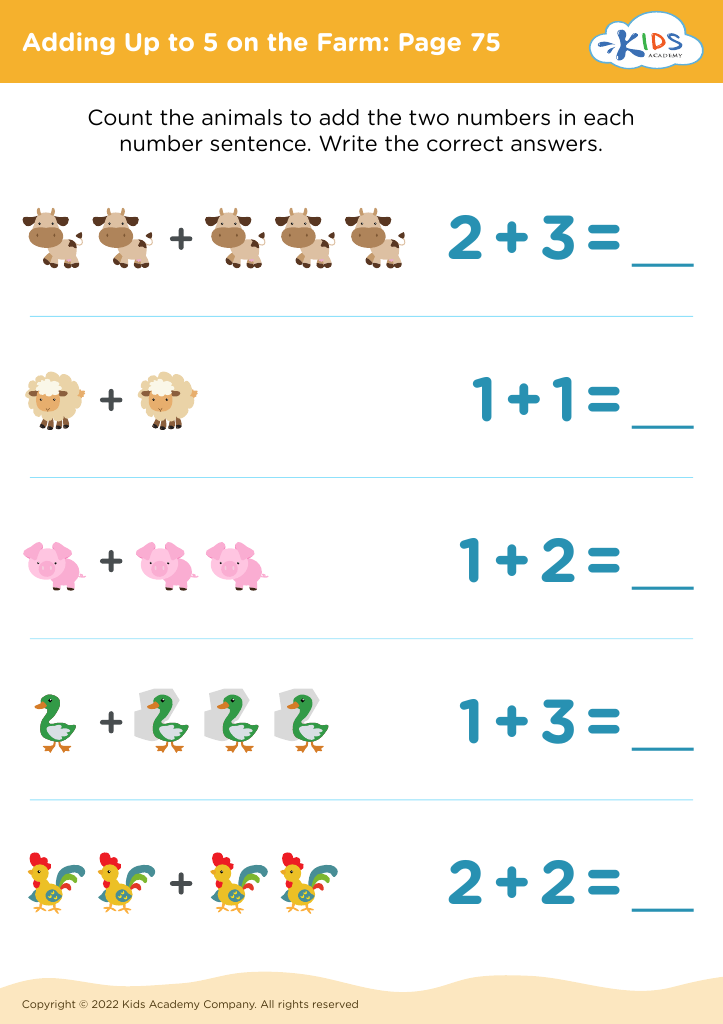
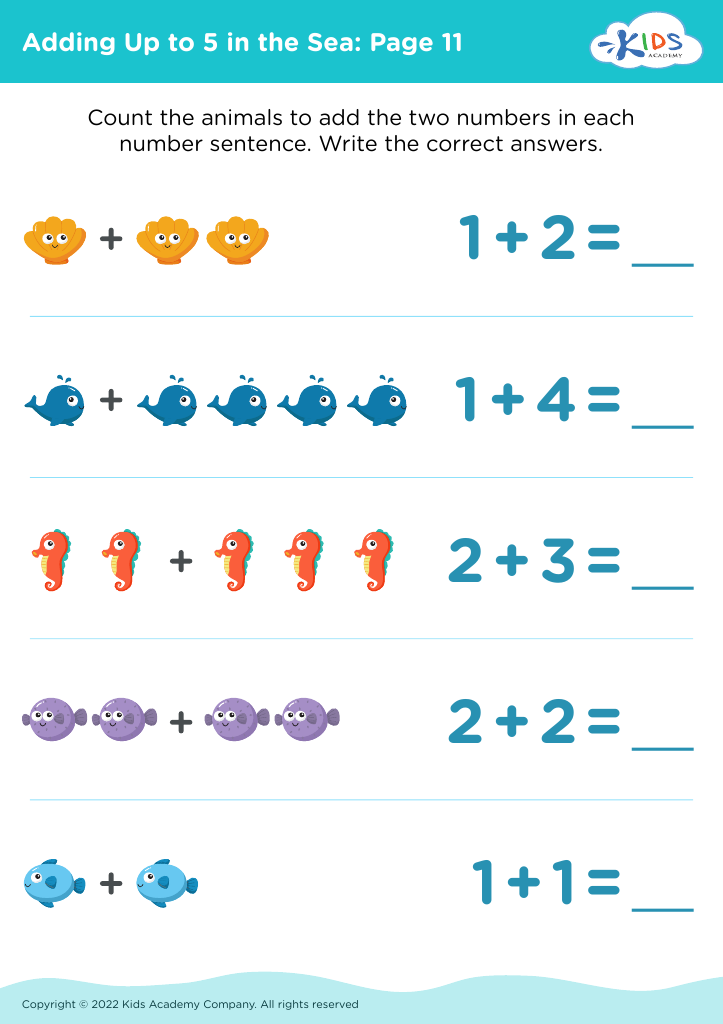
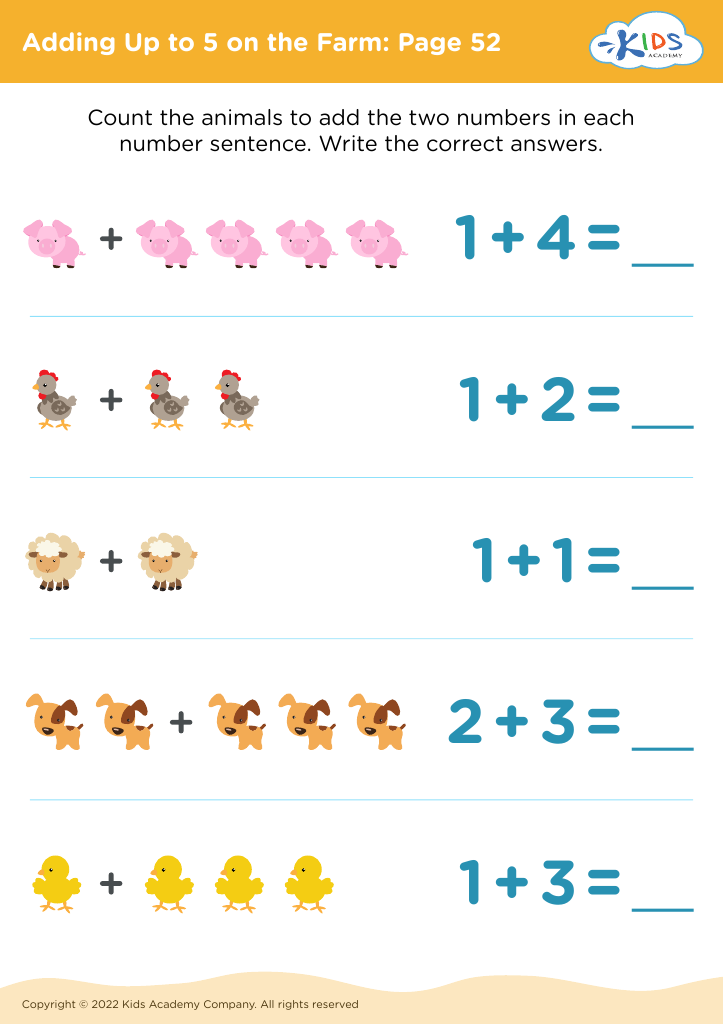
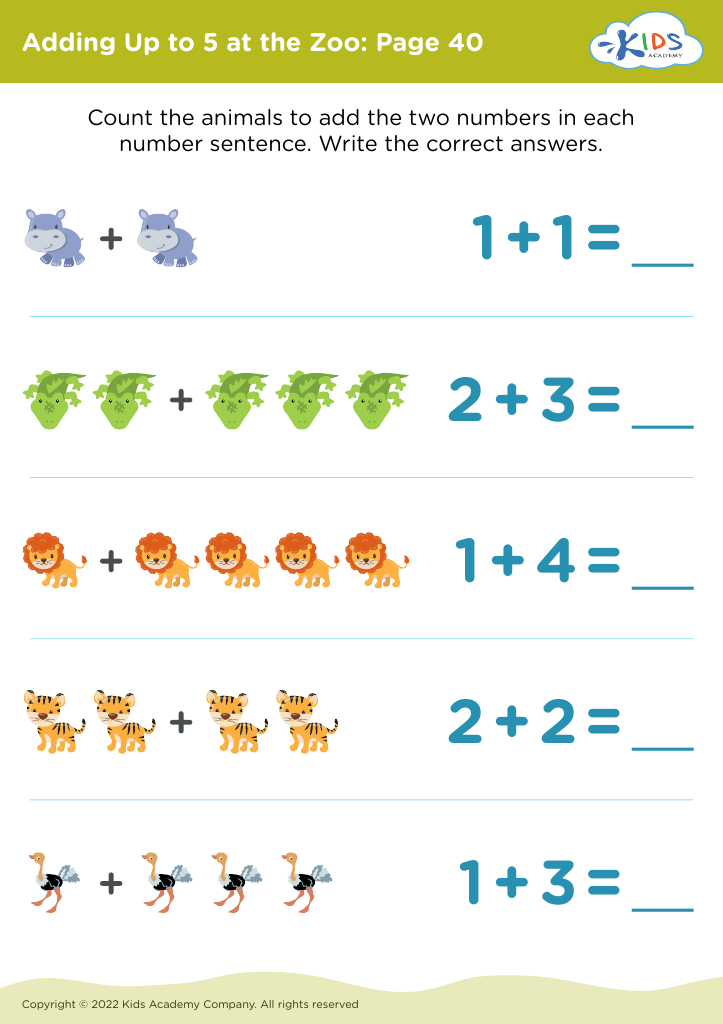
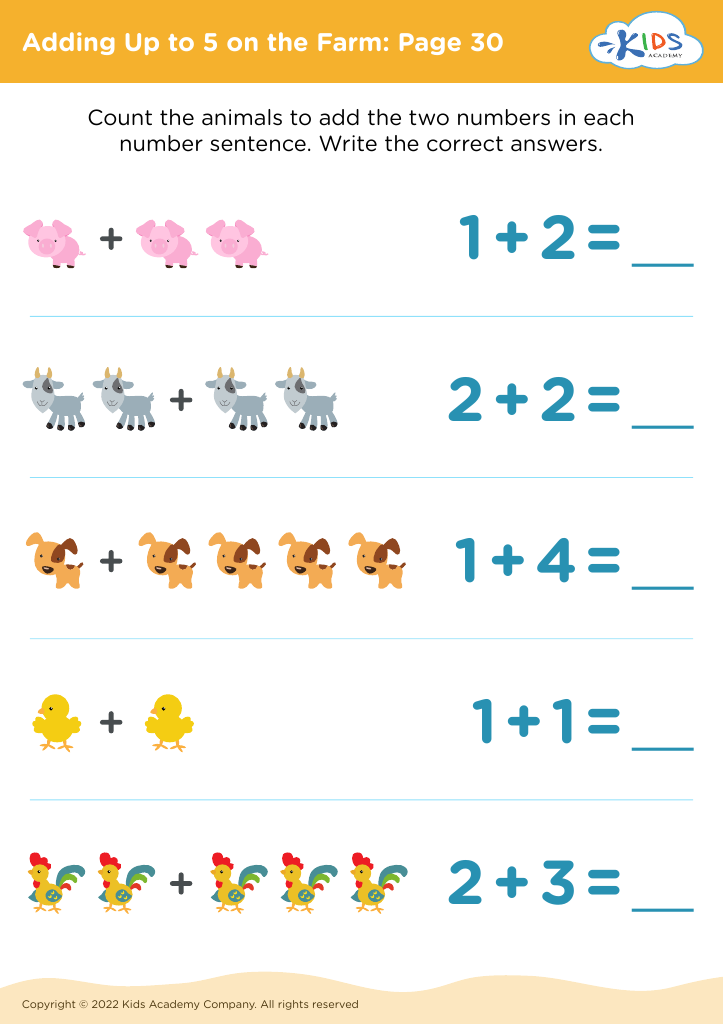
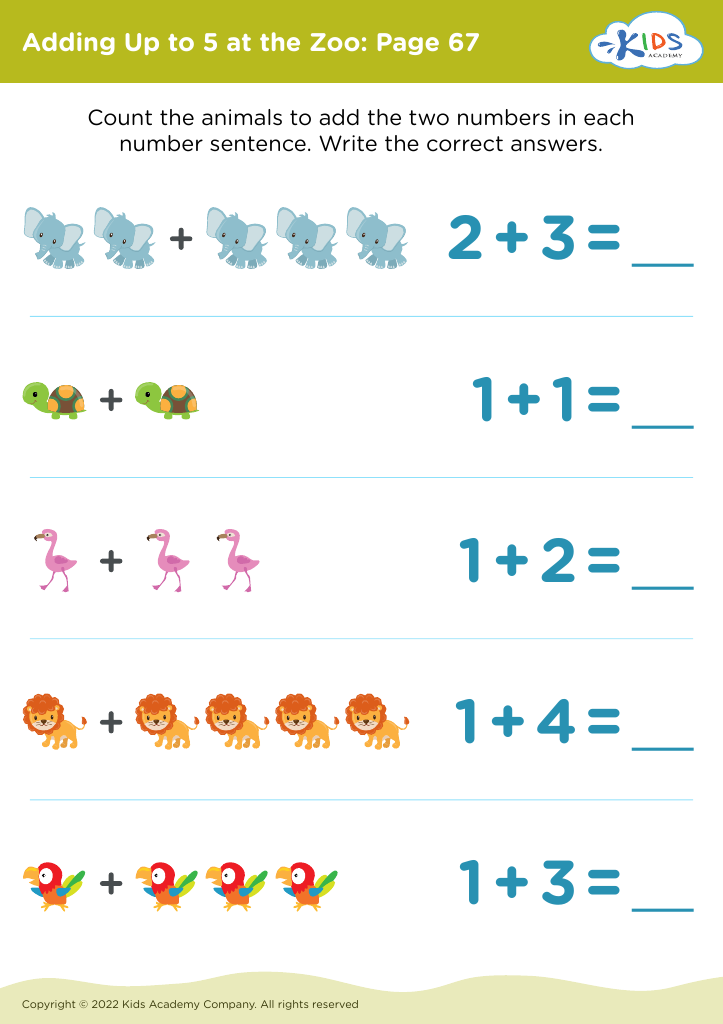
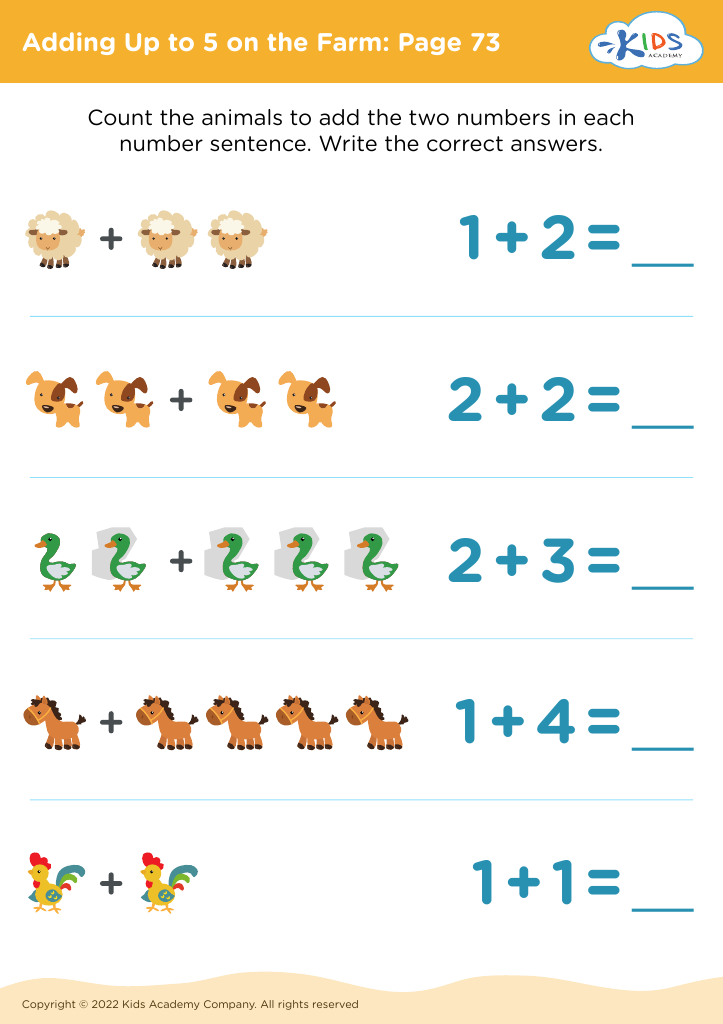
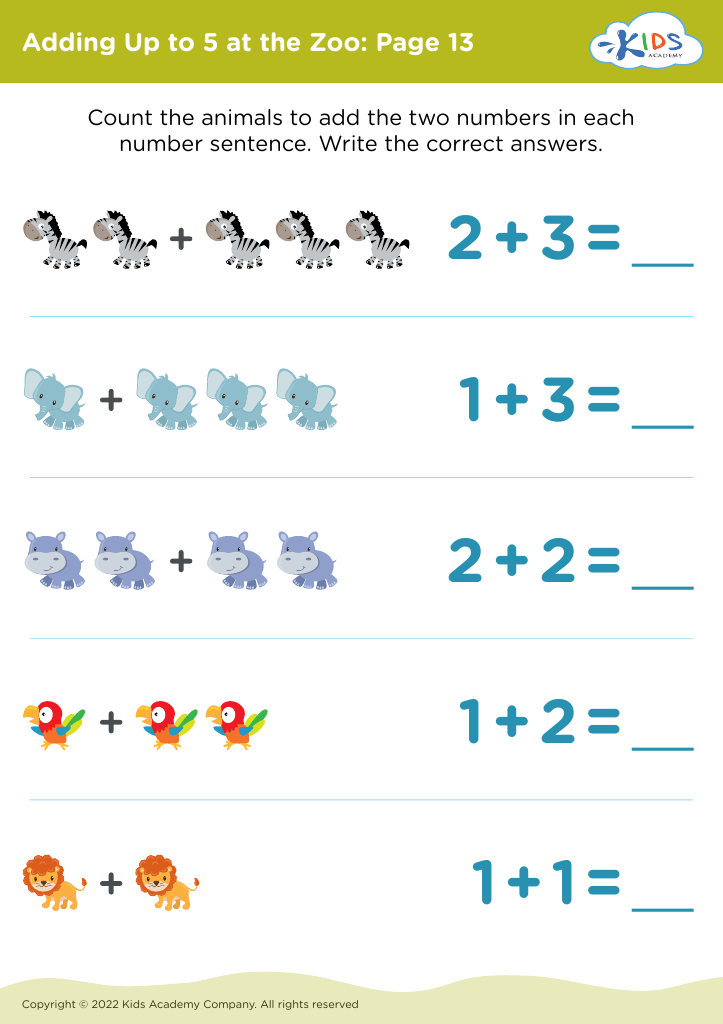
Secondly, integrating math with animal identification promotes numerical literacy. When children count the legs on a spider, group animals by categories, or compare the sizes of different species, they are practicing counting, sorting, and comparison—all essential math skills.
Moreover, this multidisciplinary approach keeps learning engaging and relatable. By combining a child's natural fascination with animals with math concepts, learning becomes less abstract and more interconnected. This can help lay a stronger foundation for more complex academic concepts later in life.
Emotionally, discussing animals—considering many children love animals—promotes empathy and caring. Understanding that animals, like humans, have needs and emotions can cultivate compassion and kindness in young hearts.
In essence, animal identification math isn't just a learning activity, but a holistic developmental tool that nurtures a child's mind and heart, setting them up for a lifetime of inquisitive and empathetic learning.








