Basic geometry skills Math Worksheets for Ages 3-7
4 filtered results
-
From - To
Nurture your child's early math skills with our Basic Geometry Skills Math Worksheets designed for ages 3-7. Through engaging activities, colorful visuals, and fun exercises, these printable worksheets help young learners grasp fundamental geometry concepts such as shapes, patterns, and spatial reasoning. Perfect for preschoolers and early elementary students, our worksheets provide a strong foundation in geometry by combining fun challenges with educational content. Prepare your child for academic success with easy-to-follow lessons from Kids Academy, building confidence and knowledge every step of the way. Unlock your child's potential in math through creativity and interactive learning!
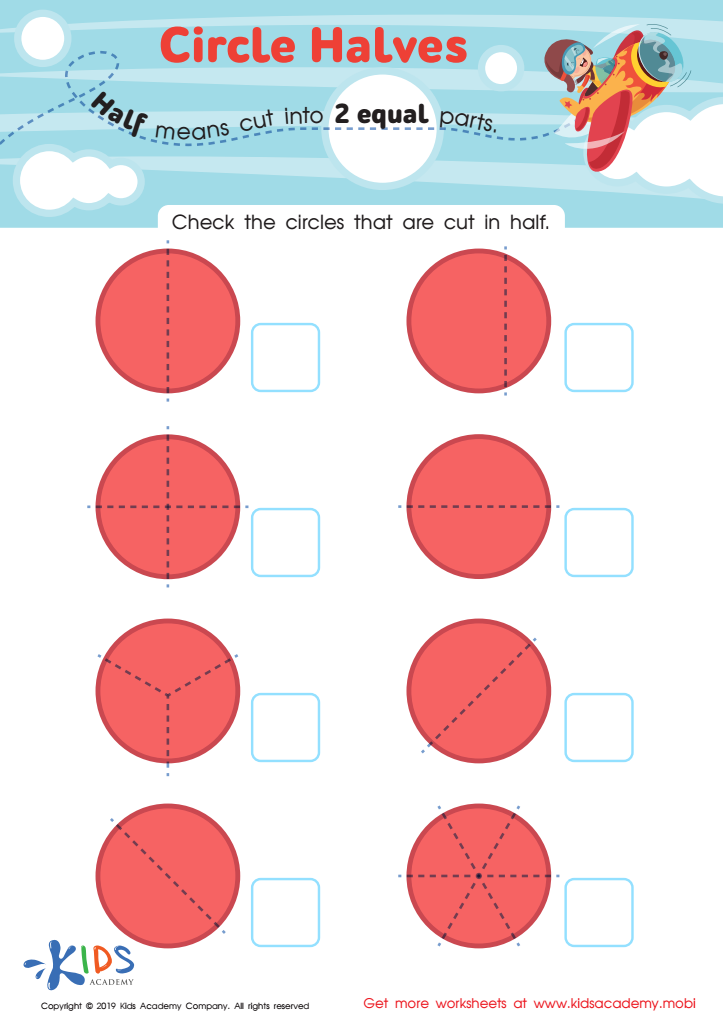
Circle Halves Worksheet
 Assign to My Students
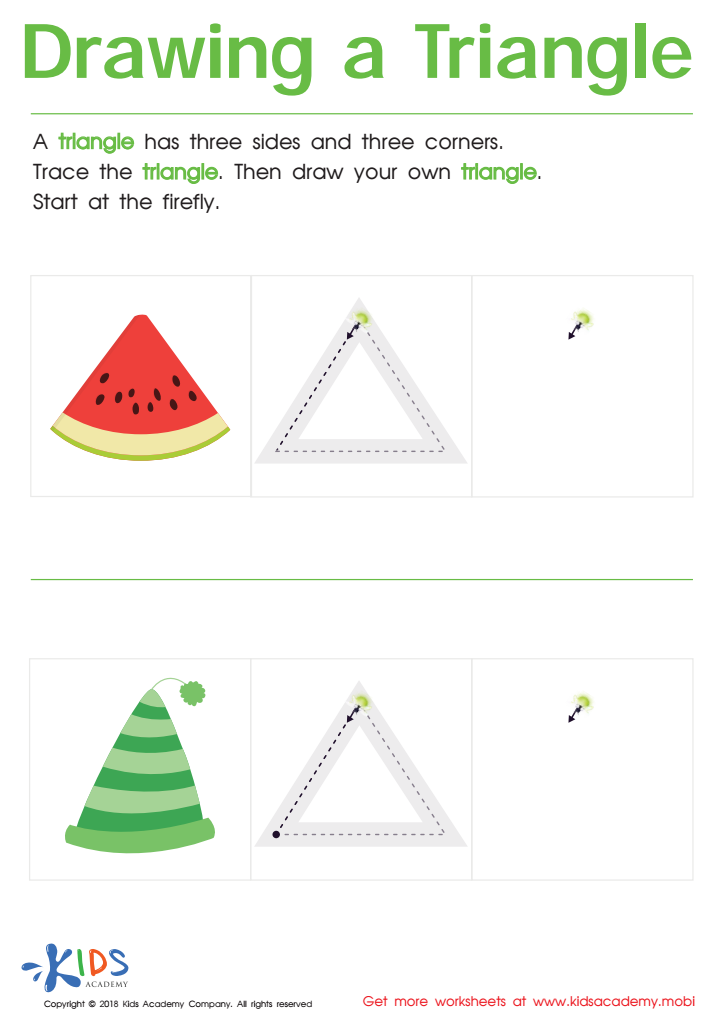
Drawing a Triangle Worksheet
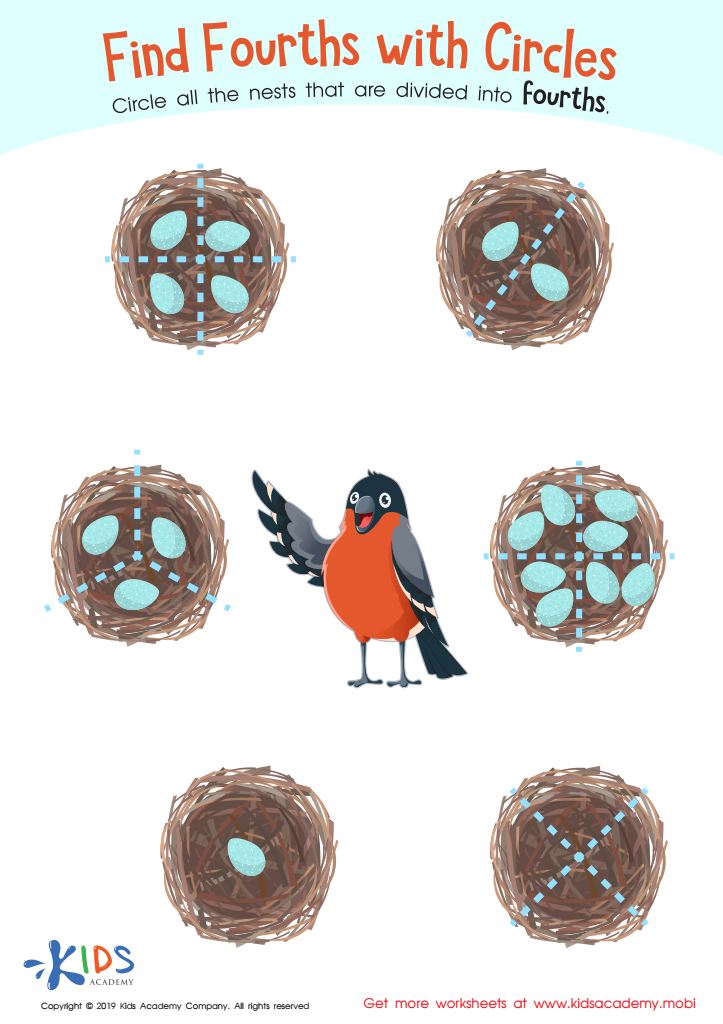
Find Fourths Circles Worksheet
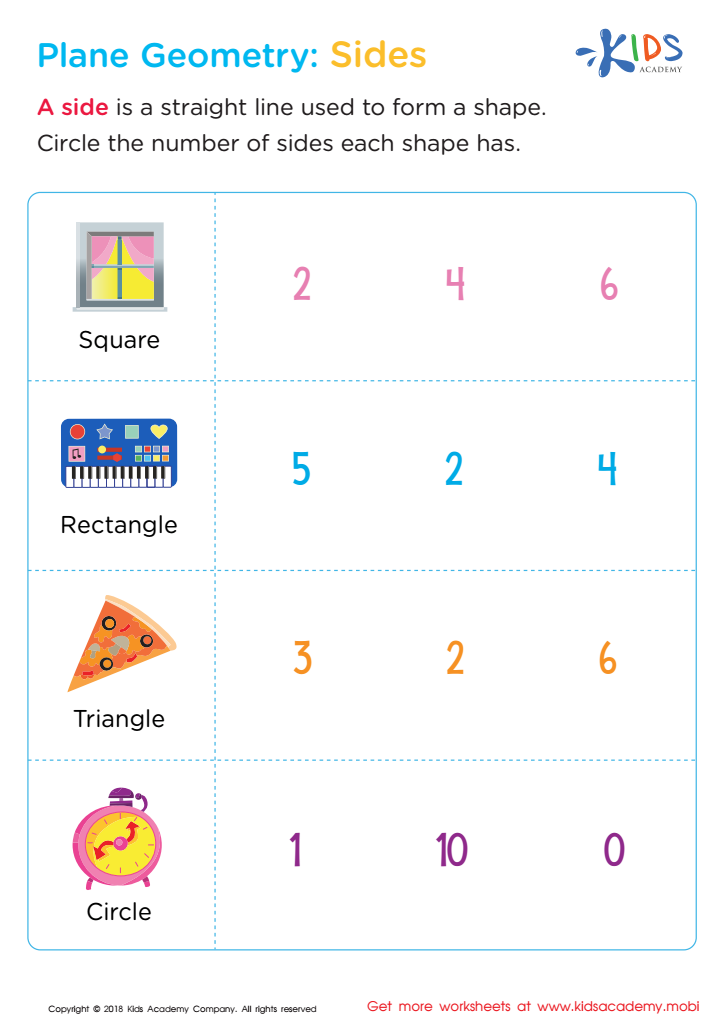
Plane Geometry: Sides Worksheet








Basic geometry skills are crucial in early childhood education for several reasons that benefit both immediate learning and long-term cognitive development.
-
Foundational Skills: Learning basic shapes, patterns, and spatial reasoning sets the groundwork for more complex mathematical concepts that will be introduced later in school. Geometry also crosses into other subjects such as science and art, enriching a child's overall understanding.
-
Cognitive Development: Understanding and processing geometric shapes enhances cognitive functions like problem-solving, logical reasoning, and visual-spatial awareness. Activities involving geometry help develop their ability to observe, compare, and classify objects in their environment.
-
Everyday Understanding: Geometry is integral to everyday life. From recognizing patterns, stopping at traffic signs, constructing buildings, to simply organizing a room, it helps children make sense of the world around them in practical ways.
-
Boosts Confidence and Behavior: Mastering geometry concepts can bolster confidence and encourage a positive attitude toward learning. Children experiencing success in manipulating shapes and understanding spatial relationships gain a sense of accomplishment.
-
Language and Communication Skills: Basic geometry encourages the use of specific vocabulary (like corner, edge, angle), helping children improve their language skills along with their ability to express and share ideas clearly.
In essence, a strong foundation in basic geometry provides critical building blocks for future academic achievement and practical life skills, making it essential for both parents and teachers to prioritize it in early education.








