Basic math learning Math Worksheets for Ages 3-7
3 filtered results
-
From - To
Discover our engaging Basic Math Learning Worksheets, designed for children ages 3-7, to build a strong foundation in early math skills. Our printable activities make learning fun and easy, covering essential topics like counting, addition, subtraction, shapes, and number recognition. These thoughtfully crafted worksheets offer colorful and appealing exercises that can be enjoyed at home or in the classroom, promoting critical thinking and problem-solving abilities. Perfect for parents and educators, our materials support young learners in mastering math concepts at their own pace, ensuring a solid start in their educational journey. Start exploring now and watch your child's confidence and skills grow!
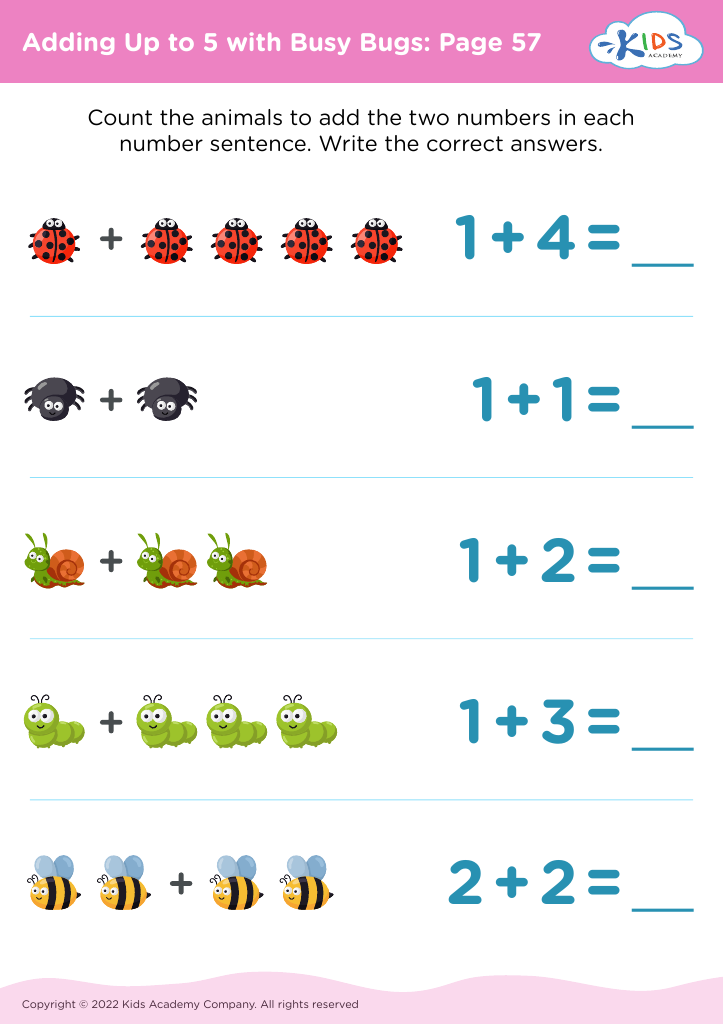
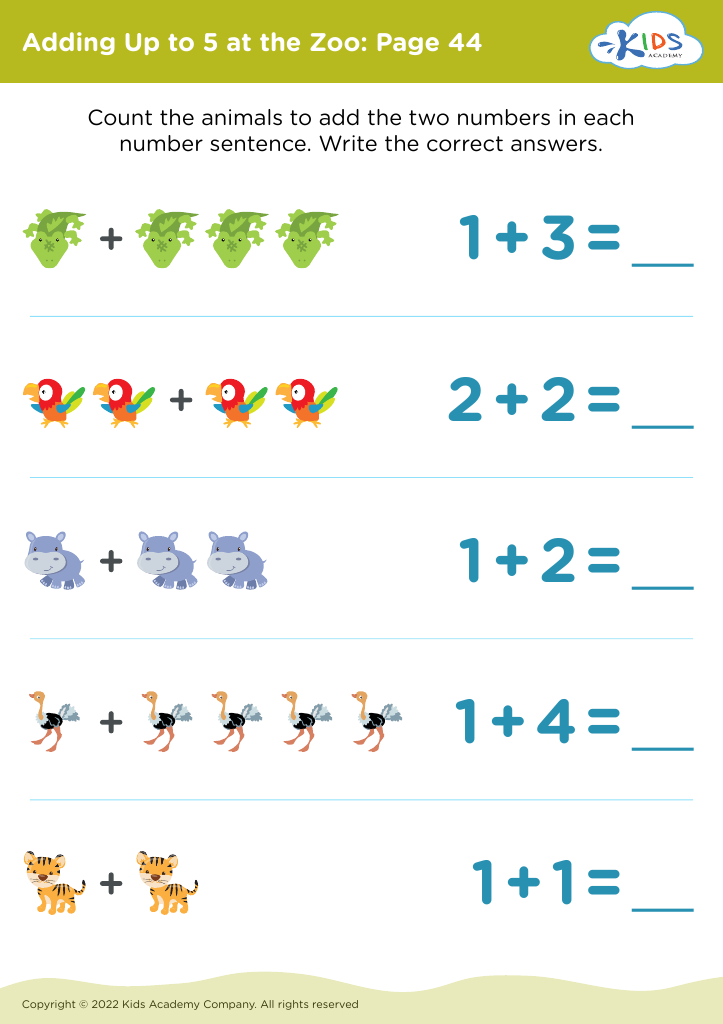
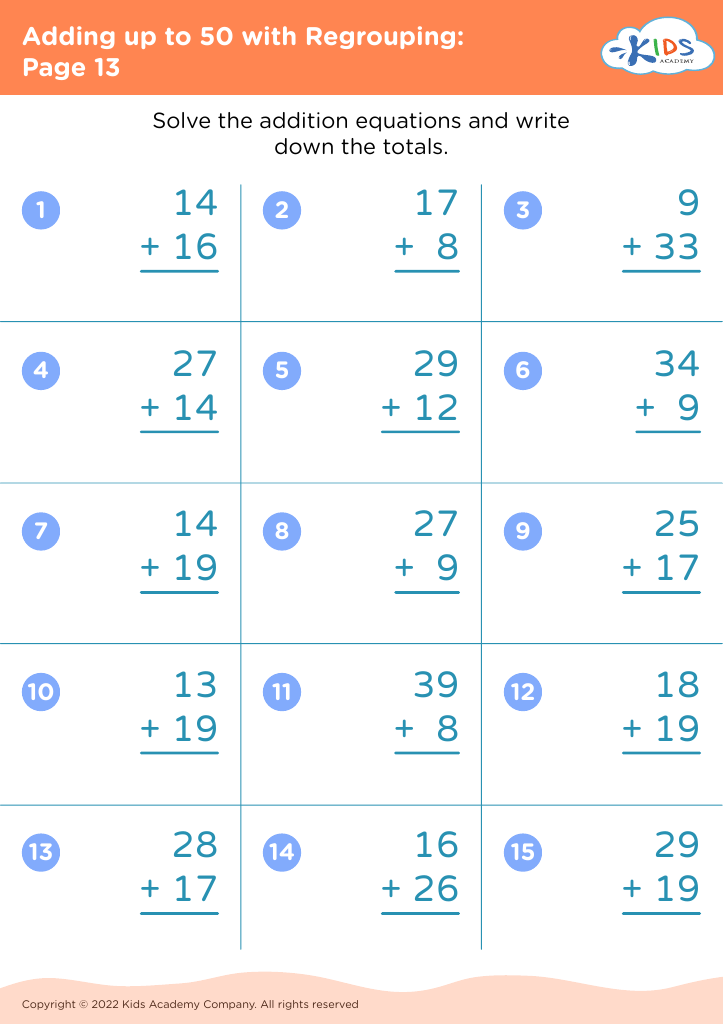








Basic math learning for children ages 3-7 serves as the cornerstone for their academic development and cognitive growth. Parents and teachers should invest in nurturing these essential skills, as early introduction to math creates a strong foundation for more advanced concepts later in life. During these formative years, children’s brains are exceptionally adaptable and capable of absorbing new information rapidly.
First, early math skills like counting, recognizing numbers, and basic addition and subtraction enhance their problem-solving abilities, critical thinking, and logical reasoning. These skills are not confined to math alone but also translate into other academic subjects and daily life activities.
Second, early success in understanding and using math builds confidence. When children grasp these concepts early, they experience a sense of achievement, fostering a positive attitude towards learning and school in general. This confidence incentivizes them to tackle more complex challenges without fear.
Third, early math skills are directly linked to long-term academic performance. Numerous studies demonstrate that children with a strong background in early math perform better in later grades, not just in mathematics but across various subjects.
Investing in early math education provides children with critical tools for lifelong learning and development, establishing a trajectory of academic success and personal growth.








