Comparative skills Math Worksheets for Ages 3-7
3 filtered results
-
From - To
Explore our engaging collection of Comparative Skills Math Worksheets for ages 3-7! Designed to build a solid foundation in critical thinking and quantitative analysis, these worksheets cover concepts like shapes, size, and quantity comparison. Fun and visually appealing, they help young learners develop essential math skills through interactive tasks including matching, sorting, and sequencing activities. Perfect for parents and teachers, these resources cater to preschool and early elementary students, ensuring they grasp comparisons in a fun, learner-friendly environment. Unlock your child's potential with our high-quality worksheets that make learning math intuitive and enjoyable!
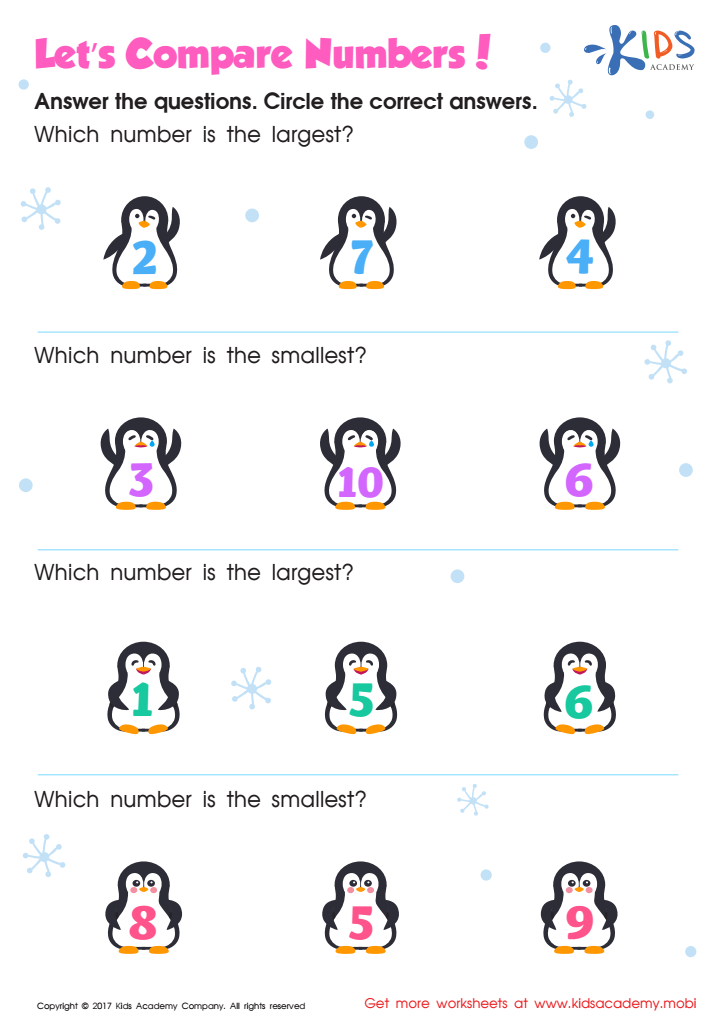
Comparing Numbers 1–10 Worksheet Kindergarten
 Assign to My Students
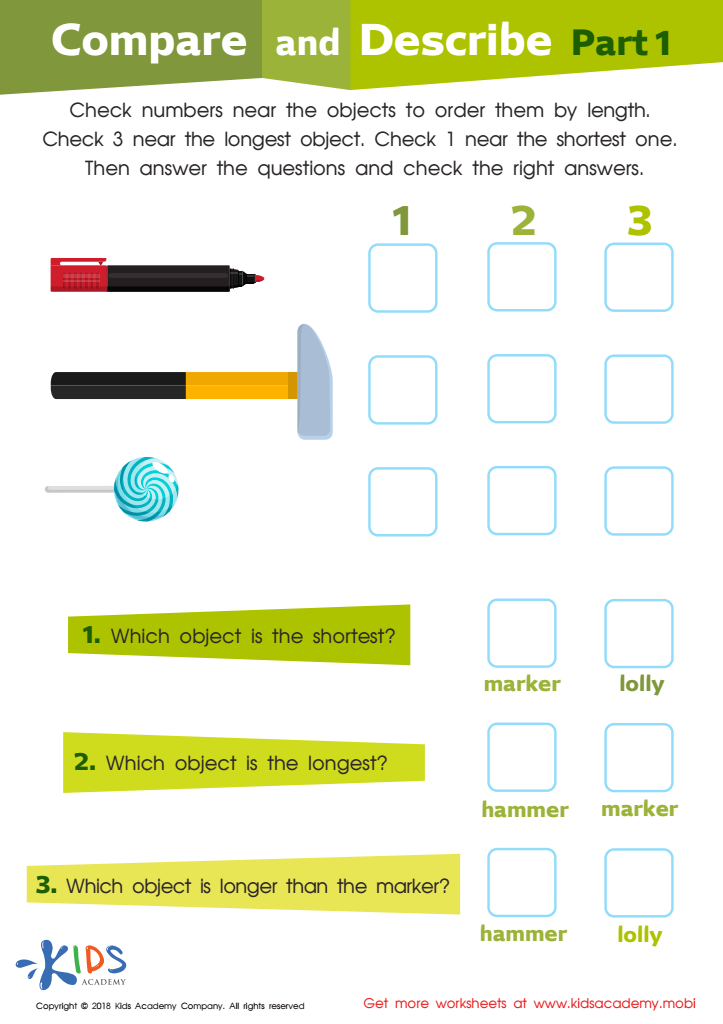
Compare and Describe: Part 1 Worksheet
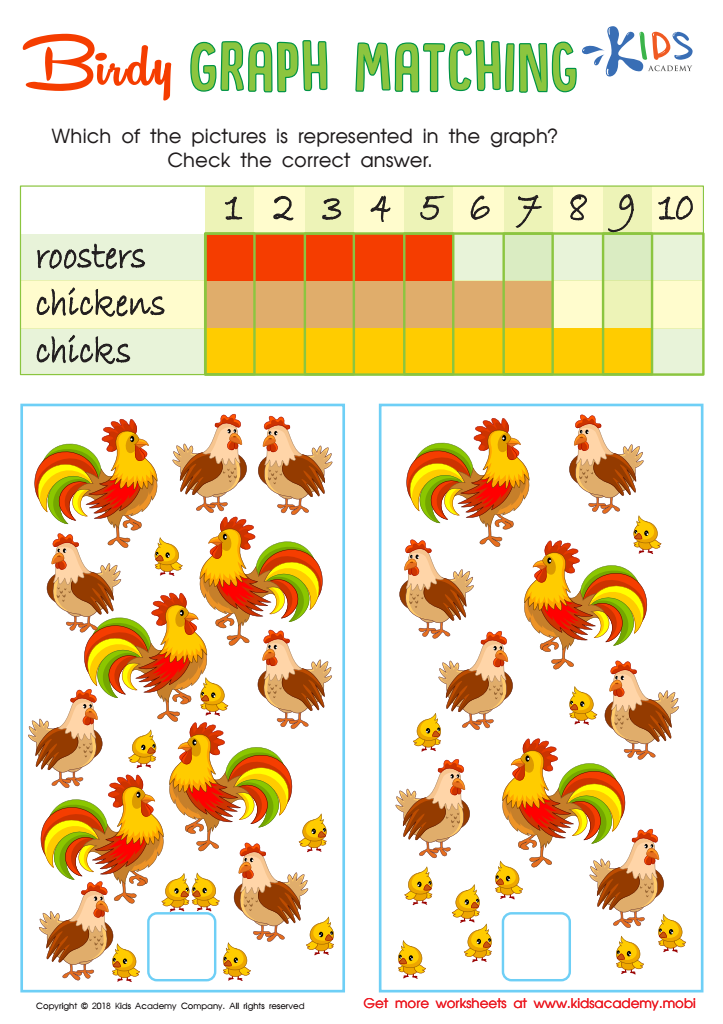
Birdy Graph Matching Worksheet



.jpg)



Comparative skills in math, the ability to compare numbers, quantities, and sizes, lay a crucial foundation for young learners aged 3-7. Parents and teachers should prioritize these skills because they cultivate essential cognitive abilities that extend beyond mathematics.
Firstly, developing comparative skills enhances logical thinking. Children learn to analyze differences and similarities, fostering critical thinking. For example, distinguishing between greater and lesser quantities sharpens problem-solving abilities, helping young minds tackle more complex concepts later.
Secondly, comparative skills are pivotal for understanding order and sequence, fundamental for everyday tasks and learning. Sorting objects by size or counting toys teaches children organization, an essential skill for both academic success and practical life.
Mathematically, comparative skills are intertwined with basic number sense. Recognizing which of two numbers is larger or smaller is foundational for arithmetic operations. This understanding translates to more advanced math, such as addition and subtraction, and later on, algebra and geometry.
Socially, encouraging math comparisons can build confidence. Successfully identifying patterns and sequences gives children immense satisfaction and motivation to take on more challenging tasks.
In essence, nurturing comparative skills in early math paves the way for academic achievement, problem-solving capabilities, and life skills. Parents and teachers should focus on these essential concepts to help children build a strong base for future learning and everyday decision-making.








