
Differentiating shapes Math Worksheets for Ages 3-7
4 filtered results
Difficulty Level
Grade
Age
-
From - To
Subject
Activity
Standards
Discover our engaging Differentiating Shapes Math Worksheets designed specifically for children aged 3 to 7. These worksheets provide a fun and interactive approach to shape recognition, helping young learners identify and differentiate between various shapes such as circles, squares, triangles, and more. With visually appealing illustrations and age-appropriate activities, these resources support early math skills while promoting critical thinking and problem-solving abilities. Suitable for both classroom and home use, our worksheets encourage hands-on learning that fosters creativity and curiosity. Dive into the world of shapes with our comprehensive collection and set the foundation for your child’s mathematical journey!
Favorites
With answer key
Interactive
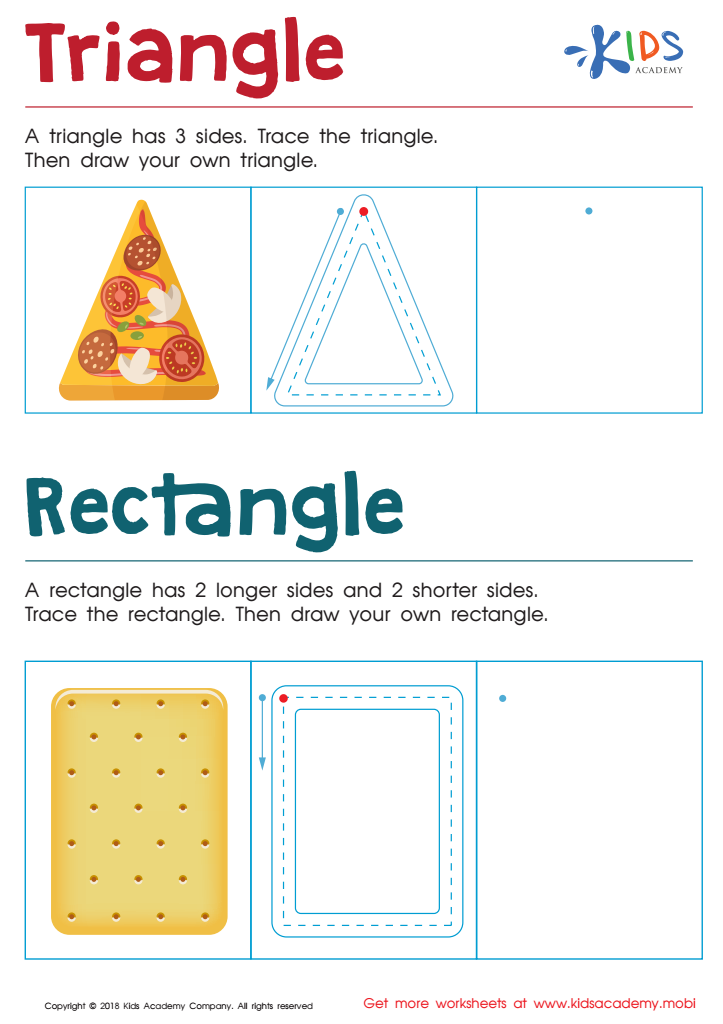
Triangle Rectangle Worksheet
This printable worksheet helps kids draw rectangles and triangles. Have your child trace the pizza and cracker shapes to become familiar, then try their own. Perfect for second graders! Coloring and creativity make this fun and educational.
 Assign to My Students
Triangle Rectangle Worksheet
Worksheet
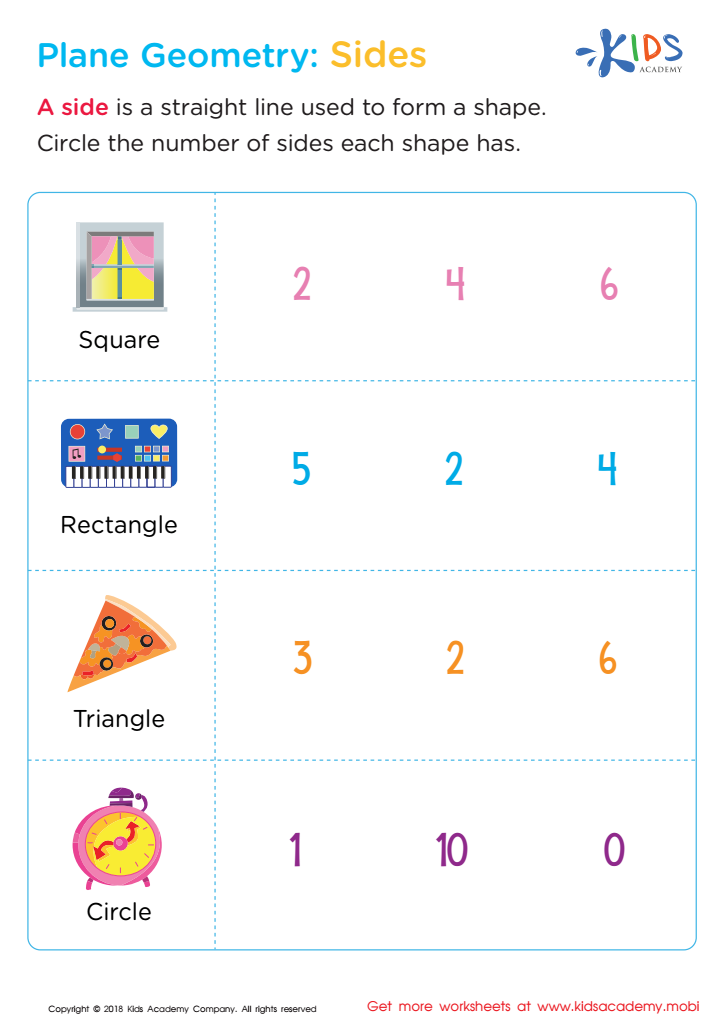
Plane Geometry: Sides Worksheet
Knowing the properties of basic geometric shapes is a great skill to have. Download this free worksheet and let your kids learn about sides and shapes using colorful pictures. They'll see each shape has its own number of sides, laying the groundwork for identifying and recognizing shapes in the future.
Plane Geometry: Sides Worksheet
Worksheet
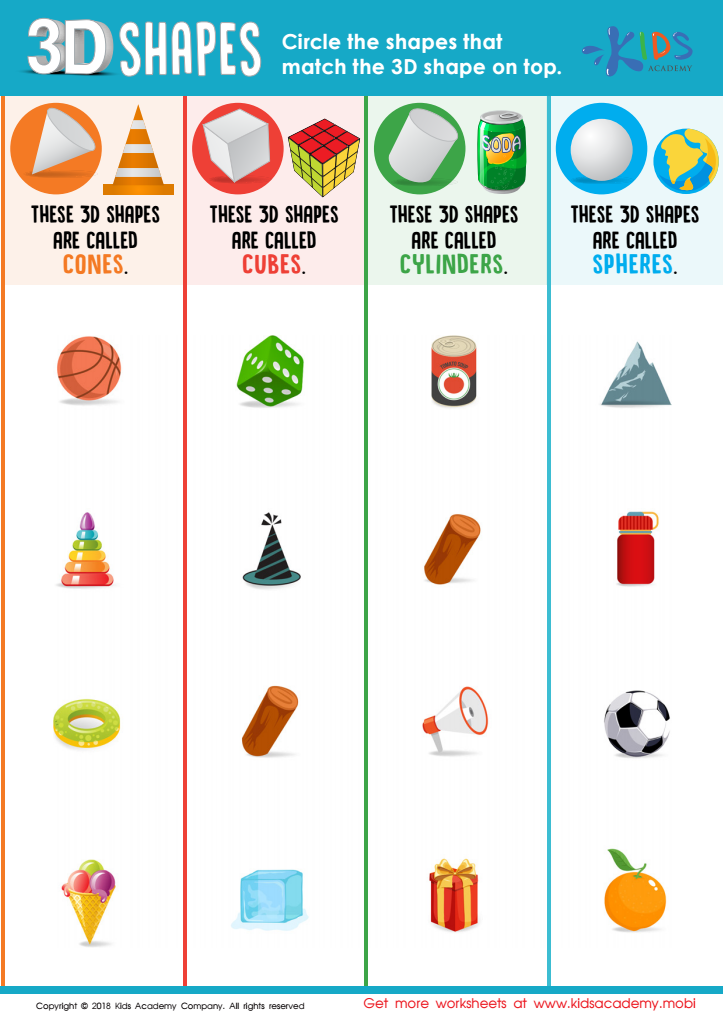
3D Shapes Worksheet
It's time to identify 3D shapes! This worksheet helps kids find and name shapes like cones, cylinders, cubes, and spheres using pictures of everyday objects. Let's explore 3D shapes in the real world!
3D Shapes Worksheet
Worksheet
Join Kids Academy for Free
Who is primarily going to use this learning content?







Differentiating shapes math for children ages 3-7 is essential for several reasons. Early childhood is a formative period for cognitive development, during which foundational math skills are established. Understanding shapes lays the groundwork for more complex mathematical concepts, such as geometry, spatial awareness, and problem-solving abilities. When parents and teachers differentiate instruction, they can cater to diverse learning styles and abilities, ensuring every child engages with the material at their level.
By introducing shapes through various approaches—like hands-on activities, visual aids, and interactive games—children remain actively involved and motivated. This variety keeps learning exciting, enhances retention, and fosters a love for math from a young age. Understanding shapes also has real-world applications; recognizing different shapes helps children interpret their surroundings, improving observational skills and critical thinking.
Moreover, differentiation allows educators to identify and support children who may struggle with shape recognition or who excel and need additional challenges. Ultimately, prioritizing differentiated shape math cultivates not only academic growth but also essential life skills, setting the foundation for lifelong learning and success. Thus, parents and teachers should care about this vital aspect of early education to help each child reach their full potential.








