Identifying Animals Math Worksheets for Ages 3-7
5 filtered results
-
From - To
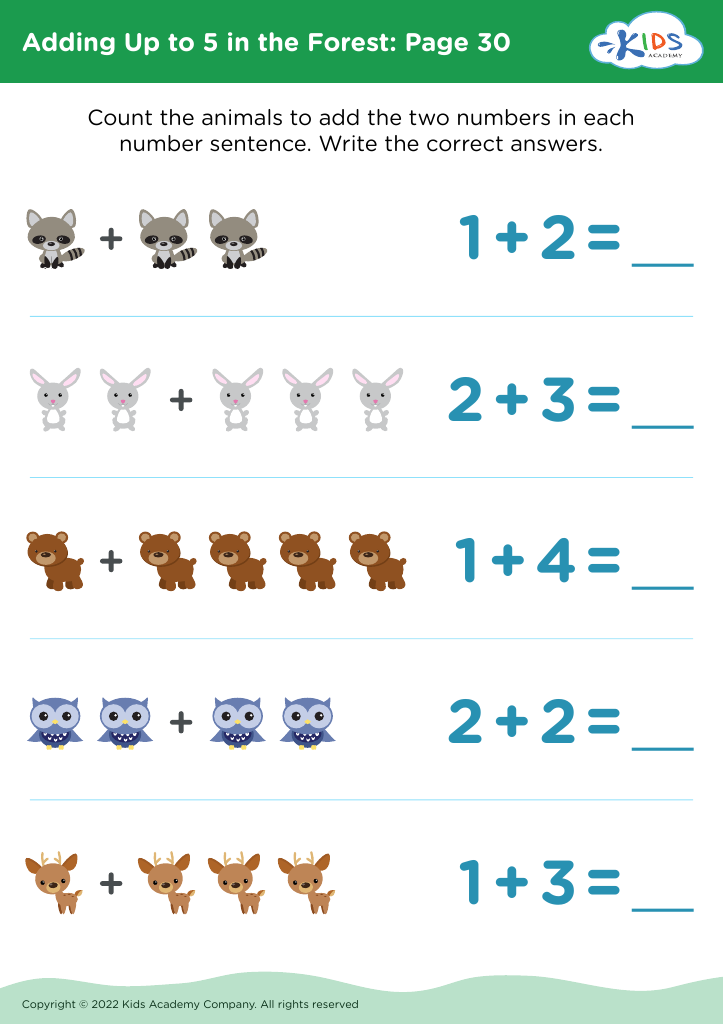
Welcome to our "Identifying Animals Math Worksheets" section, designed for children aged 3-7! These engaging and fun worksheets make learning math an exciting adventure by incorporating beautiful animal illustrations. Kids will enhance their counting, sorting, and recognition skills while exploring a variety of animal themes. Tailored to foster early math proficiency, each worksheet encourages interaction and promotes critical thinking through vibrant, age-appropriate activities. Whether at home or in the classroom, our resources support early childhood educators and parents in laying a strong educational foundation. Dive into our collection and watch your little ones thrive as they learn through the vibrant world of animals!
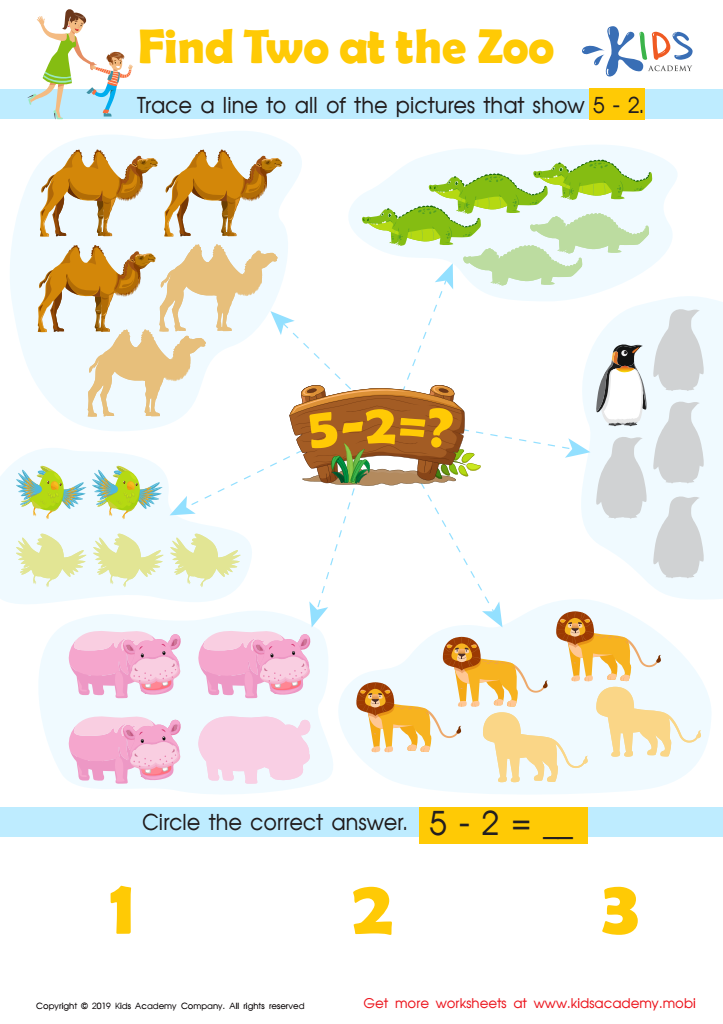
Find Two at the Zoo Worksheet
 Assign to My Students






Identifying Animals Math is an essential educational tool for children aged 3-7 as it combines foundational math skills with a rich understanding of the natural world. During these formative years, children are naturally curious and eager to learn about their environment, making it an ideal time to introduce them to essential concepts.
Understanding animal identification not only engages young learners but also enhances their observational skills. By recognizing different species, children can practice counting, sorting, and grouping, all of which are critical math skills. For example, they might count the number of zebras in a picture or sort animals by size or habitat, seamlessly integrating math concepts with science.
Moreover, teaching math through animals promotes a holistic learning approach where children can relate numeric concepts to real-life contexts. This makes learning more enjoyable and memorable. It also provides an opportunity for discussions about biodiversity and conservation, fostering a sense of responsibility towards the environment.
Ultimately, by focusing on Identifying Animals Math, parents and teachers can nurture well-rounded individuals who excel in both math and science while instilling a love and appreciation for nature, laying a strong academic foundation for their future learning journey.








