Improve counting Math Worksheets for Ages 3-7
3 filtered results
-
From - To
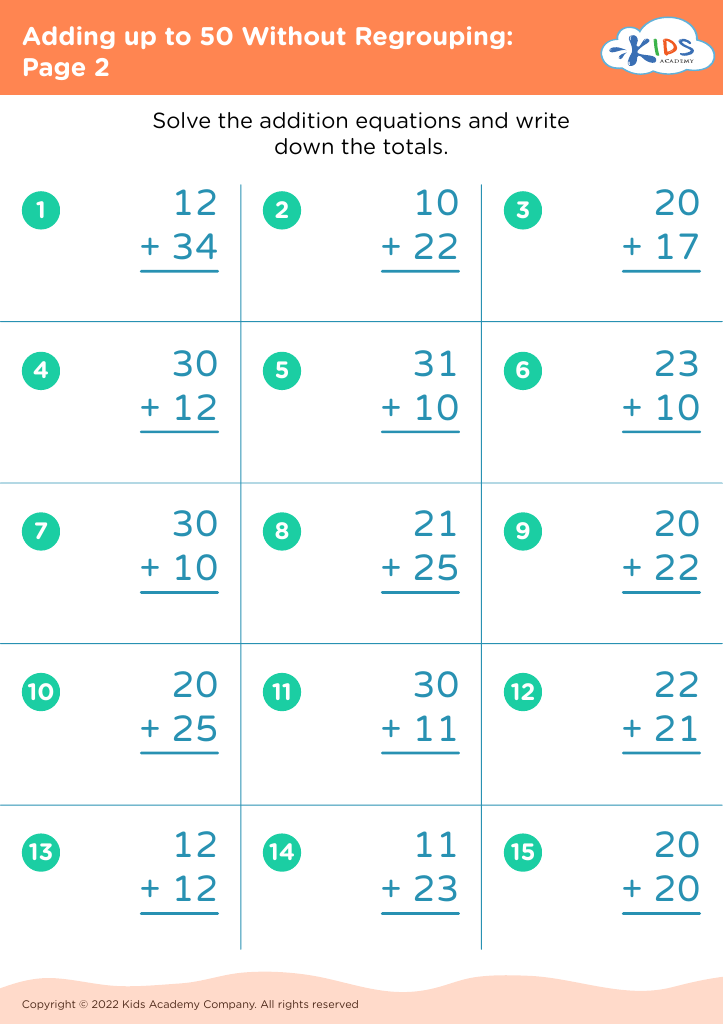
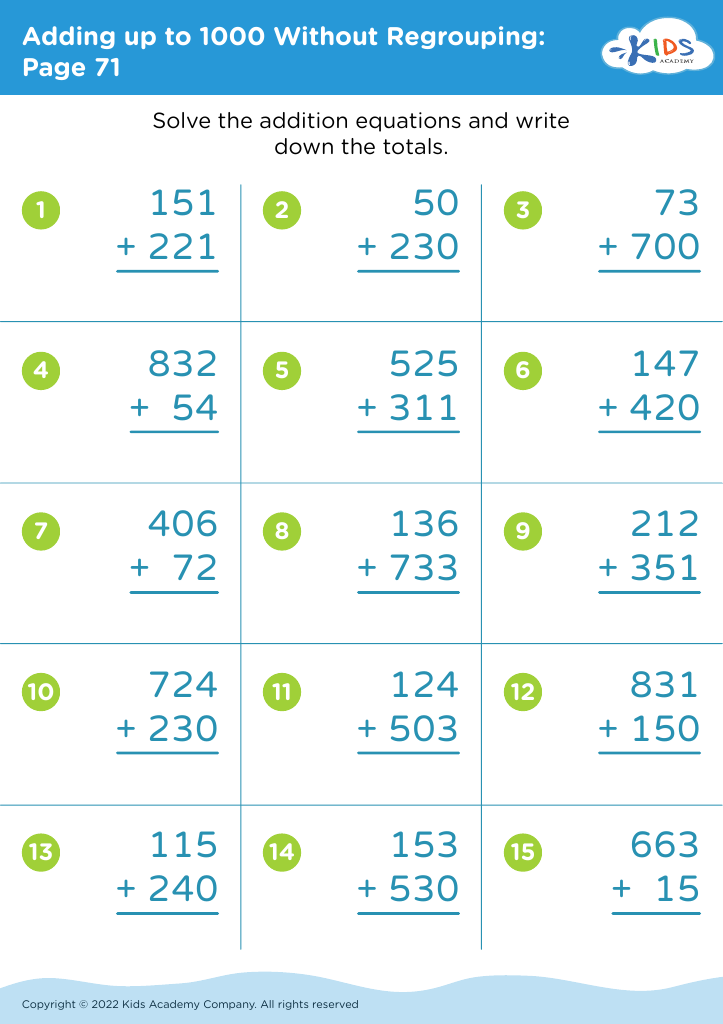
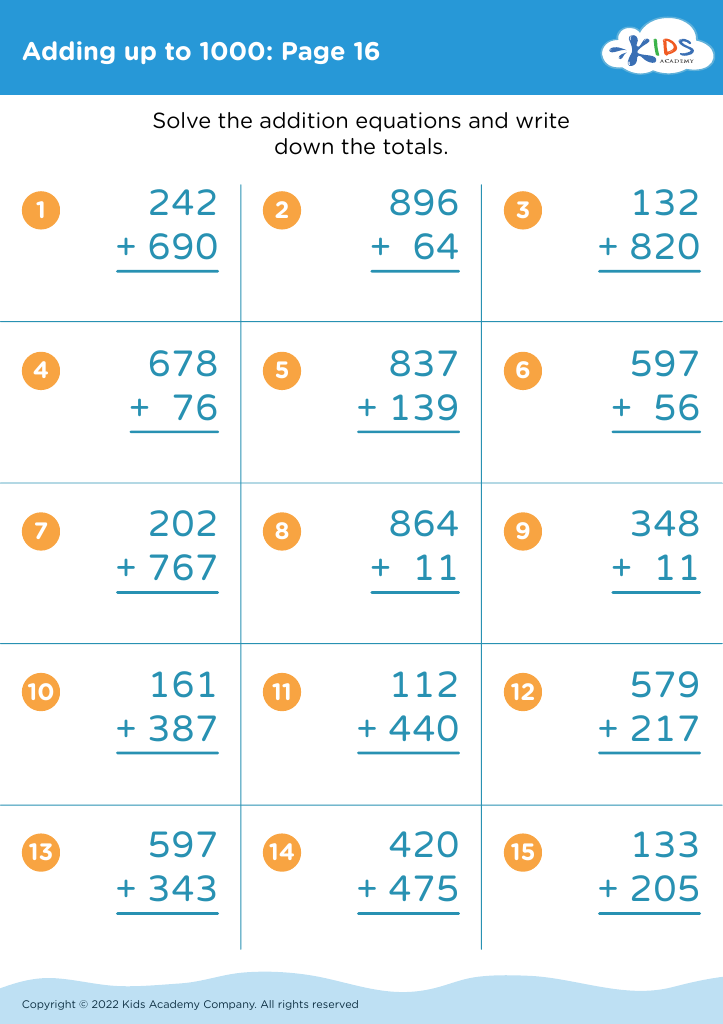
Discover engaging and educational counting math worksheets tailored for children ages 3-7. Our professionally designed resources offer fun activities to reinforce foundational math skills, making learning an enjoyable adventure. From counting objects and number recognition to basic addition and subtraction, each worksheet is curated to support various learning styles and abilities. Perfect for both classroom and home use, these printable materials boost confidence and proficiency in early math concepts. Empower your child's mathematical journey with our colorful, interactive worksheets, and watch their skills soar! Visit us to explore a diverse collection aimed at making counting second nature.







Counting is a foundational mathematical skill that has significant implications for a child's future academic success. For ages 3-7, developing strong counting skills is crucial as it lays the groundwork for more complex math concepts such as addition, subtraction, and place value. Early counting skills foster a strong number sense, allowing children to understand and relate quantities, which is essential for problem-solving and logical thinking.
From a parental and educational perspective, nurturing counting skills helps build a child's confidence and positive attitude towards mathematics. Competency in counting can lead to enthusiasm for learning more about numbers and fosters an early sense of achievement. Children who have strong counting abilities are often better prepared to tackle more advanced mathematical concepts, which can make future learning experiences less intimidating and more enjoyable.
Moreover, early math skills are predictive of later school success, not only in mathematics but across other academic subjects. Counting helps improve cognitive skills such as memory, attention, and logical reasoning which are transferable to subjects like reading and science. Therefore, parents and teachers investing time and resources in improving counting skills for children ages 3-7 are setting the stage for a lifetime of successful learning and academic achievement. This foundational step empowers children with the ability to think critically and solve problems effectively, skills that are valuable both inside and outside the classroom.








