Improving math skills Math Worksheets for Ages 3-7 - Page 2
32 filtered results
-
From - To
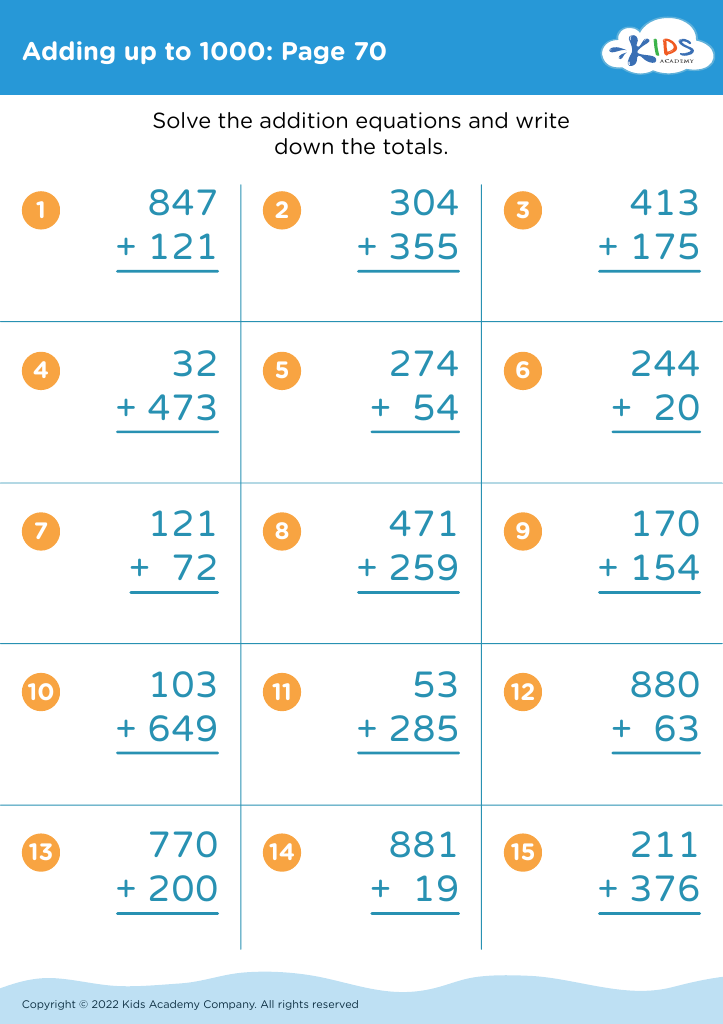
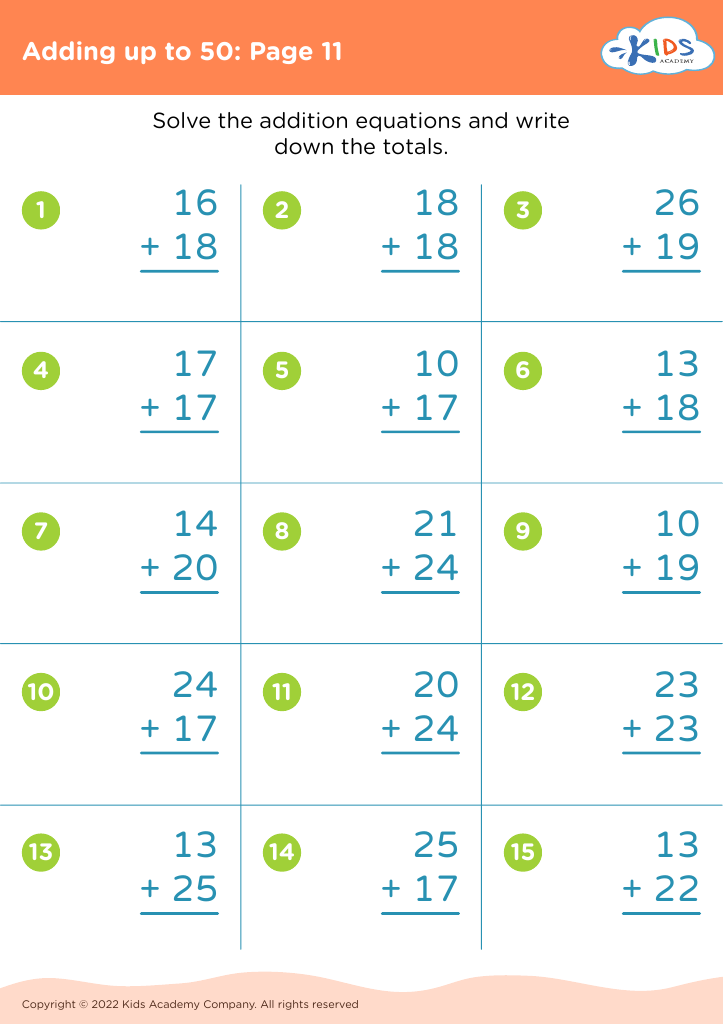
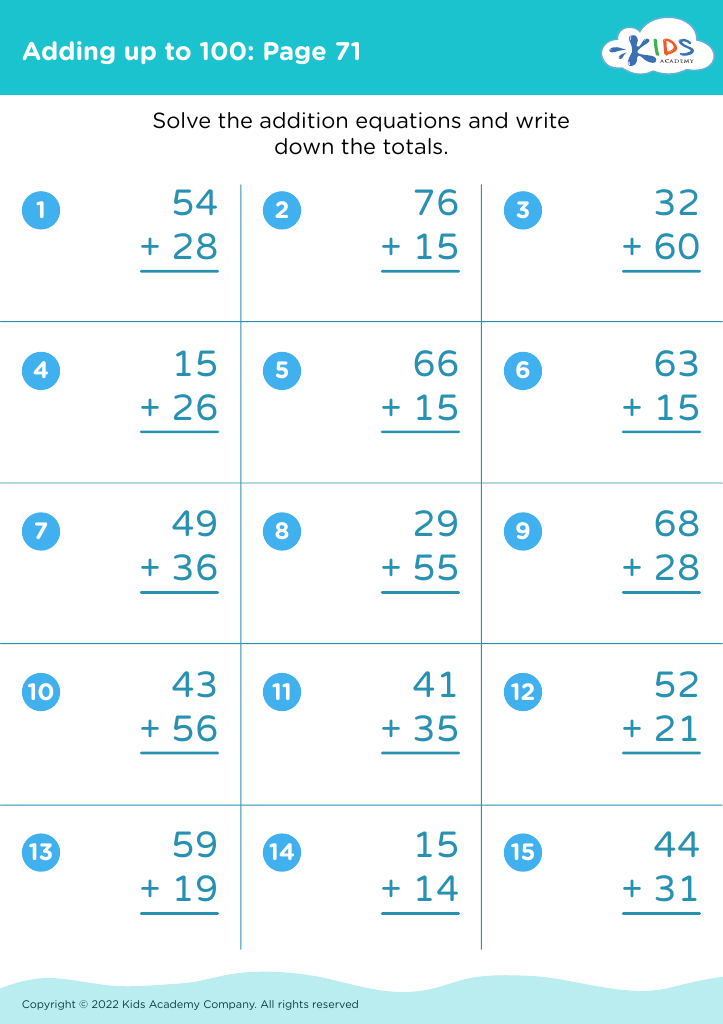
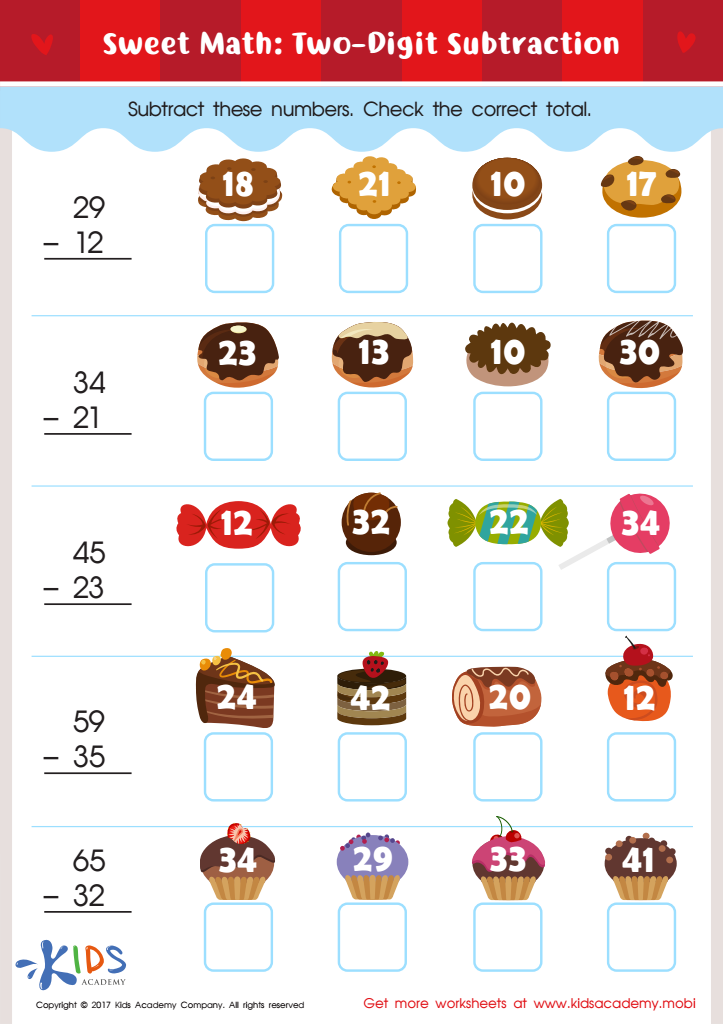
Two Digit Subtraction Worksheet
 Assign to My Students





.jpg)

Parents and teachers play a crucial role in developing early math skills for children aged 3-7, as these foundational years set the stage for lifelong learning and success. Early math skills are linked to critical thinking and problem-solving abilities, influencing overall academic performance. Math teaches children to recognize patterns, understand relationships, and develop logical reasoning, which are skills that extend beyond the classroom into everyday life.
Investing time in math from a young age helps children build confidence and fosters a positive attitude towards learning. Skills such as counting, sorting, and recognizing shapes enhance cognitive development, while also building essential social skills through shared activities and collaborative learning.
Supporting mathematical development at this stage reduces the risk of future learning difficulties. Children who grasp basic math concepts early are more likely to excel as they progress through their education. Furthermore, stronger math skills can relate to increased opportunities in STEM fields, which are crucial in today's job market. By prioritizing math skill improvement, parents and teachers not only equip children for academic success but also inspire a love for learning and exploration that lasts throughout their lives.








