Math problem-solving skills Math Worksheets for Ages 3-7
4 filtered results
-
From - To
Discover engaging and educational Math Problem-Solving Worksheets, expertly designed for children ages 3-7. Perfect for early learners, these printable worksheets foster critical thinking and foundational math skills through fun, age-appropriate activities. From simple addition and subtraction to understanding shapes and patterns, each worksheet will challenge young minds and nurture their problem-solving abilities. Ideal for both classroom and at-home learning, our resources aim to build confidence and a love for math from an early age. Start their journey towards mathematical success with our vibrant, thoughtfully crafted problem-solving worksheets today!
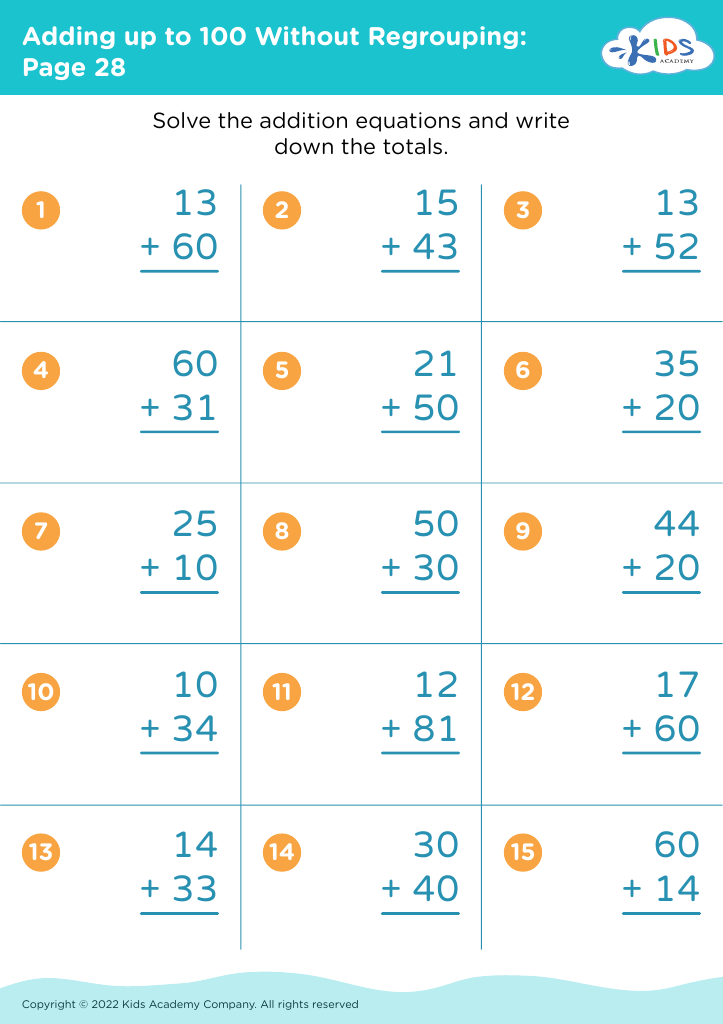
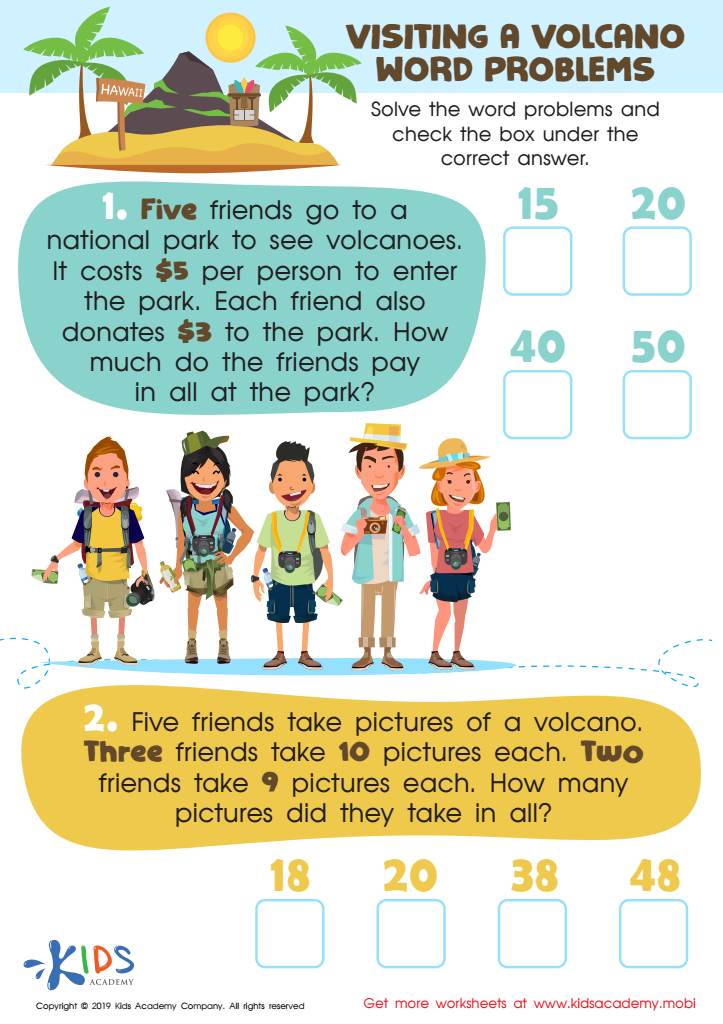
Visiting a Volcano Word Problems Worksheet
 Assign to My Students







Math problem-solving skills are crucial for young children ages 3-7 because they lay the foundation for critical thinking and decision-making abilities. These skills help children learn to approach problems methodically, promoting analytical thinking that is essential not only in math but in all areas of learning and daily life.
When children engage in solving math problems, they are introduced to basic concepts such as patterns, measurements, and numerical relationships. This early exposure helps to foster numerical literacy, making future, more complex math concepts easier to grasp. Additionally, problem-solving encourages perseverance, as children learn to try different methods and approaches when they don’t find the solution on their first attempt.
Moreover, math problem-solving can enhance children’s confidence. Successfully working through a problem can provide a sense of accomplishment, reinforcing a positive attitude towards learning and academic challenges.
Parents and teachers who invest time and resources into developing these skills help children build a strong cognitive foundation. They also foster a growth mindset, where children are less intimidated by challenges and more likely to view them as opportunities to learn. In essence, early math problem-solving skills are not only about understanding numbers; they are about shaping curious, resilient, and competent lifelong learners.








