Money management skills Math Worksheets for Ages 3-7
3 filtered results
-
From - To
Introduce your little ones to essential money management skills with our engaging math worksheets designed for ages 3-7! These resources help young learners grasp the fundamental concepts of money, such as counting coins, recognizing currency, and making simple transactions. With colorful visuals and interactive activities, children will enjoy discovering the importance of saving, spending, and budgeting in a fun and educational way. These worksheets not only enhance math skills but also lay the groundwork for responsible financial habits as they grow. Explore our collection today and set your child on the path to financial literacy with enjoyable learning experiences!
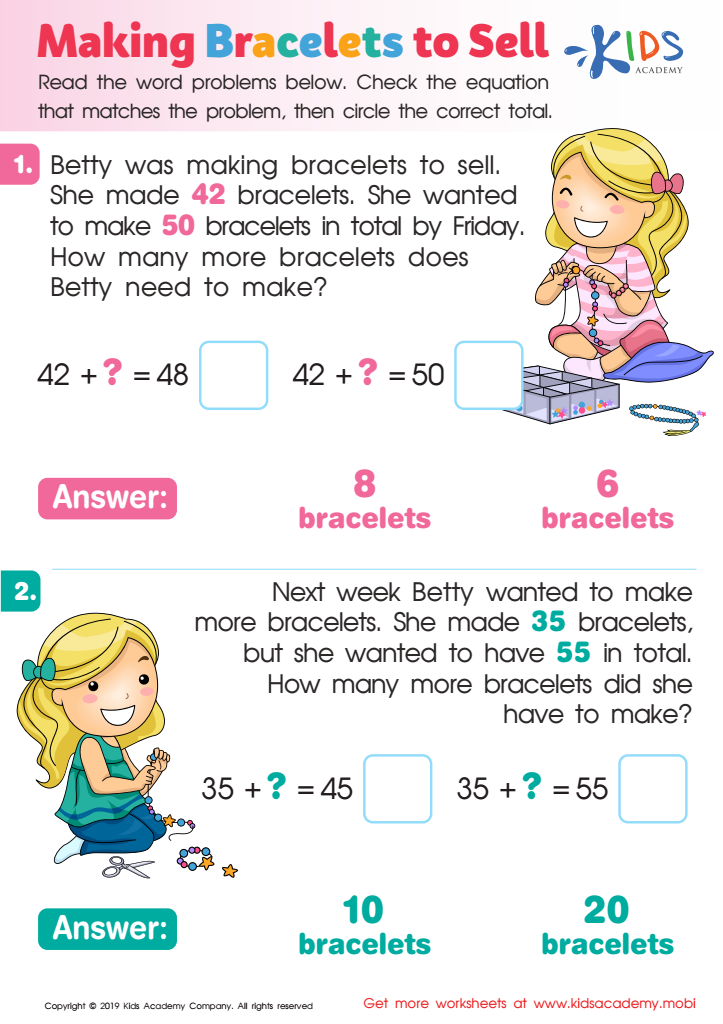
Making Bracelets to Sell Worksheet
 Assign to My Students
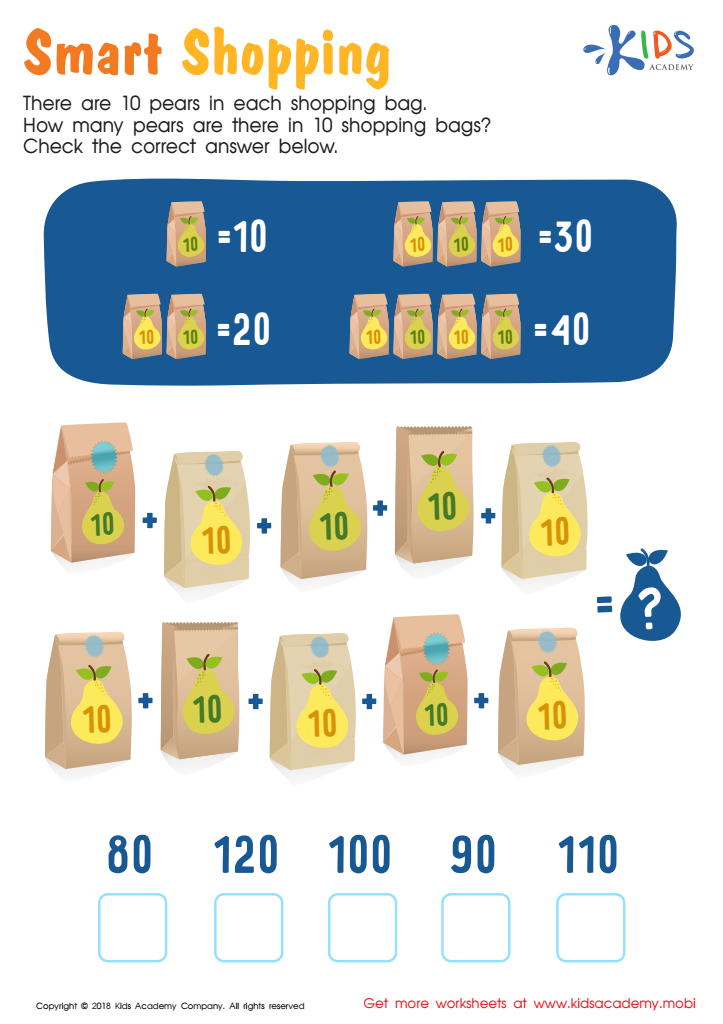
Smart Shopping: Trade Tens for a Hundred Worksheet
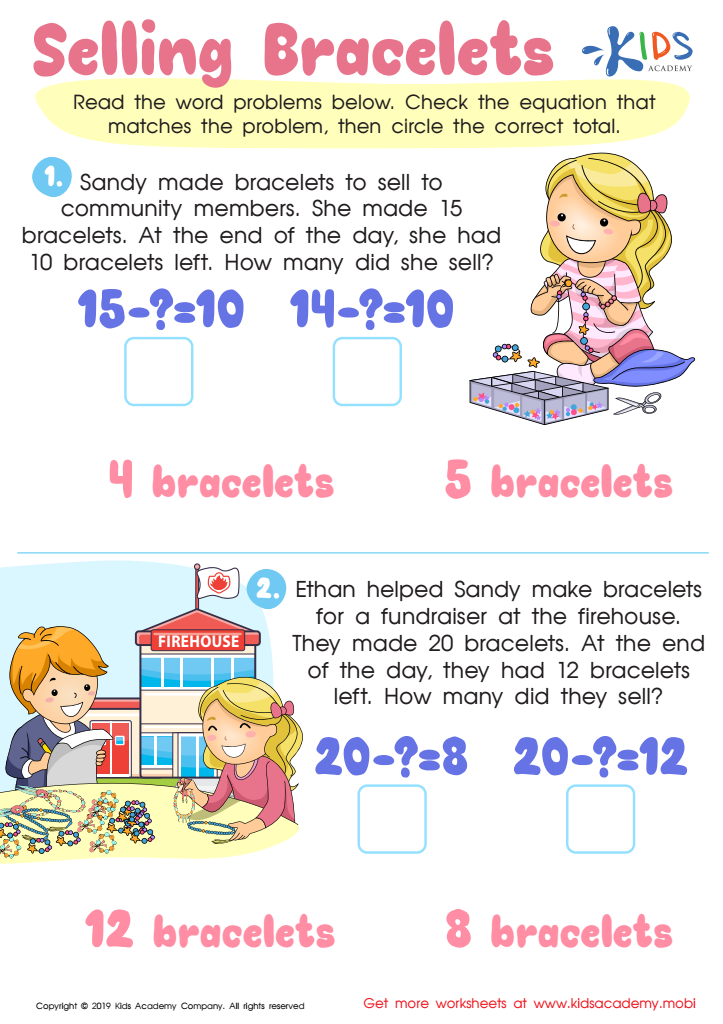
Selling the Bracelets Worksheet








Parents and teachers should prioritize money management skills in math for children ages 3-7 because these foundational skills lay the groundwork for responsible financial behaviors in adulthood. At this age, children are naturally curious and may encounter concepts of money and value through play and everyday activities. Introducing them to basic financial literacy concepts helps them understand the importance of saving, spending wisely, and distinguishing between needs and wants.
Furthermore, early money management skills promote critical thinking and decision-making abilities. Activities such as counting coins, making simple transactions in play-based scenarios, or using storytelling to discuss spending can make math engaging while instilling a sense of financial responsibility.
Involving parents and teachers in this aspect also offers an opportunity for collaboration, reinforcing learning both at home and in the classroom. By nurturing these skills early, children can develop positive attitudes toward money, helping to reduce financial anxiety later in life. Ultimately, teaching these concepts at a young age fosters not only mathematical competence, but also the social and emotional skills necessary for future financial success, transforming young learners into informed and responsible financial consumers.








