Nature appreciation Math Worksheets for Ages 3-7
5 filtered results
-
From - To
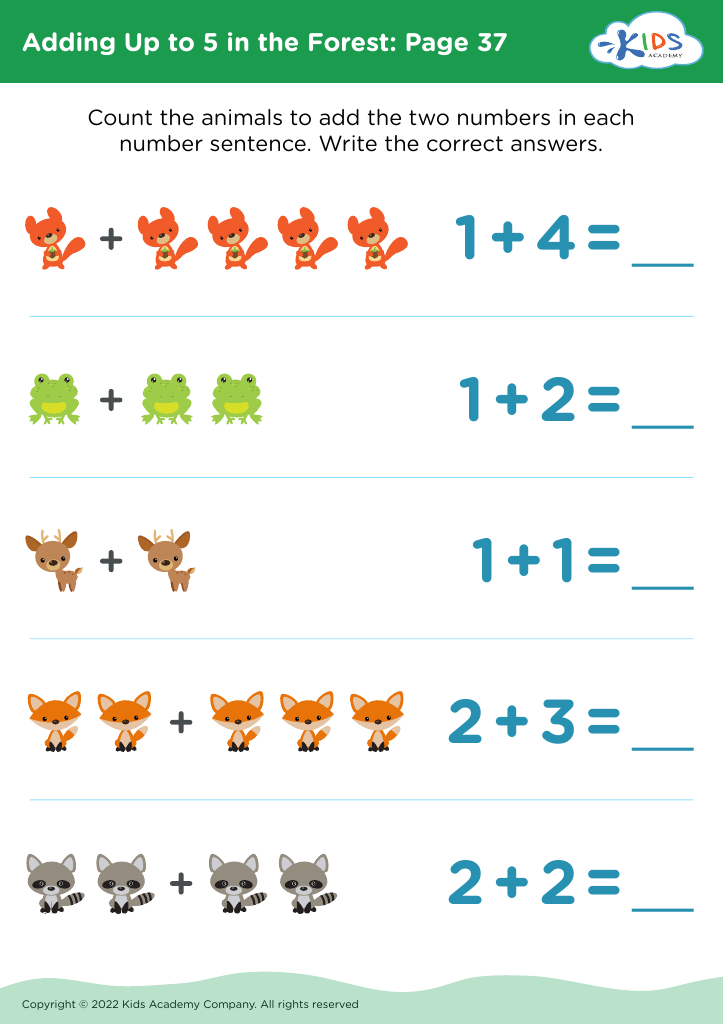
Explore the wonders of nature while developing essential math skills with our "Nature Appreciation Math Worksheets" designed specifically for children ages 3-7! These engaging worksheets combine fun, hands-on activities with beautiful illustrations of flora and fauna, making math learning a delightful experience. Children will enjoy counting leaves, sorting animals, and solving nature-themed puzzles, all while cultivating a love for the great outdoors. Perfect for home or classroom use, our worksheets encourage curiosity, critical thinking, and environmental awareness in young learners. Download now to support early math skills and foster a connection to nature in your child's educational journey!
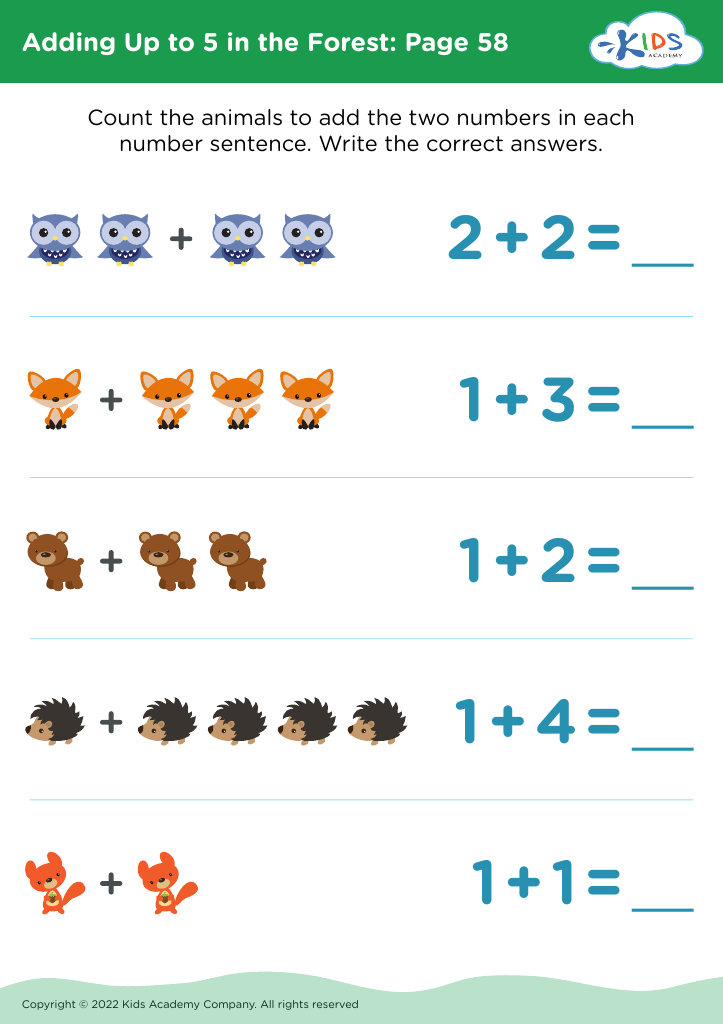
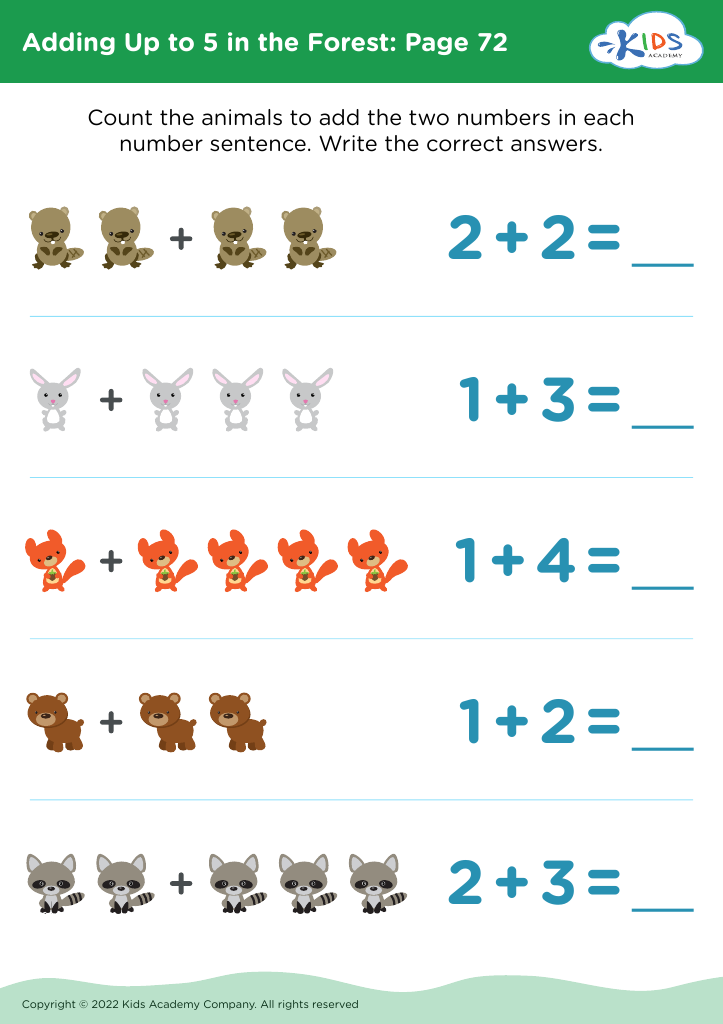
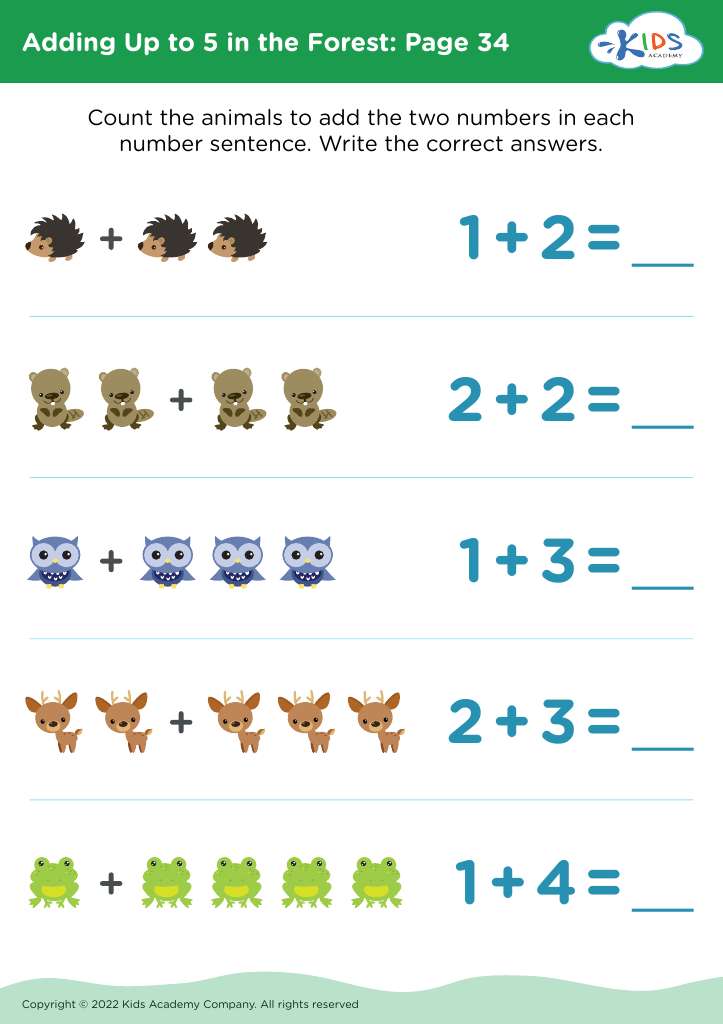
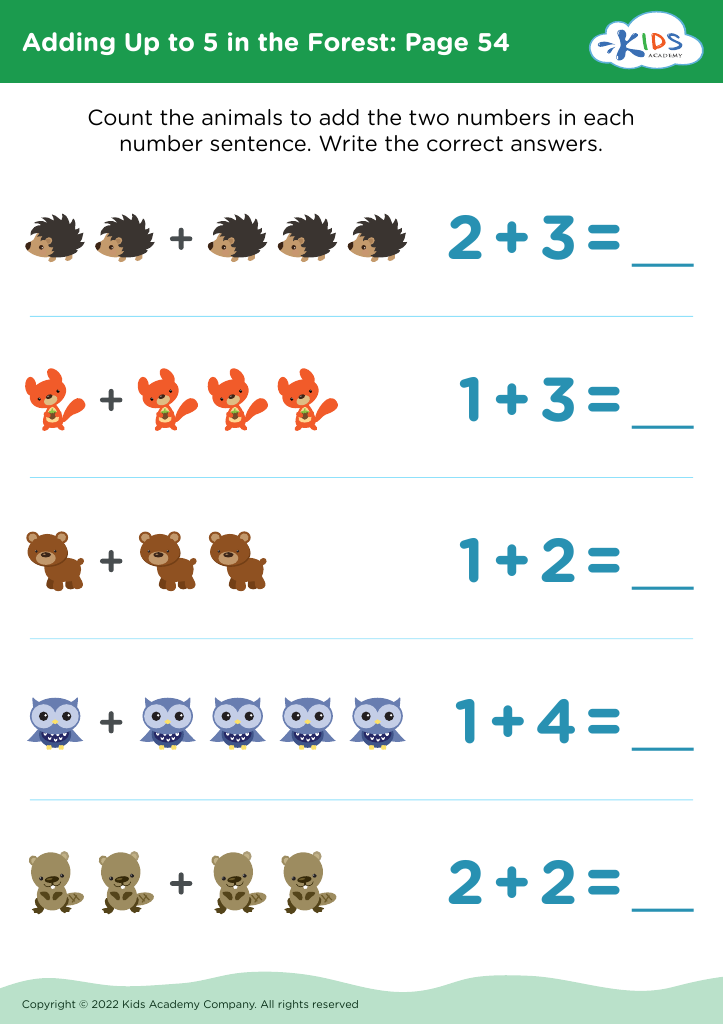







Nature appreciation math for children aged 3-7 is essential because it intertwines foundational math skills with the wonders of the natural world, fostering both cognitive and emotional development. At this early age, children are highly receptive to exploring and engaging with their surroundings. By integrating math concepts through nature, we can enhance their understanding of mathematical ideas like counting, patterns, measurement, and spatial awareness.
Parents and teachers should care about this approach because it promotes hands-on learning, enabling children to connect with their environment while actively engaging in math. For instance, while counting leaves or measuring tree heights, children experience math in real-world contexts, reinforcing their learning. This method supports the development of critical thinking and problem-solving skills, as nature provides a dynamic and varied landscape for exploration.
Moreover, nature appreciation math nurtures a sense of wonder and curiosity, instilling an early love for both mathematics and the environment. It encourages teamwork and communication, as children often work together to discover and solve problems. Ultimately, fostering this connection not only contributes to early math literacy but also ensures that children grow up appreciating nature, promoting stewardship and care for the environment as they learn.








