Practice writing numbers Math Worksheets for Ages 3-7
6 filtered results
-
From - To
Introduce your child to the world of numbers with our Practice Writing Numbers Math Worksheets, designed for ages 3-7. Each worksheet engages young learners through fun, interactive exercises, helping them to recognize, trace, and write numbers independently. These activities build foundational math skills, while also enhancing fine motor abilities and boosting confidence in number recognition. Perfect for preschool to early elementary students, our worksheets make learning numbers an enjoyable adventure. Prepare your child for math success by incorporating these hands-on worksheets into daily practice or at-home learning routines. Explore today and turn number practice into a fun-filled educational journey!
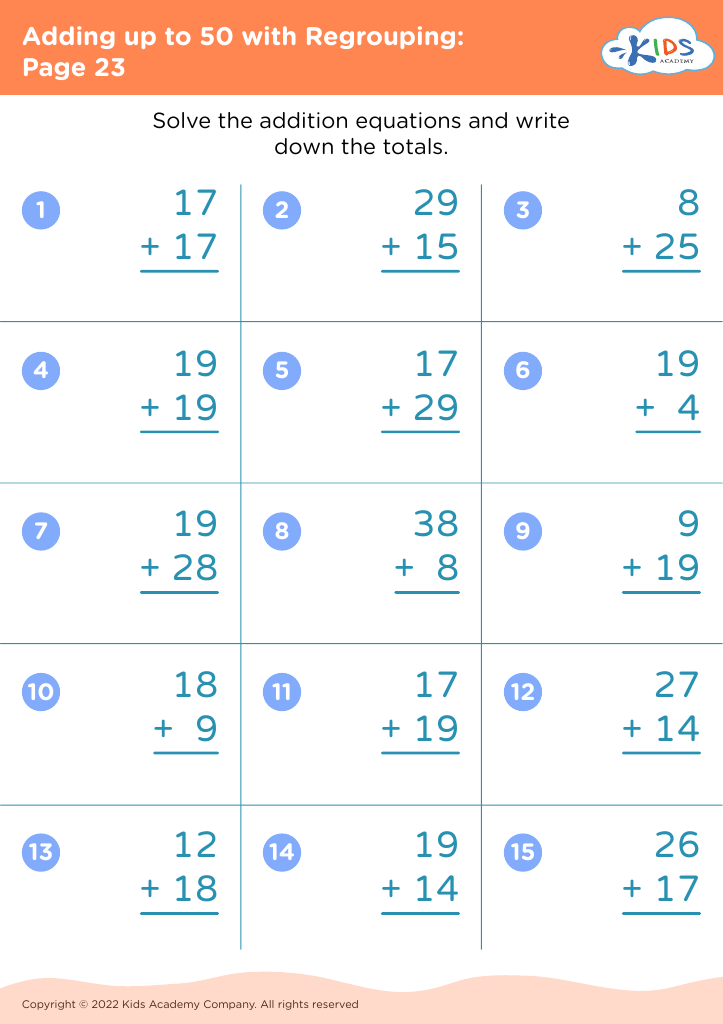
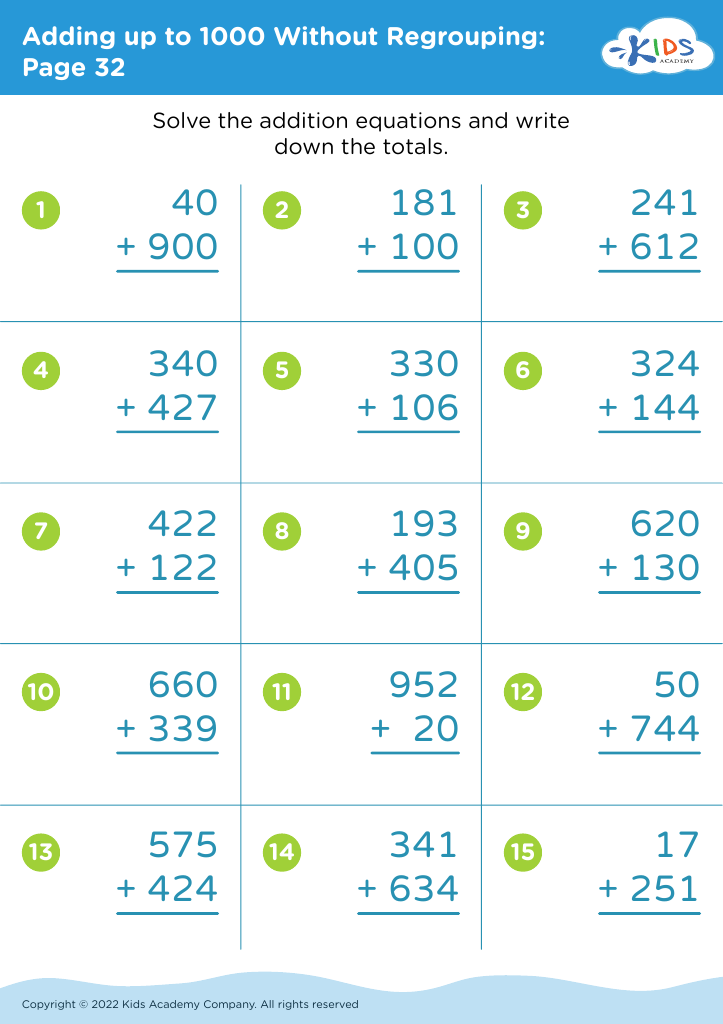
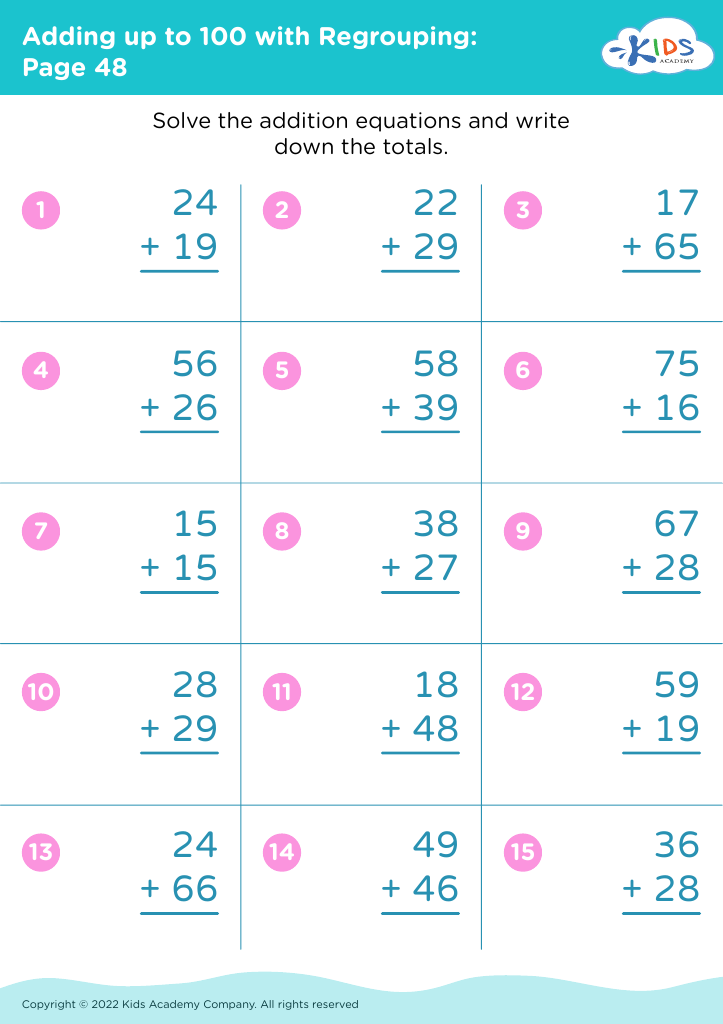
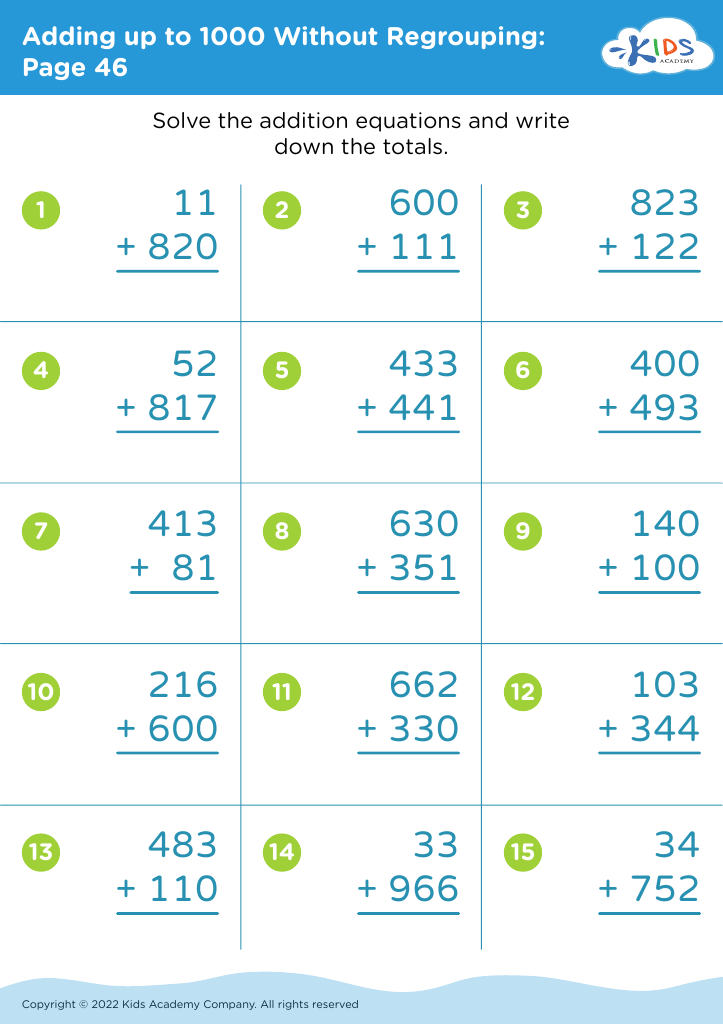
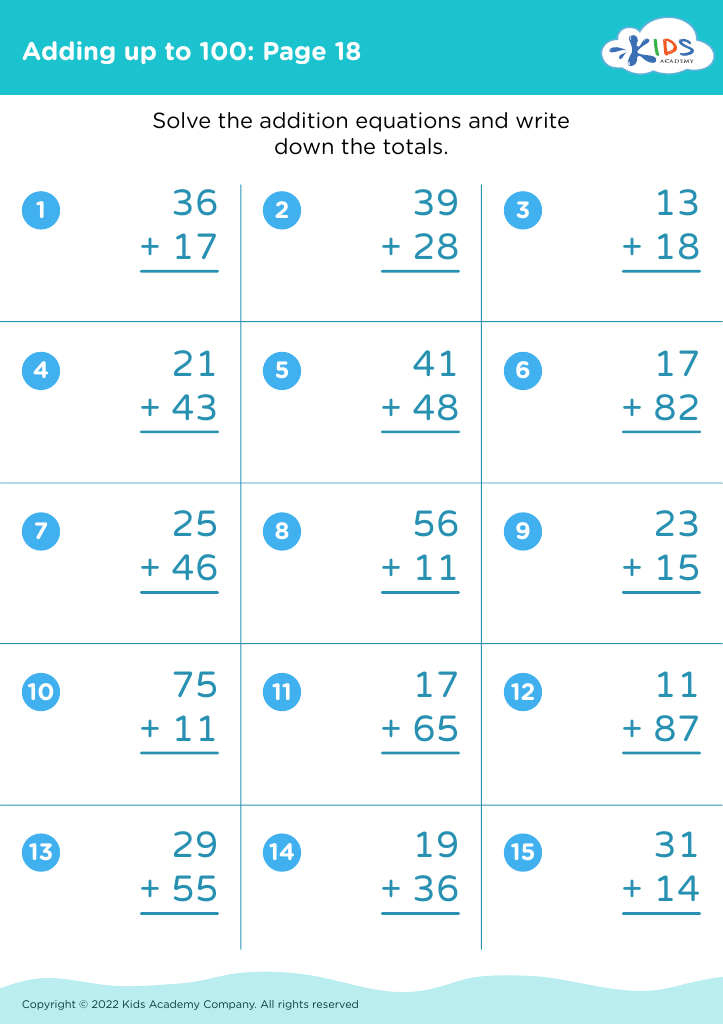
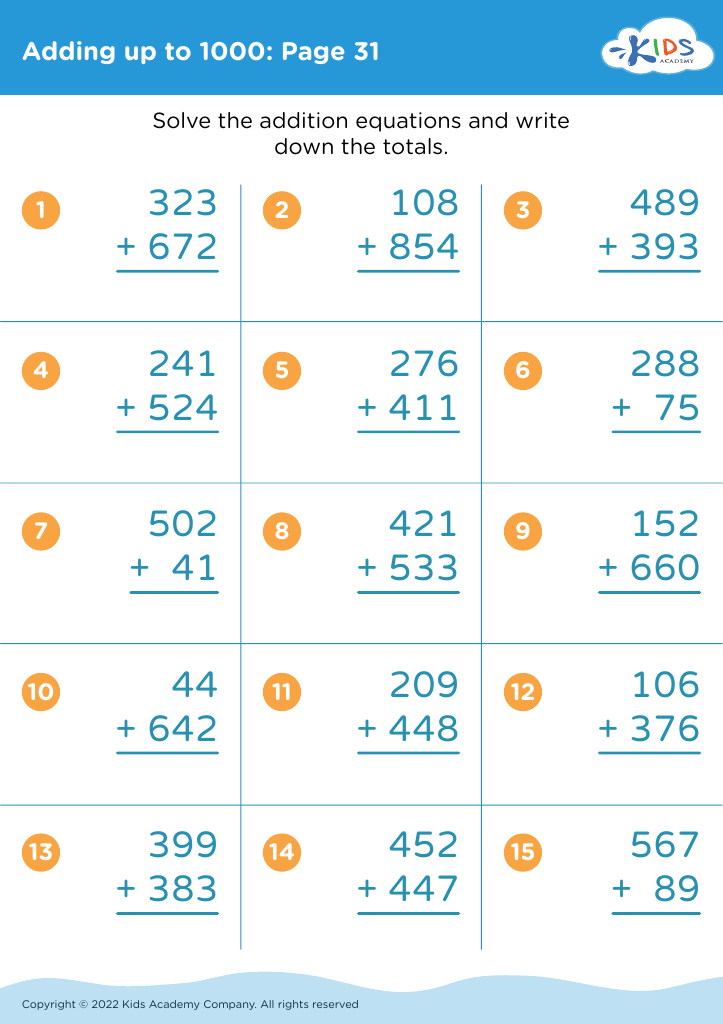








Practicing writing numbers for children ages 3 to 7 is fundamental for several critical reasons. Firstly, it lays the foundation for numeracy skills, ensuring future academic success in mathematics. This early practice helps children recognize and understand numerical symbols and their corresponding values. By continually writing numbers, young learners develop fine motor skills essential for handwriting and other tasks. This also strengthens hand-eye coordination, which is crucial for accurately producing numbers.
Moreover, engaging in numeral writing fosters cognitive development, particularly in areas like problem-solving and logical thinking. It enables children to transition from rote memorization to comprehensive understanding, aiding in effortless arithmetic operations later in life. Practicing numbers also introduces children to structured learning and instills a sense of discipline through repetitive exercises.
From a socio-emotional perspective, mastering numeric writing can boost a child’s confidence and encourage a positive attitude towards education. It empowers them to feel more competent in classroom settings, enhancing their participation and eagerness to learn.
Fostering these skills at an early age is crucial, as children are more receptive and capable of learning new concepts. Parents and teachers play a pivotal role in guiding this foundational skill, ensuring it's introduced in a fun, engaging, and supportive manner.








