Problem-solving development Math Worksheets for Ages 3-7
3 filtered results
-
From - To
Enhance your child's problem-solving skills with our engaging Math Worksheets designed for ages 3-7. These printable resources provide a fun and interactive way for young learners to develop critical thinking and reasoning abilities. Focusing on real-life scenarios, our worksheets encourage children to explore mathematical concepts through activities that captivate their imagination. From simple addition and subtraction to shape recognition and pattern creation, each worksheet is thoughtfully crafted to align with developmental milestones. Ideal for use at home or in the classroom, our problem-solving worksheets help nurture a strong foundation for future math success while promoting a love for learning!
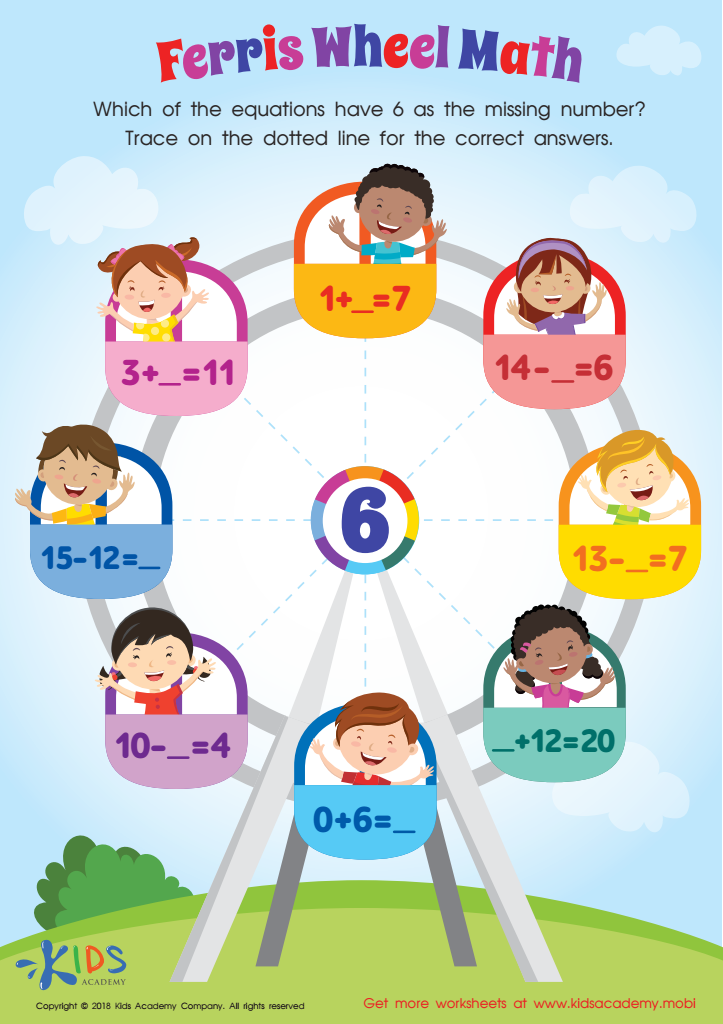
Missing Number: Ferris Wheel Math Worksheet
 Assign to My Students
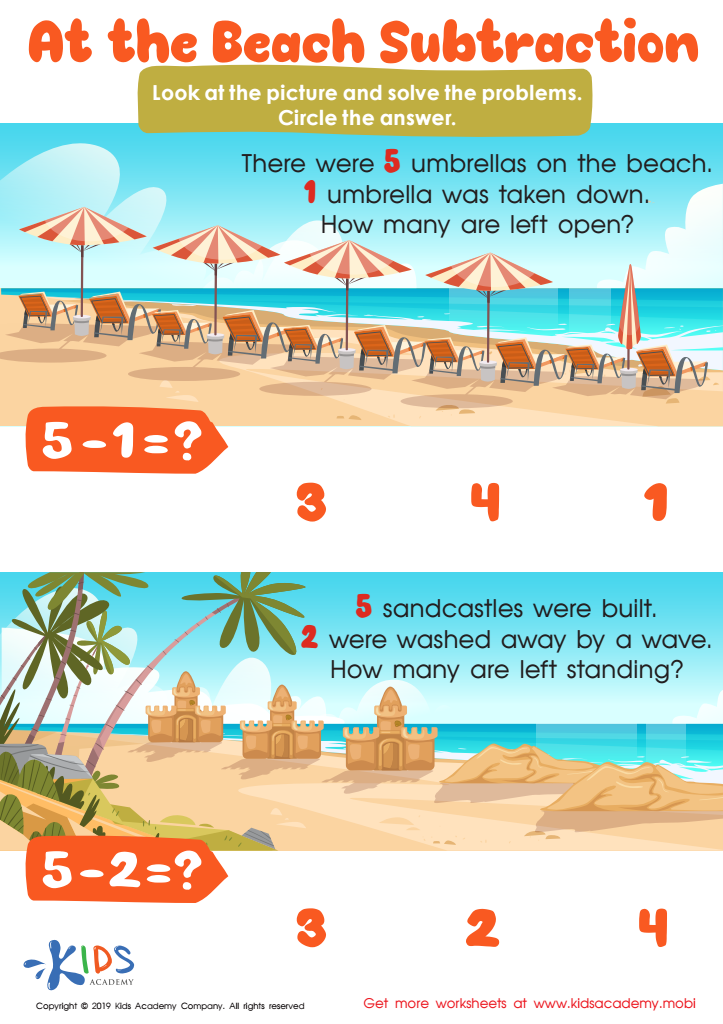
At the Beach Subtraction Worksheet
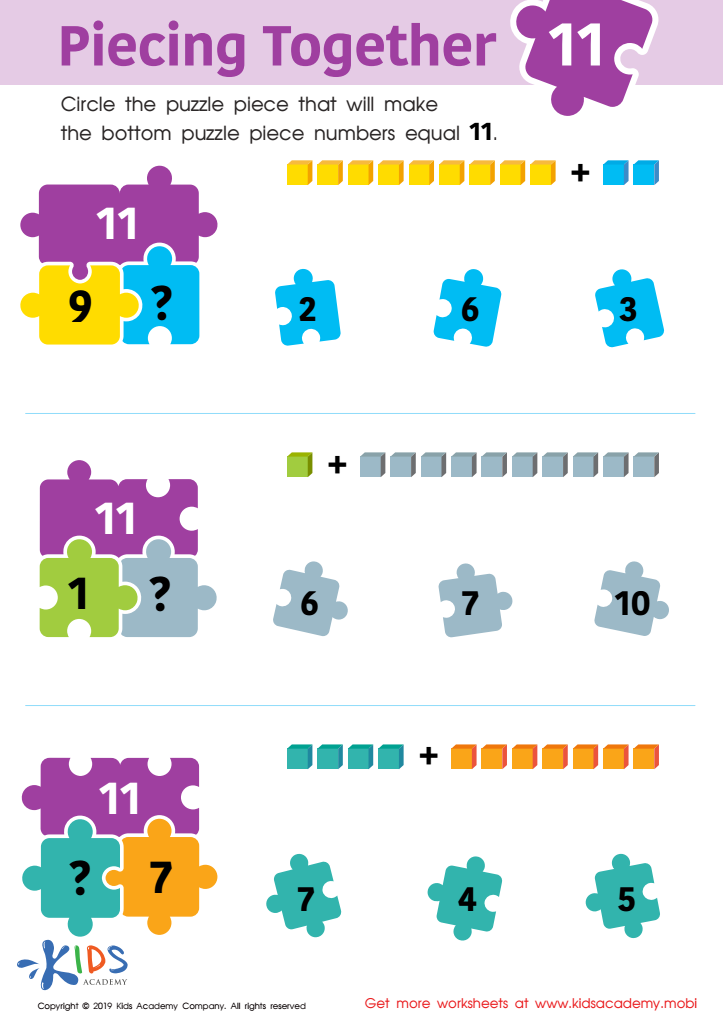
Piecing Together 11 Worksheet








Problem-solving development in mathematics for children aged 3-7 is crucial for several reasons. At this stage, young learners are like sponges, absorbing knowledge and forming foundational skills that are vital for their future academic success. Engaging children in problem-solving helps them develop critical thinking skills; they learn to analyze situations, identify patterns, and devise solutions—skills that extend beyond math into everyday life.
Moreover, early exposure to mathematical concepts through problem-solving nurtures confidence and a positive attitude towards math. When children tackle math challenges, they experience a sense of accomplishment, fostering a love for learning and an understanding that perseverance is key to overcoming obstacles.
For teachers and parents, fostering problem-solving skills in early math education aligns with developmental guidelines and teaching standards, ensuring children are well prepared for more complex mathematical concepts in later grades. Collaborative problem-solving also enhances social and emotional skills, as children learn to communicate their thought processes and support each other in finding solutions.
Ultimately, prioritizing problem-solving in young children lays the groundwork for holistic development, encouraging them not just to understand math but to embrace it as a valuable, engaging tool for exploring the world around them.








