Recognizing equivalent fractions Math Worksheets for Ages 3-7
5 filtered results
-
From - To
Explore our engaging "Recognizing Equivalent Fractions" math worksheets designed specifically for children ages 3-7! These interactive resources help young learners grasp the concept of equivalent fractions through fun illustrations and relatable activities. By incorporating vibrant visuals and hands-on exercises, children will confidently identify and compare fractions while developing essential math skills. Our worksheets are perfect for home or classroom use, enhancing learning with easy-to-follow instructions. Whether you're teaching at school or reinforcing skills at home, these worksheets make mastering equivalent fractions enjoyable and effective. Start your child's math journey today and watch them thrive in their understanding of fractions!
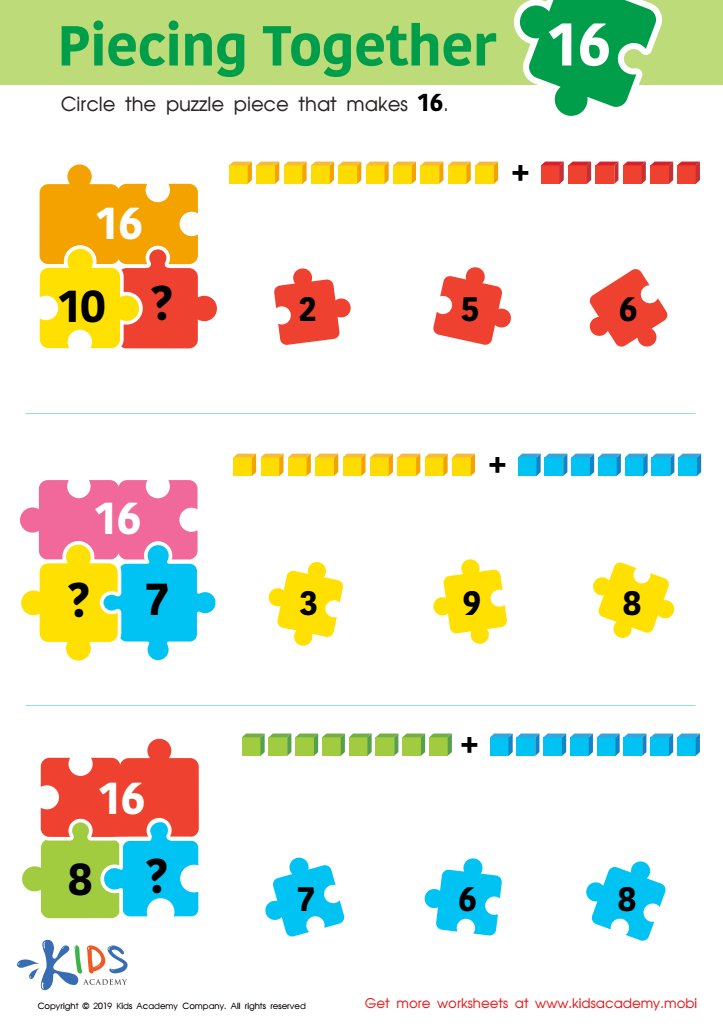
Piecing Together 16 Worksheet
 Assign to My Students



.jpg)


Recognizing equivalent fractions is a fundamental math concept that can significantly enhance a child's understanding of numbers, patterns, and relationships. For parents and teachers of children ages 3-7, grasping the idea of equivalent fractions lays the groundwork for developing critical thinking skills and promoting mathematical fluency.
At this young age, children are naturally curious and eager to explore relationships between different quantities. Introducing them to equivalent fractions helps them understand that different representations can symbolize the same quantity, fostering flexible thinking. For instance, showing that 1/2 is equivalent to 2/4 helps children make connections to their understanding of division and grouping.
Moreover, recognizing equivalent fractions simplifies more complex math later on. Children equipped with this foundational knowledge will find operations with fractions, such as addition and subtraction, more accessible as they progress in their education.
Finally, engaging in this concept nurtures a love for math, making learning enjoyable through hands-on activities like using visual aids, sharing food, or playing games. As both parents and educators emphasize the importance of equivalent fractions, they support their children's overall mathematical confidence, setting them on a path to success in future learning.








