Sea creatures identification Math Worksheets for Ages 3-7
3 filtered results
-
From - To
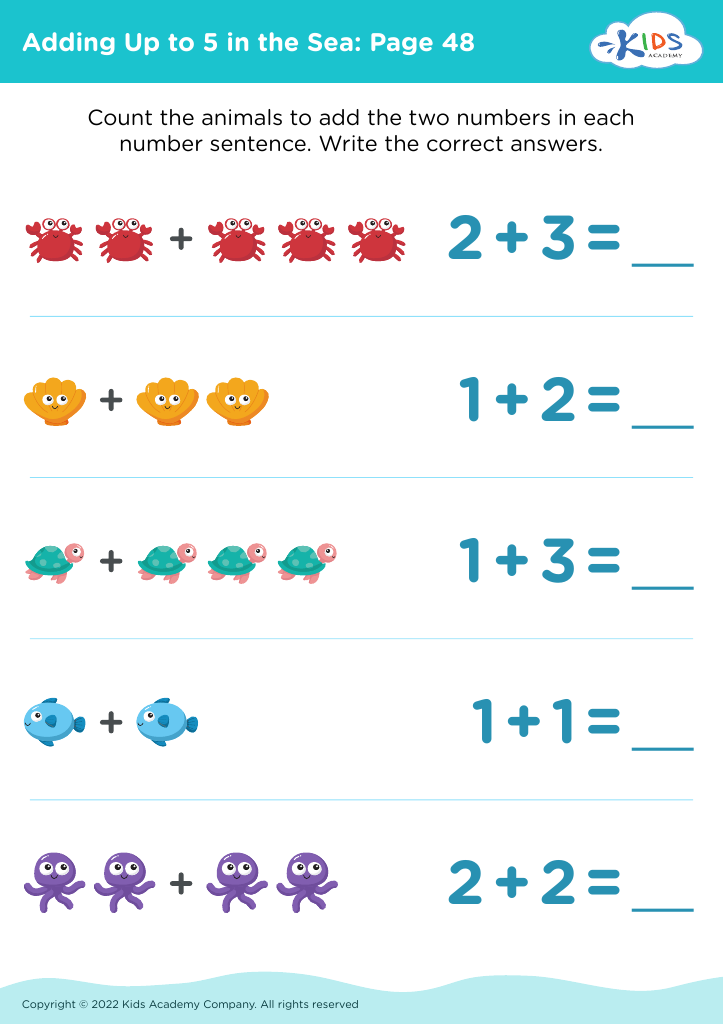
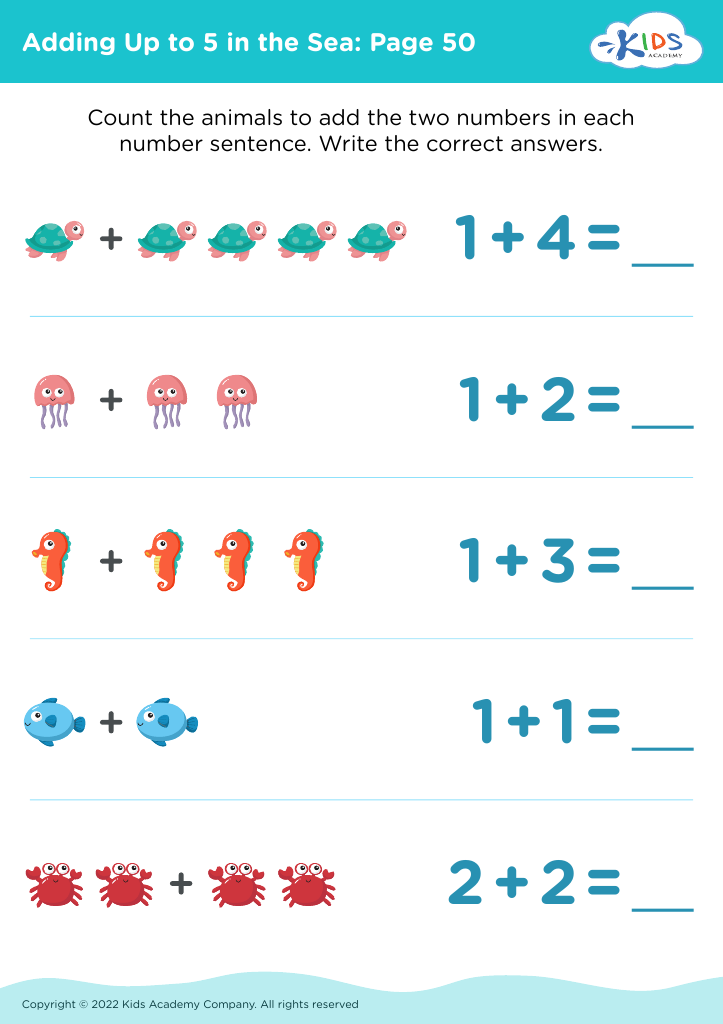
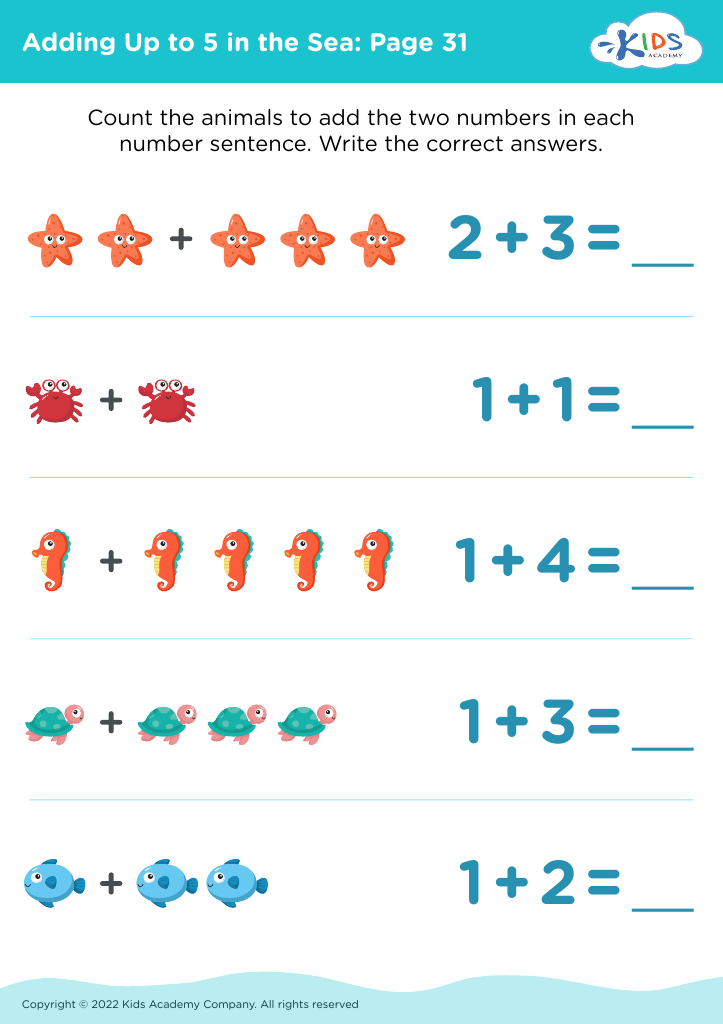
Dive into learning with our Sea Creatures Identification Math Worksheets, specially designed for ages 3-7! These engaging, printable worksheets combine math skills with the enchanting underwater world. Children will have fun identifying a variety of sea creatures while practicing counting, matching, and basic math operations. Each activity promotes critical thinking and fine motor skills development, making learning both educational and enjoyable. Perfect for parents and teachers, our worksheets provide a captivating way to bolster foundational math abilities while exploring ocean life. Make math an underwater adventure with our Sea Creatures Identification worksheets!





.jpg)

Sea creatures identification math for ages 3-7 is an engaging way to blend early math skills with marine biology, benefiting young learners profoundly. Firstly, this interdisciplinary approach captivates children's interest as ocean animals are fascinating, making learning feel more like an exciting adventure. This engagement is crucial for maintaining the attention span of young kids.
Mathematically, identifying, counting, and sorting sea creatures helps children develop fundamental skills such as number recognition, basic addition and subtraction, and an understanding of patterns and classifications. These activities lay the groundwork for more complex problem-solving skills in the future.
Cognitively, blending marine biology with math learning nurtures curiosity and instills a love for learning about nature and science. Children learn to observe, compare, and describe different sea creatures, enhancing their vocabulary and comprehension skills.
Moreover, this holistic approach promotes sensory and fine motor development through hands-on activities like drawing sea creatures, using counting blocks, or interactive digital games. It fosters a multisensory learning environment that can cater to various learning styles, whether they are visual, auditory, or kinesthetic learners.
Inculcating sea creatures identification math also subtly introduces environmental awareness. Children learn to appreciate and respect marine life, planting the seeds for future environmental stewardship. Hence, integrating sea creature identification with math creates a comprehensive, engaging, and impactful learning experience for young children.








