
Spatial understanding Math Worksheets for Ages 3-7
4 filtered results
Difficulty Level
Grade
Age
-
From - To
Subject
Activity
Standards
Explore our engaging Spatial Understanding Math Worksheets designed for children ages 3-7! These worksheets foster early cognitive development by enhancing kids' ability to perceive and understand spatial relationships. Featuring colorful and interactive activities, our resources make learning fun while teaching essential skills such as shape recognition, directions, and spatial awareness. Perfect for parents and educators, these worksheets align with early math standards and are ideal for home or classroom learning. Encourage your child's critical thinking and problem-solving abilities as they play and learn through hands-on spatial exploration. Download and start your child’s math journey today!
Favorites
With answer key
Interactive
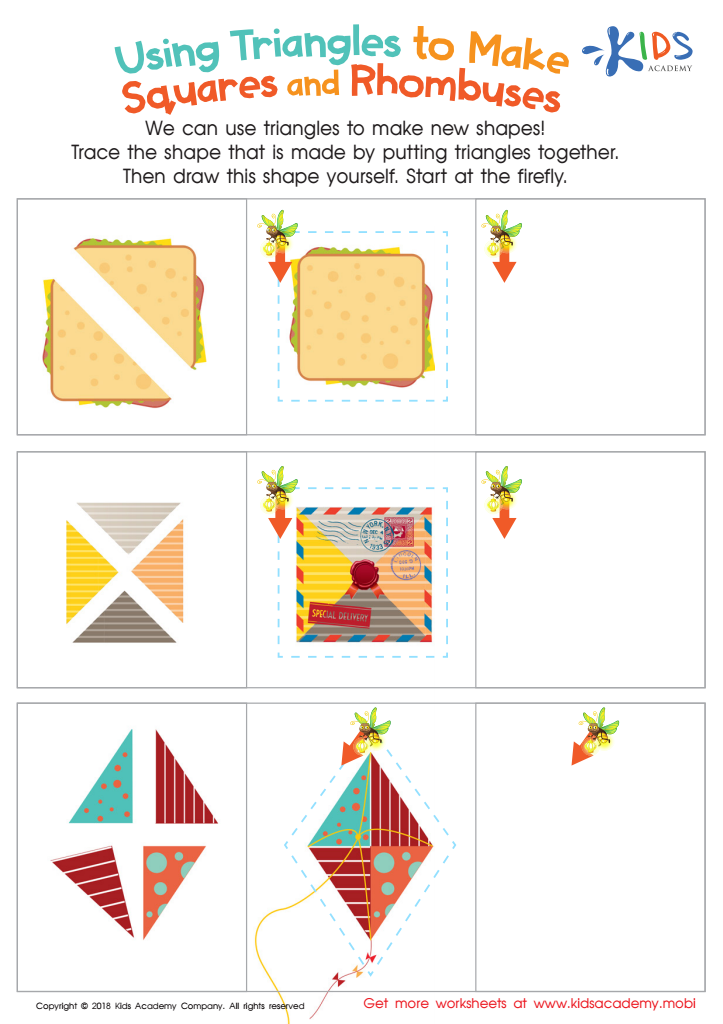
Using Triangles to Make Squares and Rhombuses Worksheet
Learning shapes is a fun way to boost spatial skills and critical thinking. This worksheet shows children how to use triangles to construct squares and rhombuses. Clear illustrations and a printout help children draw the new shape. A great activity for the math classroom! 80 words.
 Assign to My Students
Using Triangles to Make Squares and Rhombuses Worksheet
Worksheet
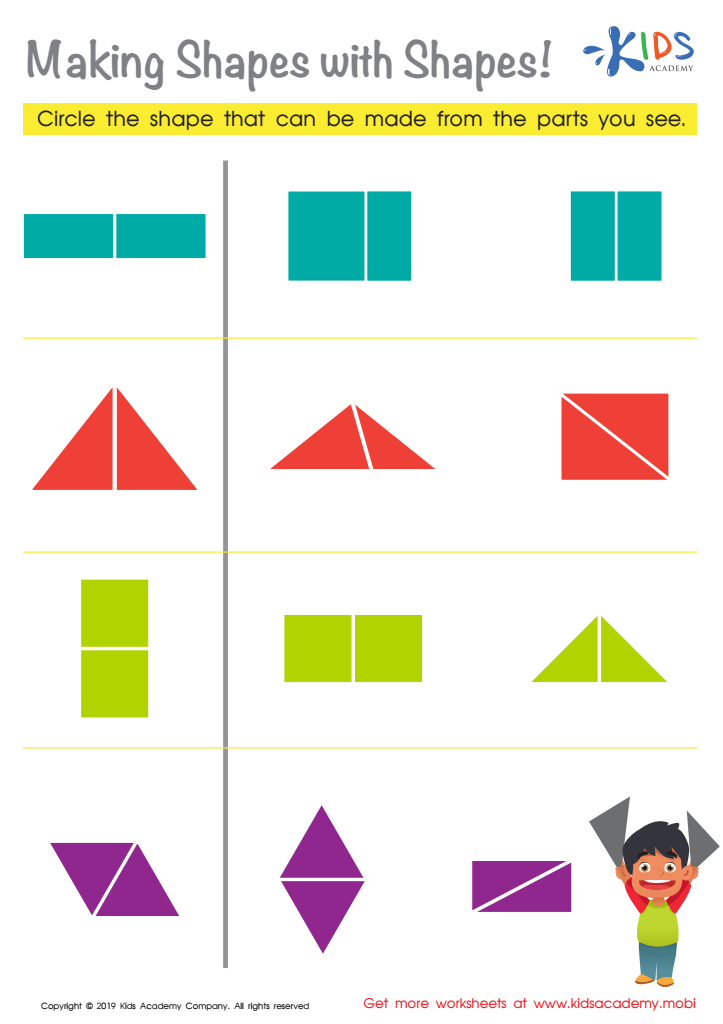
Making Shapes with Shapes Worksheet
Help your kindergartners identify shapes with this simple worksheet. Examine the shapes on the left and have them circle the one they can make from the parts in the picture. Shapes can be tricky, but this exercise will help clear up any confusion.
Making Shapes with Shapes Worksheet
Worksheet
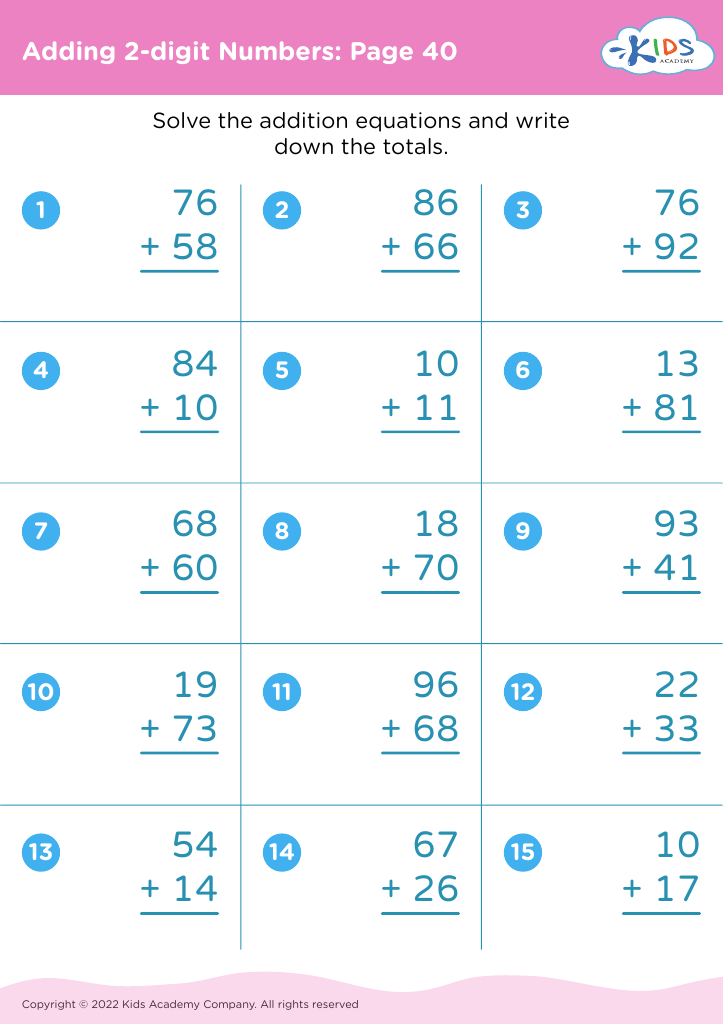
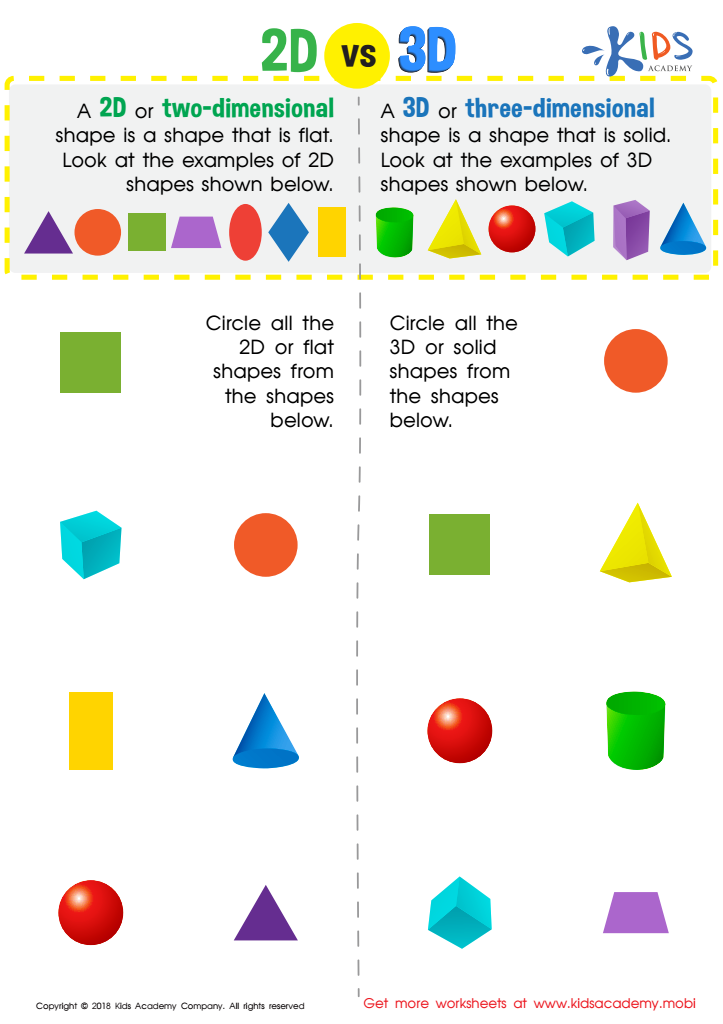
2D vs 3D Shapes Worksheet
Help your child understand 3D shapes using this engaging worksheet! Read the descriptions at the top and search for 2D and 3D shapes. An ideal activity for toddlers learning shapes. A fun way to understand the tricky concept of 3D shapes!
2D vs 3D Shapes Worksheet
Worksheet
Join Kids Academy for Free
Who is primarily going to use this learning content?








Spatial understanding is a critical component of early math development and lays the foundation for a child's future success in mathematics and STEM (science, technology, engineering, and mathematics) fields. For children ages 3-7, spatial skills encompass the ability to perceive, manipulate, and reason about spatial relationships in their environment.
Parents and teachers should care about promoting spatial understanding because it enhances children's problem-solving abilities, critical thinking, and creativity. Activities that foster spatial awareness, such as building with blocks, completing puzzles, or engaging in drawing, help children grasp concepts of shape, size, distance, and orientation. These experiences are essential for developing a strong conceptual framework for more advanced mathematical reasoning.
Furthermore, fostering spatial skills can narrow the gender gap often observed in STEM fields, as studies show that spatial reasoning is a predictor of math competency. When children engage in spatial activities, they become more adept at visualizing and manipulating mathematical concepts, paving the way for success in geometry, measurement, and algebra.
Ultimately, enhancing spatial understanding empowers children, boosts their confidence, and supports their academic journey in a world increasingly reliant on technology and mathematics. Investing in spatial development yields lifelong benefits, equipping children for future learning and career opportunities.








