Understanding equality Math Worksheets for Ages 3-7
5 filtered results
-
From - To
Discover the joy of learning with our "Understanding Equality Math Worksheets" designed for ages 3-7! These engaging and interactive worksheets help young learners grasp the concept of equality through vibrant visuals and fun activities. Tailored to build foundational math skills, children will practice recognizing and creating equal sets, enhancing their counting, sorting, and comparison abilities. Our user-friendly resources support early education by making learning enjoyable and effective. Perfect for teachers and parents alike, these worksheets promote critical thinking while fostering a love for numbers. Explore the wonders of math with our carefully crafted worksheets today!
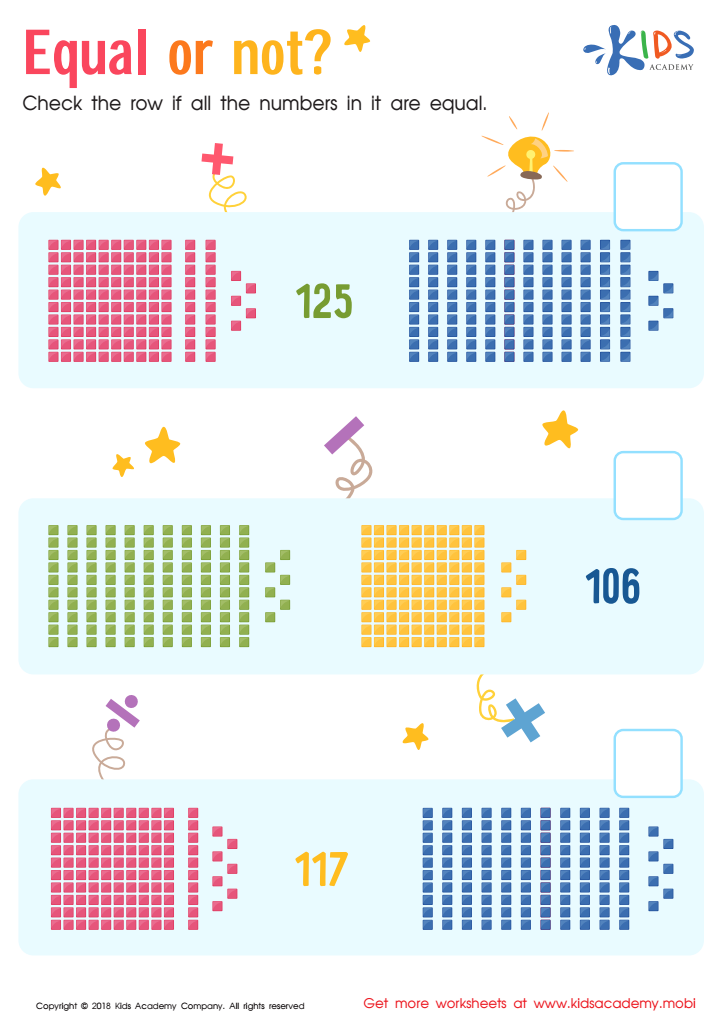
Equal or not Worksheet
 Assign to My Students
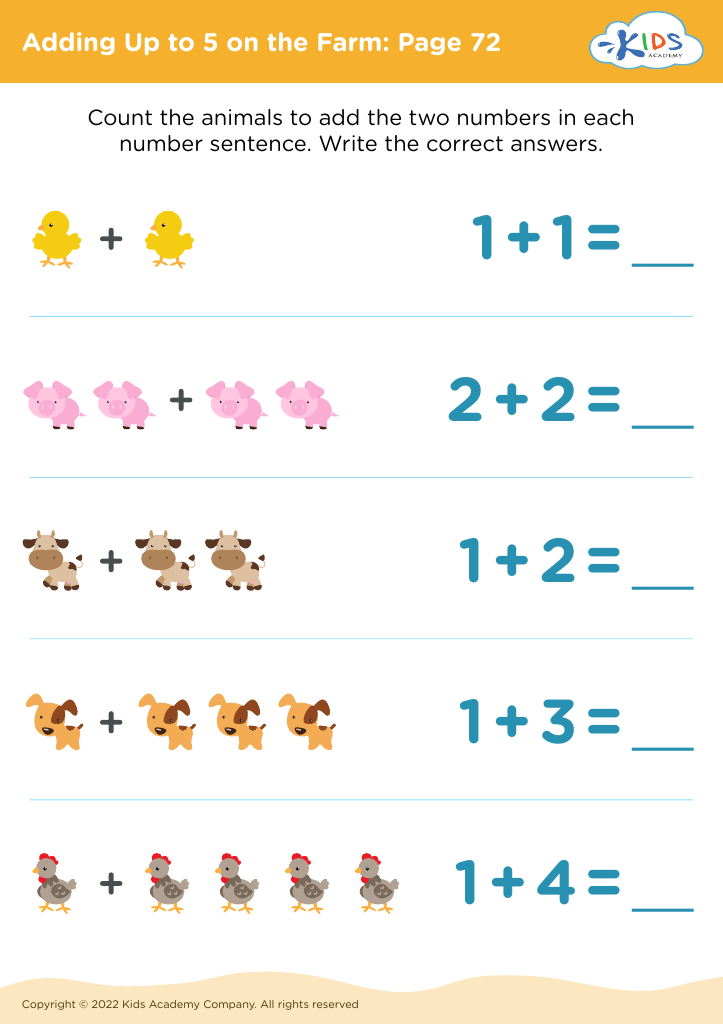
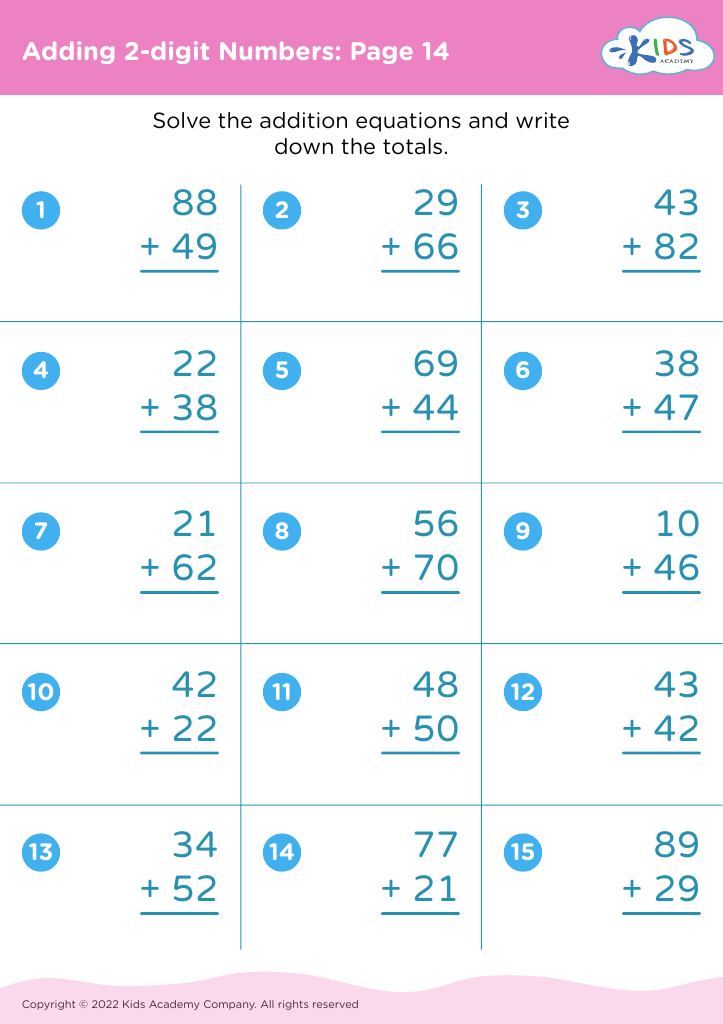
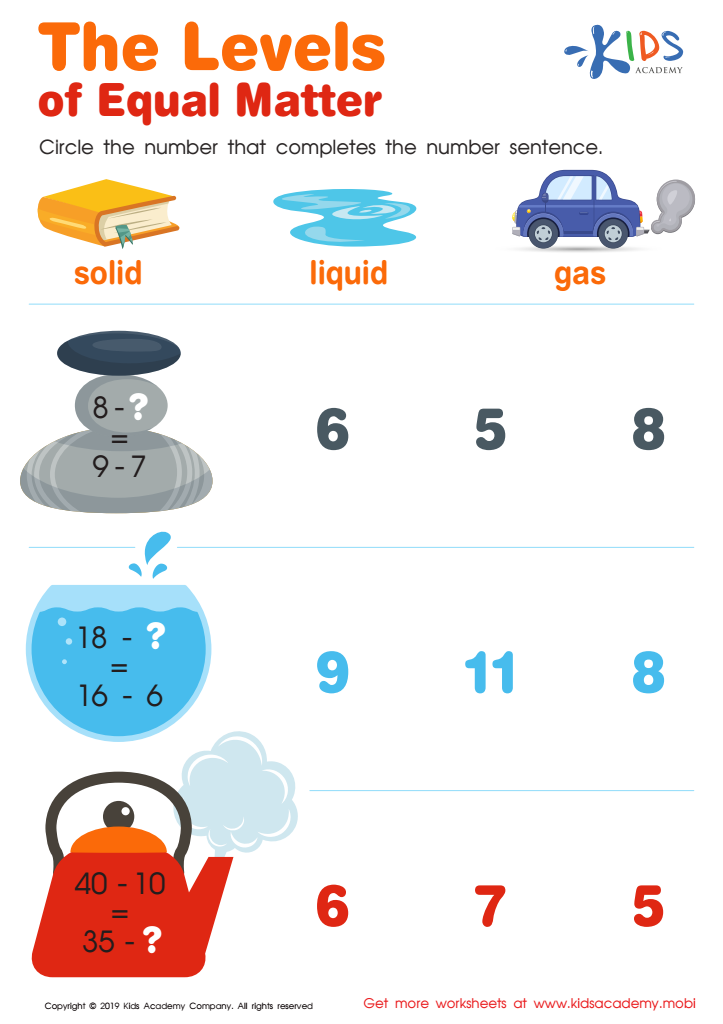
The Levels of Equal Matter Worksheet
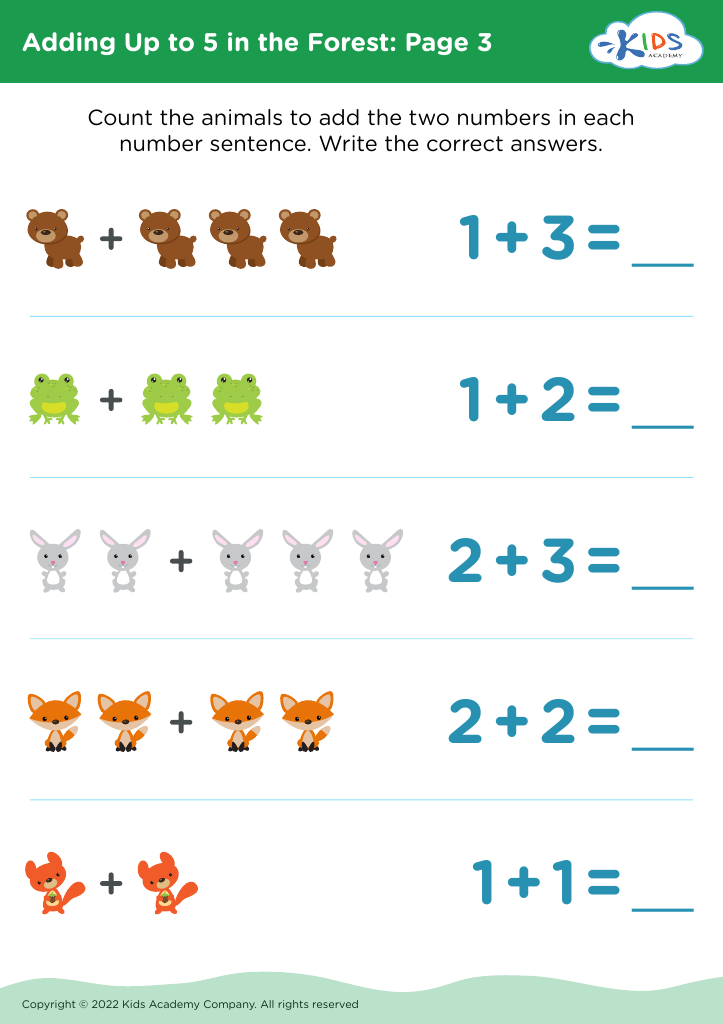








Understanding equality in math is crucial for children aged 3-7, as it lays the foundation for their future mathematical reasoning and problem-solving skills. In these early years, children begin to develop a conceptual understanding of numbers, shapes, and relationships. By grasping the concept of equality—recognizing that two expressions can balance or represent the same value—children not only learn basic arithmetic but also the essential skills of comparison and logical thinking.
Parents and teachers should care about this because these foundational skills are linked to later success in math and science. When children understand equality, they become equipped to approach more complex mathematical ideas, such as addition, subtraction, and algebraic thinking, with confidence. Moreover, fostering an environment where children engage with math in terms of fairness and balance can enhance their cognitive and social development.
Instilling early mathematical concepts will help demystify math later in life, encouraging positive attitudes toward the subject. By nurturing these skills, parents and teachers play a pivotal role in building a child's self-efficacy, encouraging curiosity, and promoting a lifelong love for learning. Therefore, focusing on understanding equality in math at this tender age is not just educational; it's foundational for a child's overall development.








