Understanding multiplication Math Worksheets for Ages 3-7 - Page 2
28 filtered results
-
From - To
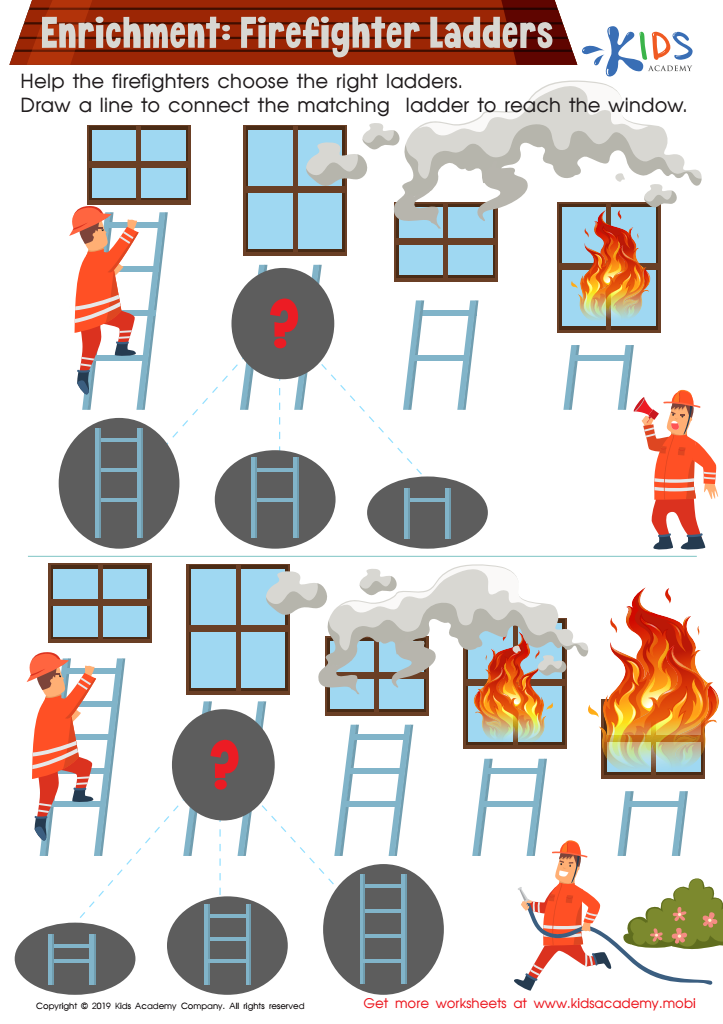
Enrichment: Firefighter Ladders Worksheet
 Assign to My Students





.jpg)

Understanding multiplication at an early age lays the foundation for a child’s mathematical development. For children aged 3-7, grasping the concepts behind multiplication fosters critical thinking and problem-solving skills. At this age, children are naturally curious and eager to explore patterns and relationships, which makes it an ideal time to introduce the principles of multiplication through engaging activities and play.
Parents and teachers should care about this foundational knowledge because early mathematical proficiency significantly impacts a child’s confidence and ability to grasp more complex concepts later on. Multiplication is not merely about memorization; it involves understanding how groups of numbers interact. Incorporating multiplication-themed games and everyday examples can demystify math and make it enjoyable, paving the way for a positive association with the subject.
Moreover, early exposure to multiplication contributes to the overall cognitive development of children. It helps in establishing a strong number sense, enabling them to draw connections between math and real-life situations. By prioritizing multiplication understanding, parents and educators can enhance a child’s enthusiasm for learning and build the skills necessary for future academic success. In essence, skillfully introducing multiplication now equips young learners with tools they will use throughout their educational journey and beyond.








