Visual discrimination skills Math Worksheets for Ages 3-7
4 filtered results
-
From - To
Boost your child's mathematical prowess with our engaging Visual Discrimination Skills Math Worksheets for ages 3-7! These expertly designed worksheets from Kids Academy focus on enhancing young learners' ability to observe and identify differences and similarities in shapes, patterns, and objects. By improving visual discrimination, kids develop sharper attention to detail and better foundational math skills, essential for future academic success. Fun and interactive, our printable worksheets make learning enjoyable while fostering critical thinking and cognitive development. Equip your child with the tools they need to excel in math. Explore our collection today and watch them thrive!
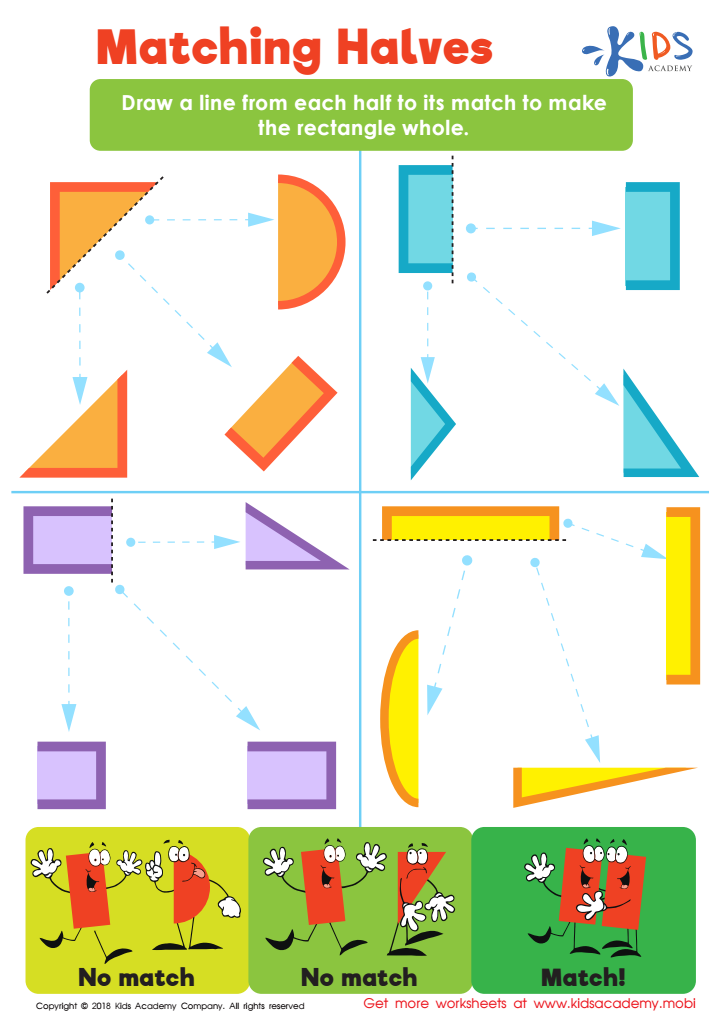
Matching Halves Worksheet
 Assign to My Students
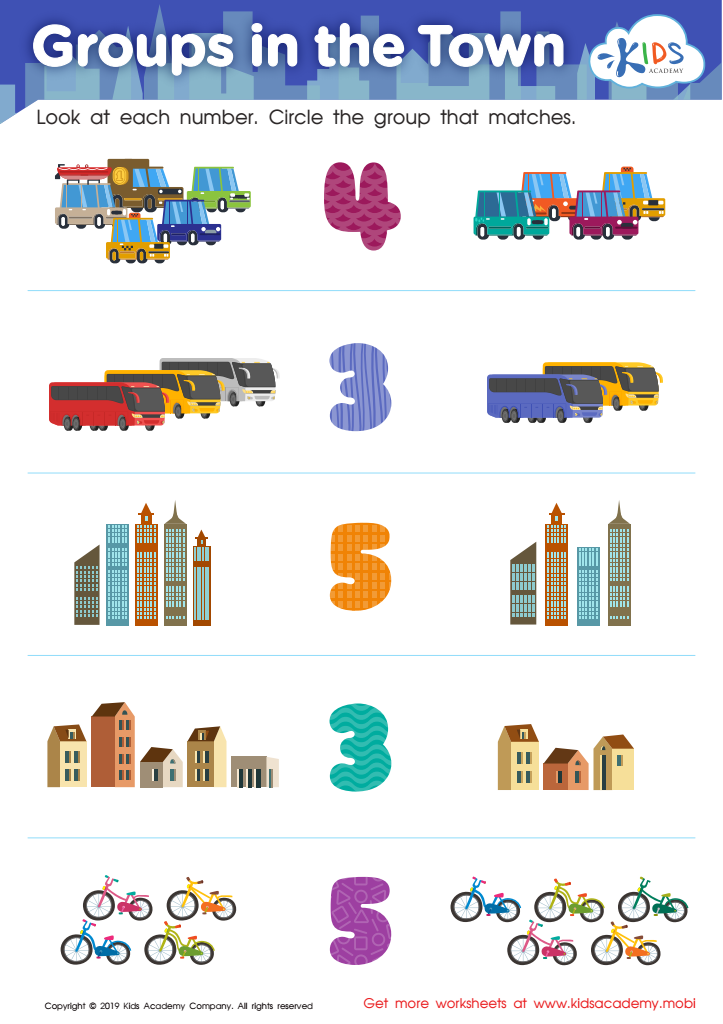
Groups in the Town Worksheet
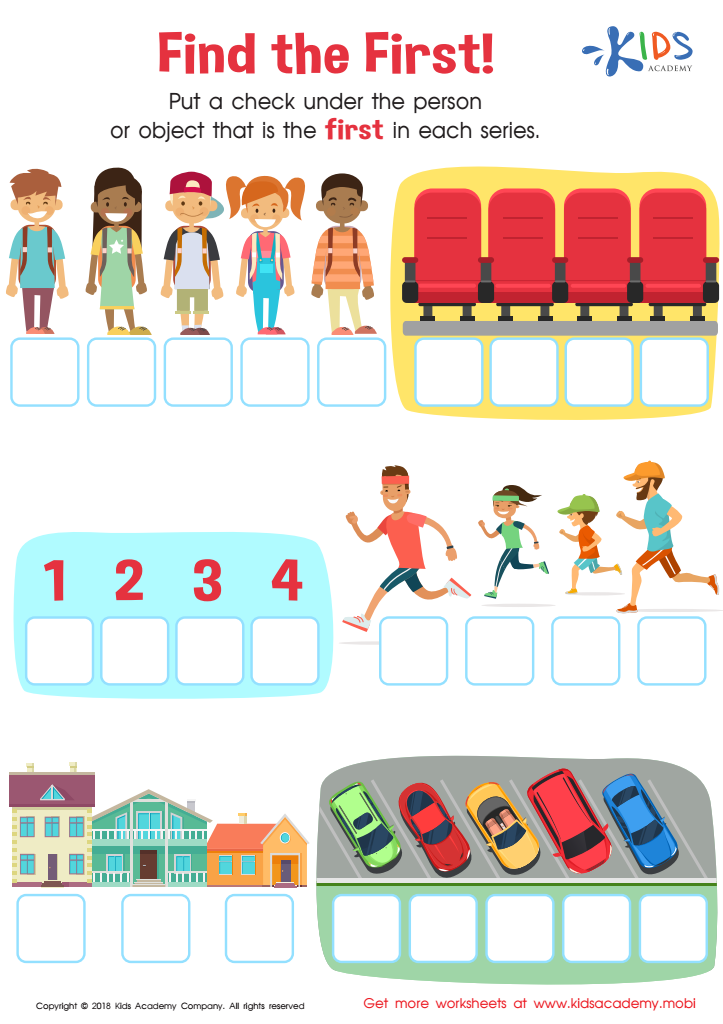
Find the First! Worksheet







Visual discrimination skills are crucial for young children's development, making it essential for parents and teachers to prioritize them, especially in math for ages 3-7. Visual discrimination involves the ability to notice and compare the visual details in objects, symbols, and shapes, which forms the foundation for many academic skills. In early math education, children rely heavily on these skills to distinguish between numbers, shapes, sizes, and patterns.
Developing visual discrimination skills helps children accurately recognize numbers and mathematical symbols, preventing possible confusion that could lead to errors in their calculations. These skills are also critical in identifying different shapes, understanding spatial relationships, and solving puzzles, which are core components of early math curricula. Additionally, strong visual discrimination abilities will support children in interpreting graphs, charts, and other visual data representations, setting a solid foundation for future math learning.
Additionally, honing visual discrimination skills can enhance overall cognitive development, including attention to detail, memory, and problem-solving skills. Teachers and parents can foster these skills through engaging activities such as sorting objects by shape and size, matching games, and interactive visual puzzles. By investing in developing children's visual discrimination skills early on, we set the stage for successful mathematical understanding and broader academic achievement.








